

Dimensional inconsistency is the most persistent headache in injection molding. Whether it’s undersized shrinkage, oversized flash, batch-to-batch drift, or post-molding warpage, many workshops find themselves constantly tweaking machines and testing molds without ever achieving true stability.
The biggest mistake operators make? Chasing symptoms instead of root causes. Blindly adjusting holding pressure, cooling times, or mold temperatures often leads to a cascade of new defects like flash, sink marks, or stress cracking.
In this comprehensive guide, we will break down the complete troubleshooting logic for dimensional stability. From core principles and machine parameters to mold design and material science, this article covers everything you need to solve 95% of dimensional fluctuation issues on your shop floor.
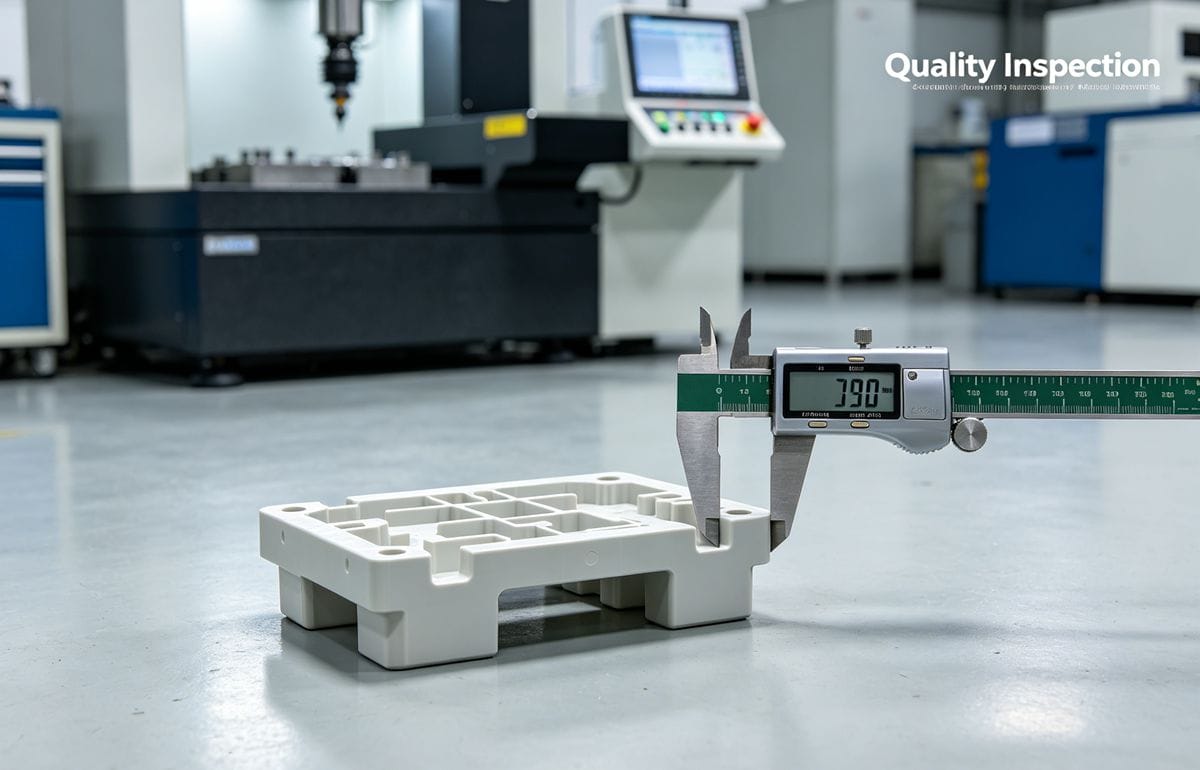
The Core Principle: Why Do Dimensions "Drift"?
All dimensional deviations in plastic parts ultimately come down to one factor: Unstable Shrinkage.
Plastic shrinks continuously as it transitions from a high-pressure molten state to a solid state. If there is any fluctuation in melt density, cooling rate, mold temperature, or material moisture, the shrinkage rate will change, and dimensions will drift.
💡 The Golden Rule: Fixed Process = Fixed Shrinkage = Stable Dimensions.
The 3 Most Common Dimensional Defects
| Type defect | Primary Cause | Visual Symptom |
|---|---|---|
| Consistently Undersized | Excessive shrinkage, insufficient packing | Overall small dimensions, surface sink marks |
| Consistently Oversized | Over-packing, insufficient cooling | Flash, part ejection swelling, high internal stress |
| Erratic Fluctuations | Dynamic process instability, equipment wear | Unpredictable size changes, batch-to-batch drift |
The Big 3: Process Parameters Controlling 80% of Dimensional Accuracy
1. Holding Pressure: The Master Switch for Dimensions
Many assume injection speed is the most critical factor, but holding pressure dictates dimensional precision. Its sole purpose is to continuously feed material into the cavity as the plastic cools and shrinks, locking in the part's density.
- Insufficient Holding: Causes internal voids, sink marks, and consistently undersized parts.
- Excessive Holding: Over-packs the cavity, causing flash, oversized parts, and severe internal stress leading to post-molding warpage.
✅ Pro Solution: Two-Stage Holding Pressure Hydraulic systems naturally lose pressure over long production runs. A two-stage profile combats this:
- Stage 1 (High Pressure, Short Time): Rapidly packs the thick sections to compensate for initial shrinkage.
- Stage 2 (Low Pressure, Long Time): Maintains steady pressure to prevent hydraulic decay without over-stressing the part.
2. Mold Temperature: The Dictator of Uniformity
Don't just look at the machine's set temperature; actual mold temperature differential is what matters.
- High Mold Temp: Promotes crystallization → Higher shrinkage (undersized parts), better surface finish, but higher warpage risk.
- Low Mold Temp: Freezes the skin instantly → Lower shrinkage (oversized parts), but traps high internal stress.
✅ Pro Solution: If dimensions are erratic, 80% of the time it’s due to unstable mold temperatures caused by clogged water lines or coolant fluctuations. Implement a strict routine: balance water flow, use separate temperature zones for thick walls, and log actual mold temps at every shift change. A 1°C difference can mean a whole tolerance tier shift. For full breakdown of how temperature, pressure and cycle time jointly control part size, read our dedicated guide: Key Factors in the Injection Molding Process: A Guide to Temperature, Pressure, and Time
3. Cooling Time: Locking in the Final Shape
A common rookie mistake is using a blanket cooling time for all products. Cooling isn't about killing time; it’s about ensuring the part is dimensionally stable voor ejection.
- Insufficient Cooling: Part continues to shrink outside the mold → Undersized and warped.
- Excessive Cooling: Shrinkage locks in completely while constrained → Oversized and brittle.
✅ Pro Solution: Thin walls are controlled by time; thick walls are controlled by temperature. Whenever possible, use temperature-triggered mold opening. Otherwise, build a cooling database based on material and wall thickness.
The Hidden Culprits: When Perfect Parameters Still Fail
Even with flawless machine settings, these two factors will ruin your dimensional stability:
1. Material Moisture & Resin
For hygroscopic materials (ABS, PA, PC, PMMA), poor drying equals batch-to-batch dimensional drift. Moisture alters melt viscosity and packing density, causing erratic, unpredictable sizing.
- Low-shrink resins (PC, ABS): Easier to stabilize.
- High-shrink resins (POM, PA, TPE): Highly susceptible to dimensional drift. Material sets the ceiling; process sets the floor. To learn material shrinkage characteristics that directly impact part tolerances, check: Comprehensive Guide to Plastic Shrinkage Rates for Injection Molding
2. Inherent Mold Design Flaws
Some dimension issues cannot be fixed by tuning the machine. If the gate is too small, located too far from thick sections, or if wall thickness is highly uneven, the mold will naturally suffer from inconsistent packing and density. These structural defects can only be mitigated through process compromises, not cured.
Quick-Reference Troubleshooting Matrix
Use this table to quickly diagnose and resolve common shop floor issues:
| Symptom | Root Cause | Corrective Action |
|---|---|---|
| Consistently Undersized | Insufficient packing, high mold temp, short cooling | Increase 2nd-stage holding pressure/time; Lower mold temp; Extend cooling in thick areas |
| Consistently Oversized | Over-packing, low mold temp, early ejection | Reduce holding pressure/time; Slightly increase mold temp to relieve stress; Extend cooling time |
| Erratic / Unpredictable | Dynamic process fluctuation | 1. Check mold temp stability 2. Inspect hydraulic pressure decay 3. Verify material drying 4. Stabilize cycle time |
Standardizing for Long-Term Stability
Dimensional stability isn't luck; it’s a standard operating procedure. Implement these pillars in your workshop:
- Mold Temp Standardization: Mandatory spot-checks, balanced water lines, and shift logs.
- Pressure Standardization: Two-stage holding profiles and regular hydraulic pressure validation (e.g., every 500 cycles).
- Cooling Standardization: Base parameters strictly on wall thickness; maintain a centralized process database.
- Material Standardization: Strict drying protocols and consistent material batch management.
- Cycle Standardization: Keep injection, holding, cooling, and mold-open/close times perfectly consistent. Stable Cycle → Stable Temp → Stable Shrinkage → Stable Dimensions.
For a full process tuning workflow to eliminate all dimension drift, refer to our process optimization manual: Injection Molding Process Parameters Optimization for High-Quality Production
The Master Technician’s Cheat Sheet
Memorize this troubleshooting rhyme to save time on the shop floor:
Undersized? Add holding pressure.
Oversized? Reduce the fill.
Dimensions drifting? Check the mold temp.
Erratic fluctuations? Inspect the hydraulics.
Thick parts? Trust the temperature, not the clock.
Wet material? Expect the drift.
Standardize the process,
And watch 90% of defects disappear.
Did you find this guide helpful? Bookmark this page for your next troubleshooting session, or share it with your production team to elevate your shop's quality standards!



 English
 French
 Dutch
Dutch German
 Japanese
 Korean