

Essentieel Spuitgieten[^1] Proceskennis die elke nieuwkomer zou moeten weten**
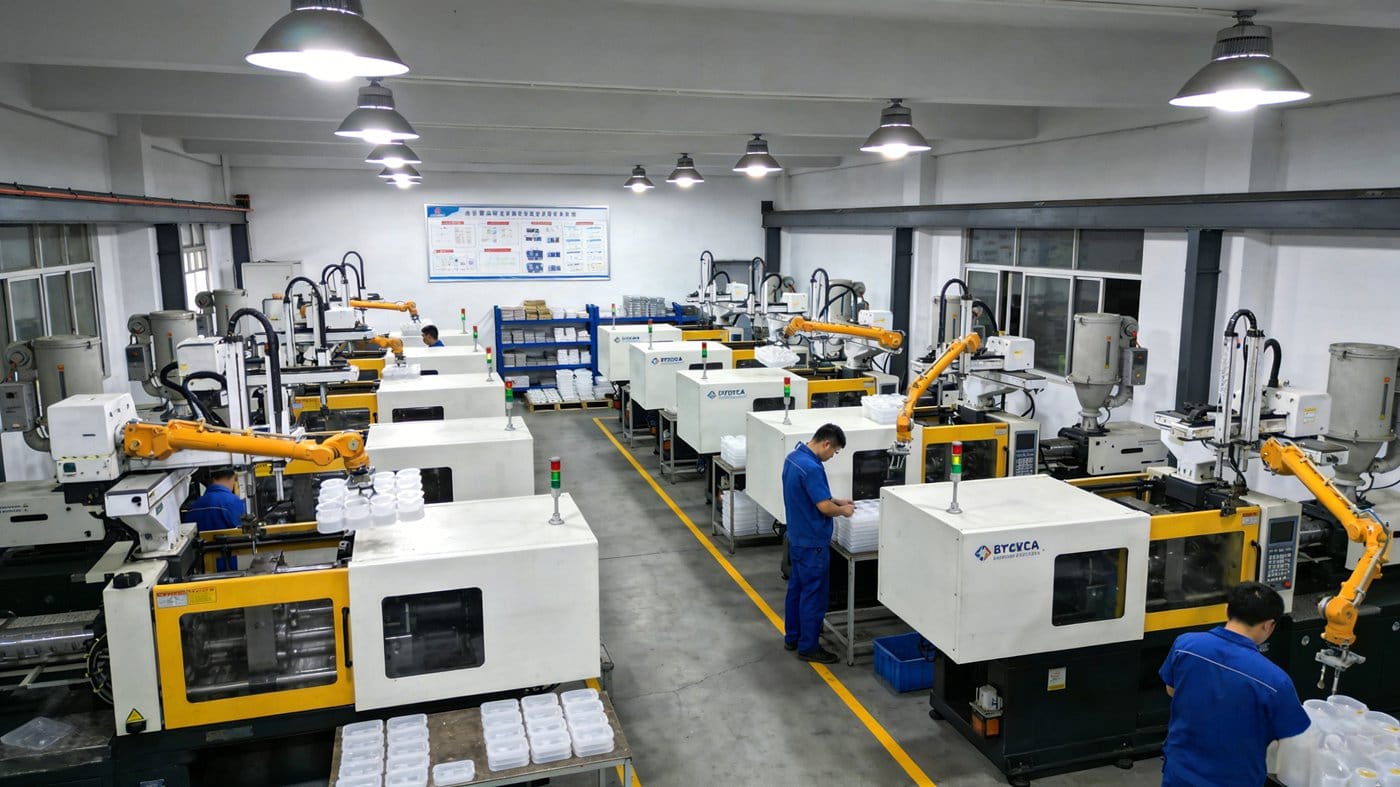
Het spuitgietproces voor kunststofonderdelen bestaat uit vier kernfasen: vulling, verpakking (houddruk), koeling, en uitwerping. Deze fasen zijn nauw met elkaar verbonden en bepalen samen de uiteindelijke kwaliteit van het spuitgietproduct. Belangrijk is dat ze één enkele, ononderbroken cyclus vormen - elke fase beïnvloedt de volgende.
1. Vulfase
De vulfase is de eerste stap in de injectiecyclus, die begint wanneer de matrijs sluit en het injecteren begint, en eindigt wanneer ongeveer 95% van de holte gevuld is met gesmolten kunststof.
Hoewel kortere vultijden theoretisch de productiviteit verbeteren, beperken beperkingen in de praktijk - zoals materiaaleigenschappen, onderdeelgeometrie en machinemogelijkheden - hoe snel er geïnjecteerd kan worden.
Vullen met hoge snelheid
Bij hoge injectiesnelheden neemt de afschuifsnelheid aanzienlijk toe. Als gevolg van afschuifverdunnend gedrag (een niet-Newtonse eigenschap van de meeste thermoplasten), daalt de viscositeit, waardoor de algehele stromingsweerstand afneemt. Bovendien wordt door plaatselijke viskeuze verwarming de gestolde huidlaag vlak bij de matrijswand dunner. In dunwandige secties zijn de koelingseffecten relatief zwak, zodat de voordelen van hoge snelheid overheersen.
Vullen met lage snelheid
Vullen met lage snelheid resulteert daarentegen in lagere afschuifsnelheden, een hogere plaatselijke viscositeit en een grotere stromingsweerstand. Warmteoverdracht naar de koude matrijswanden wordt dominant, waardoor het smeltoppervlak snel stolt. Bij minimale viskeuze verwarming vormt zich een dikkere bevroren laag, waardoor de weerstand verder toeneemt, vooral in dunnere gebieden.
Laslijnen (Breilijnen)
Vanwege fonteinstroom, De polymeerketens aan het oprukkende smeltfront liggen parallel aan de stroomrichting. Wanneer twee smeltfronten elkaar tegenkomen (bijvoorbeeld rond inzetstukken of van meerdere poorten), kunnen hun uitgelijnde ketens niet volledig in elkaar verstrengelen, vooral als de ontmoetingszones verschillen in temperatuur, druk of verblijftijd. Dit veroorzaakt microstructurele zwakte, zichtbaar als een laslijn onder de juiste verlichting.
De sterkte van laslijnen is sterk afhankelijk van de temperatuur:
- Lassen op hoge temperatuur: Een betere ketenmobiliteit zorgt voor een diepere interdiffusie en een sterkere binding.
- Lassen bij lage temperatuur: Een slechte kettingverstrengeling leidt tot zwakke, broze verbindingen die onder spanning kunnen barsten.
2. Verpakkingsfase (houddruk)
Na het vullen van de caviteiten oefent de verpakkingsfase aanhoudende druk uit om de smelt te verdichten, volumetrische krimp te compenseren en de dichtheid van het product te verhogen.
Belangrijkste kenmerken:
- De holte is al vol; de tegendruk is hoog.
- De schroefbeweging is minimaal en de trage doorstroming is verwaarloosbaar in vergelijking met vullen.
- Als de smelt afkoelt en snel stolt, neemt de viscositeit sterk toe, waardoor de holteweerstand zeer hoog wordt.
- De pakking gaat door totdat de poort dichtvriest - het punt waarop de hoogste holtedruk wordt bereikt.
Tijdens het inpakken:
- Kunststof vertoont een lichte samendrukbaarheid onder hoge druk → dichtere gebieden worden gevormd waar de druk het hoogst is.
- De stollende smelt werkt als een drukoverbrengend medium en genereert schimmelopeningskracht (ook wel opbollende kracht).
- Voldoende klemkracht is essentieel om deze kracht tegen te gaan en uitvloeiing, vervorming van onderdelen of zelfs scheiding van de matrijs te voorkomen.
💡 Praktische tip: Kies altijd een spuitgietmachine met voldoende klemkracht - niet alleen om de matrijs gesloten te houden, maar ook om effectief te kunnen verpakken zonder de integriteit van het onderdeel aan te tasten.
3. Koelfase
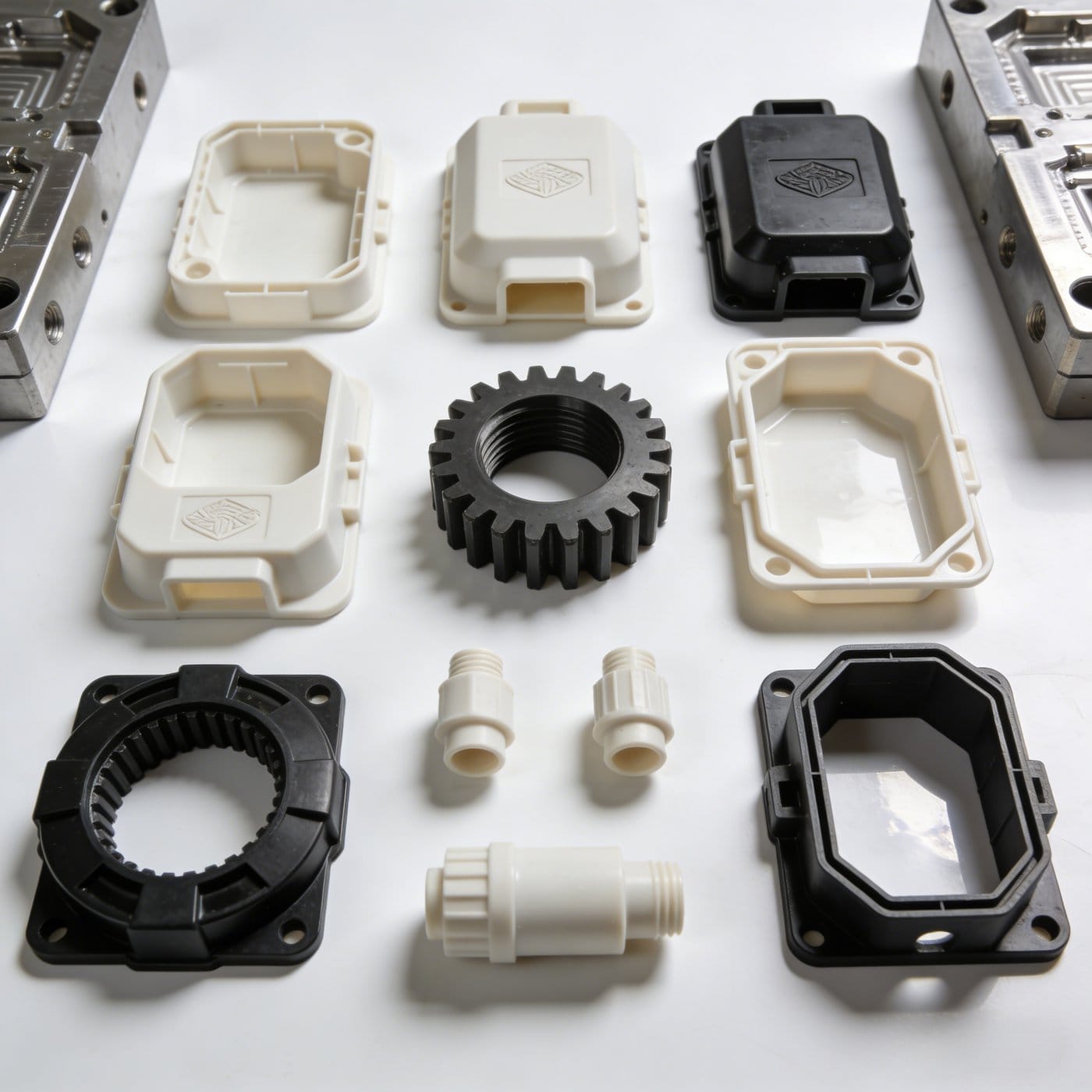
Koelen is waarschijnlijk de meest kritieke - en tijdrovende - fase, die goed is voor 70-80% van de totale cyclustijd. Efficiënte koeling heeft een directe invloed op de productiviteit, de kosten en de kwaliteit van de werkstukken.
Waarom koeling belangrijk is
- Onderdelen moeten voldoende stollen om hun vorm te behouden bij het uitwerpen.
- Onvoldoende of ongelijkmatige koeling veroorzaakt kromtrekken, zinksporen, inwendige spanningen en dimensionale instabiliteit.
Warmteverwijderingstraject
- Er wordt ~95% warmte van de smelt in de matrijs geleid.
- Vanuit de matrijs wordt de warmte via geleiding door het matrijsstaal overgedragen naar koelkanalen, die vervolgens via convectie door koelmiddel worden afgevoerd.
- Slechts ~5% dissipeert direct naar de omgevingslucht (via straling/convectie).
Factoren die de koelsnelheid beïnvloeden
| Factor | Invloed |
|---|---|
| Onderdeel Wanddikte | Koeltijd ∝ (dikte)² - een verdubbeling van de dikte verviervoudigt de koeltijd. |
| Vormmateriaal | Hogere thermische geleidbaarheid (bijv. beryllium-koper vs. P20-staal) = snellere warmteafvoer. |
| Ontwerp koelkanaal | Dichter bij de holte, grotere diameter, meer kanalen → betere koeling. |
| Doorstroomsnelheid koelmiddel | Turbulente stroming (Re > 4000) maximaliseert de efficiëntie van de warmteoverdracht. |
| Eigenschappen koelmiddel | Lagere viscositeit + hogere thermische geleidbaarheid + lagere temperatuur = betere prestaties. |
| Kunststof | Hoge thermische geleidbaarheid + lage soortelijke warmte = snellere afkoeling. |
| Procesinstellingen | Hogere smelttemperatuur, hogere matrijstemperatuur of lagere uitwerptemp → langer koelen vereist. |
Principes voor het ontwerp van koelsystemen
- Zorg voor gelijkmatige, snelle koeling over het hele onderdeel.
- Gebruik koelgaten van standaardafmetingen voor eenvoudige bewerking en onderhoud.
- Optimaliseer de kanaallay-out op basis van de productgeometrie: wanddikte, volume en kritieke kenmerken.
- Balanceer debiet, drukval en thermische prestaties.
⚠️ Slecht koelingsontwerp = langere cycli, hogere kosten en defecte onderdelen. Investeer tijd vooraf - dat betaalt zich terug in productie-efficiëntie.
4. Uitwerpfase
Uitwerpen is de laatste stap, maar verre van triviaal. Zelfs na volledige stolling kan onjuist uitwerpen vervorming, oppervlaktesporen of breuk veroorzaken.
Gebruikelijke uitwerpmethoden
Uitwerpspelden (Pushpins)
- Het beste voor onderdelen met een robuuste structuur en niet-cosmetische oppervlakken.
- De pennen moeten gelijkmatig geplaatst worden, bij voorkeur op plaatsen met een hoge weerstand (bijv. ribben, nokken) en waar de stijfheid van het onderdeel het grootst is.
- Plaats geen spelden op dunne of delicate gelaatstrekken.
Stripplaat (uitwerpplaat)
- Ideaal voor diepgetrokken, dunwandige containers of transparante onderdelen waarbij speldenmarkeringen onaanvaardbaar zijn.
- Biedt een grote, gelijkmatige uitwerpkracht met een soepele beweging en zonder zichtbare markeringen.
Ontwerptip: Simuleer altijd uitwerpkrachten tijdens het matrijsontwerp. Houd rekening met ontwerphoeken, ondersnijdingen en flexibiliteit van het product om kleven te minimaliseren en een schone lossing te garanderen.
Eindgedachten
Het beheersen van de vier stappen van de spuitgietcyclus - vullen, verpakken, koelen en uitwerpen - is van fundamenteel belang voor iedereen die met kunststofproductie begint. Bij elke fase komt complexe fysica kijken (reologie, warmteoverdracht, mechanica) en kleine veranderingen in de parameters kunnen grote gevolgen hebben voor de kwaliteit en efficiëntie.
Voor nieuwkomers: Begin met het observeren van echte cycli, het analyseren van defecten aan onderdelen (bijv. laslijnen, verzinkmarkeringen, kromtrekken) en correleer deze met procesinstellingen. Na verloop van tijd ontwikkelt u intuïtie en dan begint het echte procesmeesterschap.




 English
 French
 Dutch
Dutch German
 Japanese
 Korean