

How to Eliminate Surface Defects in Custom Injection Molding Products
Surface defects in injection molding parts1 such as dark spots, gloss variations, or orange peel—can significantly impact product aesthetics and quality. These issues typically manifest near the gate or behind sharp corners far from the gate. To effectively resolve them, manufacturers must analyze both mold design and molding process parameters.
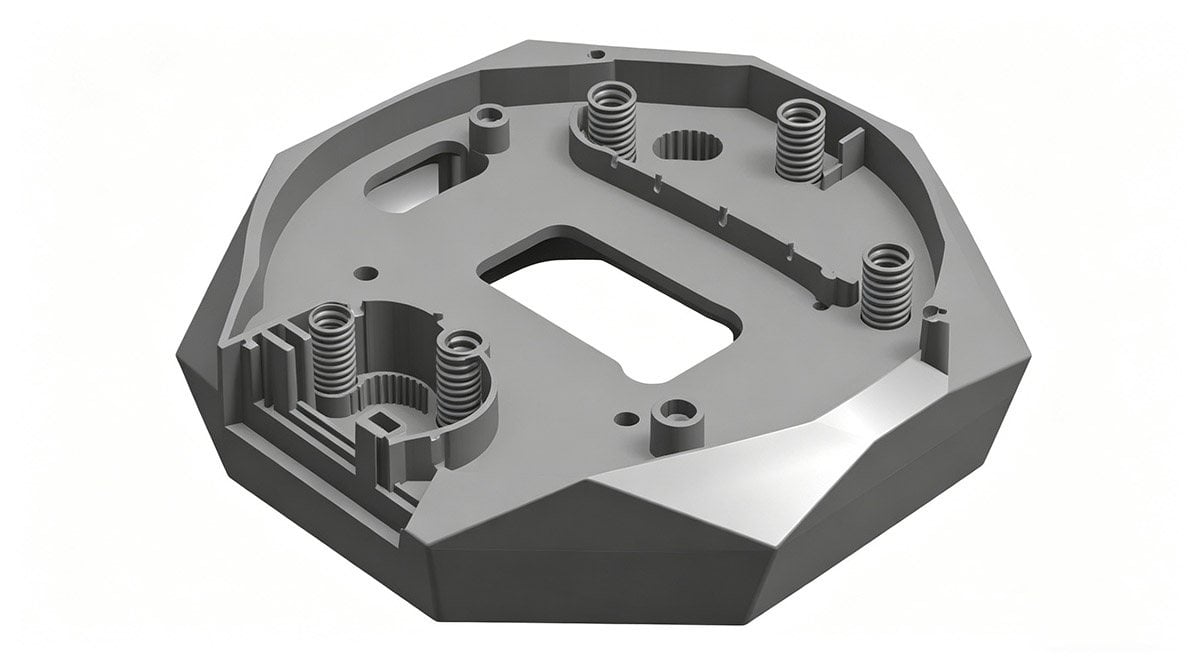
Dark Spots on Products
Dark spots appear near the gate, resembling a dim halo. They are particularly noticeable when molding high-viscosity, low-flow materials like PC, PMMA, or ABS. This visible defect occurs when the cooled surface layer of resin is dragged away by the resin flowing through the center.
Root Cause Analysis While often attributed to the filling and holding phases, dark spots near the gate actually originate at the start of the injection cycle. Tests indicate that surface layer slippage is caused by the injection speed, or more specifically, the flow velocity of the melt front.
Even if the injection speed setting is constant, the actual flow velocity changes. The velocity is high when entering the gate area but drops significantly once the melt enters the cavity (filling stage). This fluctuation in the melt front velocity leads to surface defects.
ソリューション
| カテゴリー | Actionable Steps |
|---|---|
| プロセスの最適化 | Reduce Injection Speed: Use multi-stage injection. Start with a lower speed to reduce velocity at the gate, then gradually increase it to maintain a uniform melt front velocity throughout the filling stage. |
| 温度管理 | Increase Temperatures: Raise barrel temperature, screw back pressure, and mold temperature. Low melt or mold temperatures contribute to premature surface cooling and slippage. |
| 金型設計 | Optimize Gate & Corners: Avoid sharp turns at the gate by adjusting the radius. Ensure gate location and diameter are appropriate. |
Sharp Corners and Flow Dark spots2 also frequently appear after sharp corners on the part. For instance, the surface at a sharp corner may be smooth, but the area immediately following it appears dull and rough. This is caused by excessive flow velocity and injection speed, which cause the cooled surface layer to be replaced by internal fluid slippage.
- Recommendation: Use multi-stage injection, gradually increasing speed. Ideally, allow the melt speed to increase only after it has passed the sharp edge.
- Design Tip: Use smoother fillet transitions in areas where the part geometry changes angle sharply, especially far from the gate.
Improving Gloss Variations
Gloss differences are most obvious on textured surfaces. Even if the mold surface is uniform, irregular gloss can appear on the part, meaning the mold's surface texture was not accurately replicated.
Why it Happens As the melt travels further from the gate, injection pressure decreases. If the far end of the part is not fully packed, the pressure is lowest there, preventing the mold texture from copying correctly. Consequently, the area with the highest cavity pressure (usually halfway along the flow path) shows the least gloss variation.
ソリューション To rectify this, consider the following adjustments:
- Process: Increase melt and mold temperatures, raise injection pressure, and extend holding time.
- デザイン: Avoid drastic changes in wall thickness, which cause irregular flow. Uniform wall thickness reduces the likelihood of gloss variation. Be cautious with excessive wall thickness or large ribs.
- Venting: Insufficient venting can also trap air, preventing the melt from contacting the mold wall effectively.
プロのアドバイス Ensure adequate venting at the end of the fill to allow air to escape, ensuring the melt contacts the textured surface.
The Origin of Orange Peel
"Orange peel3" or surface wrinkling generally occurs at the end of the flow path when molding thick-walled parts with high-viscosity materials.
The Mechanism If the melt flow speed is too low during injection, the part surface solidifies rapidly. As flow resistance increases, the melt front becomes uneven. The solidified outer layer fails to contact the cavity wall fully, creating wrinkles. These wrinkles become permanent defects after solidification and holding.
ソリューション
- Increase Melt Temperature: Keeps the material fluid for longer.
- Increase Injection Speed: Ensures the cavity fills before the surface layer solidifies.
Explore this resource to discover expert insights and techniques for enhancing the quality of injection molding parts. ↩
Preventing dark spots enhances the visual appeal and quality of molded products, making this resource valuable. ↩
Addressing orange peel is vital for maintaining the aesthetic quality of molded parts. ↩



 English
 French
 Dutch
Dutch German
 Japanese
 Korean