

Turning a great idea into a physical product can feel overwhelming. The path from a single prototype to mass production in China is often unclear, risking costly mistakes and delays.
The process moves from prototyping and design validation through a critical DFM analysis, followed by mold fabrication, pilot runs for testing, and finally, full-scale mass production. An experienced partner in China makes this a clear, step-by-step journey from your design to a market-ready product.
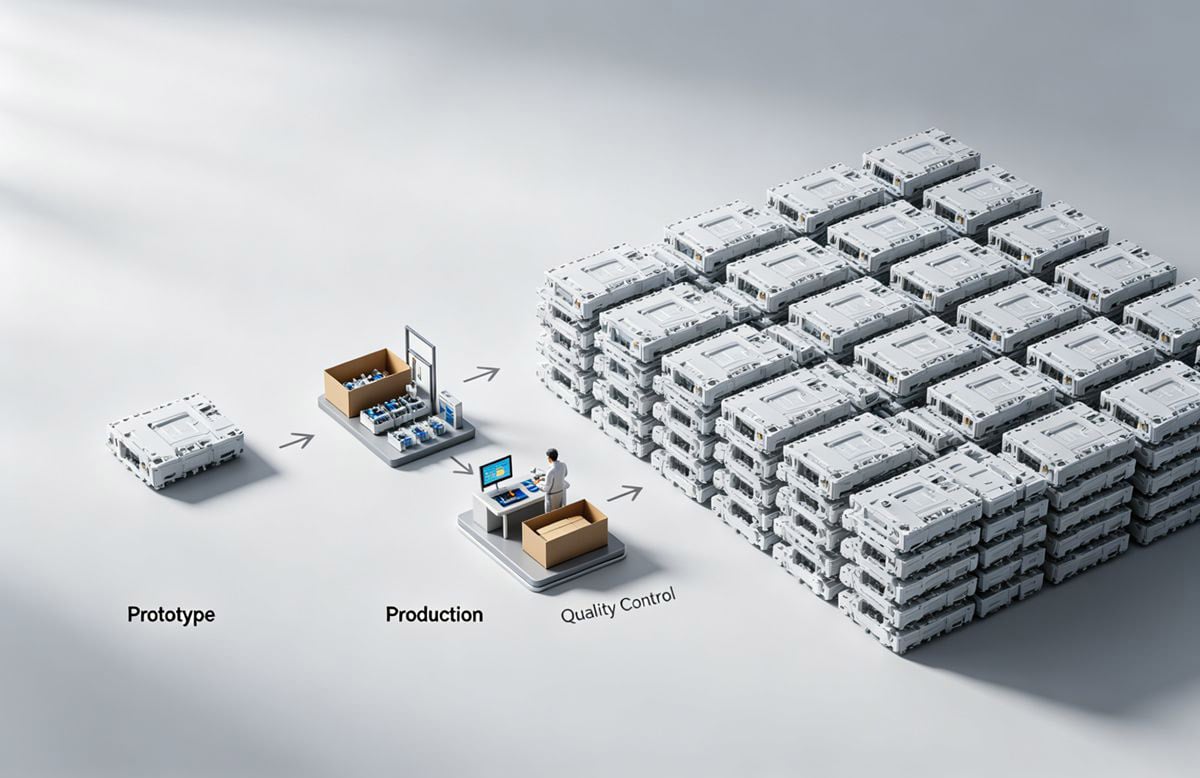
Understanding this journey is the first step toward a successful product launch. It’s not a single leap but a series of carefully planned stages. Each stage builds on the one before it, and getting them right is key. Let's break down exactly what happens at each point so you can navigate the process with confidence.
What Is the Prototype-to-Production Process in Injection Molding?
Feeling lost in manufacturing terms? The steps from one prototype to thousands of units can seem complex, and any confusion can lead to expensive delays and errors in your project.
The process is a logical progression. It starts with validating your concept using prototypes, then moves to mold design (DFM), tool manufacturing, pilot production for testing, and finally, full-scale mass production. Each step is a checkpoint to ensure quality and efficiency before proceeding to the next.
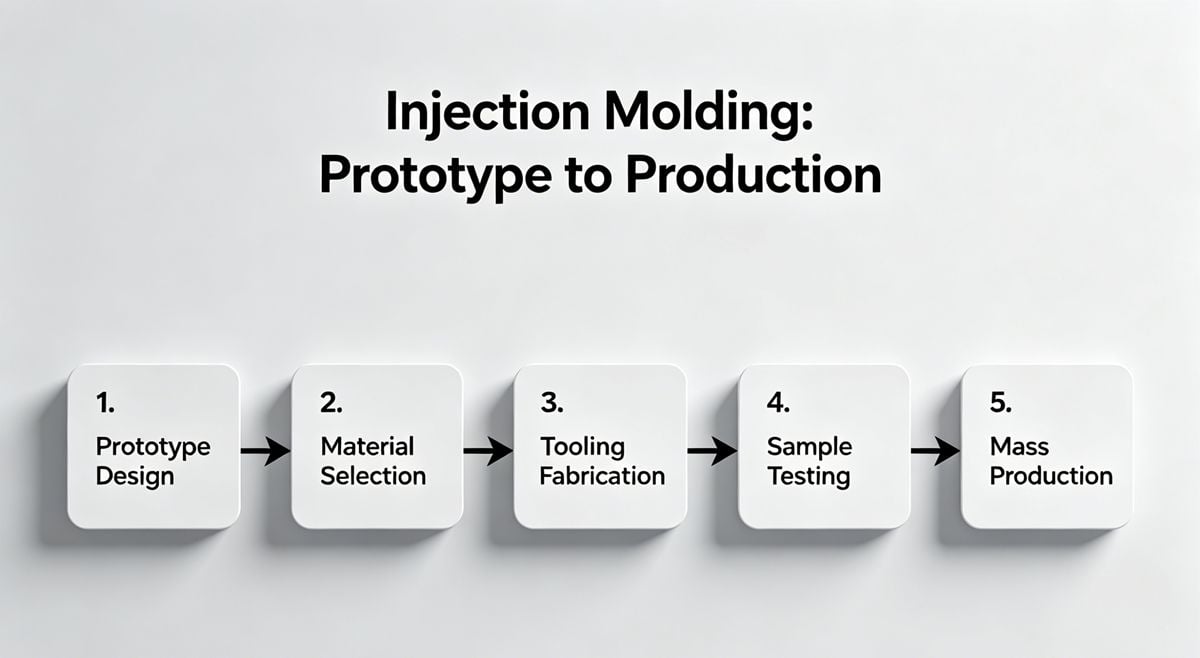
To make it clearer, I've seen this process unfold hundreds of times. It’s a well-trodden path that we guide our clients through every day. The goal is to remove risk at each stage before committing more resources. Think of it as a funnel where you refine your idea until it's ready for the market.
Stage 1: Prototyping and Design Validation
This is where you confirm your idea works. You use fast methods like 3D printing or CNC machining to create physical models. You test them for fit, form, and function. This is the time to make changes cheaply.
Stage 2: Design for Manufacturability (DFM)
Once the prototype is approved, we don't just jump into making a mold. We run a DFM analysis. This is a crucial review where we refine the part design specifically for injection molding. We look for potential problems that could cause defects or slow down production.
Related reading: What Are the Core Benefits of DFM Analysis Before Mold Fabrication
Stage 3: Mold Fabrication and Pilot Run
After you approve the DFM report, we start making the steel mold. This is the most time-consuming part. Once the mold is finished, we do a pilot run to produce the first samples, called T1 samples. You get these to inspect and approve.
Stage 4: Mass Production
With your final approval of the samples, we are ready for mass production. We set up the injection molding machine, load the material, and begin producing your parts in high volume.
| Stage | Key Activity | Typical Duration |
|---|---|---|
| Prototyping | 3D Printing / CNC Machining | 1-2 weeks |
| DFM Analysis | CAD Model Review | 2-5 days |
| Mold Making | Steel Tooling Fabrication | 4-8 weeks |
| Pilot Run & Sampling | T1 Sample Production & Approval | 1-3 weeks |
| Massenproduktion | High-Volume Manufacturing | Ongoing |
How Does Prototyping Differ from Production Molding?
Confusing a prototype part with a production part? This is a common mistake. It can lead to budget overruns and design flaws that are very expensive to fix later on.
Prototyping is for testing your design's form, fit, and function using fast, low-cost methods like 3D printing. Production molding, on the other hand, uses durable steel molds for high-volume, repeatable, and cost-effective manufacturing of the final, market-ready part.
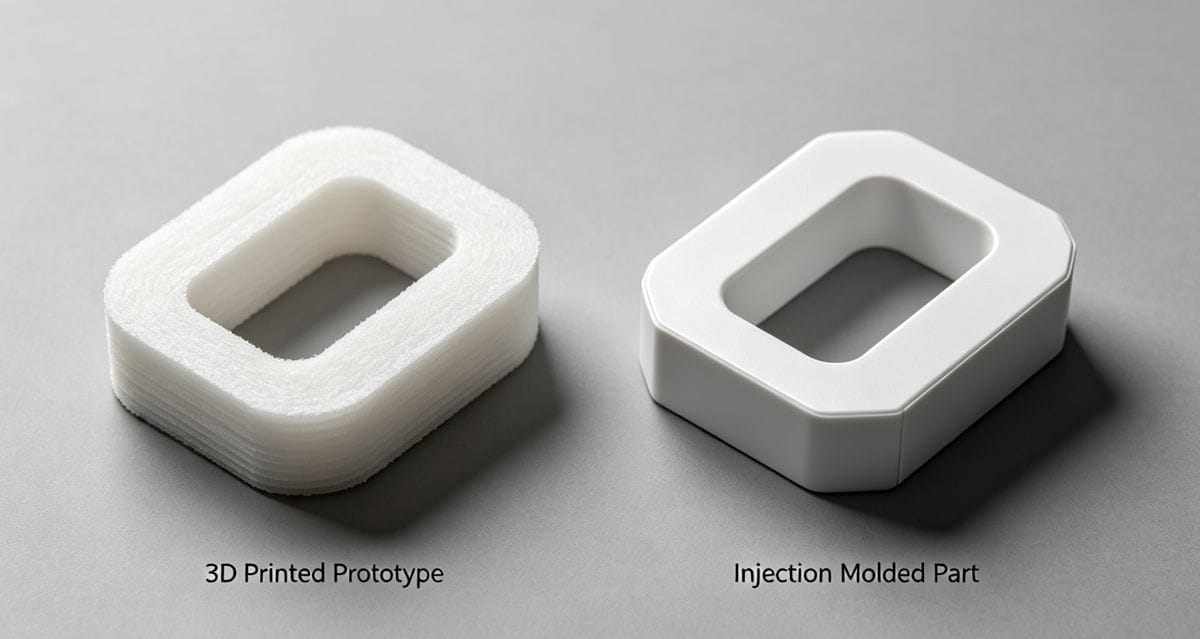
I often explain to clients that these two processes have completely different goals. A prototype's job is to answer questions about your design. Is it the right size? Does it feel right? Does it work as intended? Production molding's job is to replicate the finalized design perfectly, thousands or millions of times, at the lowest possible cost per part.
The Purpose of Each Method
The goal of prototyping is learning and validation. You want to fail fast and cheap. The goal of production molding is efficiency and consistency at scale. You want to produce identical parts with very little variation.
Materials and Processes
For prototypes, we might use a variety of materials and processes, like SLA or FDM 3D printing, to get a part in hand quickly. For production, we use a specific thermoplastic pellet chosen for its properties (like strength, flexibility, or heat resistance) and inject it into a custom-made steel mold.
Cost and Speed
A prototype is fast to make, usually within days. The cost per part is high, but the initial investment is zero. A production mold has a high upfront cost (thousands of dollars) and takes weeks to make. But once it's ready, the cost per part is extremely low, often just a few cents.
| Feature | Prototyping | Production Injection Molding |
|---|---|---|
| Purpose | Design validation, testing | Mass production, scalability |
| Speed | Fast (hours to days) | Slow initial setup, then fast per part |
| Kosten | Low initial cost, high per-part cost | High initial cost, very low per-part cost |
| Tooling | None or simple tooling (3D printer) | Custom, durable steel mold |
| Volume | Low (1-100 units) | High (1,000 to 1,000,000+ units) |
Why Do Engineers Choose China for Injection Molding Production?
Are you worried about manufacturing costs getting out of control? Finding a partner that balances high quality with an affordable price is a major challenge for any new product.
Engineers choose China for its mature supply chain, cost-effectiveness, skilled workforce, and ability to scale production quickly. The entire ecosystem for tool making, injection molding, and assembly is incredibly developed and efficient here, offering a huge advantage for new and established products alike.
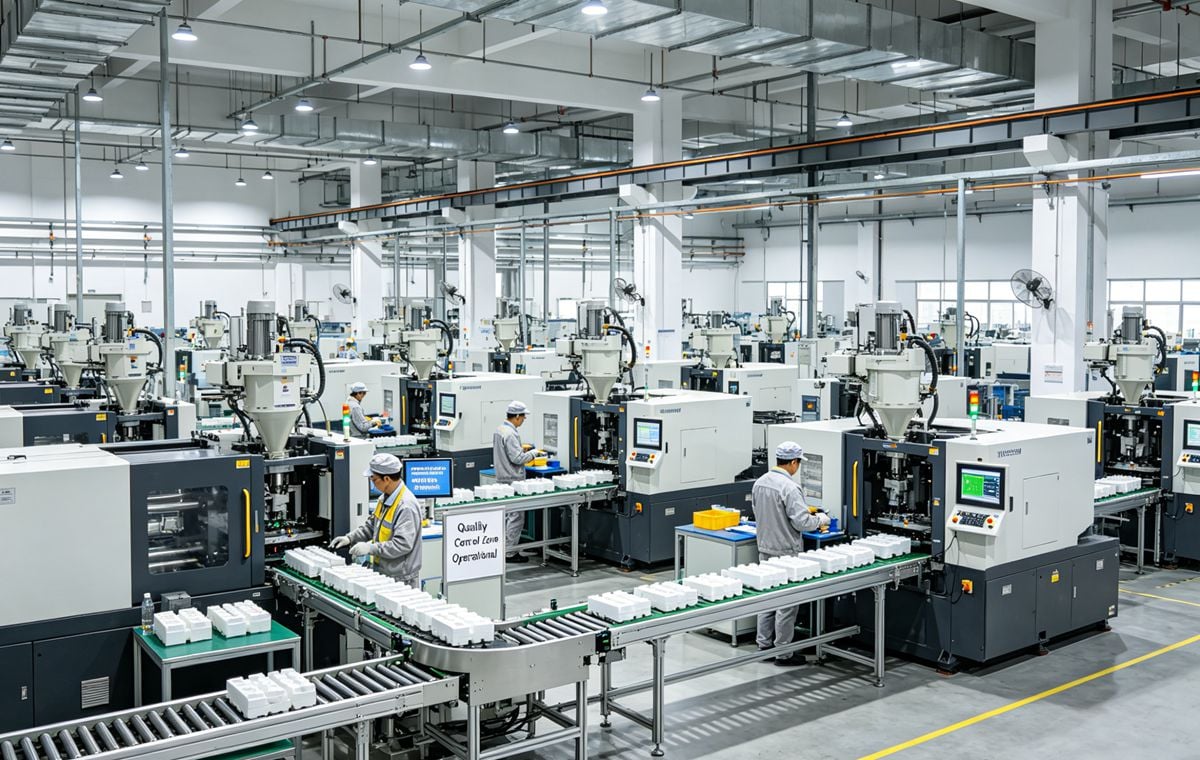
From our facility here, I can see firsthand why companies from all over the world come to us. It's not just about one thing; it's the combination of several powerful advantages that you can't find anywhere else. For over two decades, China has invested heavily in its manufacturing infrastructure, creating a powerhouse for product development.
Unmatched Cost-Effectiveness
The most obvious reason is cost. Both the labor and the significant one-time cost of creating the steel mold are generally much lower in China than in Europe or North America. This allows companies, especially startups, to get their products to market without needing massive upfront capital.
A Mature and Integrated Supply Chain
This is a huge factor. Here, I can source specific types of steel for a mold, find a supplier for a custom-colored plastic resin, and coordinate with a packaging company, all within a few kilometers. This dense network of specialized suppliers means less time spent on logistics and faster problem-solving. It reduces delays and keeps projects moving forward smoothly.
Speed and Scalability
Chinese factories are built for volume. Once a mold is approved, we can ramp up production from a thousand units to a hundred thousand units very quickly. This ability to scale is critical for products that see rapid market adoption. You don't have to worry about outgrowing your manufacturer's capacity.
Full-service manufacturing reference: Schlüsselfertige Lösungen für das Kunststoffspritzgießen
How Do You Transition from Prototype to Mass Production?
Your prototype is perfect, but what's next? The jump from a single approved model to mass production is a critical step. Many projects fail here because of poor planning.
The key to a smooth transition is a thorough Design for Manufacturability (DFM) analysis. This is a collaborative review where we refine your prototype design to make it perfect for efficient, high-volume injection molding. This step prevents costly mold changes and production defects later.
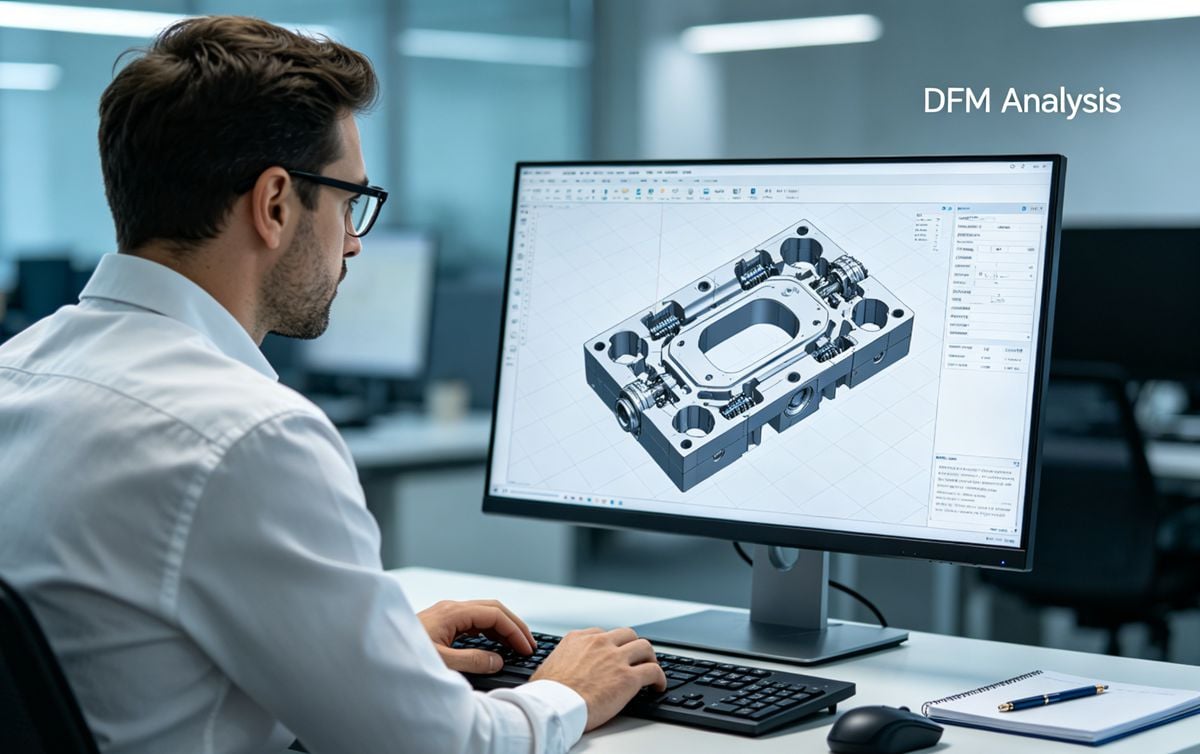
I always tell my clients that the DFM is the most important conversation we will have before spending any money on tooling. This is where our decades of experience really provide value. A design that is perfect for a 3D printer is rarely perfect for an injection mold. Making small tweaks at this stage can save you thousands of dollars and weeks of delays.
Finalizing Your CAD Design
After all your prototype testing is complete, you need to "freeze" your design. This means locking in the final 3D CAD model that will be used for manufacturing. Any changes after this point become much more expensive.
The Critical DFM Review
This is where we, the manufacturer, analyze your final design. We look for things like:
- Draft Angles: Are the walls slightly angled so the part can be ejected from the mold easily?
- Wall Thickness: Is the wall thickness uniform to prevent sinking or warping?
- Parting Lines: Where will the two halves of the mold meet? Can we place this line in a non-cosmetic area?
- Gate Locations: Where will the plastic enter the part? This affects the final appearance and strength.
We provide a detailed report with our suggestions for you to approve.
Committing to Tooling
Once you approve the DFM report, you give the green light to start building the injection mold. This is a major milestone and a significant financial commitment. At this point, the design is locked, and the journey to mass production truly begins.
What Timeline Should You Expect from Prototype to Production?
Is your project timeline realistic? Guessing the time needed for manufacturing can lead to missed launch dates and frustrated stakeholders. Let's set some clear expectations for the process.
A typical timeline from final design approval to the first mass production run in China is 6 to 12 weeks. This includes about 4-8 weeks for mold fabrication and another 2-4 weeks for shipping samples, testing, and making final adjustments.

I've seen projects move faster and some take longer, but this is a solid estimate for planning purposes. The complexity of your part is the biggest variable. A simple part with a simple mold will be on the faster end of the spectrum. A large, complex part that requires a highly intricate mold will naturally take more time.
Phase 1: Mold Fabrication (4-8 Weeks)
This is the longest phase. It involves ordering a large block of steel (like P20 or H13), then using CNC machines, EDM, and skilled technicians to cut, shape, and polish it into the precise halves of your mold. It’s a detailed process that can’t be rushed.
Phase 2: T1 Sampling and Refinement (1-3 Weeks)
Once the mold is built, we conduct the first test run and produce the "T1" samples. We ship these to you for inspection. This is your chance to hold the first real parts. If any small adjustments are needed (e.g., texture, fit), we make them to the mold. This may involve a T2 sample.
Phase 3: Mass Production Ramp-Up (1-2 Weeks)
After you give final approval on the samples, we schedule your project for mass production. We set up the mold in the production machine, load the correct raw material, and dial in the process parameters (temperature, pressure, cycle time) to ensure consistent quality for the full run.
| Milestone | Estimated Time | Notes |
|---|---|---|
| DFM Approval & Mold Kick-off | Day 1 | The clock starts now. |
| Mold Fabrication Complete | Week 4-8 | Depends heavily on part complexity. |
| T1 Samples Shipped | Week 5-9 | First parts are sent for your review. |
| Sample Approval / Revisions | Week 6-11 | You test the parts and give feedback. |
| Mass Production Begins | Week 7-12 | Your product is being manufactured. |
What Quality Standards Should Your Chinese Molder Meet?
Are you worried about quality control when manufacturing overseas? Ensuring your product meets every specification is not optional, but how can you be sure from thousands of miles away?
At a minimum, your Chinese molder should be ISO 9001 certified. More importantly, they must have a strong internal Quality Management System (QMS). This system should cover incoming material checks, in-process monitoring during production, and final inspection of finished parts before shipping.
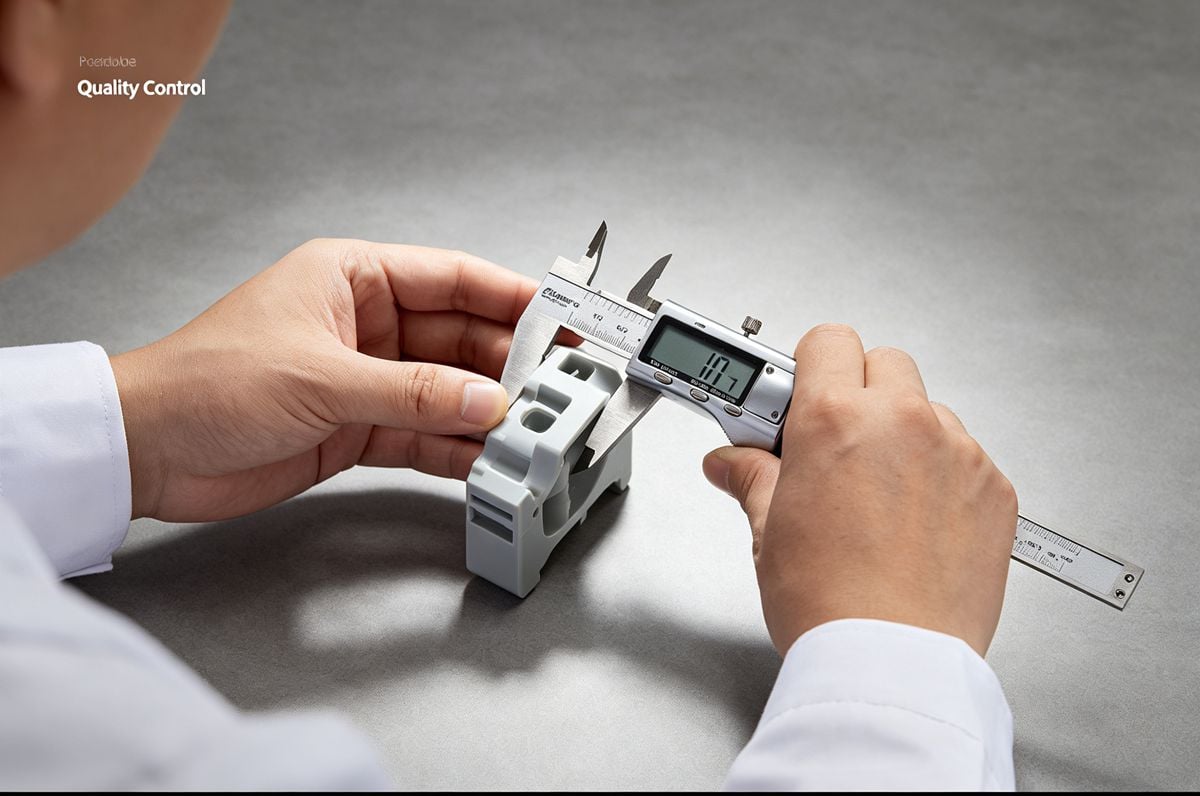
For us at Ideal Pro, quality isn't just a certificate on the wall. It's a fundamental part of our process. A good partner doesn't just make parts; they have a system to prove the parts are made correctly. Transparency is key. You should always feel comfortable asking for inspection reports and data.
Key Certifications: ISO 9001
This is the international standard for a QMS. It means the company has documented processes for everything they do, from quoting a project to shipping the final parts. It ensures traceability and a commitment to continuous improvement. If a molder isn't ISO 9001 certified, it's a major red flag.
The Internal Quality Management System (QMS)
A robust QMS includes several checkpoints:
- IQC (Incoming Quality Control): We check raw materials (plastic resins, colorants) to ensure they match the specifications before they ever enter a machine.
- IPQC (In-Process Quality Control): During production, our technicians regularly pull parts from the line to measure critical dimensions and check for cosmetic defects.
- FQC (Final Quality Control): Before packaging, a final inspection is performed on a sample of the batch to ensure it meets all of your requirements.
Communication and Reporting
A trustworthy partner will provide you with clear, easy-to-understand quality reports. This might include dimensional reports from a CMM machine, material certifications, and photos of the final parts. You should never be in the dark about the quality of your product.
How Much Does the Full Process Cost in China?
Are you trying to budget for your project but are unsure of the real costs? Hidden fees and inaccurate estimates can easily derail your product launch before it even starts.
The main cost is the injection mold itself, which is a one-time investment. This can range from $2,000 for a simple, low-volume mold to over $50,000 for a complex, high-volume one. The per-part cost is then typically very low, often cents to a few dollars.
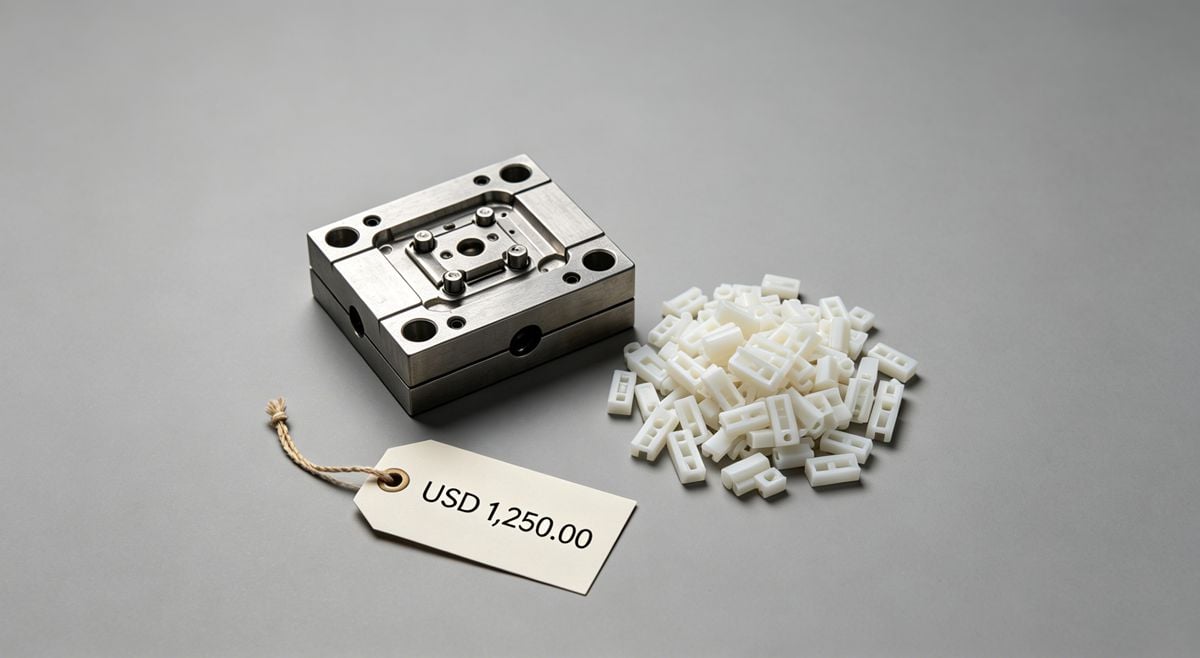
When we create a quote, we break it down so there are no surprises. The two biggest numbers you need to plan for are the mold cost (tooling) and the part cost. Understanding what drives these costs will help you design your part more effectively and manage your budget.
Tooling (Mold) Costs
This is your biggest upfront expense. The price is driven by three main factors:
- Part Complexity: A complex part with many undercuts and intricate features requires a more complex and expensive mold.
- Part Size: A larger part requires a larger block of steel and more machine time, increasing the cost.
- Mold Longevity: A mold made from pre-hardened P20 steel is cheaper but might only last for 100,000 parts. A mold made from hardened H13 steel costs more but can produce over a million parts.
Per-Part Costs
This is the price you pay for each unit produced. It is determined by:
- Material: The type and grade of plastic you choose. A standard polypropylene is much cheaper than a high-performance, glass-filled PEEK.
- Cycle Time: How long it takes to inject, cool, and eject one part. A faster cycle time means lower machine and labor costs.
- Order Quantity: Larger orders typically result in a lower price per part.
| Cost Component | Simple Part Example | Complex Part Example |
|---|---|---|
| Mold Cost (One-Time) | $2,500 (P20 Steel) | $15,000 (H13 Steel) |
| Material Cost (per kg) | $2.00 (PP) | $15.00 (PC/ABS) |
| Part Weight | 15g | 80g |
| Cycle Time | 20 seconds | 50 seconds |
| Estimated Part Cost | $0.15 | $1.80 |
Frequently Asked Questions?
Still have some lingering questions about the process? It’s completely normal to have more specific concerns before you decide to start a big manufacturing project in China.
We've gathered some of the most common questions we hear from clients. We'll cover topics like protecting your intellectual property (IP), understanding minimum order quantities (MOQs), and how to choose the right partner for your specific needs. Getting these answers will give you more clarity.
Navigating a new manufacturing relationship can be tricky. My goal is to be as transparent as possible and build a lasting partnership. Here are some honest answers to the questions that are probably on your mind.
How is my intellectual property (IP) protected in China?
This is a valid concern. The best strategy is a multi-layered one. First, always sign a Non-Disclosure Agreement (NDA) with any potential partner before sharing your designs. Second, work with established, reputable companies like ours that have a long track record and a reputation to protect. We rely on long-term client relationships, and stealing IP would destroy our business. Finally, for ultimate protection, you can register your trademarks and design patents in China.
What is a typical Minimum Order Quantity (MOQ)?
MOQs exist because there is a real cost to setting up a production run. It takes time to mount a heavy mold, load the correct material, and dial in the machine settings. To make this setup cost worthwhile, we need to produce a certain number of parts. For most projects, a typical MOQ starts between 1,000 and 5,000 units. However, this is always negotiable, and we try to be flexible for new products.
How do I choose the right manufacturing partner?
Don't just choose the partner with the lowest price. The cheapest quote often leads to poor quality, delays, and communication problems. Instead, look for a partner who:
- Communicates Clearly: Do they speak your language well and respond quickly?
- Is an Expert: Do they offer helpful DFM feedback that improves your design?
- Is Transparent: Are they open about their process and quality systems?
- Has a Good Reputation: Do they have positive testimonials and long-term clients?
A good partner acts as an extension of your own team.
Learn basic molding knowledge to evaluate suppliers: Grundlegendes Wissen über den Spritzgießprozess, das jeder Neuling kennen sollte
Fazit
The journey from prototype to production in China is a clear, structured process. With an experienced partner guiding you, it becomes a manageable and cost-effective path to launching your product successfully.

 English
 French
 Dutch
Dutch German
 Japanese
 Korean