 한국어




Polybutylene Terephthalate (PBT) is a widely used engineering thermoplastic known for its excellent mechanical properties, chemical resistance, and electrical insulation. However, to achieve high-quality parts consistently, understanding its unique processing behavior is essential. Below, we detail PBT’s processing characteristics and recommended 사출 성형[^1] conditions.
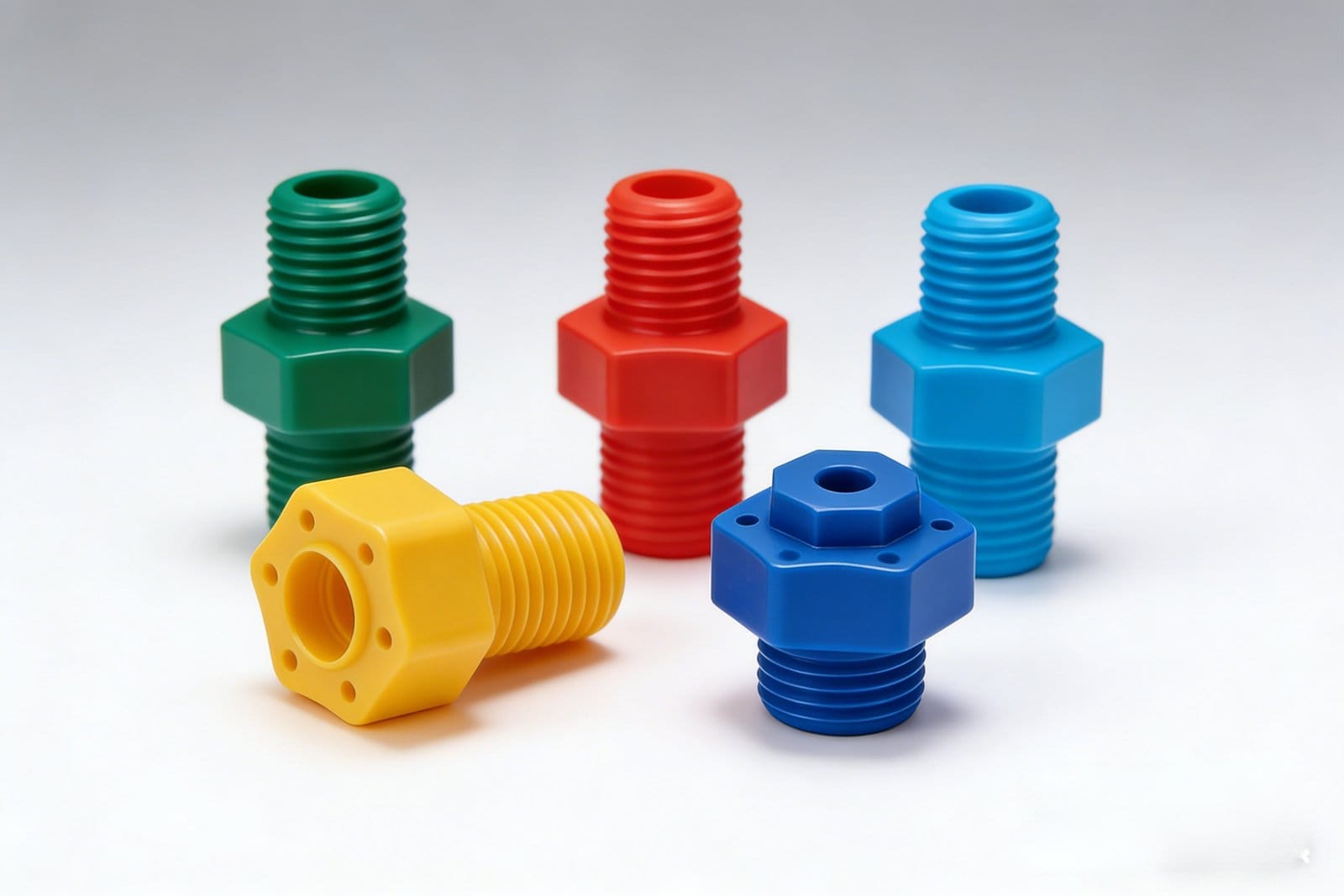
Processing Characteristics of PBT
Low Hygroscopicity—but Moisture-Sensitive at High Temperatures
PBT absorbs relatively little moisture, yet residual water can cause hydrolysis during high-temperature processing, leading to molecular degradation, discoloration (darkening), and surface blemishes. Pre-drying is strongly recommended: typically 2–4 hours at 120°C (with desiccant dryer, dew point ≤ −40°C).Excellent Melt Flowability
PBT exhibits very low melt viscosity, enabling easy molding of thin-walled and complex geometries. However, this also increases the risk of flash (mold) 그리고 drooling from the nozzle—requiring tight mold fit and proper nozzle shut-off design.Sharp Melting Transition
PBT has a distinct melting point (~223–225°C). Once above this threshold, melt flow increases abruptly—so precise temperature control is critical to avoid uncontrolled flow or jetting.Narrow Processing Window, Fast Crystallization
PBT crystallizes rapidly upon cooling—even at ambient temperatures. Combined with its high flowability, this makes it ideal for high-speed injection molding, but demands precise control over cycle time and cooling.High & Anisotropic Shrinkage
PBT exhibits relatively large shrinkage (typically 1.5–2.5% for unfilled grades), and shrinkage differs significantly between flow and transverse directions. This anisotropy must be accounted for in mold design to prevent warpage or dimensional inaccuracy.High Notch Sensitivity
PBT is extremely sensitive to sharp corners, edges, or notches, where stress concentration can drastically reduce load-bearing capacity and lead to brittle fracture under impact or static load.
✅ Design tip: Always use generous fillets (R ≥ 0.5 mm) at internal corners—especially in load-bearing areas.Elongation & Demolding Behavior
- Unfilled PBT has high elongation (~200%), allowing forced ejection of parts with minor undercuts or shallow recesses.
- Glass-fiber or mineral-filled grades show much lower elongation ( ? Note: Always optimize parameters based on part geometry, wall thickness, and machine capability. Use DOE (Design of Experiments) for critical applications.
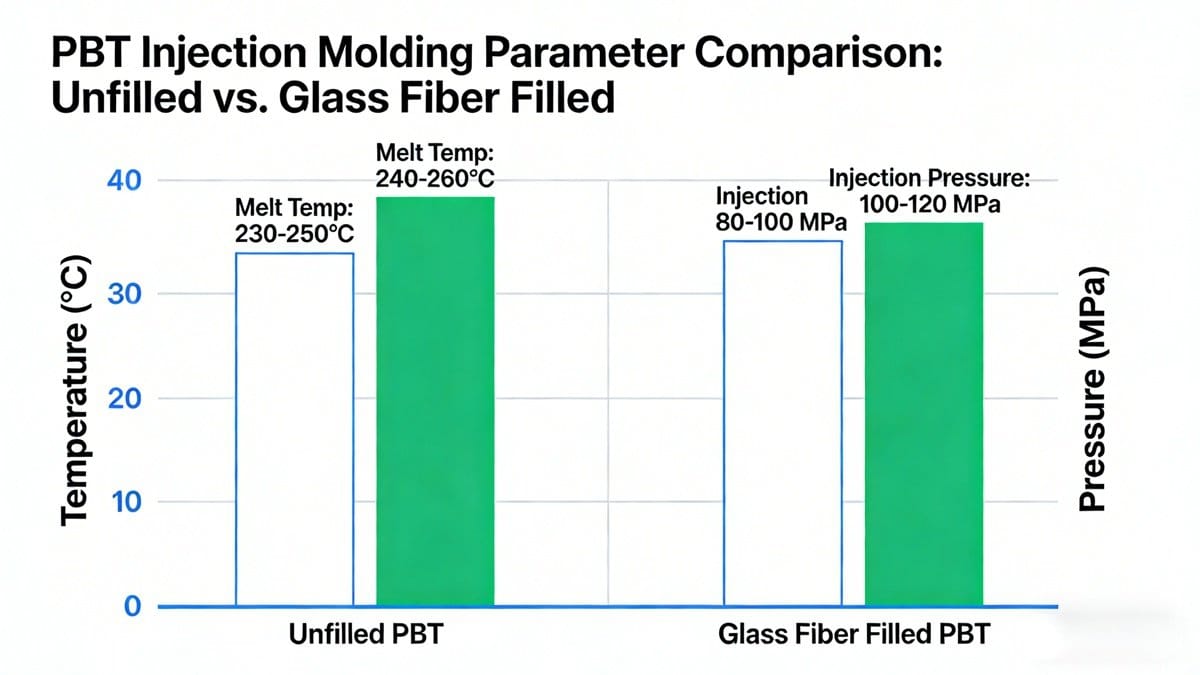
Final Takeaway
PBT is a high-performance polymer—but its narrow processing window, sensitivity to moisture, and anisotropic shrinkage demand careful attention to drying, temperature control, mold design, and gate strategy. When handled correctly, PBT delivers outstanding dimensional stability, strength, and surface quality.
[^1]: Explore this resource to gain insights into optimal injection molding techniques for PBT, ensuring high-quality production.
저자 소개

Alex Yu
아이디얼 프로 매뉴팩처링
알렉스는 Ideal Pro의 공동 창립자이지만, 주요 프로젝트를 총괄하거나 기술 팀을 이끌지 않을 때는 장거리 자전거 타기를 즐기거나, 동네에서 가장 맛있는 커피를 찾아다니거나, 다음 여행 계획을 세우는 모습을 볼 수 있습니다. 국제 무역 영업과 프로젝트 관리 분야에서 20년 이상의 경력을 쌓아온 그는 촉박한 마감 기한부터 까다로운 엔지니어링 문제까지, 그 사이의 모든 상황을 다 겪어보았습니다. 그는 훌륭한 성과는 충분한 휴식을 취한 마음과 맛있는 커피에서 나온다고 믿으며, 맡은 모든 프로젝트에 그와 같은 호기심과 세심한 주의를 기울입니다. 사무실에 있지 않을 때는 대개 야외 어딘가에서 새로운 장소를 탐험하며, 나중에 나눌 이야기를 수집하곤 합니다.




 English
 French
 Dutch
 German
 Japanese
 Korean