

Moulage par injection is a precise science, but even minor deviations can lead to costly defects. One of the most frustrating issues operators face is nozzle drool (often accompanied by jetting ou jet marks).
Typically appearing as snake-like streaks near the gate—especially in side-gated molds—this defect occurs when molten plastic flows too rapidly through a narrow nozzle and suddenly expands into a wider mold cavity. The leading edge of the melt cools prematurely upon touching the mold wall, failing to fuse properly with the incoming resin. The result? A visible, wavy surface defect that compromises both aesthetics and structural integrity.
If you're dealing with this issue, don't worry. Below is a comprehensive guide to diagnosing and eliminating nozzle drool from your production line.
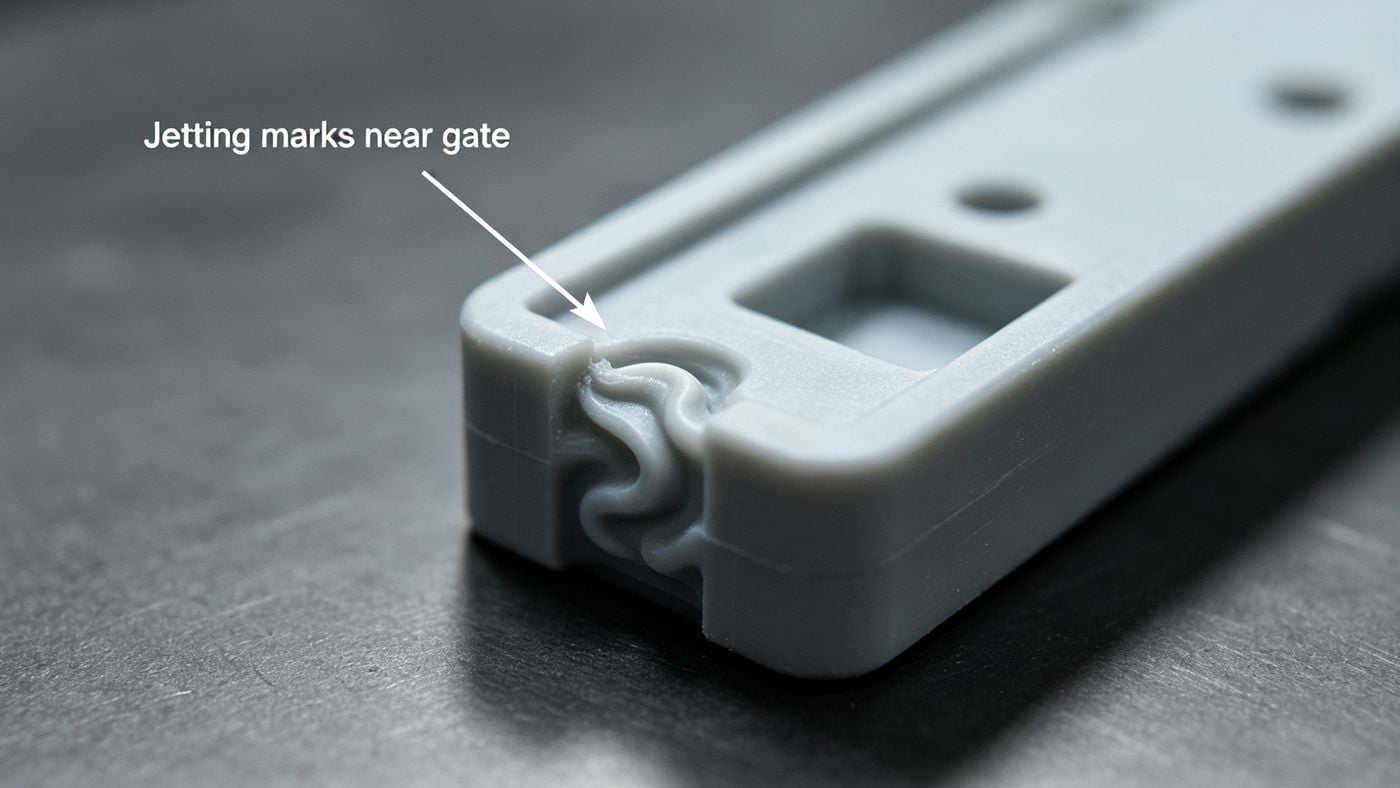
Root Causes & Troubleshooting Guide
Fixing nozzle drool requires a systematic approach. Below is a quick-reference table for operators and engineers:
| Potential Cause | Why It Happens | Recommended Solution |
|---|---|---|
| Excessive Nozzle Temp | Localized heat causes melt to drip or flow prematurely. | Lower the nozzle temperature gradually. |
| High Melt Temperature | Overheated resin loses viscosity, causing uncontrolled flow. | Reduce barrel temperatures or shorten the molding cycle. |
| High Backpressure / Hold | Excess pressure pushes melt out of the nozzle during cooling. | Reduce injection pressure, backpressure, and hold time. |
| Oversized Nozzle Orifice | Too much volume flows too quickly into the cavity. | Switch to a smaller orifice, tapered nozzle, or spring-loaded shut-off nozzle. |
| Moisture in Resin | Water vapor expands, disrupting melt flow and viscosity. | Pre-dry raw materials; use hopper dryers. |
| Hot Runner Design Flaws | Residual stress in the manifold causes uncontrolled drool. | Install stress-relief mechanisms in the hot runner system. |
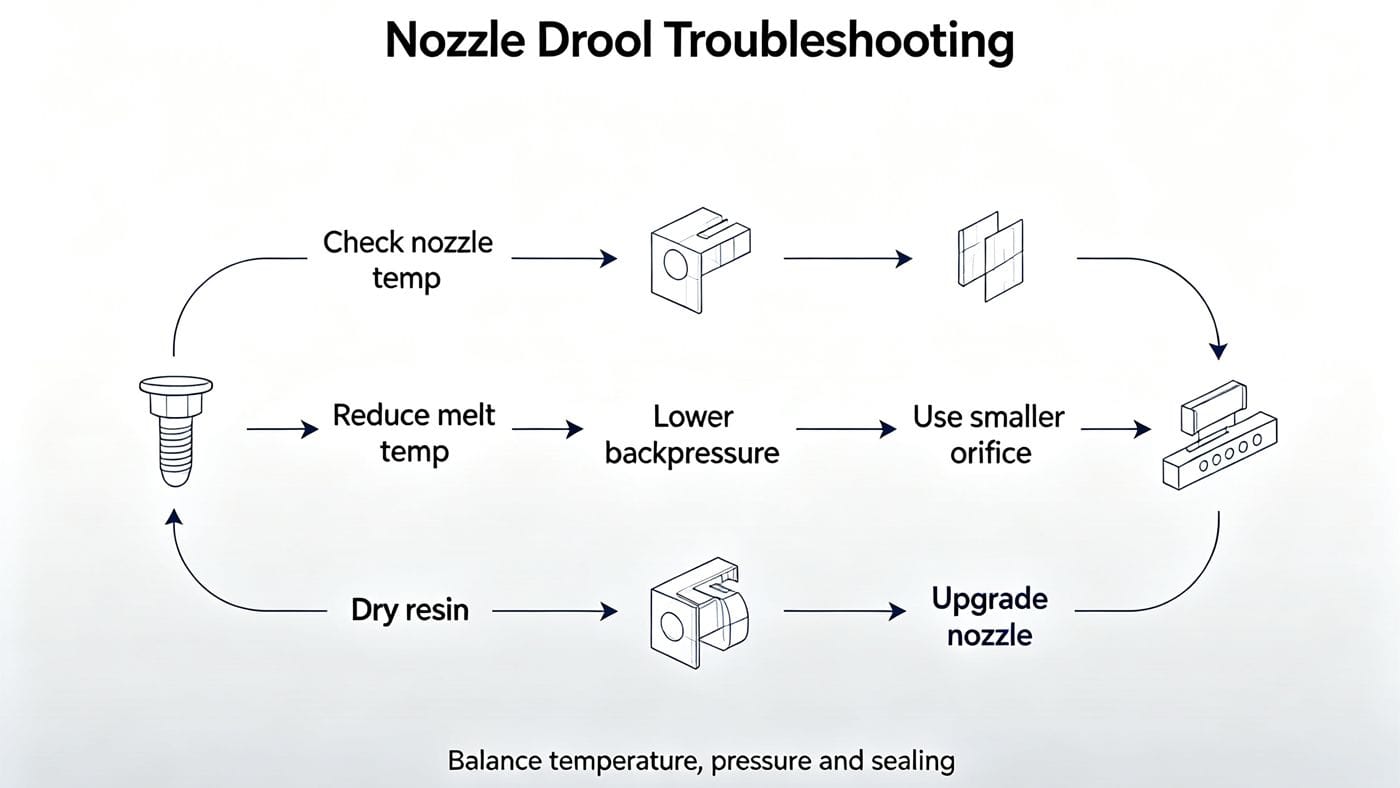
Deep Dive: Advanced Process Adjustments
While the table above covers the basics, understanding the pourquoi behind the adjustments will make you a better processor.
1. Optimize Thermal & Pressure Profiles
When resin exits the nozzle at a relatively low initial temperature, its viscosity spikes, creating that characteristic snake-like flow. As hotter melt follows, it pushes the cooled material deeper into the cavity, leaving the jet mark behind.
- Actionable Tip: Don't just lower temperatures blindly. Try adding a filter screen inside the nozzle to regulate flow resistance and stabilize melt temperature. Also, consider reducing the cushion size to minimize residual pressure in the barrel. For full thermal and pressure tuning standards, check our dedicated guide: Injection Molding Parameters Tuning Guide.
2. Upgrade Your Nozzle Hardware
If process tweaks aren't enough, hardware changes may be necessary. Standard open nozzles are highly susceptible to drool. Upgrading to a spring-loaded needle valve nozzle or a tapered (reverse-taper) nozzle provides a mechanical seal that physically prevents melt from escaping during the cooling phase. Many common molding defects including jetting and nozzle drool are covered in our defect troubleshooting roundup: 16 Common Injection Molding Defects: Root Causes & Solutions.
3. Never Skip Material Drying
Hygroscopic resins (like ABS, Nylon, and PC) absorb moisture from the air. When heated, this moisture turns to steam, acting as a lubricant that drastically alters melt viscosity and causes drool. Always verify moisture levels with a moisture analyzer before processing. Improper drying is a frequent culprit of flow-related defects, which we break down in our full article on nozzle drool and jetting failures: How to Fix Nozzle Drool & Jetting in Injection Molding: Causes & Solutions.
Réflexions finales
Eliminating nozzle drool and jetting marks usually comes down to balancing temperature, pressure, and mechanical sealing. Start with the easiest process adjustments (drying and temperature reduction) before investing in new nozzle hardware or modifying hot runner systems.


 English
 French
 Dutch
Dutch German
 Japanese
 Korean