

Struggling with PVC injection molding? The material's unpredictable nature can lead to defects, ruining production runs and wasting money. Understanding its unique thermal properties is the key to success.
PVC does not have a single, sharp melting point. It softens gradually over a temperature range. This narrow processing window, dangerously close to its degradation temperature, makes precise control of heat and pressure absolutely essential for successful injection molding and to avoid costly damage to equipment.
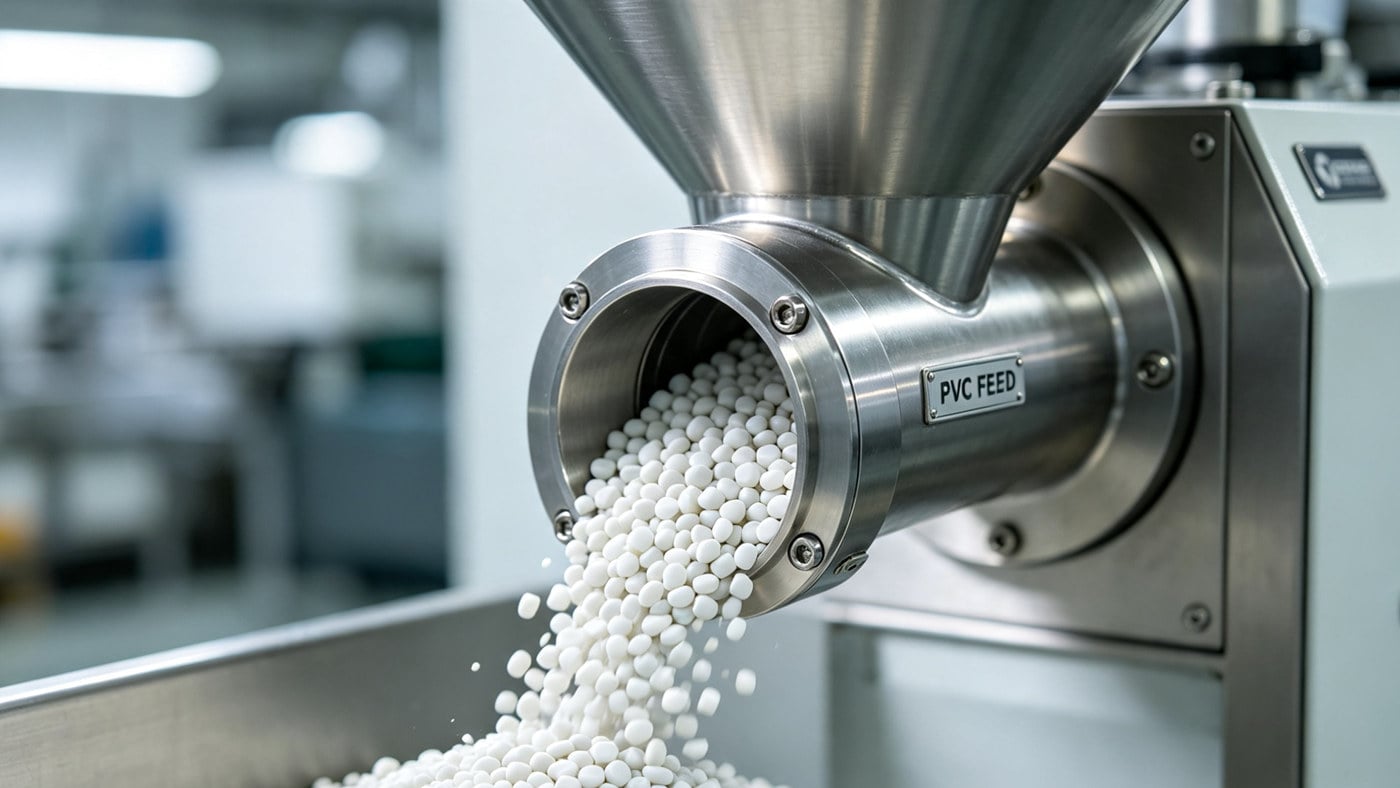
I've seen many clients struggle with PVC before coming to us. They treat it like other common thermoplastics, and the results are often disastrous. The truth is, PVC plays by its own set of rules. Once you learn those rules, you can turn this challenging material into a reliable and cost-effective solution for your products. But ignoring them can lead to damaged molds, faulty parts, and serious safety hazards. Let's break down exactly what you need to know to master PVC injection molding.
What's the truth about the PVC melting point, is it softening or true melting?
You set your machine to the PVC "melting point" but still get inconsistent parts. It feels like you're missing a critical piece of the puzzle about how this material behaves.
PVC, being an amorphous polymer, doesn't truly melt. Instead, it has a glass transition temperature (Tg) where it starts to soften. It then enters a processing window where it becomes a viscous, moldable fluid, unlike crystalline plastics that melt at a specific point.
To really understand this, think about the difference between ice and glass. Ice is crystalline. It stays solid at -1°C and becomes fully liquid at 1°C. It has a sharp, defined melting point. PVC is more like glass. When you heat it, it doesn't suddenly turn to liquid. It goes through a gradual softening process. This starts at its glass transition temperature (Tg), which for rigid PVC is around 80-85°C. At this point, it's just turning from a rigid solid into a leathery material. To actually mold it, you need to heat it further, into its processing window, typically between 160°C and 200°C. Within this range, it becomes a thick, honey-like fluid that can be injected. I remember a new engineer on my team who was baffled by this. He kept looking for a single number, but with PVC, you have to think in terms of a temperature range. For deeper comparison of amorphous and crystalline plastic thermal characteristics, read our guide: Allgemeine Eigenschaften und Anwendungen von Thermoplasten.
| Eigentum | Crystalline Polymer (e.g., Polypropylene) | Amorphous Polymer (e.g., PVC) |
|---|---|---|
| Structure | Ordered, chain-like molecular structure | Random, tangled molecular structure |
| Melting Behavior | Sharp, distinct melting point (Tm) | Softens over a range (Glass Transition, Tg) |
| State Change | Solid to low-viscosity liquid | Rigid solid to rubbery to viscous fluid |
| Processing | Temperature set above Tm | Temperature managed within a narrow window |
How do PVC formulations change its thermal behavior in molding?
You're using PVC, but different batches or grades behave differently in the molding machine. This frustrating inconsistency causes unexpected delays and wastes expensive material, disrupting your production schedule.
Additives like plasticizers, heat stabilizers, and fillers dramatically change PVC's properties. A flexible PVC with plasticizers will soften and flow at much lower temperatures than a rigid, unplasticized PVC (uPVC). Every unique formulation has its own specific processing window.
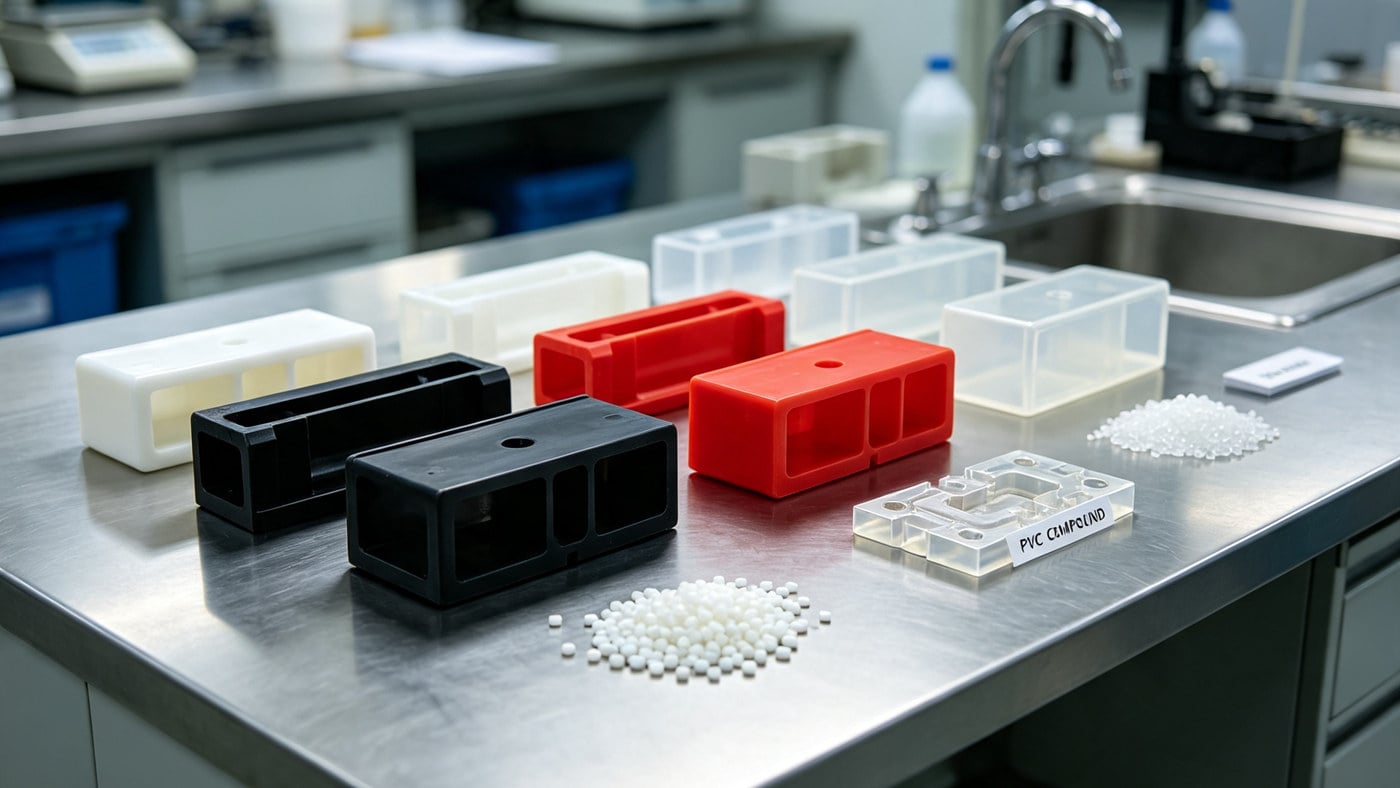
You can't talk about "PVC" as if it's one single material. The secret is in the sauce—the formulation. At our facility, we work with dozens of custom PVC grades, and each one is a different beast. The two main families are rigid PVC (uPVC) and flexible PVC. The big difference is the addition of plasticizers. These additives get between the polymer chains and allow them to move more freely, making the material flexible and lowering the temperature needed to process it. A rigid uPVC pipe might be processed around 175°C, while a flexible PVC hose could be molded as low as 150°C. Then you have heat stabilizers. These are non-negotiable for PVC. They prevent the material from burning at processing temperatures. Different stabilizers (like tin-based or calcium-zinc) have different levels of effectiveness and can slightly alter the processing window. Fillers like calcium carbonate are also common. They can reduce cost, but they also affect how the material flows and transfers heat. Understanding the specific formulation you're using is the first step to setting up your process correctly. If you want to learn more about how fillers, stabilizers modify plastic performance, check our article: Verbundwerkstoff-Spritzgießmaterialien.
What is the critical danger zone of thermal degradation and HCl release?
You see black specks in your parts or smell a sharp, acidic odor during molding. This is a clear warning sign of a serious problem that damages your parts, mold, and machine.
This is PVC thermal degradation. If heated too high (above ~200°C) or for too long, PVC breaks down and releases corrosive hydrochloric acid (HCl) gas. This gas attacks steel molds and machine components, causing permanent damage and creating toxic fumes.
This is the number one rule of molding PVC: do not burn it. The danger zone for most rigid PVC formulations starts just above 200°C. If you exceed this temperature, or even if you hold the material at a "safe" temperature for too long, a chemical reaction called dehydrochlorination begins. The polymer chains start to break apart, releasing hydrochloric acid gas. This is a nightmare scenario. First, the gas is highly corrosive. I once saw a brand new, expensive mold that was ruined in a single day because a machine operator set the temperature too high. The HCl gas etched the polished steel surfaces, and the mold had to be sent for major repairs. Second, the degradation is autocatalytic, meaning the released acid speeds up the breakdown of more PVC, creating a runaway reaction. Third, the fumes are toxic and a serious health hazard for your workers. Finally, the parts you produce will be brittle, discolored, and completely useless. This is why precise temperature control and the use of heat stabilizers are not just recommendations; they are absolute requirements. Thermal degradation leads to many typical molding defects, we summarized all root causes and fixes in: Analysis and Solutions for Black Spots and Impurities in Plastic Injection Molding.
How can you optimize injection molding parameters for PVC?
Setting the right parameters for PVC feels like a guessing game. The wrong settings lead to a host of defects, slowing down your entire production schedule and driving up costs.
To optimize PVC molding, use a lower temperature profile, starting around 160-175°C. Use moderate injection speeds to prevent shear burn, and maintain sufficient back pressure (5-10 MPa) for a consistent melt. Most importantly, keep residence time in the barrel as short as possible.
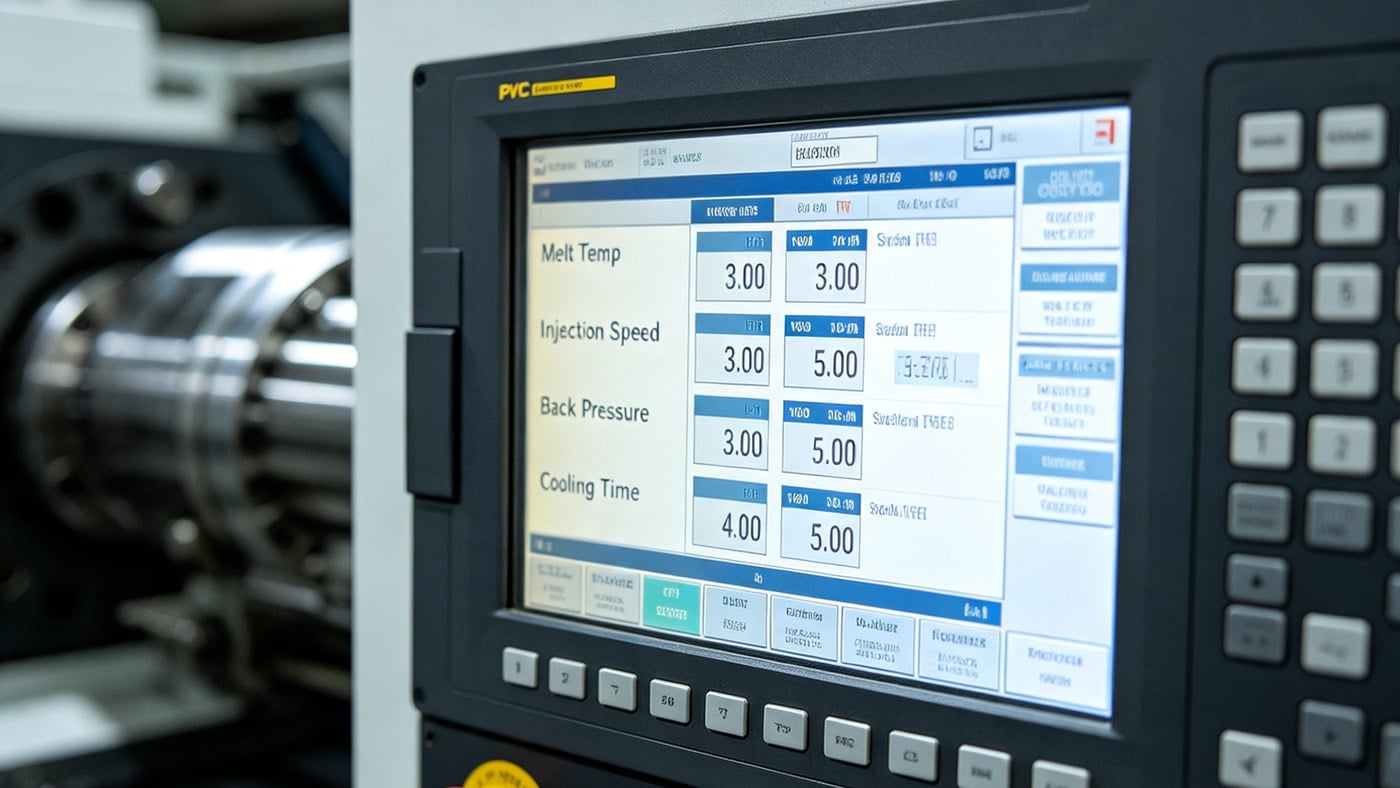
Getting the machine settings right for PVC is a balancing act. You need enough heat and pressure to fill the mold, but not so much that you cause degradation. Here’s a breakdown of the key parameters we focus on at Ideal Pro:
- Melt Temperature: This is the most critical parameter. Unlike other plastics where you might have a wide range, PVC's window is tight. We typically start with a flat or slightly rising temperature profile from the rear zone to the nozzle, for example: 165°C - 170°C - 175°C - 175°C (Rear to Nozzle). Never "front-load" the heat.
- Injection Speed: Too fast generates excessive shear heat, which can burn the PVC. Too slow can cause the material to freeze in the gates before the mold is full. We always start with a slow to moderate speed and profile it carefully.
- Back Pressure: A little back pressure (around 5-10 MPa) is good. It helps ensure the melt is uniform and free of air bubbles. However, too much back pressure will increase shear heating and residence time, raising the risk of degradation.
- Residence Time: This is the total time the PVC material spends inside the hot barrel. For PVC, less is more. We aim to size the machine shot so that the material is in the barrel for no more than a few cycles. If the machine has to pause for any reason, the barrel must be purged immediately. For universal parameter tuning logic applicable to all plastics including PVC, read our complete guide: Injection Molding Parameters Tuning Guide.
What are the essential mold & machine design considerations for PVC?
Your standard molds and machines are showing signs of corrosion after running PVC. This unexpected and expensive maintenance causes significant downtime, disrupting your entire production plan.
For PVC, you must use corrosion-resistant materials. This means using stainless steel, like grade S136 or 420SS, for the mold. For the machine, a chrome-plated or specialized alloy screw and barrel are mandatory. Proper mold venting is also critical.
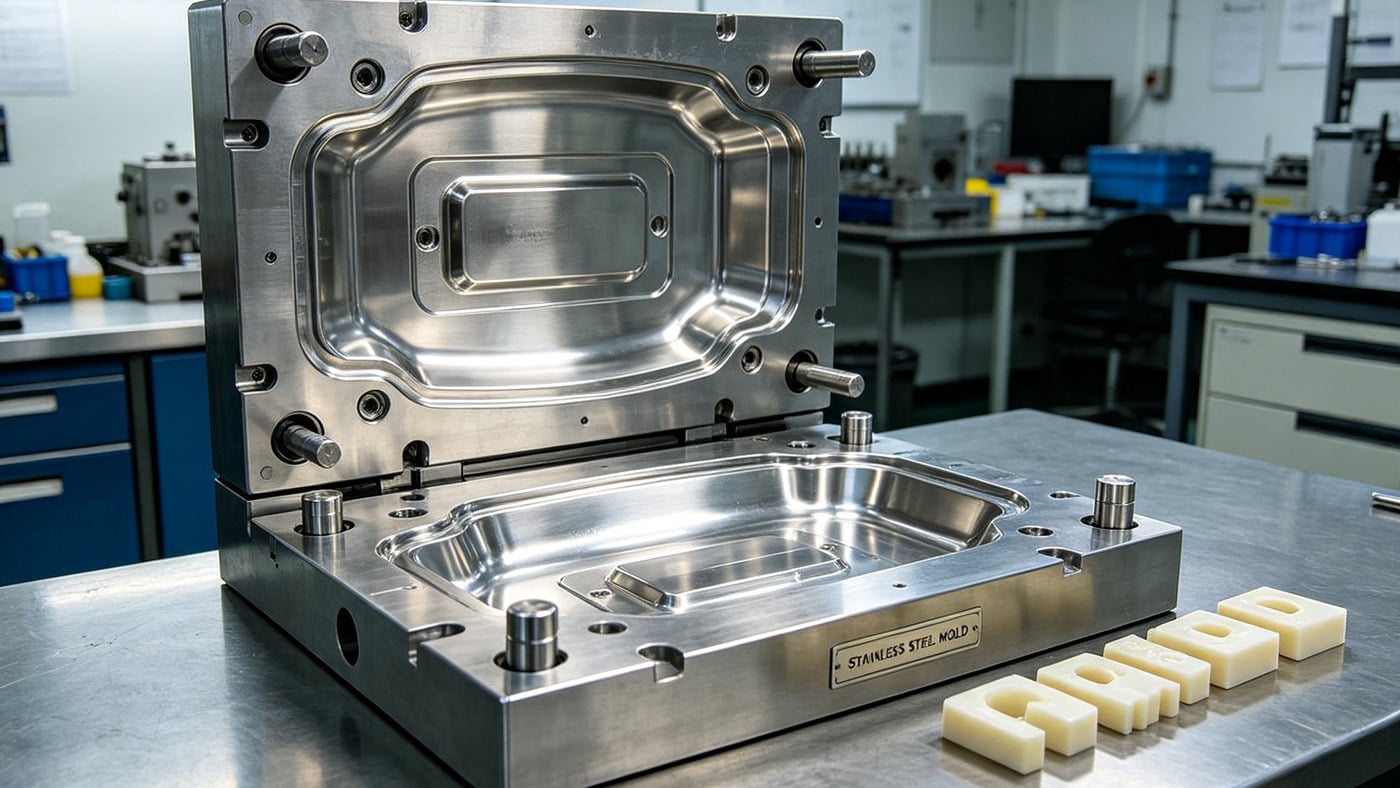
You cannot run PVC successfully or safely with standard equipment. It's a costly mistake we've seen others make. The material itself demands special considerations in both the machine and the mold design.
Machine Design
The screw and barrel are in constant contact with hot PVC, making them vulnerable to HCl attack.
- Screw & Barrel: The absolute minimum is a hardened screw with a heavy-duty chrome plating. For high-volume production, we recommend using a bimetallic barrel and a screw made from a specialized stainless alloy. A standard nitrided screw will be destroyed quickly.
- Screw Geometry: A lower compression ratio (around 2:1) is preferred to minimize shear heating.
- Nozzle: An open-style nozzle is often best to prevent any "dead spots" where material can sit and degrade.
Formenbau
The mold is a significant investment, and protecting it is paramount.
- Mold Material: Never use standard tool steels like P20. They will corrode. We exclusively use high-chrome stainless tool steels such as S136 or 420SS for all our custom PVC molds.
- Venting: Trapped air and gas are enemies of PVC molding. We design generous vents into the mold at the parting line and with vent pins to allow gases to escape, preventing burn marks and ensuring complete filling.
- Runners & Gates: To reduce shear, we use full-round runners and smooth, large-radius gates. This helps the material flow gently into the cavity without generating excess frictional heat.
How do you troubleshoot common PVC injection molding defects?
You're constantly facing frustrating defects like burns, bubbles, and brittle parts when molding PVC. These issues waste material and time, making it impossible to deliver high-quality products on schedule.
Troubleshoot PVC defects by focusing on heat and residence time. For burns or black streaks, lower the barrel temperature or injection speed. For bubbles, dry the material or improve mold venting. For brittle parts, check for degradation by reducing melt temperature or cycle time.
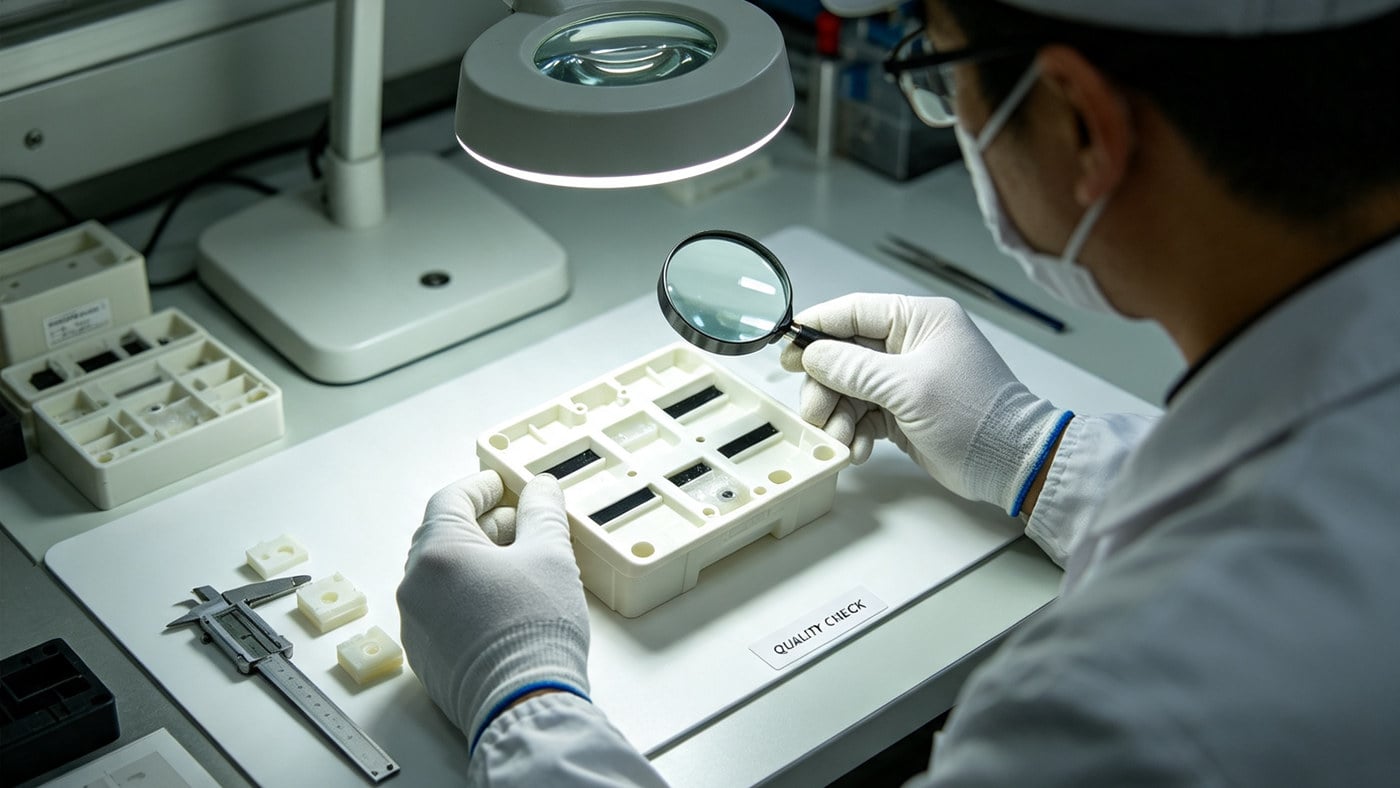
Troubleshooting PVC is a logical process. Almost every defect can be traced back to a problem with temperature, time, or pressure. I tell my team to always check for signs of degradation first. Black specks are the tell-tale sign. If you see them, your heat is too high or your residence time is too long. Stop immediately and lower your temperatures. Here is a quick guide we use to diagnose the most common issues.
| Defect | Common Cause(s) | Solution(s) |
|---|---|---|
| Black Streaks / Burn Marks | 1. Melt temperature too high.<br>2. Excessive shear heat.<br>3. Material degradation in barrel. | 1. Lower barrel temperatures.<br>2. Reduce injection speed and back pressure.<br>3. Purge the barrel. Shorten residence time. |
| Silver Streaks / Bubbles | 1. Moisture in the material.<br>2. Trapped air/gas in the mold. | 1. Dry the PVC granules properly before molding.<br>2. Improve mold venting. Reduce injection speed. |
| Brittle Parts | 1. Thermal degradation.<br>2. Insufficient fusion of material. | 1. Lower melt temperature and residence time.<br>2. Slightly increase melt temperature or back pressure. |
| Short Shots (Incomplete Fill) | 1. Melt temperature too low.<br>2. Insufficient injection pressure/speed.<br>3. Poor mold venting (gas trap). | 1. Increase melt or mold temperature slightly.<br>2. Increase injection pressure or speed.<br>3. Check and clean mold vents. |
| Flash (Material leakage) | 1. Clamp tonnage too low.<br>2. Injection pressure too high. | 1. Increase machine clamp force.<br>2. Reduce injection pressure and packing pressure. |
Frequently Asked Questions (FAQ) About PVC Injection Molding
Can PVC be injection molded? Yes, PVC can be injection molded, but it requires specialized equipment and precise process control. Unlike standard thermoplastics, PVC has a narrow processing window and releases corrosive gases if overheated. To mold it successfully, manufacturers must use corrosion-resistant molds (stainless steel), specialized screws, and strict temperature controls to prevent thermal degradation.
What temperature does PVC release toxic gas? PVC begins to thermally degrade and release hydrogen chloride (HCl) gas when temperatures exceed approximately 200°C (392°F). However, degradation can start at lower temperatures if the material remains in the barrel for too long (excessive residence time). This gas is toxic to humans and highly corrosive to steel molds and machinery, making precise temperature management critical.
What is the difference between the PVC melting point and the glass transition temperature? Because PVC is an amorphous polymer, it does not have a sharp melting point like crystalline plastics. Instead, it has a Glass Transition Temperature (Tg) around 80–85°C, where it transitions from a hard, glassy state to a softer, rubbery state. For injection molding, PVC must be heated further to a viscous flow state, typically between 160°C and 200°C, to become moldable.
Why does my PVC injection molding machine screw keep corroding? Screw corrosion is usually caused by hydrogen chloride (HCl) gas, which is released when PVC degrades due to excessive heat or long residence times. Standard screws are not built to withstand this acid. To prevent this, manufacturers should use chrome-plated or bimetallic screws and barrels, and ensure processing temperatures stay within the safe window to minimize gas generation.
Do I need to dry PVC pellets before injection molding? While rigid PVC is less sensitive to moisture than materials like Nylon or PET, it is still good practice to ensure the material is dry. Moisture can cause silver streaks (splay) or bubbles (voids) in the final part. If the PVC compound contains hygroscopic additives or fillers, drying at around 80°C for 2–3 hours is often recommended to ensure surface quality.
Fazit
Molding PVC demands precision and respect for the material. Success comes from controlling its narrow processing window, using corrosion-resistant equipment, and always prioritizing the prevention of thermal degradation.


 English
 French
 Dutch
Dutch German
 Japanese
 Korean