

When it comes to toughening PVC (Polyvinyl Chloride) products, CPE (Chlorinated Polyethylene) stands out as one of the most reliable and cost-effective modifiers in the polymer industry. But what exactly makes this saturated macromolecule so special?
In this guide, we’ll break down the chemistry, key properties, and the critical factors that dictate CPE performance in PVC formulations. For deeper PVC molding material fundamentals, you can read our comprehensive introduction to PVC injection molding: A Comprehensive Guide to Polyvinyl Chloride (PVC) Injection Molding.
What is CPE?
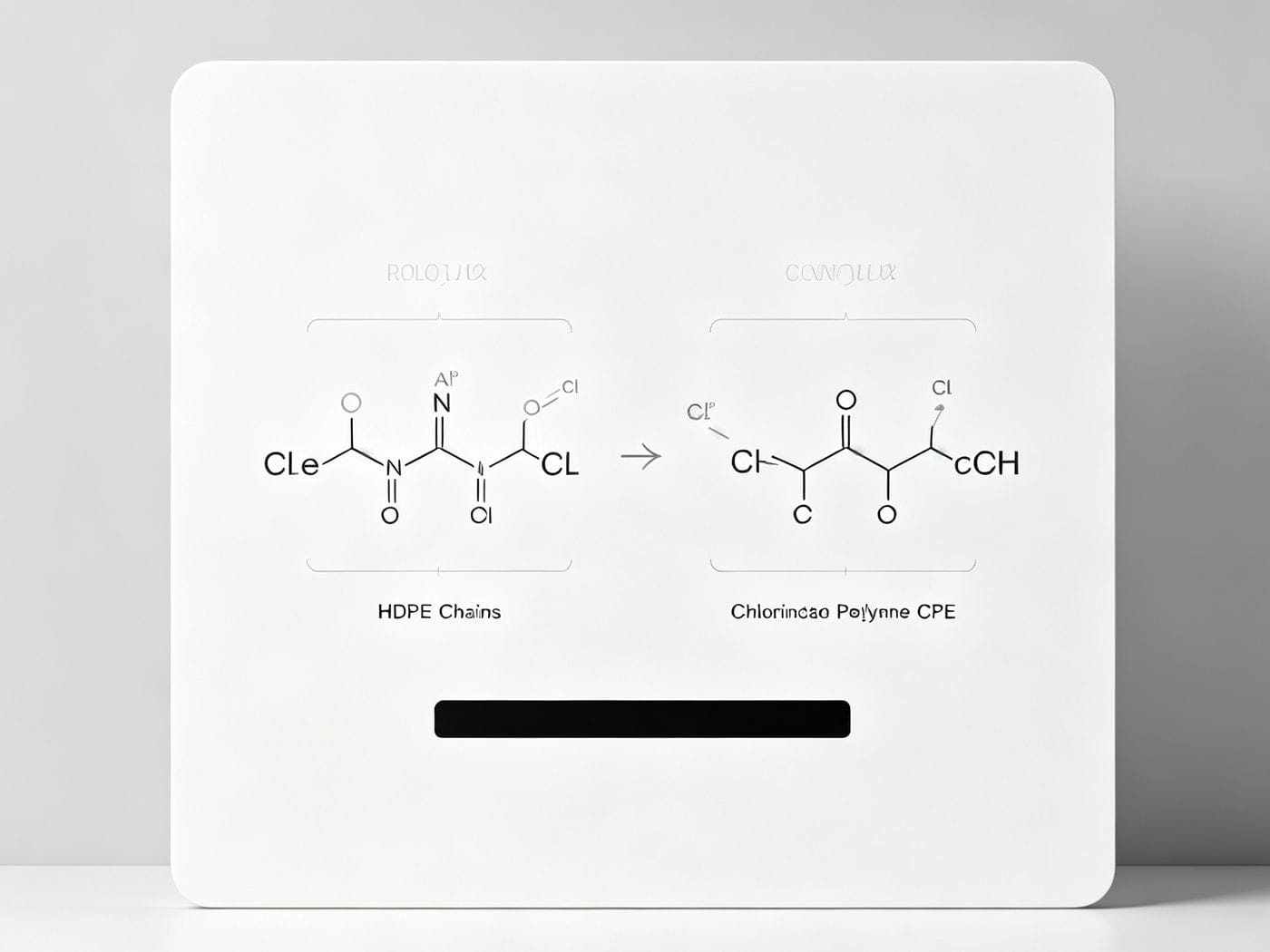
CPE is a saturated elastomeric material produced by the chlorination of High-Density Polyethylene (HDPE). During this process, chlorine atoms partially replace the hydrogen atoms on the HDPE molecular chain.
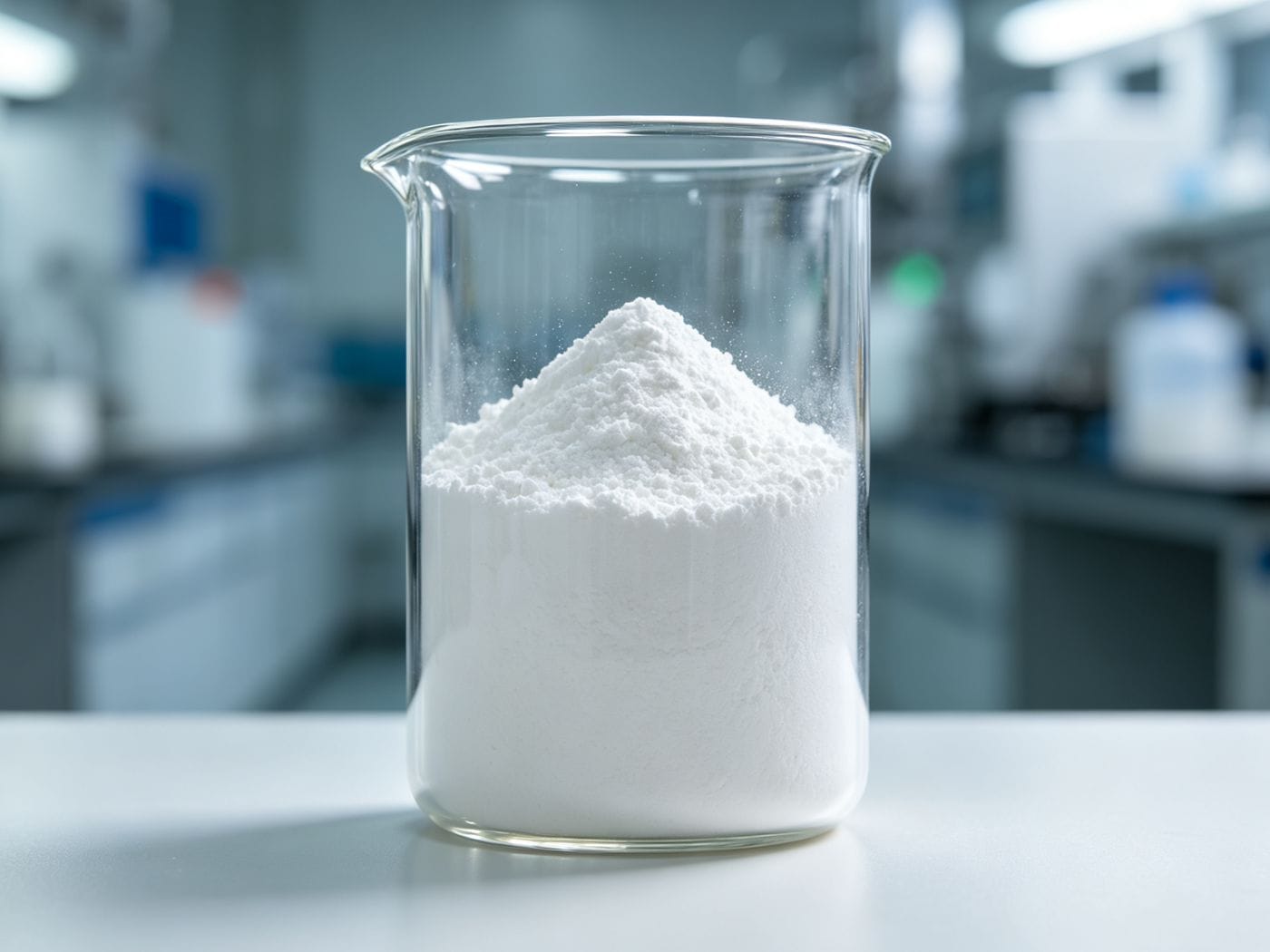
The result? A non-toxic, white powder with a stable chemical structure. With the general formula [-CH2-CHCl-CH2-CH2-]n, CPE (also known as CM) bridges the gap between rigid plastics and flexible rubbers.
Key Properties & Advantages
Because CPE is a saturated polymer (lacking double bonds in its main chain), it boasts exceptional weatherability and thermal stability that often surpasses standard PVC.
Here is why formulators love CPE:
- Excellent Weather & UV Resistance: No double bonds mean less degradation from sunlight.
- Flame Retardancy: The presence of chlorine inherently improves fire resistance.
- Chemical & Ozone Resistance: Highly stable against harsh chemicals and environmental ozone.
- Superior Compatibility: Blends seamlessly with PVC, PE, PS, and various rubbers.
- Cost-Effective: Offers premium performance at a highly competitive price.
Note: CPE is soluble in aromatic and halogenated hydrocarbons but insoluble in aliphatic hydrocarbons. It begins to decompose above 170°C, releasing hydrogen chloride gas. Thermal degradation of PVC compounds is a common molding issue; learn how to avoid plastic decomposition here: Plastic Injection Molding: Causes & Solutions for Material Degradation.
3 Critical Factors Influencing CPE Performance
Not all CPE is created equal. If you are formulating PVC products, you must consider these three pillars:
1. The Base PE Resin
The molecular weight and type of the original HDPE dictate the final CPE traits:
- High Molecular Weight PE: Yields CPE with higher viscosity and tensile strength, but lower adhesion to PVC.
- Low Molecular Weight PE: Results in lower viscosity and tensile strength.
- HDPE Base: Generally provides the best heat distortion resistance.
2. Particle Size Distribution
Grind size matters immensely for processing:
- Too Fine: Tends to form gels or agglomerates.
- Too Coarse: Leads to uneven chlorine distribution and poor solvent solubility.
- The Sweet Spot: An optimal particle size range of 0.1 to 200 μm ensures uniform dispersion.
3. Degree of Chlorination (Chlorine Content)
This is the most crucial metric for determining CPE's application.
[📊 SEO Table Suggestion: Insert a clean, mobile-responsive table here. Tables are highly favored by Google for Featured Snippets.]
| Chlorine Content (%) | Compatibility with PVC | Primaire toepassing | Key Characteristics |
|---|---|---|---|
| < 25% | Slecht | Not recommended as a modifier | Lacks necessary elastomeric properties. |
| 25% - 34% | Matig | Specialty applications | Transition zone; limited impact modification. |
| 35% - 38% | Uitstekend | PVC Impact Modifier | Optimal rubber elasticity and toughness. |
| > 40% | Zeer hoog | Solid Plasticizer | Loses impact modification capability; acts as a softener. |
Why is 35% Chlorination the Industry Standard?
Currently, CPE with 35% chlorine content is the most widely used variant in the market. At this specific chlorination level, the material exhibits low crystallinity and a low glass transition temperature ($T_g$).
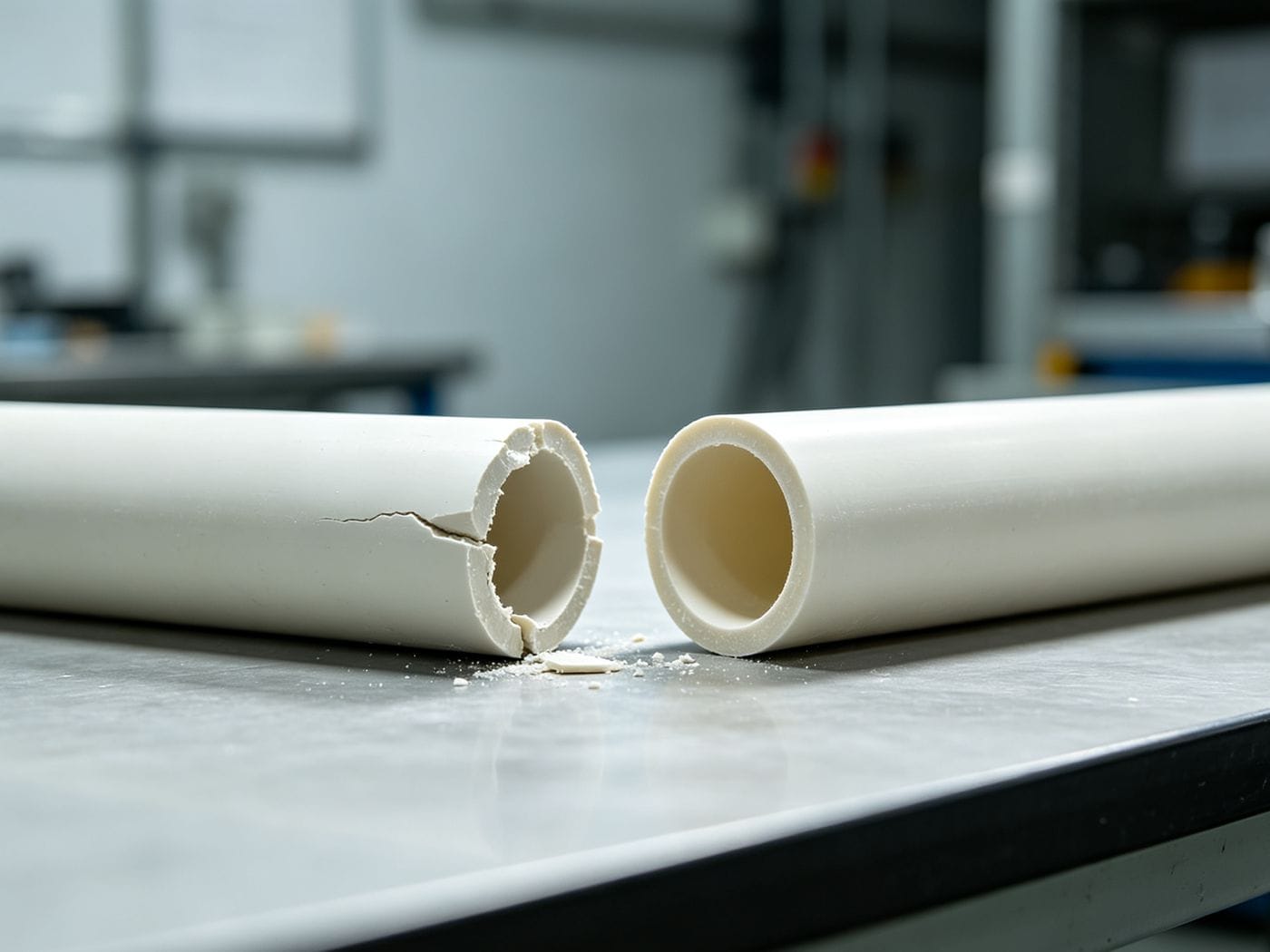
This creates a perfect balance: it delivers outstanding rubber-like elasticity while maintaining ideal compatibility with PVC, making it the undisputed champion for toughening rigid PVC products (like pipes, profiles, and window frames). All rigid plastic structural parts rely on balanced impact performance; check our troubleshooting guide for brittle molded components: Troubleshooting Injection Molding Brittleness: Root Causes & Engineering Solutions.
Eindgedachten
Whether you are manufacturing construction profiles or industrial piping, understanding the nuances of CPE is key to product success. By selecting the right base resin, controlling particle size, and strictly adhering to the 35% chlorination sweet spot, you can dramatically enhance the impact strength and longevity of your PVC formulations.


 English
 French
 Dutch
Dutch German
 Japanese
 Korean