

Inleiding: De kracht van PVD in Moderne productie1
Fysieke dampdepositie (PVD) is momenteel een van de meest geavanceerde technologieën voor oppervlaktebehandeling die internationaal op grote schaal wordt gebruikt. Naarmate de vraag naar hoogwaardige kunststofproducten toeneemt, is PVD een spelbreker geworden voor de spuitgietindustrie.
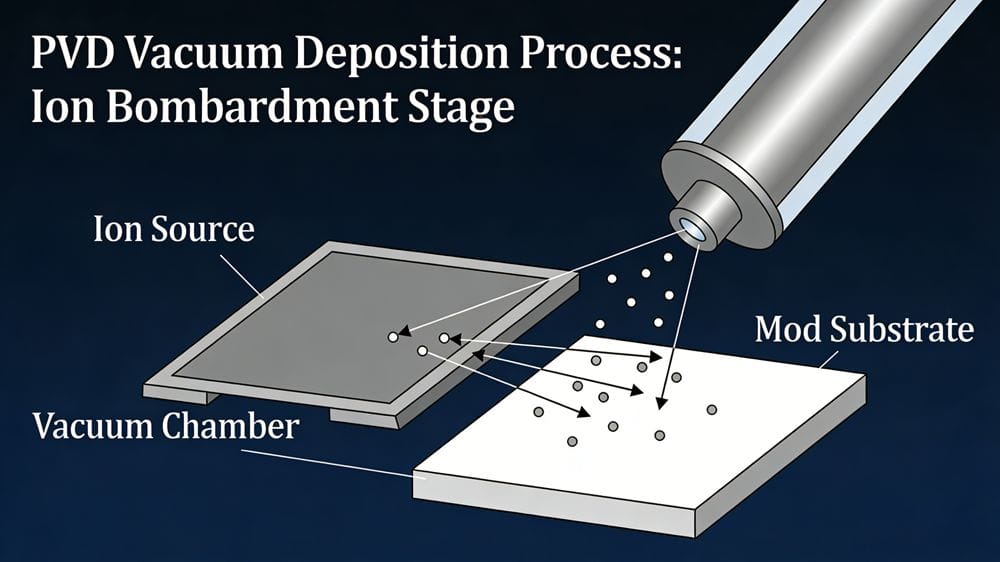
Maar wat is het precies? Eenvoudig gezegd is PVD een proces waarbij materiaal in een vacuümomgeving wordt verdampt en op een substraat wordt afgezet. Hierdoor ontstaat een dunne film met uitzonderlijke eigenschappen.
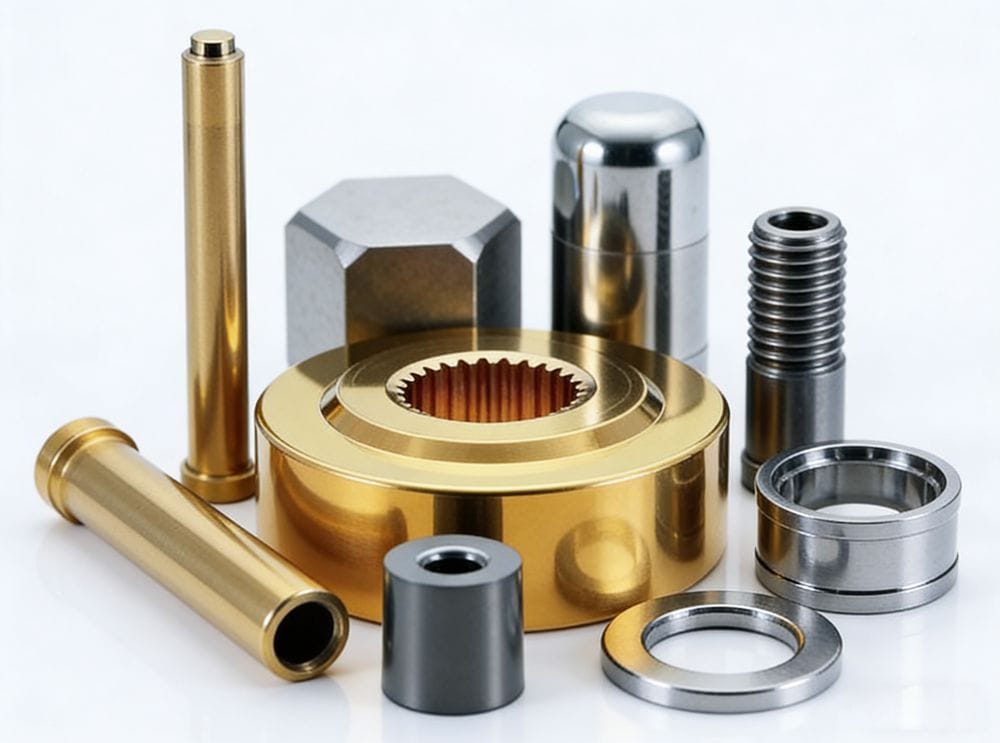
Belangrijkste afhaalmaaltijd: PVD-technologie biedt snelle afzetting, sterke hechting en uitstekende veelzijdigheid, waardoor het essentieel is voor moderne groene productie.
Hoe de PVD-technologie werkt
Het werkingsprincipe bestaat uit het gebruik van gasontlading onder vacuümomstandigheden. Dit proces ioniseert het gas of het verdampte materiaal gedeeltelijk. Onder het bombardement van gasionen of verdampte materiaalionen worden de verdamper of zijn reactieproducten op het substraat (de mal) afgezet.
De PVD-technologie ontstond aan het einde van de jaren 1970 en werd aanvankelijk geprezen om zijn succes met gereedschappen van snelstaal. Vandaag de dag is het geëvolueerd om de spuitgietindustrie te dienen met folies die zich onderscheiden:
- Hoge hardheid: Bestand tegen slijtage.
- Lage wrijvingscoëfficiënt: Verbetert de glij-eigenschappen.
- Chemische stabiliteit: Bestand tegen corrosie.
Waarom PVD Coating toepassen op spuitgietmatrijzen?
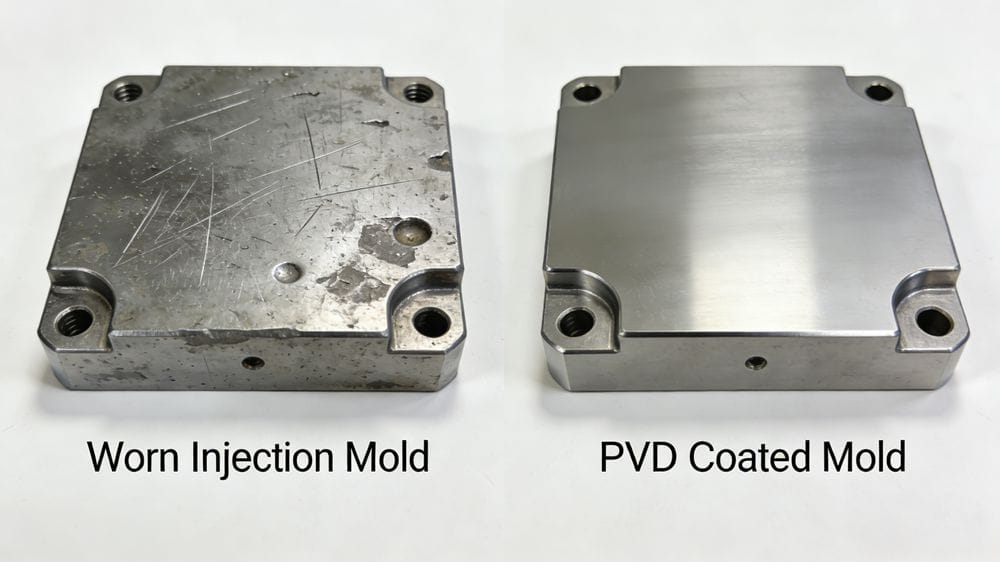
Kunststof producten zijn alomtegenwoordig in ons dagelijks leven. De productie ervan eist echter veel van matrijzen. Door PVD-coatings aan te brengen, kunnen kritieke productieproblemen zoals slecht ontvormen, korte levensduur van matrijzen en frequente reparaties effectief worden opgelost.
Dit zijn de belangrijkste voordelen van het coaten van uw spuitgietmatrijzen:
1. Lagere onderhoudskosten Coatings verhogen de hardheid en corrosiebestendigheid van matrijzen aanzienlijk. Dit verlengt de onderhoudscyclus, vermindert de stilstandtijd van de machine en verandert complex onderhoud in eenvoudige reinigingstaken.
2. Superieure oppervlaktekwaliteit De coating beschermt de vormoppervlak2 tegen beschadiging. Dit zorgt ervoor dat dure gepolijste of EDM (Electrical Discharge Machining) afwerkingen langer meegaan. Bovendien stromen kunststofmaterialen soepeler in de gecoate holte, wat leidt tot een hogere opbrengst van gekwalificeerde producten.
3. Moeilijke materialen hanteren Vormt u kunststoffen met een hoge hardheid of materialen met een hoog glasvezelgehalte? Deze materialen kunnen belangrijke matrijsonderdelen ernstig beschadigen. PVD-coatings bieden uitstekende bescherming tegen dergelijke abrasieve slijtage.
4. Soepelere beweging van de schimmel Onderdelen zoals uitwerppennen, kleppennen en lifters vertrouwen op coatings om olievrije smering te verkrijgen. Dit voorkomt dat onderdelen vastlopen en vermindert de olievervuiling op de kunststof eindproducten.
5. Visuele indicatoren voor onderhoud In tegenstelling tot standaard metalen zijn PVD-coatings verkrijgbaar in duidelijke kleuren. Wanneer de coating afslijt, kunnen technici dit duidelijk zien. Dit dient als visuele waarschuwing voor vervanging of onderhoud en voorkomt (precisie)verlies en materiaalverspilling.
Soorten PVD-coatings en toepassingen
Verschillende coatingmaterialen bieden verschillende voordelen. De juiste keuze hangt af van uw specifieke vormvereisten. Hieronder vindt u een gids met veelgebruikte PVD-coatings die in de industrie worden gebruikt:
| Type coating | Kleur | Primaire toepassing |
|---|---|---|
| DLC-serie | Zwart | Holtes (hoge slijtvastheid) |
| Cromastar (CrN) | Zilver-grijs | Vormkernen (Corrosiebestendigheid) |
| Alastar (TiAlN) | Paars-Rood | Uitwerpmechanismen (pennen, hefbomen) |
| Tinastar (TiN) | Goud | Hotrunnersystemen (thermische stabiliteit) |

Conclusie: Een groene toekomst voor productie
PVD-technologie sluit perfect aan bij de richting van moderne groene productie. Het heeft geen nadelige invloed op het milieu en biedt een hoog grondstoffengebruik.
Door PVD vacuümcoating te integreren in uw spuitgietproces3, Beschermt u niet alleen een hulpmiddel, maar investeert u in hogere efficiëntie, betere productkwaliteit en aanzienlijke kostenbesparingen.
Verken deze bron om innovatieve praktijken te ontdekken die de toekomst van de productie vormgeven, waaronder vooruitgang op het gebied van duurzaamheid en technologie. ↩
Verken deze bron en ontdek de inzichten van experts over het verbeteren van de kwaliteit van spuitgietoppervlakken, wat cruciaal is voor het maximaliseren van de productie-efficiëntie. ↩
Verken deze bron en ontdek deskundige inzichten en technieken die uw spuitgietefficiëntie en productkwaliteit kunnen verbeteren. ↩
 English
 French
 Dutch
Dutch German
 Japanese
 Korean