

Why Choose Silicone Rubber Molds?
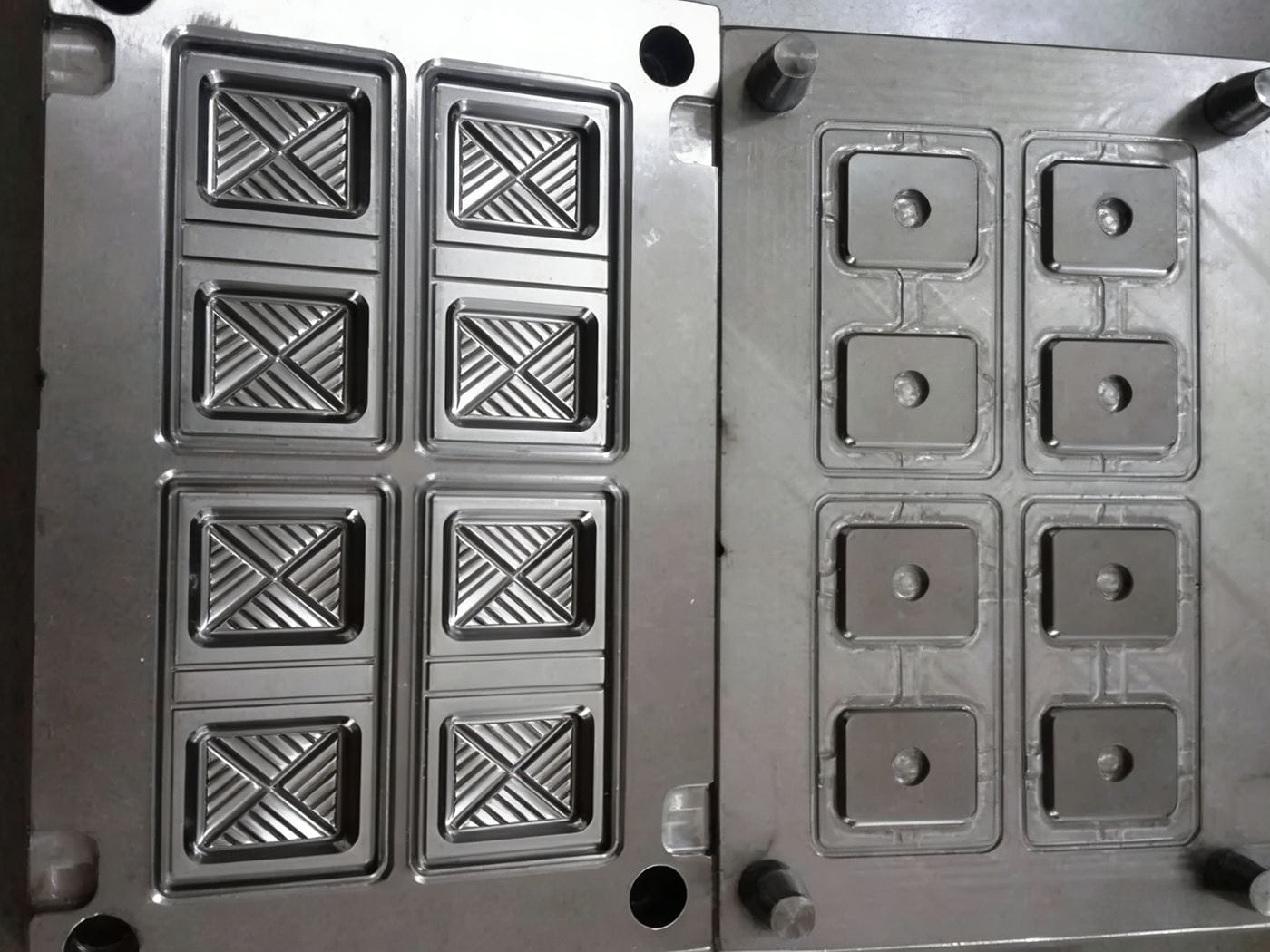
Silicone rubber molds1 are among the most accessible rapid tooling solutions in prototyping. Created by replicating RP (Rapid Prototyping) masters with liquid silicone, these molds deliver exceptional elasticity, dimensional accuracy, and replication fidelity. While service life is typically limited to 10–30 casts, key advantages include:
✅ No draft angles required
✅ Minimal impact on prototype dimensions
✅ Seamless monolithic casting (no complex mold separation)
✅ Easy demolding via strategic cutting along parting lines
Types of RTV Silicone Rubber
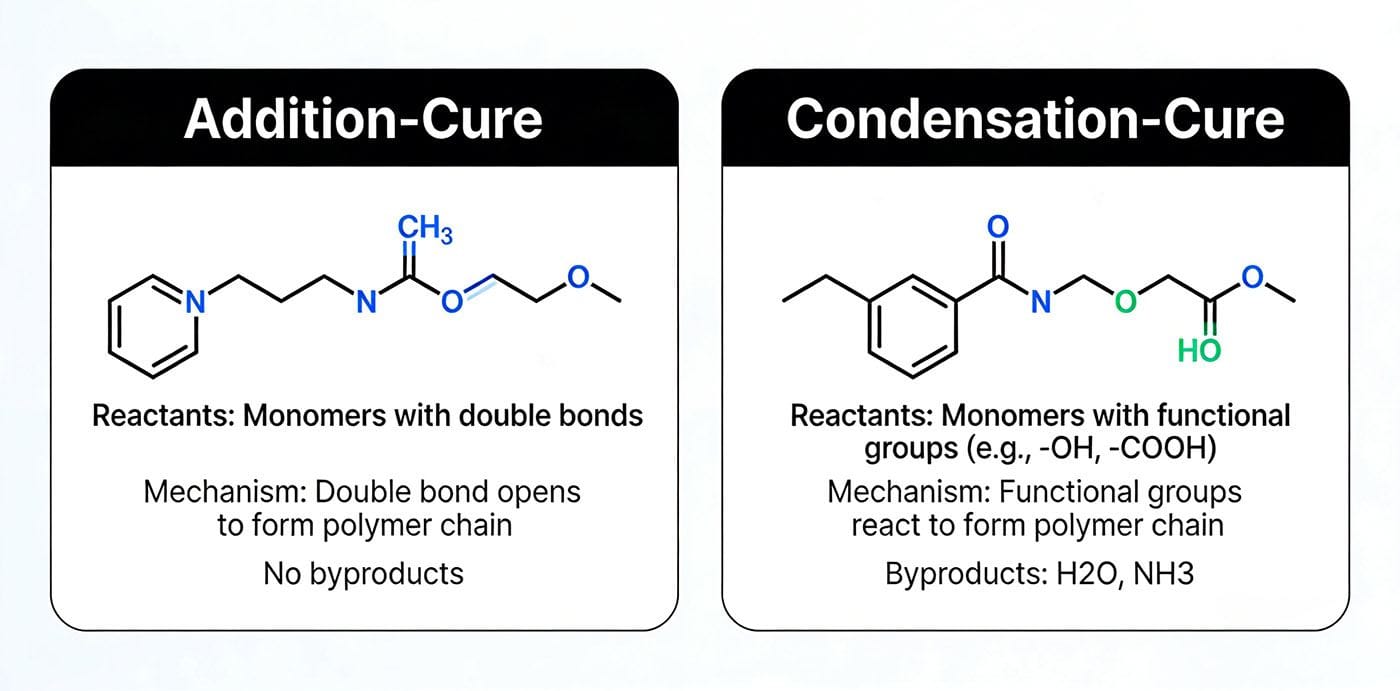
Room Temperature Vulcanizing (RTV)2 silicone systems fall into two categories:
| Type | Kenmerken | Beste voor |
|---|---|---|
| Addition-Cure | Platinum-catalyzed, minimal shrinkage, odorless | High-detail prototypes, food-safe applications |
| Condensation-Cure3 | Tin-catalyzed, cost-effective, slight shrinkage | General-purpose molds, non-critical tolerances |
Materials, Ratios & Mixing Protocol
Commercial mold-making silicone is supplied as a two-part system:
- Part A: Base polymer (pre-pigmented silicone compound)
- Part B: Catalyst (moisture-sensitive curing agent)
Precision Mixing Guide (by weight)
| Ambient Temp | A:B Ratio | Adjustment Notes |
|---|---|---|
| 20–25°C (68–77°F) | 100 : 1.5 | Standard condition |
| <20°C (min 10°C/50°F) | +0.1–0.3 B | Accelerate cure in cool environments |
| >25°C | –0.1–0.3 B | Slow reaction in warm conditions |
🔧 Critical Steps:
- Stir Part A thoroughly voor measuring (prevents filler settling)
- Use digital scale (±0.1g accuracy)
- Mix slowly in circular motion for 3–5 mins to minimize air entrapment
- Work immediately – pot life begins upon mixing
Mold Fabrication Techniques
🖼️ Pouring Method (Relief/Flat Artwork)
- Build frame 4–6 cm larger than prototype on all sides
- Place frame on glass plate; center prototype with 2–3 cm clearance
- Pour degassed silicone slowly from one corner
- Pro tip: Embed fiberglass mesh between layers for tensile strength
🎨 Brushing Method (Complex 3D Objects)
- Apply 2–3 thin layers with soft brush
- Allow tack-free cure (30–60 mins) between coats
- Reinforce deep undercuts with additional layers
⏳ Cure Timeline:
- Initial set: ~2 hours at 20°C
- Full demold readiness: 24 hours
7 Non-Negotiable Safety & Quality Precautions
- 🔒 Seal Catalyst Immediately: Part B hydrolyzes on moisture exposure – store airtight with desiccant
- ⏱️ Mix Only What You Need: Reaction is irreversible; waste = cost
- 📏 Ratio Precision = Performance: Excess catalyst = brittle mold; insufficient = sticky surface
- 🌬️ Degass Before Pouring: Vacuum chamber (29 inHg, 2–3 mins) eliminates microbubbles
- 🧼 Prototype Prep: Clean master with isopropyl alcohol; apply minimal mold release
- 🌡️ Monitor Ambient Conditions: Ideal: 22°C ±3°C, <50% humidity
- 🧤 PPE Essential: Nitrile gloves, eye protection, ventilated workspace
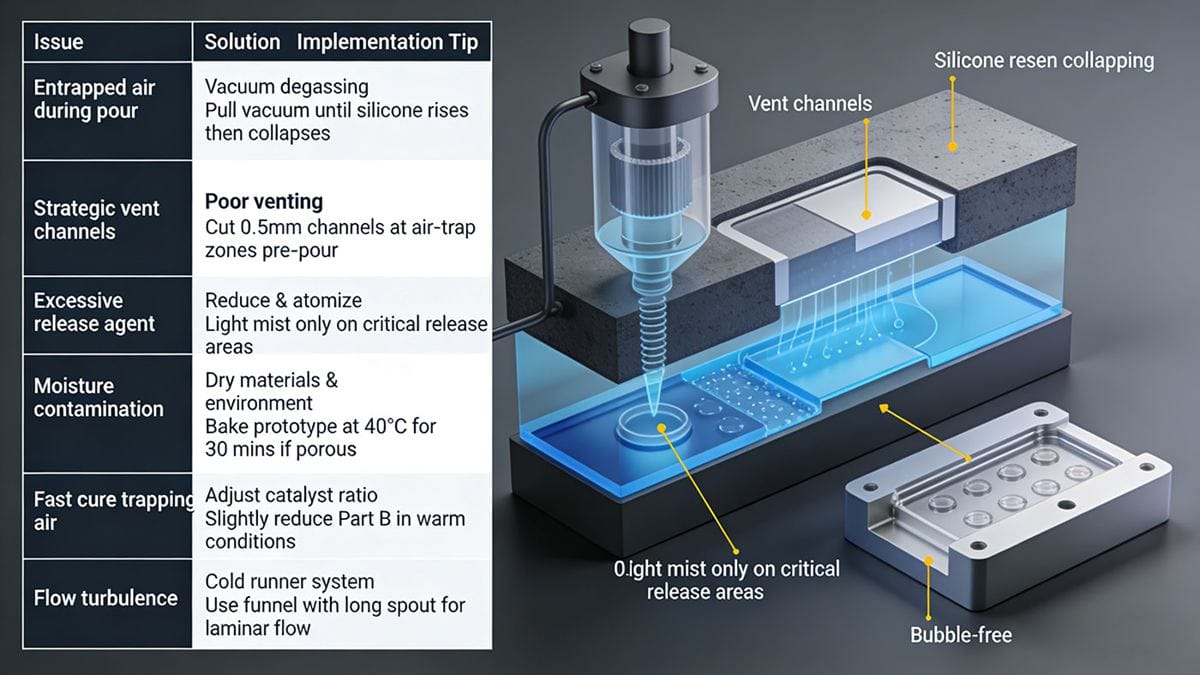
Eliminating Air Bubbles: Proven Solutions
| Issue | Oplossing | Implementation Tip |
|---|---|---|
| Entrapped air during pour | Vacuum degassing | Pull vacuum until silicone rises then collapses |
| Poor venting | Strategic vent channels | Cut 0.5mm channels at air-trap zones pre-pour |
| Excessive release agent | Reduce & atomize | Light mist only on critical release areas |
| Moisture contamination | Dry materials & environment | Bake prototype at 40°C for 30 mins if porous |
| Fast cure trapping air | Adjust catalyst ratio | Slightly reduce Part B in warm conditions |
| Flow turbulence | Cold runner system | Use funnel with long spout for laminar flow |
Final Recommendations for Success
✅ Always conduct a small test batch before full mold production
✅ Document your ratios, temps, and results for process refinement
✅ Store cured molds flat in dust-free containers away from UV light
✅ For >30 casts: Consider urethane or epoxy tooling alternatives
Silicone rubber molding blends artistry and engineering precision. By mastering material science, environmental control, and technique, you unlock reliable replication for sculpture, jewelry, props, and functional prototypes.
Explore the advantages of silicone rubber molds for rapid prototyping, including elasticity and dimensional accuracy. ↩
Learn about RTV silicone's unique properties and its best applications in mold-making. ↩
Find out how Condensation-Cure silicone can be a cost-effective solution for general-purpose molds. ↩




 English
 French
 Dutch
Dutch German
 Japanese
 Korean