

How to Fix Cloudy, Mottled Marks Near the Gate in Injection Molding
Cloudy, mottled marks appearing near the gate are among the most common and frustrating injection molding surface defects. They ruin part aesthetics, increase scrap rates, and often stall production while engineers chase the root cause. The good news is that these blemishes are highly preventable once you understand the two main failure mechanisms behind them: melt fracture そして irregular pulsing flow.
In this guide, we break down why hazy, streaked zones form around the gate, how crystalline polymers make the problem worse, and step-by-step process and mold corrections that eliminate them. You'll also find structured troubleshooting tables, expert fixes, and an FAQ to get your production back to glossy, uniform surfaces faster.
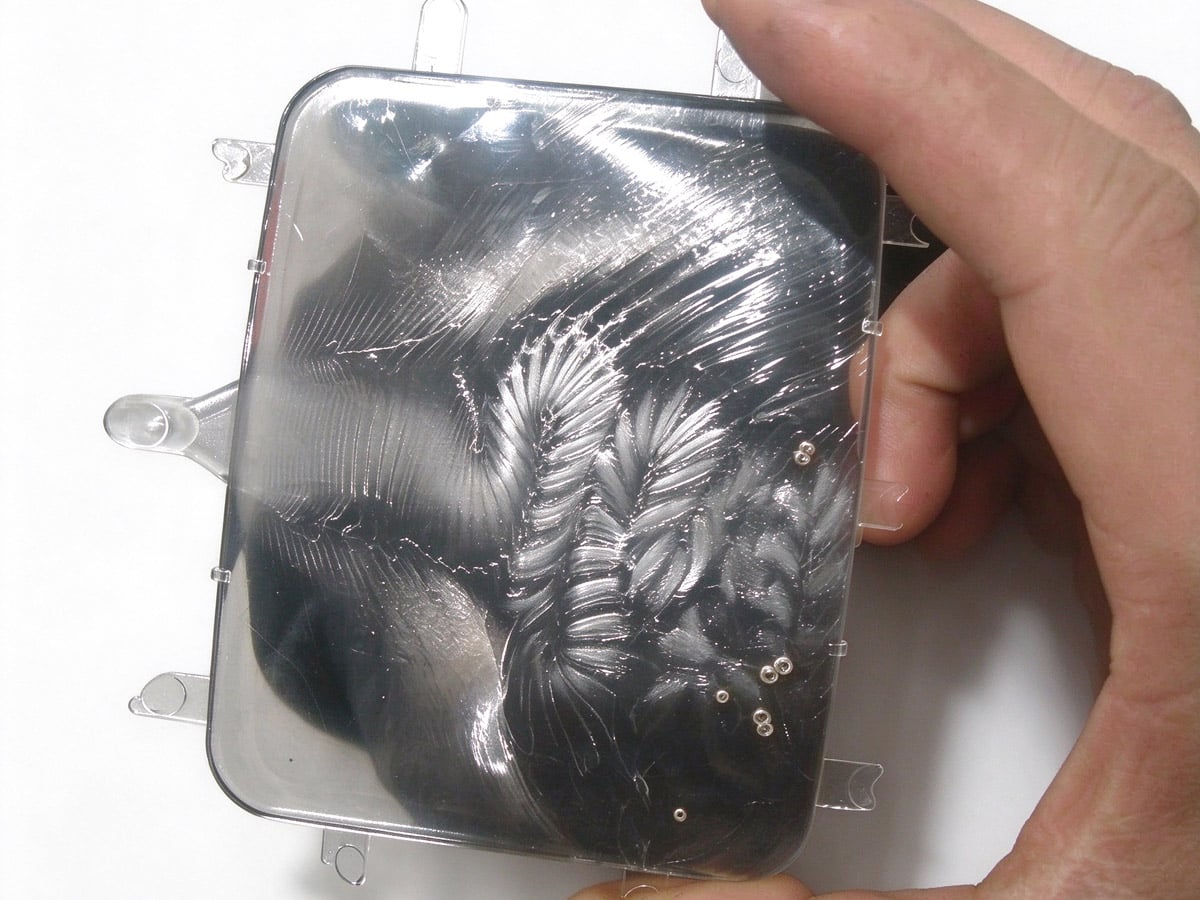
What Causes Cloudy, Mottled Marks Near the Gate?
Two distinct mechanisms produce these surface blemishes, and each needs a different fix. Misdiagnosing them—treating melt fracture as a flow issue, or vice versa—wastes cycles and can worsen the defect.
1. Melt Fracture (Frozen Skin Rupture)
When molten polymer enters the cavity, it first solidifies into a thin surface skin (shell) against the mold wall. If the incoming melt then pushes against this fragile skin during filling, the skin can tear, shift, or wrinkle. The result is scratches, wrinkles, and alternating light/dark bands across the part surface.
This is especially visible on low-melt-index LDPE parts, where you can see clear repeating dark-and-light zones. The bands usually start a short distance from the gate and can cover the entire surface—thin-wall parts are the most susceptible, because the skin layer is thinner and the filling pressure is proportionally higher before the cavity is completely filled.
How to fix it: The most reliable cure is to slow down both the cooling of the melt during filling and the formation rate of the skin layer. Practically, this means raising the mold temperature または raising the local temperature at the fracture zone. For localized heating, small cartridge (tubular) electric heaters installed near the gate and at the fracture site work well.
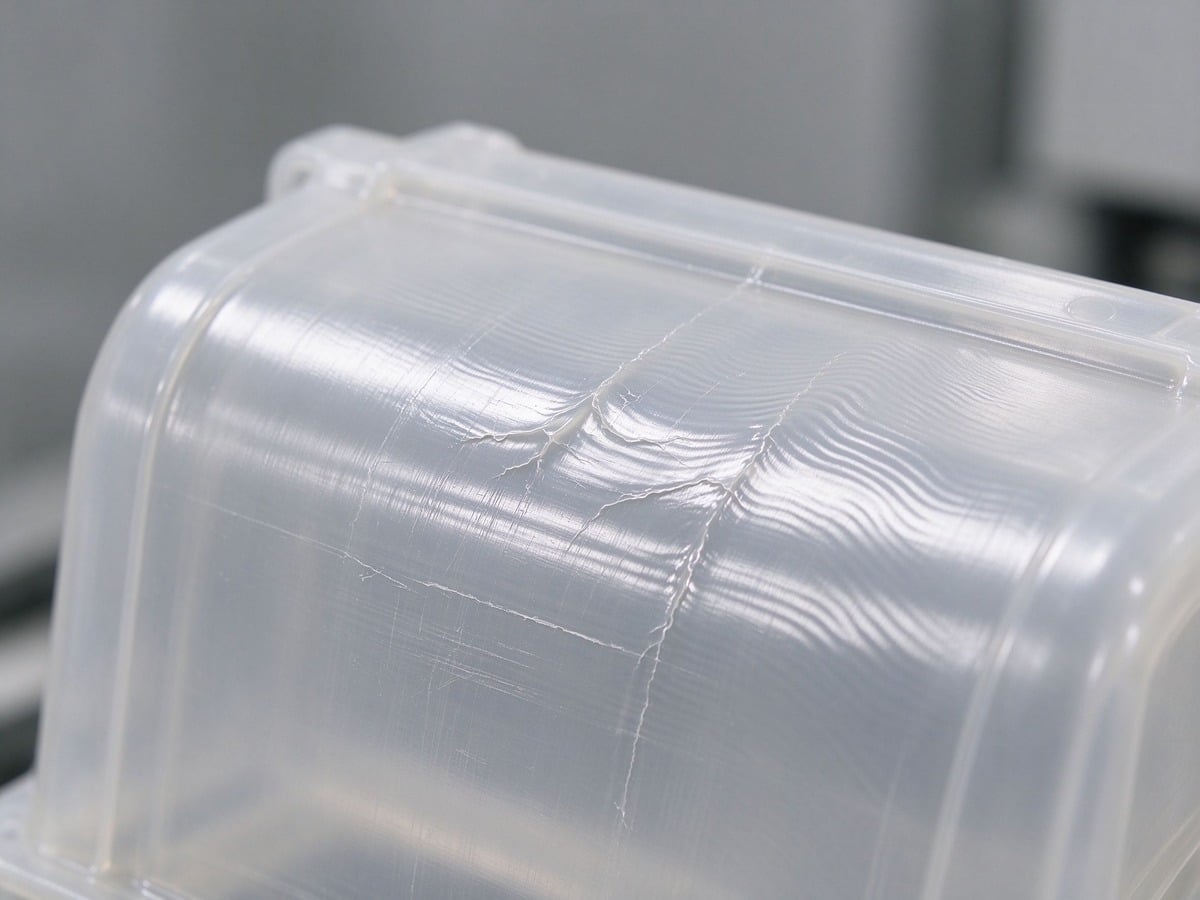
2. Irregular Pulsing Flow in the Cavity
The second mechanism is about flow behavior. How the melt flows depends on its rheological (flow) properties and on the gate cross-section, which sets the shear rate at the mold entrance. When the gate is very small and the injection rate is very high, the melt enters the cavity as a thin, bent, jet-like stream. If this stream cools quickly, it fails to fuse cleanly with the irregularly moving melt that follows—producing cloudiness and mottled marks right around the gate.
Sometimes a small amount of cold material (cold slug) travels along the cavity wall, which pushes the cloudy zone to a spot farther away from the gate.
How to fix it: Improve fusion by letting the melt flow more uniformly—larger gates, fan gates, better venting, and slower injection speeds all help (detailed in the tables below).
Why Crystalline Polymers Are Harder to Fix
Crystalline (semi-crystalline) resins such as PA, POM, PP, PBT and PET make this defect noticeably harder to eliminate. Why? Because these materials:
Have a high melting temperature and a narrow processing window;
Solidify faster than amorphous polymers once cooling begins;
Form irregular flow at sudden wall-thickness changes and abrupt flow-direction turns, giving the disturbed melt very little time to fuse with the rest of the cavity fill.
As a result, cloudy and mottled zones form more readily and are more stubborn to remove.
Crystalline vs. Amorphous Polymers: Key Differences
| Property | Crystalline (e.g., PA, POM, PP, PBT) | Amorphous (e.g., ABS, PC, PS) |
|---|---|---|
| Melting temperature | High, sharp melting point | Gradual softening, no sharp melt point |
| Solidification speed | Fast | 遅い |
| Processing temperature window | Narrow | Broad |
| Flow irregularity risk | High (rapid cooling + short fusion time) | Lower |
| Difficulty fixing cloudy/mottled marks | Harder | Easier |
Step-by-Step Fixes for Cloudy, Mottled Marks Near the Gate
To remove these defects, work through the process parameters first, then the 金型設計, and finally the material/additive side.
A. Process Parameter Adjustments
| Adjustment | How It Helps |
|---|---|
| Raise mold temperature | Slows skin-layer formation and melt cooling, improving fusion |
| Raise barrel (cylinder) temperature | Lowers melt viscosity, promotes smoother, more uniform flow |
| Raise nozzle temperature | Prevents early solidification and cold slug formation at the nozzle |
| Reduce screw forward (injection) speed | Lowers shear rate, reduces jetting and irregular pulsing flow |
B. Mold Design Adjustments
| Adjustment | How It Helps |
|---|---|
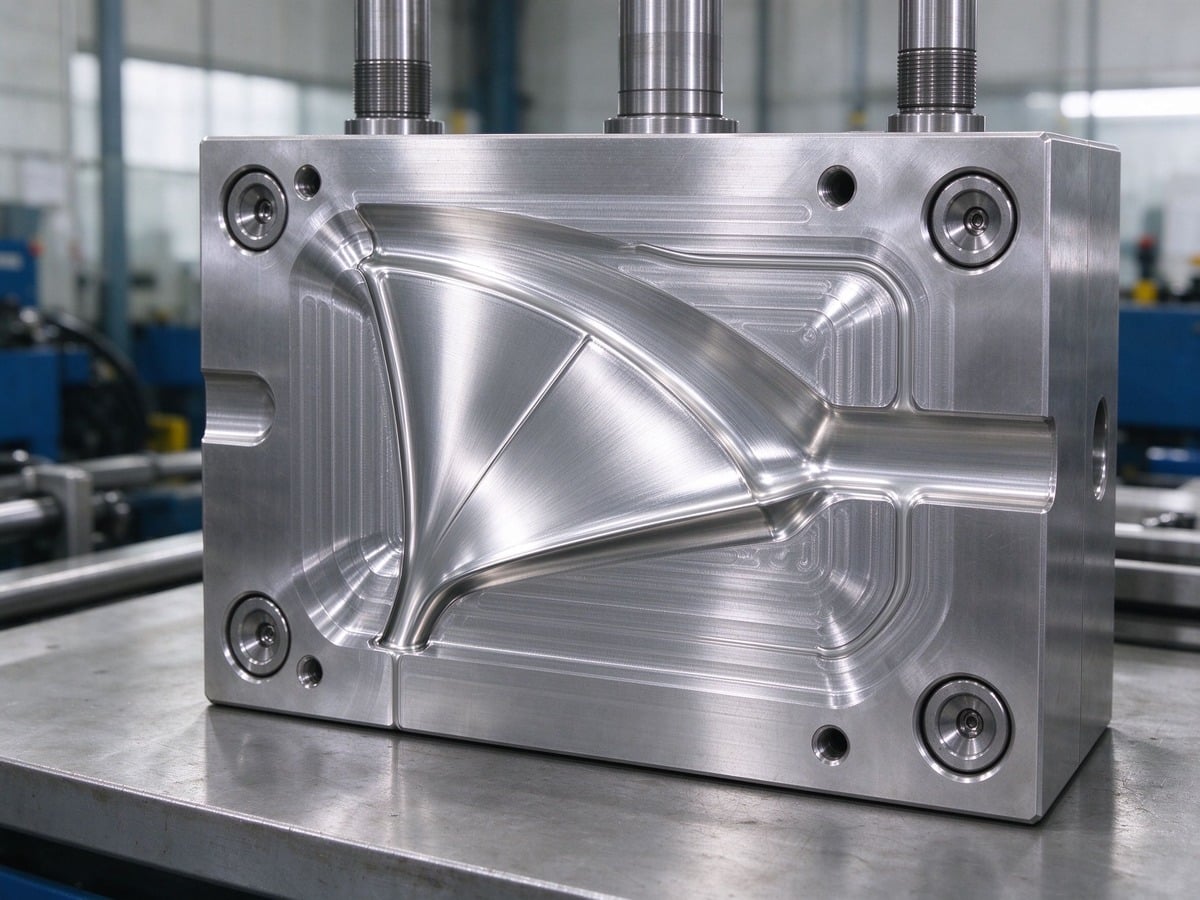
| Enlarge the gate cross-section | Lowers shear rate at the entrance; reduces jetting and irregular flow |
| Prefer a fan gate | Spreads melt across a wider front, reducing turbulence and improving fusion |
| For tunnel (submarine) gates: enlarge the top/small-end size | A too-small top leaves residual cold material at the gate that disrupts filling and worsens irregular flow |
| Improve mold venting (gas venting) | Trapped air disrupts uniform flow; proper venting stabilizes the melt front |
C. Material & Additive Adjustments
| Adjustment | How It Helps |
|---|---|
| Reduce lubricant dosage | Excessive lubricant disrupts melt homogeneity and surface appearance |
| Choose the right lubricant grade/type | A compatible grade keeps flow stable without surface streaking |
Quick Troubleshooting Checklist
Confirm whether the defect is melt fracture (wrinkles, scratches, alternating bands) or irregular flow (cloudy, mottled, jetting).
Process first: raise mold, barrel, and nozzle temperatures; slow the injection speed.
Then mold: enlarge the gate, switch to a fan gate, fix tunnel-gate top size, improve venting.
Material last: reduce and re-select the lubricant.
Document the before/after parameters so the fix is repeatable.
関連記事
How to Fix Lusterless Surfaces in Injection Molding – A Comprehensive Troubleshooting Guide
How Injection Molding Process Parameters Affect Product Performance – Complete Guide 2026
Frequently Asked Questions (FAQ)
Q1: What do cloudy, mottled marks near the gate look like?
They appear as hazy, cloud-like or streaked zones around the gate area, sometimes with alternating light/dark bands. They result from either melt fracture (frozen skin rupture) or irregular pulsing flow failing to fuse cleanly.
Q2: What is melt fracture in injection molding?
Melt fracture happens when the thin solidified skin formed on the cavity wall is torn, shifted, or wrinkled by the incoming melt, producing scratches, wrinkles, and repeating bands. It is most common on thin-wall and low-melt-index parts.
Q3: Why is the defect worse with crystalline polymers?
Crystalline polymers have high melting temperatures, narrow processing windows, and solidify fast, so disturbed melt has little time to fuse with the rest of the fill—making cloudy/mottled marks more likely and harder to remove.
Q4: What is the fastest way to remove cloudiness near the gate?
Start with the process: raise mold, barrel, and nozzle temperatures and reduce injection speed. If that isn't enough, enlarge the gate and improve venting, then review lubricant dosage.
Q5: Should I use a fan gate to prevent this defect?
Yes. A fan gate spreads the melt over a wider front, reducing shear rate, jetting, and irregular flow—one of the most effective mold-side fixes for cloudy/mottled marks near the gate.
Q6: Can mold venting really fix a surface cloudiness problem?
Poor venting traps air that destabilizes the melt front and worsens irregular flow. Improving venting supports a stable, uniform fill and is a recommended part of the fix.
Need a custom injection molding partner that ships defect-free parts? Contact our team for DFM review, tooling, and low-to-mid volume production.



 English
 French
 Dutch
Dutch German
 Japanese
 Korean