

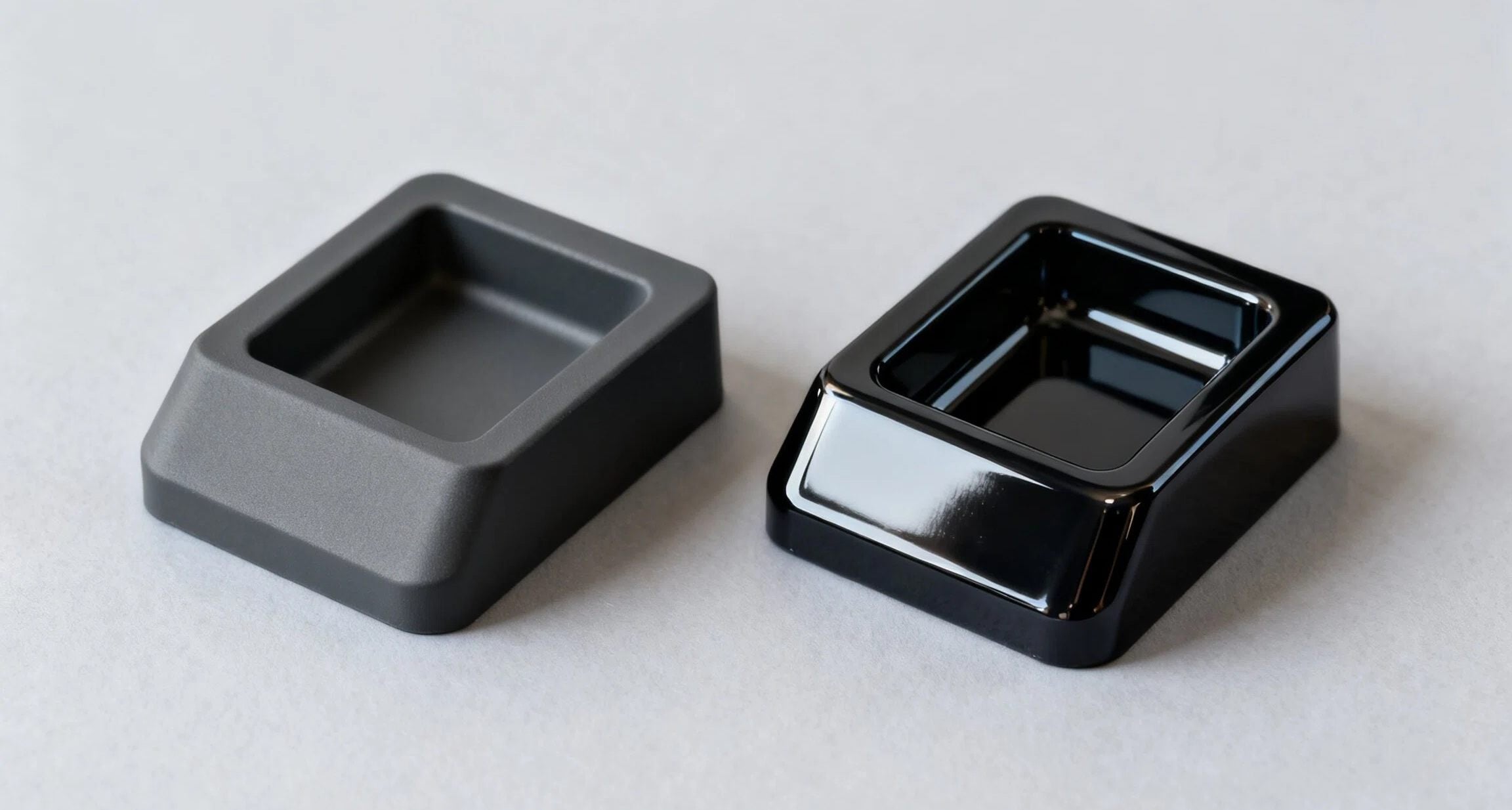
A dull or matte finish on ABS injection molded parts is a common challenge in manufacturing. Achieving a high-gloss surface isn't just about aesthetics; it often reflects the overall quality of the molding process.
The root causes of poor surface gloss generally fall into three categories: Mold Design, Injection Molding Process, und Raw Materials. Below is a comprehensive guide to troubleshooting and fixing this issue.
1. Mold Design & Maintenance
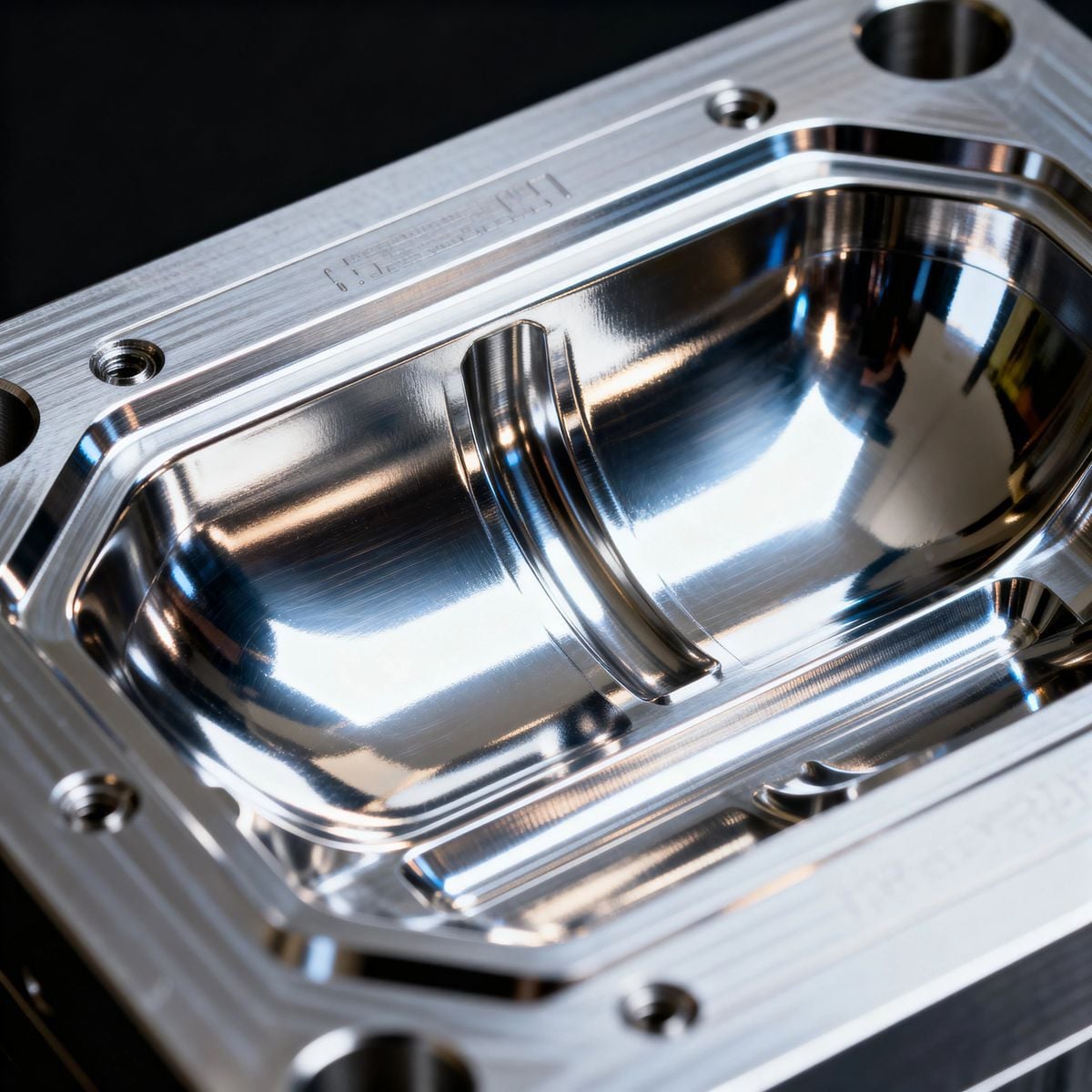
The mold is the direct "mirror" of the plastic part. Any imperfection on the mold surface will be replicated on the final product.
- Surface Finish Quality: Poor machining, scratches, micro-pores, or wear on the cavity surface will result in a dull finish. Lösung: Precision machining is required. Ensure the cavity has a low surface roughness value, and consider polishing and chrome plating if necessary.
- Contamination & Mold Release Agents: Oil, water stains, or excessive use of mold release agents can cause the part surface to look hazy and dark. Lösung: Clean the mold regularly and strictly limit the use of release agents.
- Ejection System: If the draft angle is too small, ejection becomes difficult and causes excessive friction, damaging the surface gloss. Lösung: Increase the draft angle to ensure smooth ejection.
- Venting Issues: Trapped gases inside the mold can burn or create surface defects, reducing gloss. Lösung: Inspect and optimize the mold venting system.
- Gating & Runner Design: If the gate or runner cross-section is too small or changes abruptly, the melt experiences high shear stress and turbulent flow. Lösung: Appropriately increase the cross-sectional area of the gate and runner.
2.
Prozess des Spritzgießens Parameters
Fine-tuning your machine settings is often the most cost-effective way to improve part glossiness.
- Injection Speed: Too slow, and the part surface won't pack densely enough. Too fast (especially with a small gate), and you'll get jetting or localized dullness near the gate. Lösung: Find the optimal speed. Generally, increase it for better density, but reduce it if gate blush occurs.
- Holding Pressure & Time: Insufficient holding pressure or time leads to low part density and a matte surface. Lösung: Increase both holding pressure and holding time.
- Melt Temperature: Low melt temperature reduces flowability, resulting in poor surface replication. Lösung: Raise the barrel/melt temperature appropriately.
- Cooling System: For thick-walled parts or crystalline resins (like PE, PP, POM), uneven or insufficient cooling causes surface roughness and dullness. Lösung: Optimize the cooling channels to ensure uniform and adequate cooling.
3. Raw Material Quality & Preparation
Even with a perfect mold and settings, poor material will yield poor results.
- Particle Size Variation: Inconsistent pellet sizes lead to uneven plasticization. Lösung: Screen and sort the raw material before processing.
- Regrind / Recycled Content: Adding too much regrind disrupts melt uniformity. Lösung: Strictly control and reduce the percentage of regrind.
- Thermal Degradation: Some materials decompose and discolor at high temperatures, killing the gloss. Lösung: Select materials with better thermal stability.
- Moisture Content: Excess moisture or volatiles turn into gas during melting, causing micro-voids and dullness. Lösung: Pre-dry the ABS resin thoroughly according to manufacturer specifications.
- Additive Dispersion: Poorly dispersed additives create surface defects. Lösung: Use additives with better flow and dispersion properties.
- Contamination: Foreign materials or incompatible resins won't blend uniformly. Lösung: Implement strict quality control to eliminate cross-contamination.
- Lubricant Levels: Insufficient internal lubricant reduces melt flow, leading to a non-dense surface. Lösung: Increase the lubricant dosage appropriately.
Quick Troubleshooting Cheat Sheet
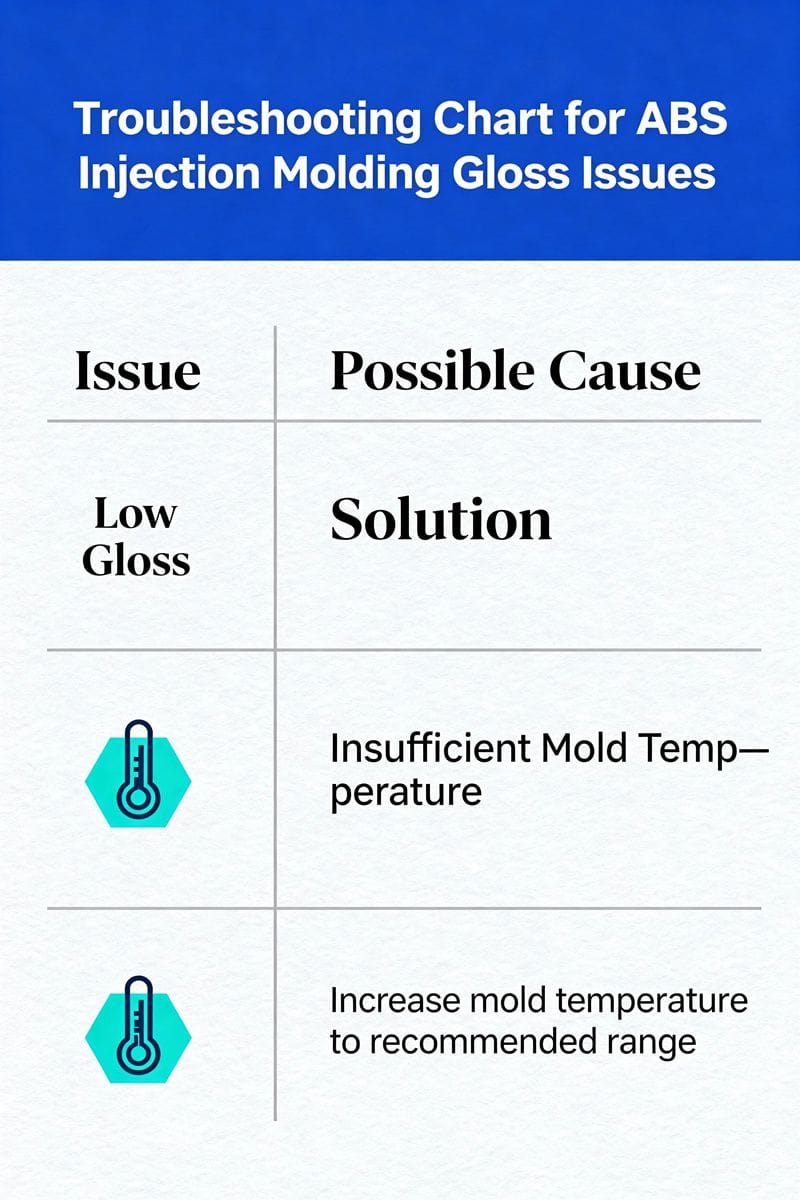
For a quick reference, use the table below to diagnose your ABS gloss issues:
| Problem Area | Mögliche Ursache | Recommended Solution |
|---|---|---|
| Mold Surface | Scratches, wear, or poor finish | Polish cavity, apply chrome plating |
| Mold Contamination | Excess release agent, oil, or water | Clean mold, minimize release agents |
| Einspritzgeschwindigkeit | Too slow (dull overall) or too fast (gate blush) | Optimize speed; enlarge gate if necessary |
| Holding Phase | Low pressure or short time | Increase holding pressure and time |
| Material Prep | High moisture content | Pre-dry ABS resin thoroughly |
| Regrind Usage | Too much recycled material | Reduce regrind percentage |
Fazit
Achieving a brilliant gloss on ABS injection molded parts requires a holistic approach. Always start by checking your raw material preparation and mold cleanliness before making drastic changes to your injection molding parameters.



 English
 French
 Dutch
Dutch German
 Japanese
 Korean