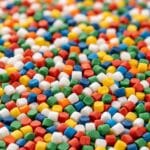
De wereld van de productie verandert voortdurend en inzicht in de rol van polyethyleen (PE) kan uw productieprocessen en productkwaliteit aanzienlijk beïnvloeden.
Polyethyleen (PE) is een veelzijdige thermoplast die wordt gebruikt bij spuitgieten, waardoor het geschikt is voor een groot aantal toepassingen.

Polyethyleen (PE) is een van de meest gebruikte thermoplastische polymeren ter wereld. Het wordt geproduceerd uit de polymerisatie van ethyleenmonomeren (met de herhalingseenheid -CH₂-CH₂-, vaak geschreven als (C₂H₄)ₙ) en behoort tot de polyolefinefamilie. PE staat bekend om zijn veelzijdigheid, duurzaamheid en kosteneffectiviteit, waardoor het onmisbaar is geworden in veel industrieën, van verpakkingen tot auto's en medische toepassingen.
Door de combinatie van lage kosten, chemische weerstand, flexibiliteit en duurzaamheid is polyethyleen een hoeksteen van de moderne productie- en consumentenproducten geworden. Of het nu gebruikt wordt om flexibele verpakkingsfolie of robuuste industriële buizen te maken, het vermogen om de eigenschappen aan te passen door variaties in de moleculaire structuur en verwerkingsmethoden zorgt ervoor dat PE blijft voldoen aan diverse en veranderende technologische en milieueisen.
Wat is polyethyleen (PE)?
Polyethyleen (PE) is een van de meest voorkomende thermoplastische polymeren die wereldwijd worden geproduceerd. Het dient als basis voor veel producten die dagelijks worden gebruikt. Als u de structuur en eigenschappen ervan begrijpt, kunt u weloverwogen beslissingen nemen in uw productieprocessen.
Polyethyleen is een polymeer gemaakt van ethyleen en staat bekend om zijn flexibiliteit en duurzaamheid.
Wat zijn de verschillende soorten PE-materialen?
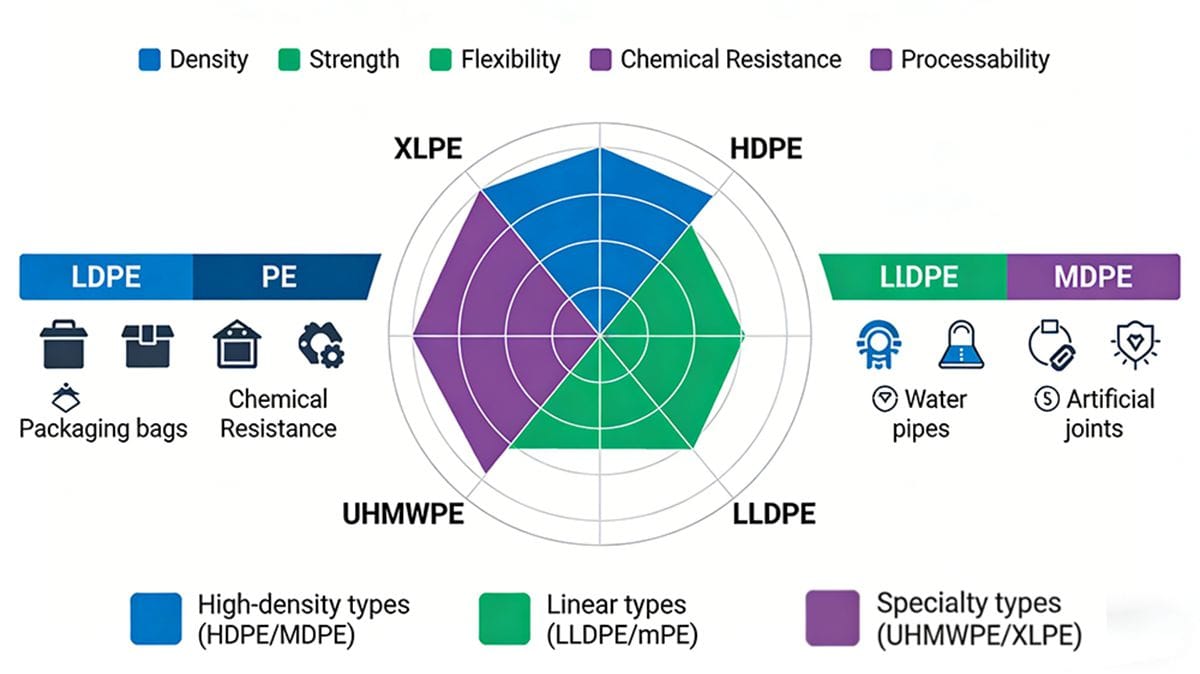
Polyethyleen (PE) materialen worden gecategoriseerd op basis van hun dichtheid, moleculaire structuur en productiemethoden. Hier volgt een gestructureerd overzicht van de verschillende soorten:
| Type | Kenmerken | Toepassingen |
|---|---|---|
| LDPE | Hoge vertakking, flexibel, transparant | Plastic zakken, verpakkingsfolie, knijpflessen |
| LLDPE | Lineaire structuur met korte takken, verbeterde taaiheid | Rekfolie, landbouwfolie, industriële voeringen |
| HDPE | Minimale vertakking, stijf, bestand tegen chemicaliën | Flessen, containers, buizen, speelgoed |
| MDPE | Matige dichtheid, evenwichtige sterkte en flexibiliteit | Gasleidingen, krimpfolie, draagtassen |
| HMWPE | Hoge sterkte en slijtvastheid | Industriële apparatuur, grote containers |
| UHMWPE | Lange moleculaire ketens, hoge taaiheid | Medische implantaten, transportbanden |
| XLPE/PEX | Vernette ketens, hitte- en chemische weerstand | Sanitaire systemen, stralingsverwarming, isolatie |
| VLDPE | Zeer flexibel met lage kristalliniteit | Voedselverpakking, rekfolie, zachte slang |
| mPE | Superieure helderheid en sterkte | Dunne films, voedselverpakking, speciale coatings |
| rPE | Afkomstig van post-consumer/post-industrieel afval | Duurzame producten, bouwmaterialen |
Elk type dient verschillende industriële en consumententoepassingen op basis van zijn structurele eigenschappen en prestatiekenmerken.
Wat zijn de kenmerken van PE?
PE (polyethyleen) is een veelgebruikte thermoplast die bekend staat om zijn flexibiliteit, lage dichtheid en uitstekende chemische weerstand. Het wordt vaak gebruikt in verpakkingen, containers en pijpleidingen. De belangrijkste kenmerken zijn een goede slagvastheid, lage vochtabsorptie en eenvoudige verwerking.
PE wordt gekenmerkt door zijn lichte gewicht, flexibiliteit en hoge chemische weerstand.
| Eigendom | Beschrijving |
|---|---|
| Fysische eigenschappen | Lichtgewicht, flexibel (LDPE) vs. stijf (HDPE) |
| Chemische weerstand | Bestand tegen de meeste zuren, basen en oplosmiddelen |
| Thermische eigenschappen | Laag smeltpunt (~120°C), thermoplastisch |
| Elektrische eigenschappen | Uitstekende isolator |
| Mechanische eigenschappen | Verschilt per type; HDPE is sterk, LDPE is buigzaam |
| Milieu-impact | Niet biologisch afbreekbaar maar recyclebaar |
Wat zijn de eigenschappen van PE?

PE (polyethyleen) is een veelzijdige thermoplast met een aantal uitstekende eigenschappen. Het heeft een lage dichtheid (0,91-0,96 g/cm³), waardoor het licht en gemakkelijk te hanteren is. PE heeft een uitstekende slagvastheid, vooral bij lage temperaturen, waardoor het bestand is tegen scheuren en breken. Het heeft ook een sterke chemische weerstand en is bestand tegen blootstelling aan diverse zuren, basen en oplosmiddelen. Het smeltpunt ligt tussen 120-180°C, waardoor het geschikt is voor verschillende verwerkingsmethoden. PE heeft een zeer lage waterabsorptie, waardoor het zelfs in vochtige omgevingen stabiel blijft presteren.
Eigenschappen van PE zijn onder andere lichtgewicht, sterke chemische weerstand en lage vochtabsorptie.
PE Materiaal Eigenschappen Tabel:
| Eigenschap Parameter | HDPE | LDPE | LLDPE |
|---|---|---|---|
| Dichtheid (g/cm³) | 0.94-0.965 | 0.910-0.925 | 0.915-0.940 |
| Smeltpunt (℃) | 126-136 | 105-115 | 120-125 |
| Vormkrimp (%) | 1.5-3.6 | 1.5-5 | 1.5-2.5 |
| Treksterkte (MPa) | 20-30 | 10-20 | 15-25 |
| Chemische weerstand | Bestand tegen zuren, alkaliën en organische oplosmiddelen (behalve oxiderende zuren) | Bestand tegen zuren en alkaliën, maar gevoelig voor koolwaterstofcorrosie | Bestand tegen zuren, alkaliën en organische oplosmiddelen |
| Elektrische isolatie | Uitstekend, geschikt voor kabelmantel | Goed, geschikt voor dunne filmisolatie | Goed |
Kunnen PE-materialen spuitgegoten worden?
Ja, polyethyleen (PE) materialen kunnen met succes spuitgegoten worden en worden veel gebruikt in dit productieproces.
PE is thermoplastisch en geschikt voor spuitgietprocessen, waardoor het ideaal is voor diverse toepassingen.
De belangrijkste aspecten van PE-spuitgieten:
Materiaalsoorten:
- HDPE: Bekend om zijn hoge sterkte en stijfheid.
- LDPE: Flexibeler en gebruikt voor diverse toepassingen.
Verwerkingsparameters:
- Temperatuur: DE varieert; HDPE heeft hogere temperaturen nodig.
- Druk en snelheid: Geoptimaliseerd voor het vullen van matrijzen en het voorkomen van defecten.
Krimpbeheer:
- PE krimpt gewoonlijk 1,5-4% tijdens het koelen, waardoor nauwkeurige matrijsontwerpen nodig zijn.
Stromingseigenschappen:
- LDPE vloeit gemakkelijker dan HDPE vanwege de lagere viscositeit.
Toepassingen:
- Gangbare producten zijn emmers, containers en verpakkingen.
Wat zijn de belangrijkste overwegingen voor PE spuitgieten?
Als u overweegt polyethyleen (PE) te spuitgieten, moet u rekening houden met een aantal belangrijke factoren om een optimale productkwaliteit en procesefficiëntie te garanderen.
Kritische factoren bij het spuitgieten van PE zijn onder andere materiaalselectie, verwerkingsparameters en matrijsontwerp.
Belangrijke overwegingen:
Materiaalkeuze:
- Kies HDPE of LDPE op basis van de vereiste eigenschappen.
Verwerkingsparameters:
- Pas de temperatuur en druk aan voor een optimale doorstroming.
Vormontwerp:
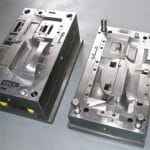
- Een goed poortontwerp en krimpcompensatie zijn van vitaal belang.
Deelontwerp:
- Handhaaf de uniformiteit van de wanddikte om defecten te voorkomen.
Post-Processing:
- Zorgvuldig bijsnijden en eventueel gloeien om de spanning te verlichten.
Kwaliteitscontrole:
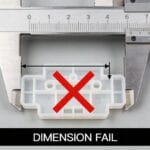
- Voer dimensionale controles en mechanische tests uit.
Kosten en efficiëntie:
- Optimaliseer de cyclustijd en verminder materiaalverspilling.
Milieu-overwegingen:
- Ontwerp met het oog op recyclebaarheid en energie-efficiëntie.
Extra factoren:
- Controleer het vocht- en vloeigedrag voor kwaliteitsgarantie.

Conclusie
Polyethyleen is een flexibel en duurzaam materiaal dat ideaal is voor spuitgieten, vooral wanneer de juiste verwerkingsparameters en ontwerpfactoren in acht worden genomen.