

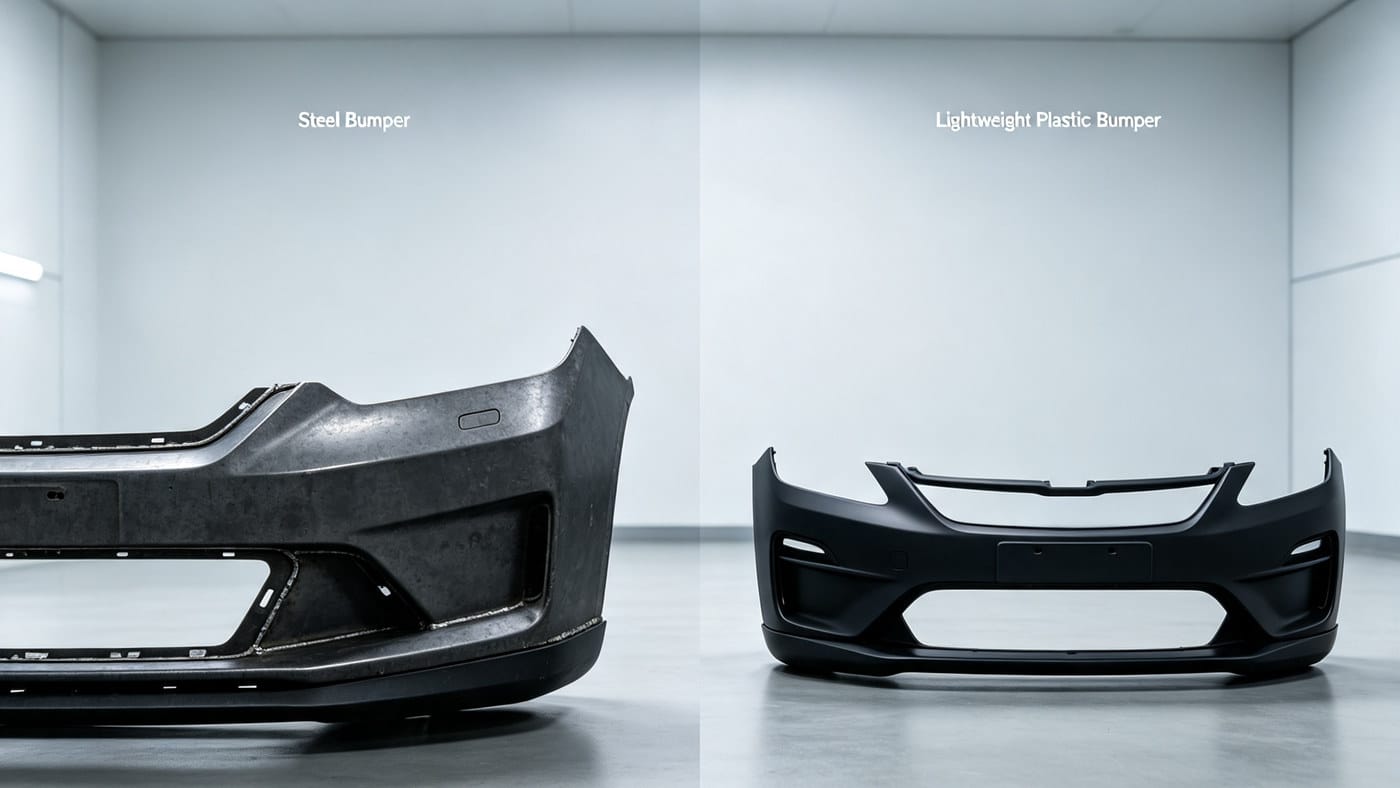
Automotive Bumper Thin-Wall Injection Molding Full Guide Automotive bumpers are among the largest exterior components on a vehicle, serving three critical functions: safety, functionality, and aesthetics.
As the automotive industry pushes for better fuel efficiency and lower emissions, lightweighting has become a top priority. There are three primary pathways to achieve a lightweight bumper:
- Material Lightweighting: Using lower-density materials (e.g., replacing steel with plastic).
- Structural Optimization: Implementing thin-wall technology.
- Manufacturing Innovations: Adopting advanced processes like micro-foaming and gas-assisted molding.
In this guide, we will dive deep into the material selection and the engineering solutions required to successfully manufacture thin-wall plastic bumpers.
Material Selection: Why Modified PP is the Gold Standard
Plastics are revolutionizing the automotive industry due to their low weight, excellent performance, corrosion resistance, impact strength, and design flexibility. In fact, plastic usage is a benchmark for a country's automotive development. While developed nations use up to 200kg of plastic per vehicle (about 20% of total weight), China's usage currently ranges from 5% to 10% (50kg to 100kg depending on the vehicle class).
For bumpers, materials must meet strict requirements:
- High impact resistance and weatherability
- Excellent paint adhesion
- Superior flowability and processability
- Cost-effectiveness
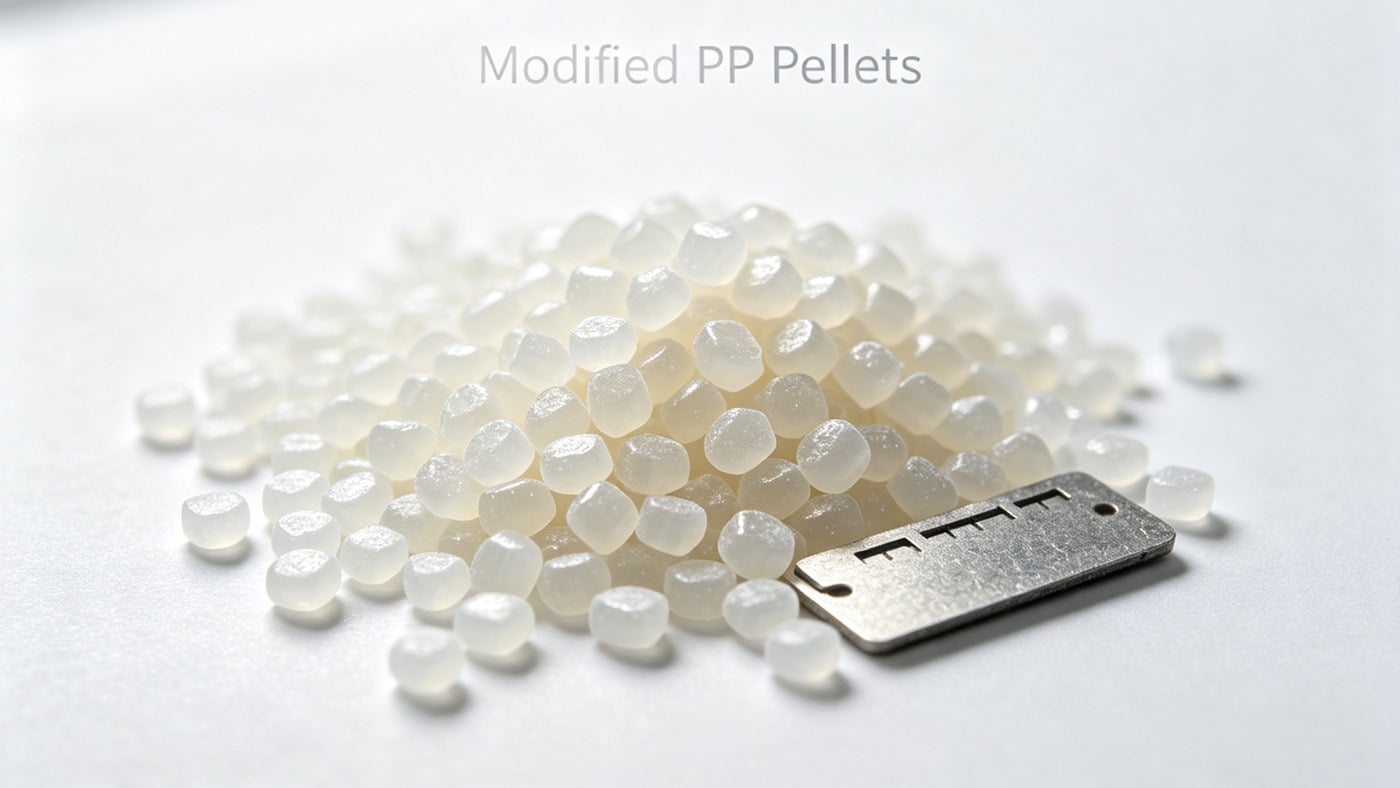
Polypropyleen (PP) is the undisputed champion of cost-performance. However, pure PP suffers from poor low-temperature impact strength, aging issues, and dimensional instability. Therefore, Modified PP is the industry standard. You can read our dedicated research on how filler, elastomer additives affect bumper-grade PP’s painting and forming performance in Effecten van de belangrijkste eigenschappen van gemodificeerd PP op de spuitgietproductkwaliteit, de verfbaarheid en de assemblageprestaties.
| Component | Function in Bumper Material |
|---|---|
| PP Base Resin | Provides the core structural matrix and flowability. |
| Rubber / Elastomers | Significantly boosts low-temperature impact strength. |
| Inorganic Fillers | Improves dimensional stability and rigidity. |
| Masterbatch & Additives | Enhances UV resistance, color, and processing performance. |
The Challenges of Thin-Wall Bumpers
While thin-wall technology reduces weight, it introduces significant manufacturing headaches, primarily warpage en ejection difficulties.
1. Warpage Deformation
Warpage is the result of internal stress release during the injection molding process. Three main types of stress are involved:
- Orientation Stress: Caused when polymer chains or fibers align in a specific direction and fail to relax. Higher melt/mold temperatures reduce this, while higher injection pressure and longer packing times increase it.
- Thermal Stress: Occurs due to the massive temperature difference between the hot melt and the cold mold, causing uneven cooling and mechanical stress.
- Ejection Stress: Results from insufficient mold rigidity or uneven ejection pin distribution, causing elastic deformation during part removal.
2. Ejection Difficulties
Thin walls have less shrinkage, causing the part to stick tightly to the mold. High injection speeds also make packing time difficult to control, increasing the risk of damaging thin ribs during ejection.
Overcoming Mold Opening Resistance: To safely open the injection molding machine must overcome several forces:
- Direct Opening Force: Adhesion from incomplete elastic recovery of the plastic.
- Indirect Resistance: Friction from side-core pulling mechanisms and moving mold plates.
- Cavity Residual Pressure: Pressure differences between the mold cavity and the outside atmosphere.
Thin-wall parts face unique precision and deformation risks; we break down four core influencing factors of thin-wall part accuracy in Vier aspecten die de nauwkeurigheid van spuitgietonderdelen met dunne wand bepalen.
Engineering Solutions: Mold Design & Process Optimization
To conquer the challenges of thin-wall bumpers, manufacturers must optimize both tooling and processing parameters.
Advanced Mold Design
- Upgrade Mold Materials: Select materials with high thermal strength and wear resistance.
- Boost Rigidity: Increase the thickness of pusher plates and support plates to minimize elastic deformation.
- Precision Engineering: Improve the manufacturing accuracy of core-pulling mechanisms. Lower the surface roughness of cavities and cores to reduce friction.
- Interlocking Devices: Implement locking mechanisms to prevent relative displacement between the core and cavity, which is crucial for thin-wall precision.
- Smart Gating & Venting: Design runners so plastic flows from thicker to thinner sections. Ensure ample venting to prevent burn marks and short shots.
Injection Molding Process Tuning
- Reduce Internal Stress: Increase injection speed while lowering the cooling rate.
- Optimize Temperatures: Raise both melt and mold temperatures to allow better relaxation of oriented polymer chains.
- Fine-Tune Pressure & Time: Carefully balance injection pressure, packing time, and cooling speed to ensure dimensional stability without causing warpage.
Unreasonable wall thickness and cooling design are the top culprits for thin-wall part warpage, which is a widespread defect in large automotive exterior parts like bumpers. Our guide How to Fix Warpage in Large Flat Injection Molded Parts | 4 Proven Solutions shares actionable mold and process fixes for warping defects.
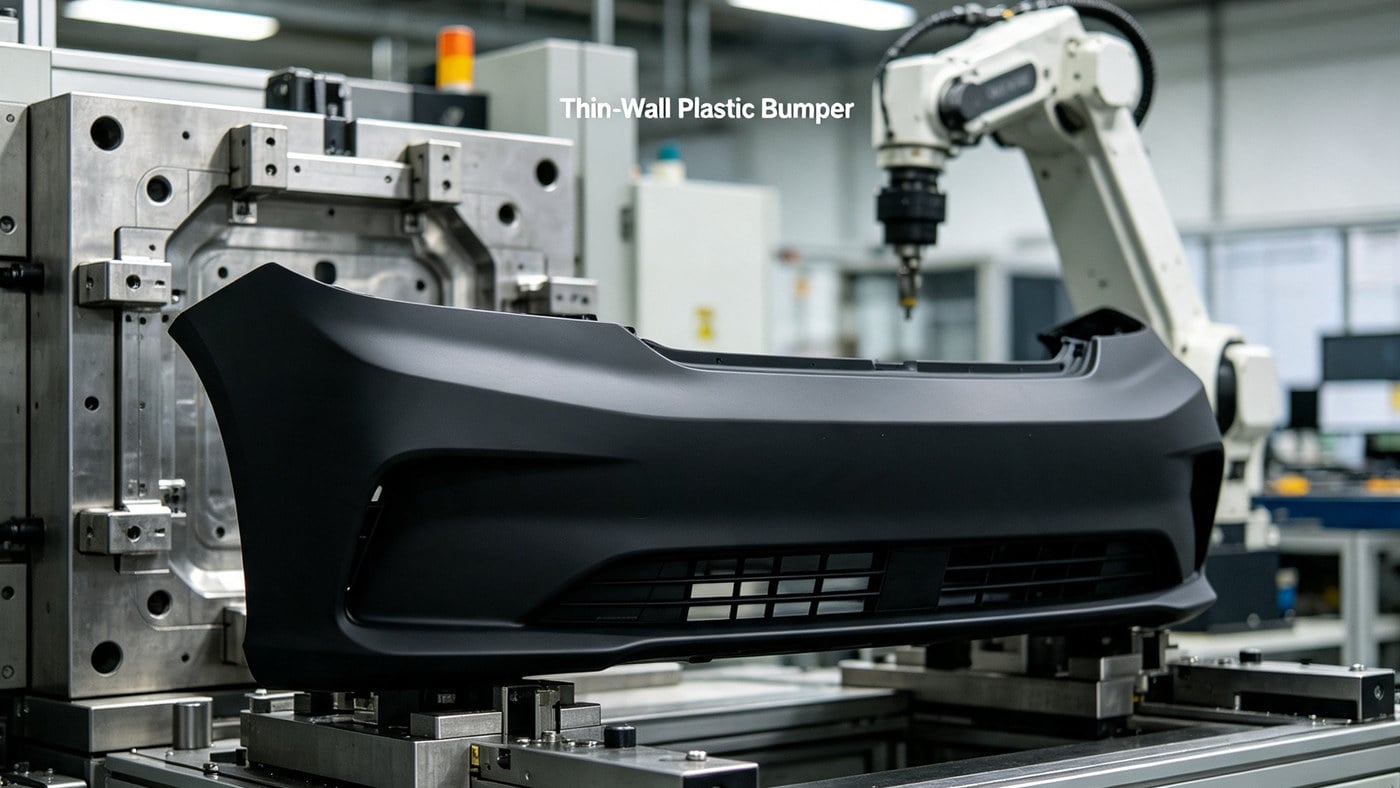
Conclusie Achieving a thin-wall automotive bumper requires a delicate balance of high-quality modified PP materials, precision mold engineering, and optimized injection molding parameters. By understanding and mitigating internal stresses, manufacturers can produce lightweight, durable, and aesthetically pleasing bumpers that meet modern automotive standards.
Found this guide helpful? Share it with your engineering team or leave a comment below with your own tips for thin-wall injection molding!



 English
 French
 Dutch
Dutch German
 Japanese
 Korean