

Vormontwerp1 is een kritieke fase in grootschalige productontwikkeling. Aangezien productontwerp en matrijsontwerp inherent van elkaar afhankelijk zijn, is inzicht in de volledige levenscyclus - van de ontwikkeling van kunststofonderdelen via matrijsontwerp tot matrijsproductie - van onschatbare waarde voor zowel productontwerpingenieurs als matrijsontwerpingenieurs.
Een typisch productontwikkelingsproces bestaat uit verschillende belangrijke fasen:
- Product Definitie
- Productontwerp
- Bedrijfs- en productieontwikkeling
- Schaalvergroting en marktintroductie
Hoewel ze complex zijn, hebben de meeste workflows voor productontwikkeling gemeenschappelijke kenmerken:
- Een systematisch ontwikkelingsplan garandeert volledigheid in ontwerp en productie.
- De budgettoewijzing wordt gestuurd door strenge evaluaties bij kritieke mijlpalen van het project - vaak geformaliseerd als “gate reviews”.”
- Elke fase wordt afgesloten met een formele goedkeuring (of afwijzing) voordat er naar de volgende fase wordt overgegaan, zodat de risico's beperkt blijven en er afstemming is met de bedrijfsdoelen.
1. Productdefinitie
Het ontwikkelingsproces begint met marktanalyse, vergelijking met concurrerende producten, het definiëren van technische specificaties en het evalueren van potentiële winstgevendheid. Als het senior management het initiatief goedkeurt, wordt een multifunctioneel team samengesteld om een vroeg conceptontwerp en business case-ontwikkeling uit te voeren.
In deze fase maken de teams een schatting van de geschatte grootte van het product, de functionele kenmerken en de beoogde kosten. Conceptschetsen, fysieke prototypes en haalbaarheidsstudies worden iteratief beoordeeld.
Vanuit een commercieel perspectief voorspelt marktonderzoek al in een vroeg stadium het verkoopvolume voor verschillende prijsscenario's. Tegelijkertijd worden budgetten voor R&D, tooling en go-to-market activiteiten vastgesteld. Tegelijkertijd worden budgetten voor R&D, tooling en go-to-market activiteiten, inclusief personeels- en projectkosten, vastgesteld.
Voortdurende evaluatie van de commerciële haalbaarheid leidt tot uitvoerende beslissingen: het project kan worden goedgekeurd, uitgesteld, afgewezen of herzien op basis van feedback over het conceptontwerp, de verkoopprognoses en de financiën.
2. Productontwerp
Na goedkeuring van het budget gaat het project over tot een gedetailleerd ontwerp, dat meestal in fasen wordt gefinancierd. Elk onderdeel ondergaat strenge specificaties, met bijzondere aandacht voor esthetiek, structurele integriteit, thermisch gedrag en produceerbaarheid.
Voor plastic onderdelen zijn de ontwerpoverwegingen onder andere:
- Esthetiek & ergonomie
- Structurele prestaties (bijv. spanningsverdeling, snap-fit functionaliteit)
- Thermisch gedrag (bijv. kromtrekken, koelefficiëntie)
- Fabriceerbaarheid (bijv. trekhoeken, uniformiteit wanddikte, locatie poort)
Productieprocesontwerp helpt bij het identificeren van potentiële productie-uitdagingen voor gereedschap begint. Het ontwerp van de assemblagemethodologie is erop gericht om het aantal onderdelen te minimaliseren, kritieke toleranties te definiëren en kosteneffectieve eindassemblage te garanderen.
Het resultaat van deze fase - onder voorbehoud van een tweede uitvoerende beoordeling - is een gevalideerd, gedetailleerd productontwerp. “Gedetailleerd ontwerp2”betekent dat elk onderdeel volledig gespecificeerd is: materiaalsoort, geometrie, oppervlakteafwerking, maattoleranties, leveranciersselectie en eenheidskosten. Voor op maat gemaakte onderdelen worden in dit stadium formele offertes aangevraagd.
Zodra de ontwerp- en kostendoelstellingen geaccepteerd zijn, wordt het budget vrijgegeven en verschuift de aandacht naar de productiegereedheid.
3. Bedrijfs- en productieontwikkeling
Hoewel het ontwerp en de fabricage van matrijzen de discussies in de industrie domineren, vormen ze slechts één onderdeel van een breder productie mogelijk maken. Parallelle inspanningen omvatten het definiëren van de toeleveringsketen, de eerste inkoop en de uitgebreide productieplanning.
De belangrijkste activiteiten zijn:
- De end-to-end toeleveringsketen voltooien
- Eerste inkooporders plaatsen om de lancering te ondersteunen
- Lay-outplanning voor assemblagelijnen
- Personeelsplanning en training
- Opzetten van productie-infrastructuur (bijv. spuitgietcellen, QC-laboratoria)
Na voltooiing van de mal, Productie van alfa (α) begint: onderdelen in kleine series worden gegoten, geassembleerd en grondig getest op prestaties, conformiteit en gebruikerstevredenheid. Als de resultaten tegenvallen, worden er iteratieve aanpassingen gedaan, niet alleen aan de matrijzen en processen, maar ook aan de onderdelenontwerpen en kwaliteitscontroleprotocollen. Operators worden opgeleid en inspectieplannen worden afgerond.
4. Schaalvergroting en marktintroductie
Een formele managementbeoordeling valideert of het productontwerp en het productiesysteem aan alle eisen voldoen. Als dit wordt goedgekeurd, kunnen middelgrote Beta (β) productie draait onder standaard productieomstandigheden.
Bèta-units worden uitgedeeld aan marketing- en verkoopteams en belangrijke klanten voor validatie in de praktijk. Feedback leidt vaak tot verdere verfijningen - ontwerpaanpassingen, procesoptimalisatie of wijzigingen aan het gereedschap - om kritieke problemen op te lossen voor de volledige lancering.
Zodra alle belanghebbenden - marketing, verkoop, productie, belangrijke leveranciers en de belangrijkste klanten - op één lijn zitten, gaat het product de markt op. proefproductie, Het opbouwen van de eerste inventaris. Pas daarna wordt het product officieel op de markt gebracht.
5. De rol van matrijsontwerp
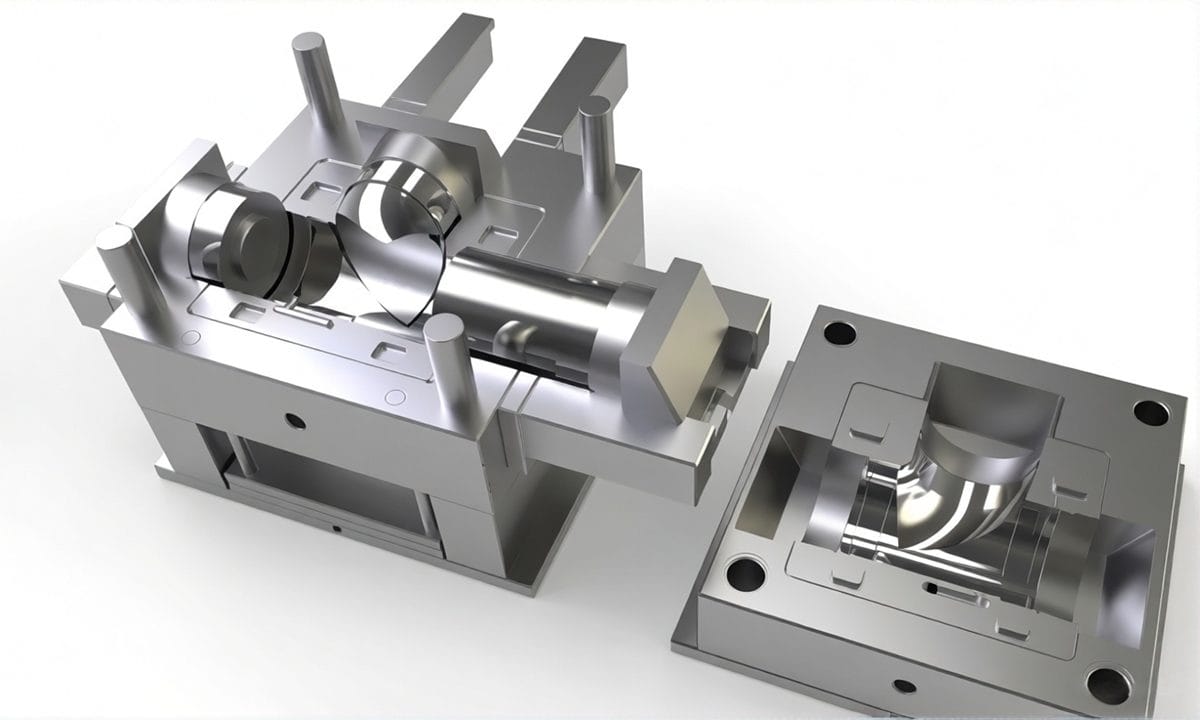
Offerte, ontwerp en productie van matrijzen vormen de basis van de hele productontwikkelingscyclus. Wanneer de matrijs of het onderdeel berekend moet worden, betekent dit meestal de overgang van conceptontwerp naar gedetailleerd ontwerp.
Op dit moment is het onredelijk om volledig afgeronde matrijsontwerpen te verwachten, en wel om twee belangrijke redenen:
- Vroeg matrijswerk gaat vaak hand in hand met evoluerende productontwerpen.
- Veranderingen als gevolg van maakbaarheid of prestatievereisten kunnen grote matrijsrevisies noodzakelijk maken.
De ontwikkeling van matrijzen begint meestal met onvolledige gegevens. Als u voorlopige ontwerpen gebruikt, loopt u het risico dat er niet-conforme onderdelen worden gemaakt. De belangrijkste gegevens die nodig zijn voor de eerste lay-out van matrijzen zijn onder andere:
- Afmetingen van onderdelen
- Wanddikte
- Verwacht jaarlijks productievolume
Hiermee kunnen matrijsontwerpers voorlopige lay-outs voorstellen, kosten schatten en zelfs verbeteringen aan het productontwerp voorstellen (bijv. ribben toevoegen, ontwerp aanpassen). Om de time-to-market te versnellen, kunnen het matrijsontwerp, de inkoop van onderdelen en de bewerking op maat parallel lopen met de productontwikkeling, en dat gebeurt vaak ook.
Wanneer de productontwikkeling bijna voltooid is, beginnen de matrijsproductie en inbedrijfstelling. Dit legt een enorme druk op matrijzenmakers om snel gereedschap van hoge kwaliteit te leveren, vooral gezien het risico van latente ontwerpfouten. Daarom werken matrijsontwerpers vaak nauw samen met fabrikanten om matrijssecties te herwerken of te optimaliseren, zodat ze aan de productievereisten voldoen voordat de massaproductie begint.
Conclusie
Succesvol spuitgieten gaat niet alleen over het maken van een mal, het gaat over het integreren van ontwerp, engineering, bedrijfsstrategie en productie-uitvoering in een naadloze workflow. Door elke fase goed te begrijpen, kunnen teams iteraties verminderen, dure vertragingen voorkomen en producten van hoge kwaliteit sneller op de markt brengen.


 English
 French
 Dutch
Dutch German
 Japanese
 Korean