

Why Do Custom Plastic Injection Products Crack? A Comprehensive Troubleshooting Guide
Plastic injection molding1 is a precise art, but defects can still occur. One of the most frustrating issues manufacturers face is cracking in injection-molded parts.
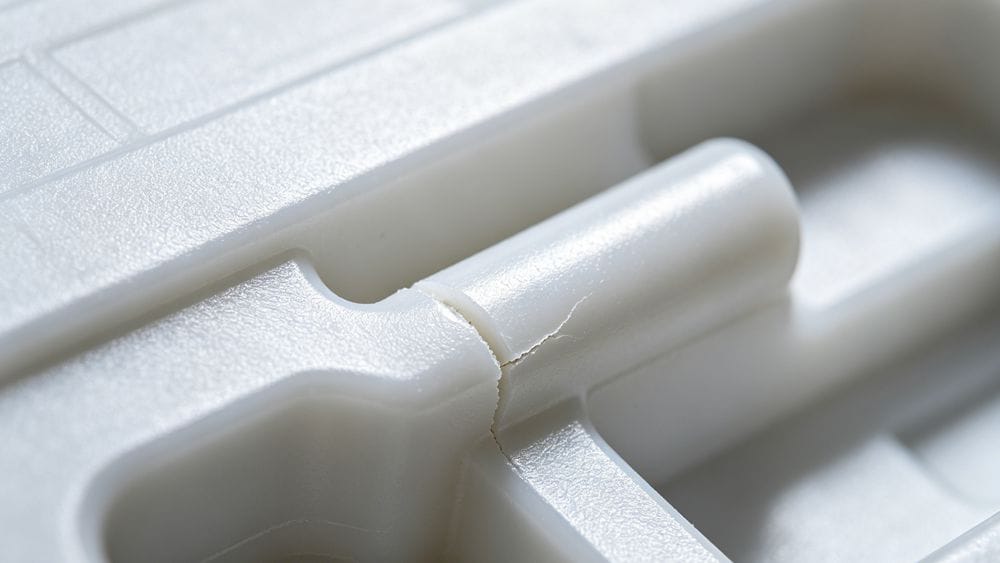
Cracking can manifest as surface crazing (silky cracks), micro-cracks, stress whitening (white marks at stress points), or complete fracture. These defects can happen immediately during demolding or later during the product's application.
In this guide, we break down the root causes of these cracks—ranging from processing errors to mold design flaws2—and provide actionable solutions.
Key Takeaway: Cracking is rarely caused by a single factor. It is usually a combination of residual stress, external force, and material weakness.
1. Processing Factors (Machine Settings)
Improper machine settings are the most common cause of internal stress leading to cracks.
- Excessive Pressure & Speed: If the injection pressure is too high, the filling speed is too fast, or the packing time is too long, the part will suffer from excessive internal stress.
- Demolding Speed: If the mold opens too quickly or with too much force, it can physically pull and crack the part, especially if it hasn't cooled sufficiently.
- Temperature Control:
- Mold Temperature: If the mold is too cold, the part may not release easily, leading to stress.
- Material Temperature: If the barrel temperature is too high, the plastic may degrade (burn), reducing its mechanical strength.
- Weld Lines: Poor processing can lead to weak weld lines where the plastic flow fronts meet, creating weak points prone to cracking.
Solutions:
- Reduce injection pressure and speed.
- Shorten injection and holding times.
- Adjust the mold opening speed to be smoother.
- Annealing: Perform heat treatment (annealing) immediately after molding to relieve residual stress.
2. Mold Design Issues
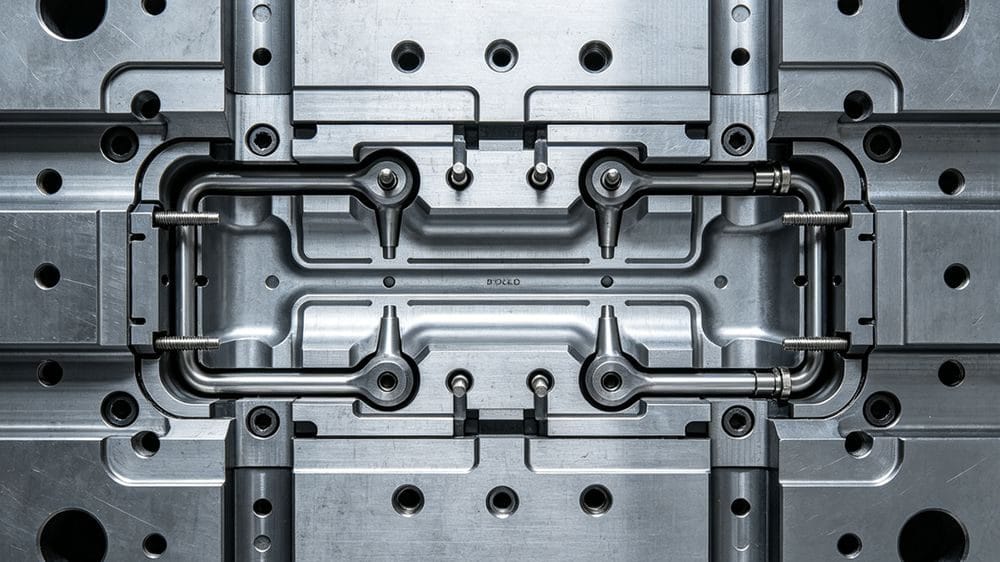
The physical design of the mold dictates how the plastic flows and cools. Flaws here create inherent weak points.
- Ejection System: If the ejector pins are unbalanced, too few, or have too small a surface area, the ejection force concentrates on small areas, causing cracks.
- Sharp Corners: Sharp corners act as stress concentrators.
- Metal Inserts: Using metal inserts can be problematic because metal and plastic shrink at different rates during cooling, creating high internal stress around the insert.
- Vacuum Lock: Deep-draw parts need air vents. Without them, a vacuum forms, making the part stick and potentially crack during ejection.
Solutions:
- Ensure sufficient draft angles and polished cavity surfaces.
- Use fillets (rounded corners) instead of sharp angles to distribute stress.
- Minimize the use of metal inserts or design the mold to accommodate shrinkage differences.
- Add vents to deep cavities to prevent vacuum formation.
3. Material Selection & Quality
Even with a perfect mold and machine, bad material will result in failure.
- Recycled Material: Using too much regrind (recycled plastic) lowers the tensile strength and impact resistance of the part.
- Moisture: Many engineering plastics (like Nylon or PC) are hygroscopic. If not dried properly, moisture reacts with the polymer during melting (hydrolysis), causing the material to become brittle and crack.
- Contamination: Mixing different types of plastics or using contaminated raw materials will compromise structural integrity.
4. Machine & Process Factors
- Plasticizing Capacity: The injection molding machine must be sized correctly.
- Too Small: The plastic won't mix or melt thoroughly, leading to brittleness.
- Too Large: The plastic stays in the barrel too long and degrades due to heat.
- Back Pressure & Screw Speed: Excessive back pressure3 or screw speed generates shear heat, degrading the material properties.
Summary: Troubleshooting Table
Here is a quick reference guide to help you diagnose the source of the cracking.
| カテゴリー | Potential Cause | Recommended Solution |
|---|---|---|
| Processing | High Injection Pressure / Speed | Lower pressure; Reduce injection speed. |
| Processing | High Residual Stress | Increase mold temp; Anneal part after molding. |
| 金型設計 | Sharp Corners / Bad Geometry | Add radius (fillets) to corners; Avoid sharp transitions. |
| 金型設計 | Ejection Issues | Polish cavity; Increase draft angle; Balance ejector pins. |
| 素材 | Moisture / Wet Resin | Dry material properly before processing. |
| 素材 | Too much Recycled Content | Reduce regrind ratio; Use virgin material. |
| Machine | Degradation | Check barrel temperature; Ensure correct screw size. |
結論
Cracking in custom plastic injection products is a complex issue that requires a systematic approach to solve. By analyzing the processing parameters, 金型設計, そして material quality, you can identify the root cause.
Start by checking your material drying process and reducing injection speeds, as these are the most common culprits. If problems persist, review your mold design for stress concentrators like sharp corners or insufficient draft angles.
Need help with your injection molding project? Contact us today for expert manufacturing solutions.


 English
 French
 Dutch
Dutch German
 Japanese
 Korean