

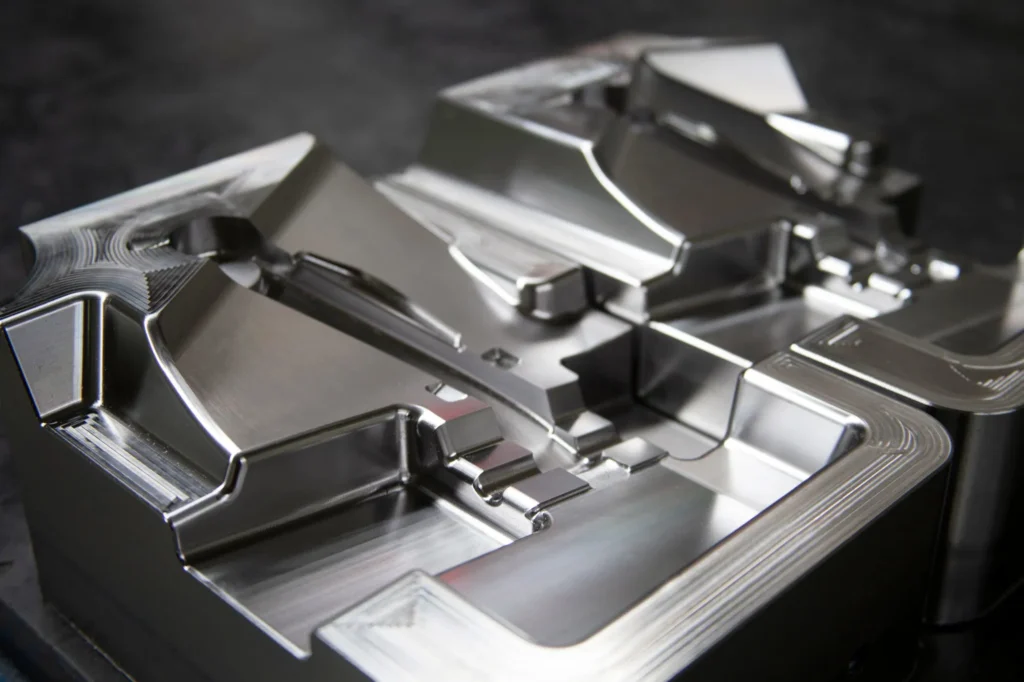
Qu'est-ce que le traitement de surface des moules d'injection ?
Here, injection mold surface treatment refers to the texture of the product surface. As we all know, injection molded products are made by injecting molten plastic material into a mold to form a specific shape, and then cooling and solidifying it into the final product. The surface texture is generated directly by the mold itself, meaning that no additional post-processing work such as polishing, painting, or oxidation is required. Therefore, the surface texture of injection molded products corresponds to the processing of the mold surface, specifically the polishing and finishing of the mold during the production process. With this understanding, we can now look at some common surface treatment methods we use.
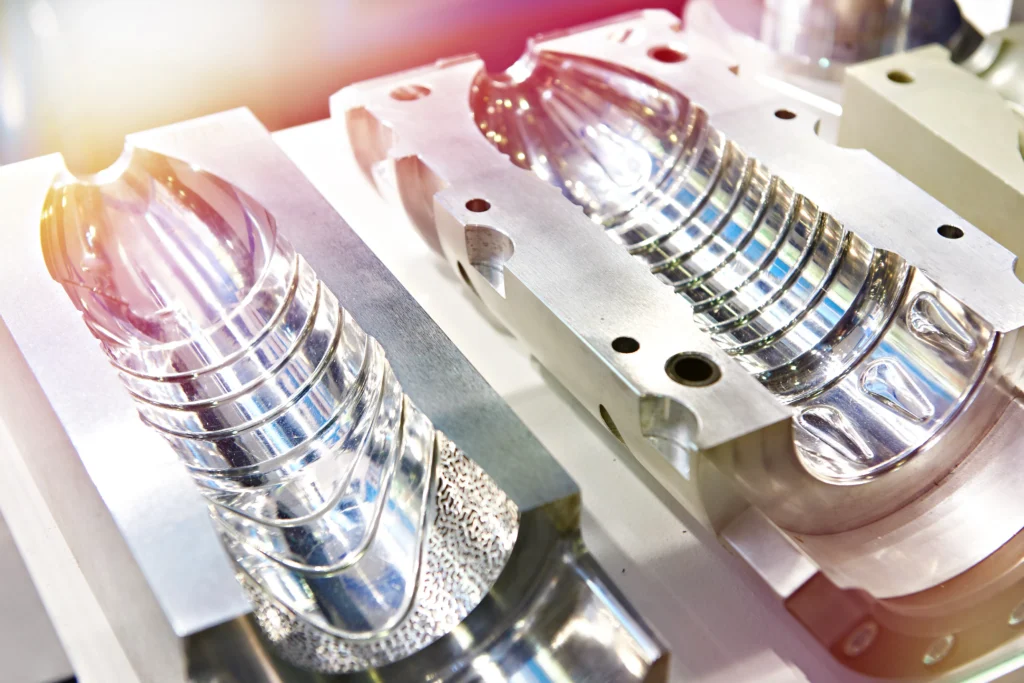
Traitement de surface des moules SPI
The most commonly used surface finishes are standardized by the Plastics Industries Society (SPI). These finishes range from the highest grade, mirror finish (SPI A), to semi-gloss finishes (SPI B), and fine and coarse matte textures (SPI C and SPI D). These finishes enhance the appearance of transparent polymer parts by improving their reflectivity or transparency. Mirror finishes are ideal for parts that require a glossy or transparent look, but they are also more prone to showing signs of use and typically require longer processing times and are more expensive. Matte finishes, on the other hand, offer a softer look and help conceal fingerprints or scratches on frequently handled items. They are also faster to process and more cost-effective.
| Type de finition | Numéro SPI | décrire | application | rugosité (Ra μm) | ||
| SPI-A1 | #3 Polissage au diamant | Pièces hautement polies ou transparentes, optiquement claires | 0.012-0.025 | |||
| diamant | SPI-A2 | #6 Polissage au diamant | Pièces hautement polies ou transparentes | 0.025 - 0.050 | ||
| SPI-A3 | #15 Polissage au diamant | Pièces hautement ou moyennement polies, lentilles non optiques | 0.050-0.100 | |||
| SPI-B1 | 600 Taille des particules | Pièces moyennement polies | 0.05 - 0.10 | |||
| Papier | SPI-B2 | 400 Taille des particules | Pièces moyennement polies | 0.10 - 0.15 | ||
| SPI-B3 | 320 gravier | Pièces moyennement ou faiblement polies | 0.28 - 0.32 | |||
| SPI-C1 | 600 pierres | Pièces peu polies | 0.35 - 0.40 | |||
| Pierre | SPI-C2 | 400 pierres | Pièces peu polies | 0.35 - 0.40 | ||
| SPI-C3 | 320 pierres | Pièces peu polies |
| |||
| SPI-D1 | #11 Perles de verre | Finition satinée | 0.80 - 1.00 | |||
| Sablage à sec | SPI-D2 | #240 Sablage à l'alumine | Finition terne | 1.00 - 2.80 | ||
| SPI-D3 | #24 Sablage à l'alumine | Finition terne | 20 mars - 18h00 |
Texture du moule VDI 3400
VDI 3400 surface finish refers to the texture standard of the German Association of Engineers (Verein Deutscher Ingenieure). VDI has set the standard for mold cavity surfaces in the European market and globally. VDI 3400 is mainly processed by EDM during mold making. VDI consists of electrical discharge particles of different sizes, depths, and densities.
| Valeur VDI | décrire | application | Rugosité (Ra µm) |
| VDI 12 | 600 pierres | Pièces peu polies | 0.40 |
| VDI 15 | 400 pierres | Pièces peu polies | 0.56 |
| VDI 18 | Perles de verre pulvérisées à sec | Finition satinée | 0.80 |
| VDI 21 | Sablage à sec #240 oxyde | Finition terne | 1.12 |
| VDI 24 | Sablage à sec #240 oxyde | Finition terne | 1.60 |
| VDI 27 | Sablage à sec #240 oxyde | Finition terne | 2.24 |
| VDI 30 | Sablage à sec #24 Oxyde | Finition terne | 3.15 |
| VDI 33 | Sablage à sec #24 Oxyde | Finition terne | 4.50 |
| VDI 36 | Sablage à sec #24 Oxyde | Finition terne | 6.30 |
| VDI 39 | Sablage à sec #24 Oxyde | Finition terne | 9.00 |
| VDI 42 | Sablage à sec #24 Oxyde | Finition terne | 12.50 |
| VDI 45 | Sablage à sec #24 Oxyde | Finition terne | 18.00 |
The VDI 3400 surface finish standard is primarily achieved through electrical discharge machining (EDM) and is an international guideline for creating matte textures on molds. EDM can produce a range of textures from fine to coarse, depending on the selection. Some textures have close equivalents, such as SPI D-3 and VDI 33, which look very similar. Similarly, VDI 12 corresponds to SPI C-1 in terms of texture quality.
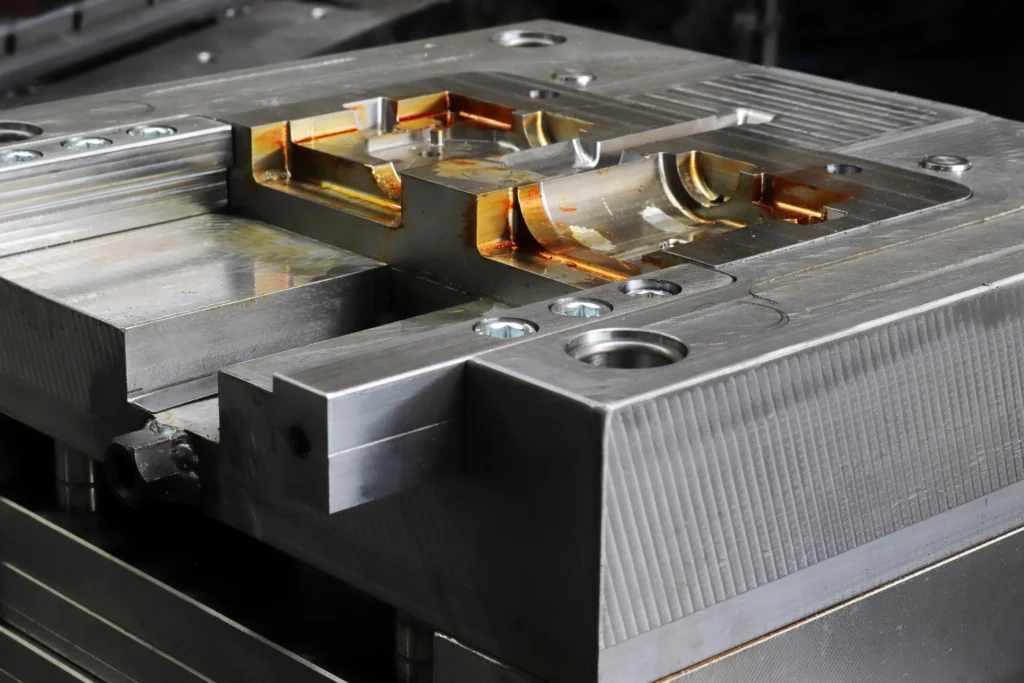
Options de traitement de surface pour le moulage par injection
A lower surface finish value results in a finer mold and product surface, which means longer mold production time and higher costs. Therefore, it’s not always necessary to choose the highest grade when selecting mold surface finish. The decision should be made based on the product’s usage environment and specific requirements. For example, for externally invisible plastic parts, a surface finish of SPI-B2 (the industry default unless otherwise specified) or lower is sufficient. For products requiring a transparent or mirror-like finish, a standard of SPI-A3 or higher is necessary.
Finally, the surface treatment of the mold is significantly influenced by the mold manufacturing method, especially the draft angle of the product. In injection molding, almost every product requires a draft angle (which helps remove the product from the mold), typically ranging from 1 to 10 degrees. The rougher the product surface, the larger the required draft angle. Therefore, if you need a product with a surface almost perpendicular to the mold opening direction, you cannot choose a very rough surface treatment. If you are unsure about the right mold treatment for your product, feel free to consult Ideal Pro’s professional engineers and advisors. We are happy to offer you free consultation and assistance; let’s get started!



 English
 French
 Dutch
Dutch German
 Japanese
 Korean