

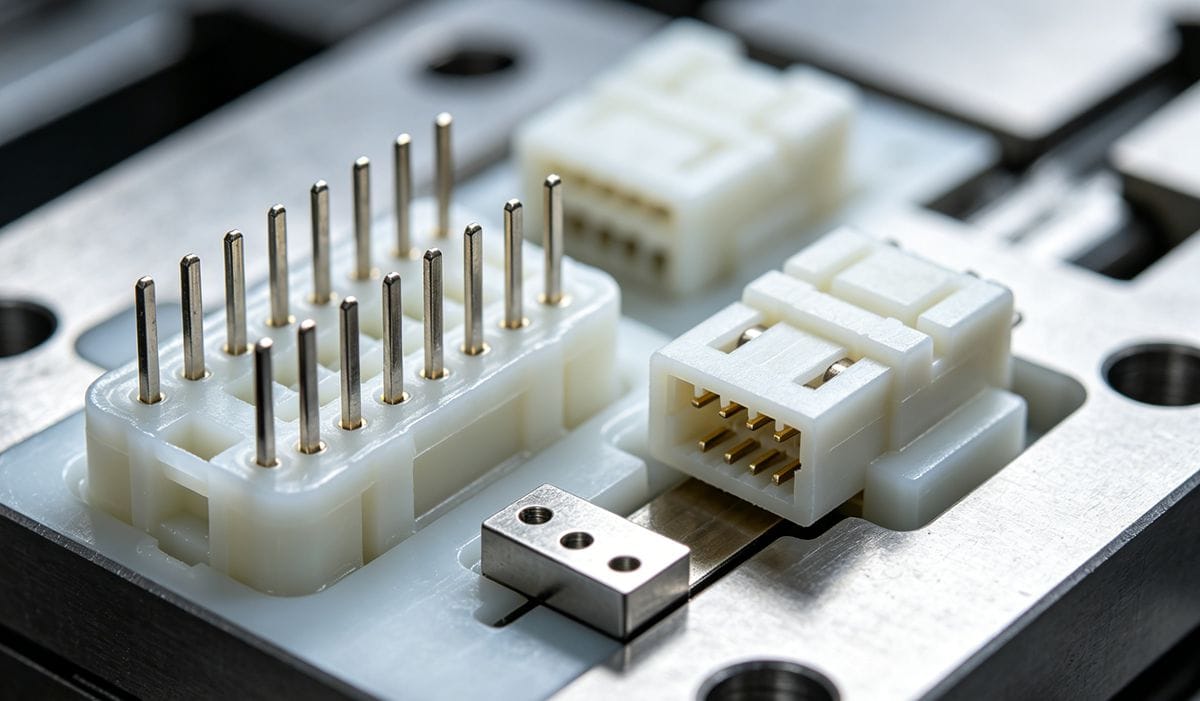
Insert Injection Molding is a sophisticated manufacturing process where pre-prepared inserts of different materials are loaded into a mold. Resin is then injected, bonding with the inserts as it melts and solidifies to create a seamless, integrated product. A closely related method, Overmolding , specifically refers to Insert Injection Molding onto a local area of a metal plate or substrate.
While slightly different in application, both processes share the same fundamental principles. Below, we explore the distinct characteristics of this technology and provide a comprehensive guide on designing automated Insert Injection Molding systems.
Top 10 Key Features of Insert Injection Molding
Insert Injection Molding offers unique advantages by combining the strengths of different materials. Here are the core benefits:
- Superior Material Combination: It perfectly combines the ease of molding, flexibility, and insulation of resin with the rigidity, strength, and heat resistance of metal. This allows for the creation of complex,exquisite, and robust metal-plastic integrated products.
- Electrical Functionality: By leveraging the insulation properties of resin and the conductivity of metal, molded parts can directly meet the functional requirements of electrical products.
- Process Optimization: Multiple inserts can be pre-molded and combined into sub-assemblies. This significantly rationalizes downstream assembly processes and reduces overall production steps.
- Versatile Material Compatibility: Inserts are not limited to metal. The process accommodates cloth, paper, wires, plastics, glass, wood, coils, and various electrical components.
- Simplified Assembly: For rigid parts or elastic products like rubber gaskets, creating an integrated unit via molding eliminates the complex task of arranging sealing rings manually, making subsequent automation much easier.
- Enhanced Reliability: Since the molten material bonds directly with the metal insert, the gap tolerance can be designed much tighter compared to traditional press-fit methods. This results in higher reliability for composite products.
- Secure Encapsulation: With the right resin and molding conditions, fragile items (such as glass, coils, or electrical parts) that are prone to deformation or breakage can be securely sealed and fixed within the plastic.
- Complete Enclosure: By utilizing appropriate mold structures, inserts can be completely encapsulated inside the resin if required.
- Complex Geometry Capabilities: After Insert Injection Molding, processes like core-pulling can be applied to create products with hollow grooves or intricate internal structures.
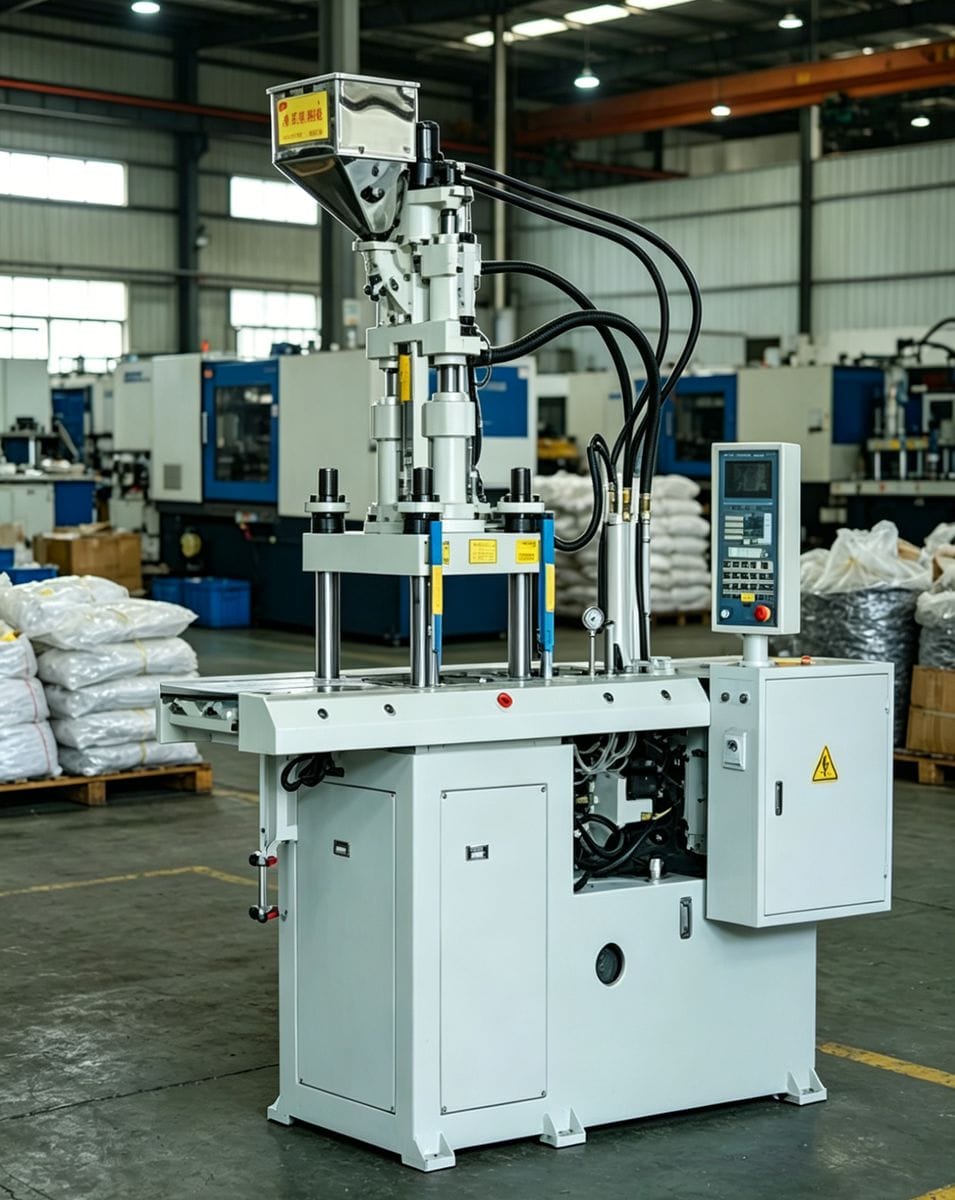
- Automation Ready: Vertical Insert Injection Molding machines, when combined with robotic arms and insert alignment devices, allow the entire Insert Injection Molding process to achieve high-level automated production.
Critical Considerations for Automated Insert Injection Molding System Design
Designing an automated system for Insert Injection Molding requires precision and foresight. Here are 12 essential factors to consider to ensure quality and efficiency:
1. Dimensional Accuracy & Shrinkage
Metal Insert Injection Molding often leads to uneven shrinkage rates. It is crucial to conduct limit tests on the shape and dimensional accuracy of critical areas beforehand.
2. Mold Design & Insert Stability
Metal inserts are prone to deformation or displacement during injection. The conception de moules must firmly hold the inserts in place. For products where the insert shape cannot be altered, preliminary testing is mandatory.
3. Surface Quality Control
When using conveyors or vibratory bowls to align metal inserts, contact between parts can cause micro-scratches. You must define the allowable quality limits for surface damage in advance.
4. Accounting for Manufacturing Tolerances
Measure variations caused by stamping processes, such as burrs (sawtooth edges), warping, thickness differences, diameter variations, and plating thickness. Use this data to select compatible automation equipment and design robust molds.
5. Gate Location & Cycle Time
Predictable factors like gate location and molding cycle time constrain the mold structure. Address these issues or develop countermeasures during the design phase.
6. Pre-treatment Requirements
Verify if the metal inserts require pre-heating or drying. This step is often vital for ensuring product quality and molding stability.
7. In-Mold Sensors
Various sensors may be installed inside the mold to monitor heat, force, and vibration. Confirm whether these are necessary to stabilize the molding action under environmental influences.
8. Contamination Prevention
To prevent fine debris from metal inserts or molded parts from accumulating in the mold cavity, consider installing air-blow cleaning devices.
9. Investment vs. Production Volume
Automated systems involve high capital investment. Before adopting them, ensure that the projected production volume justifies the cost. For dedicated machines, ensure the product has a lifecycle long enough (several years) to warrant continuous production.
10. Flexibility for General-Purpose Machines
If using general-purpose machines, confirm how many varieties of low-volume/high-mix inserts need to be produced. If mass production isn't guaranteed, recovering fixed assets per product becomes difficult. In such cases, choose systems where partial device replacement allows adaptation to new product varieties.
11. Cost & Efficiency Factors
The yield rate, productivity, and cost are determined by multiple factors: insert precision, insert shape, mold design suitability, and the final product geometry.
12. System Integration
The key to a successful automatic Insert Injection Molding system lies in the effective combination of the injection machine, mold, and automation devices—and how quickly they can function in unison. It is highly recommended to consult with manufacturers who have proven track records and experience in this field.
Conclusion
Insert Injection Molding is a powerful technique for creating high-value, integrated components. However, success relies heavily on understanding material interactions and meticulously planning your automation strategy. By addressing the design considerations above, you can maximize efficiency and product reliability.


 English
 French
 Dutch
Dutch German
 Japanese
 Korean