 Français




Introduction: Why HDPE Matters in Modern Manufacturing
High-Density Polyethylene (HDPE) is one of the most versatile and widely used thermoplastics in the world today. Recognized by its resin identification code "2", HDPE is celebrated for its exceptional strength-to-density ratio, outstanding chemical resistance, and high recyclability. From everyday consumer goods like milk jugs, shampoo bottles, and food storage containers to heavy-duty industrial applications such as corrosion-resistant piping, geomembranes, and automotive fuel tanks, HDPE is everywhere.
However, to fully leverage these superior properties in manufacturing, understanding the material's specific behavior is crucial. Drawing on 16+ years of plastic manufacturing experience and nearly 3,000 completed product development projects, IDEAL PRO has compiled this practical HDPE processing reference. As a provider of custom plastic injection molding and full-cycle product design, IDEAL PRO delivers end-to-end turnkey solutions spanning rapid prototyping, mold development, CNC machining, die casting and sheet metal production. In this guide, we will dive deep into the chemical and physical characteristics of HDPE, explore its classification by density, and provide precise injection molding parameters. Whether you are a product designer, a mold engineer, or a manufacturer, this article will serve as your ultimate reference for processing HDPE efficiently and achieving top-tier product quality.
For a broader overview of polyethylene manufacturing basics, read our full guide: Polyethylene (PE) Injection Molding: Process Guide & Parameters
1. Chemical and Physical Properties of HDPE
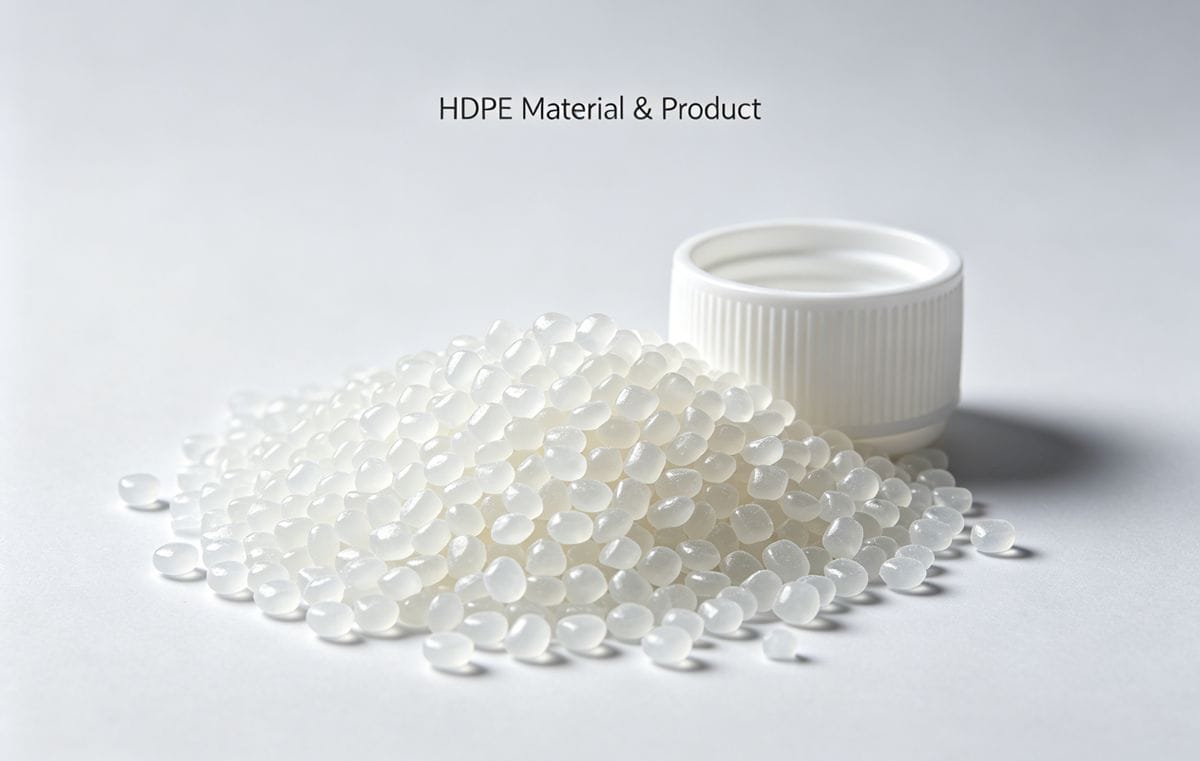
High-Density Polyethylene (HDPE) is a semi-crystalline thermoplastic known for its high strength-to-density ratio. Its high crystallinity is responsible for its excellent tensile strength, high-temperature distortion resistance, stiffness, and chemical stability.
Compared to Low-Density Polyethylene (LDPE), HDPE offers superior barrier properties (lower permeability) but has a relatively lower impact strength. The overall characteristics of HDPE are primarily controlled by its density and molecular weight distribution. For injection molding applications, HDPE with a narrow molecular weight distribution is typically preferred.
HDPE Classification by Density
HDPE is generally categorized into three types based on density:
| HDPE Type | Density Range (g/cm³) | Caractéristiques principales |
|---|---|---|
| Type I | 0.910 – 0.925 | Lower density, higher flexibility |
| Type II | 0.926 – 0.940 | Balanced properties |
| Type III | 0.940 – 0.965 | Higher density, maximum stiffness & chemical resistance |
Flow and Environmental Resistance
HDPE exhibits excellent flow characteristics, with a Melt Flow Rate (MFR) typically ranging from 0.1 to 28. While higher molecular weights reduce flowability, they significantly enhance impact strength.
> ⚠️ Note on Environmental Stress Cracking (ESC): HDPE is susceptible to ESC. This can be mitigated by using materials with lower flow rates to reduce internal stresses. Furthermore, while HDPE dissolves easily in hydrocarbon solvents at temperatures above 60°C, its solvent resistance is still superior to that of LDPE.
To learn about core thermoplastic metrics including melt flow and crystallinity, check: Key Plastic Properties for Injection Molding: Flow, Moisture & Shrinkage
2. Shrinkage and Post-Molding Behavior
Because HDPE is a semi-crystalline material, it experiences significant volumetric shrinkage during the cooling phase. The typical post-molding shrinkage rate ranges from 1.5% to 4.0%. Ensuring uniform cooling is critical to minimizing shrinkage variations and preventing warpage.
3. Optimal Injection Molding Parameters
Achieving high-quality HDPE parts requires precise control over the molding process. IDEAL PRO’s technical team regularly optimizes these settings for customer HDPE projects, balancing surface quality, dimensional stability and production cost. Below are the recommended processing conditions:
Processing Guidelines
- Séchage : Generally not required if the material has been stored properly in a dry environment.
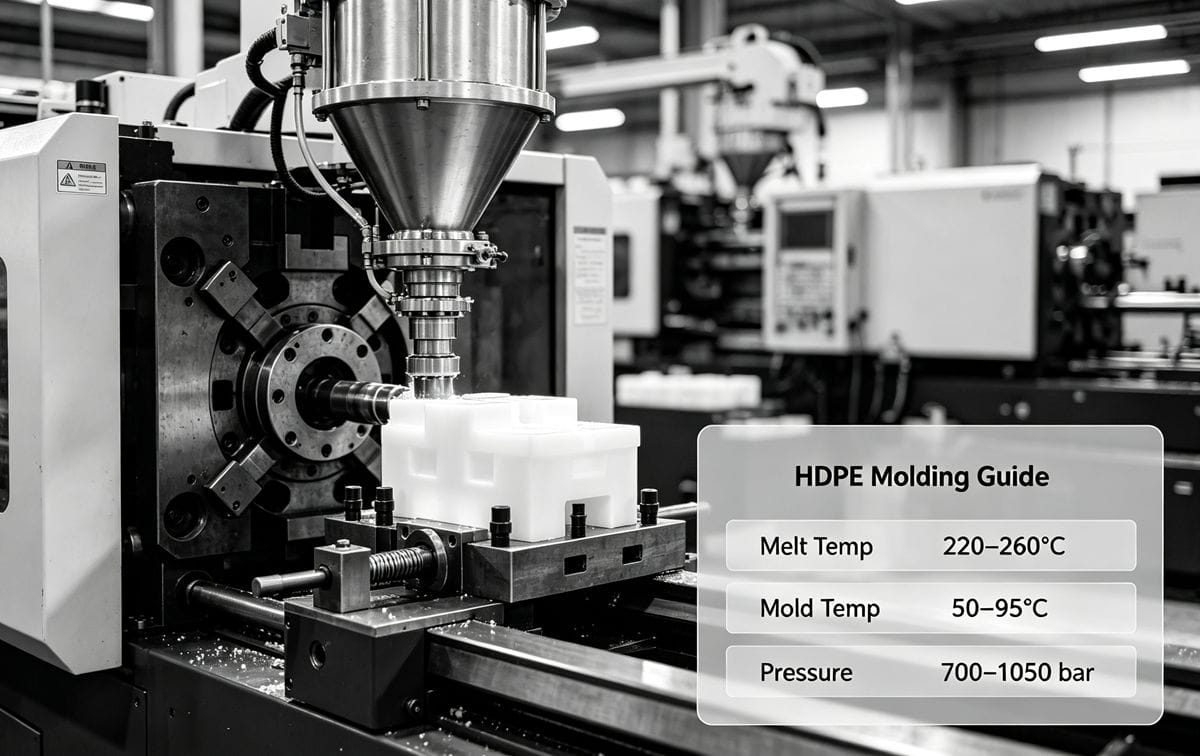
- Température de fusion : 220°C – 260°C. (For higher molecular weight grades, a range of 200°C – 250°C is recommended).
- Injection Pressure: 700 – 1050 bar.
- Vitesse d'injection : High injection speed is highly recommended to ensure proper filling and surface finish.
Mold Temperature & Cooling Strategy
Mold temperature should be maintained between 50°C and 95°C.
- Wall Thickness 6mm: Use lower mold temperatures.
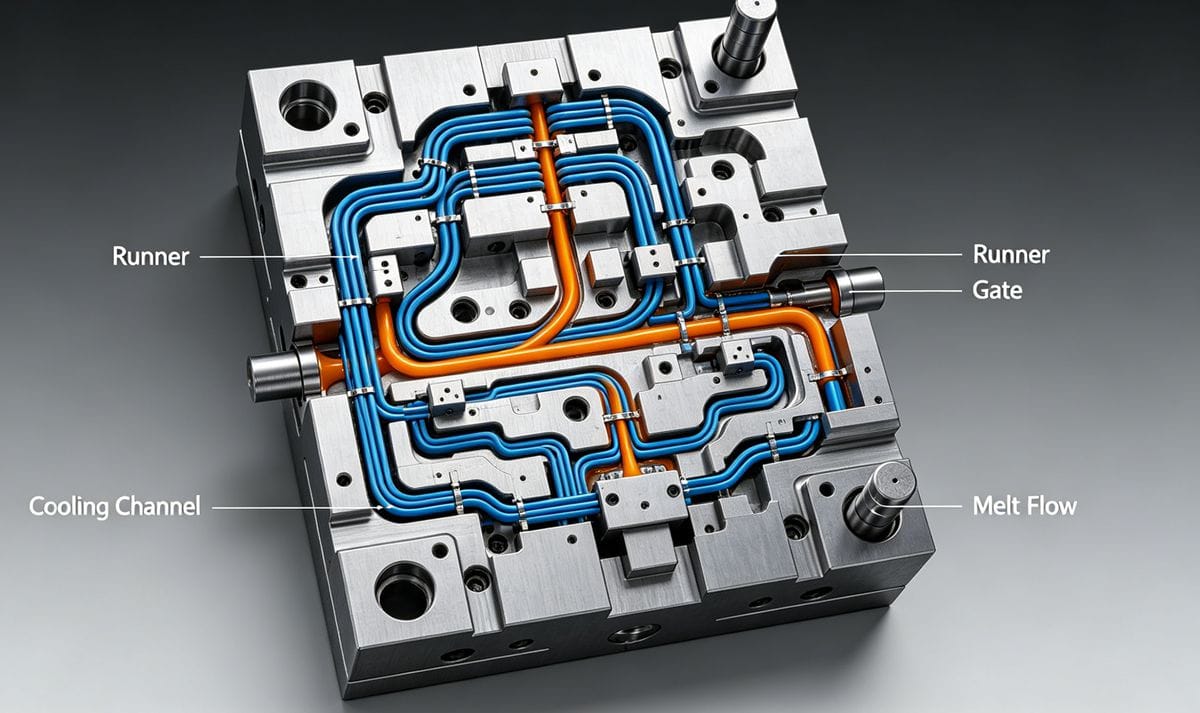
To optimize cycle time and ensure uniform cooling, cooling channel diameters should be at least 8mm, and the distance from the channel to the mold surface should not exceed 1.3d (where d = channel diameter).
Runner and Gate Design
- Runner Diameter: 4.0 – 7.5 mm. Keep runner lengths as short as possible to reduce pressure drop.
- Gate Type: Various gate types are suitable. Gate length should not exceed 0.75 mm.
- Hot Runners: HDPE is exceptionally well-suited for hot runner mold systems.
If you want to master universal injection process tuning rules applicable to HDPE and all thermoplastics, see our parameter tuning handbook: Guide des paramètres de moulage par injection : 5 réglages essentiels et dépannage
4. Quick Reference: HDPE Molding Cheat Sheet
| Paramètres | Recommended Range / Condition |
|---|---|
| Température de fusion | 220°C – 260°C |
| Température du moule | 50°C – 95°C |
| Pression d'injection | 700 – 1050 bar |
| Vitesse d'injection | Haut |
| Taux de rétrécissement | 1.5% – 4.0% |
| Material Drying | Not required (if stored properly) |
Custom HDPE Manufacturing Support from IDEAL PRO
If you are developing custom HDPE products for consumer, industrial or automotive use, IDEAL PRO’s cross-functional design and manufacturing team offers full-cycle support for startups, established manufacturers and independent designers. Our turnkey service covers material selection validation, mold design optimization, small-batch prototyping and mass production, with cost-reduction strategies tailored to HDPE molding projects. Reach out to our engineers for personalized technical consultation on your HDPE part development.
À propos de l'auteur

Alex Yu
Ideal Pro Manufacturing
Alex est le cofondateur d’Ideal Pro, mais lorsqu’il ne supervise pas des projets clés ou ne dirige pas l’équipe technique, vous le trouverez sans doute en train de faire une longue balade à vélo, à la recherche du meilleur café de la ville, ou en train de planifier sa prochaine aventure de voyage. Fort de plus de 20 ans d’expérience dans le commerce international et la gestion de projets, il a tout vu : délais serrés, problèmes techniques complexes et tout ce qui se trouve entre les deux. Il est convaincu qu’un travail de qualité naît d’un esprit bien reposé et d’une bonne tasse de café, et il apporte cette même curiosité et ce même souci du détail à chaque projet qu’il entreprend. Lorsqu’il n’est pas au bureau, il se trouve généralement en plein air, à explorer de nouveaux endroits et à glaner des anecdotes à partager.

 English
 French
 Dutch
 German
 Japanese
 Korean