

How Key Properties of Modified PP Affect Injection Molding Quality, Paint Adhesion, and Assembly Performance
Modified polypropylene (PP), especially PP + EPDM (ethylene-propylene-diene monomer rubber) blends, is widely used in automotive, consumer electronics, and appliance industries due to its balanced mechanical properties, cost-effectiveness, and processability. However, achieving consistent product quality—especially in terms of surface finish, stabilité dimensionnelle1, and paint adhesion—requires deep understanding of how material composition and processing parameters interact.
In this article, we analyze how critical properties of modified PP—including EPDM content, melt flow index (MFI), shrinkage behavior, et filler loading (e.g., talc)—impact injection molding outcomes, paintability, and final assembly performance.
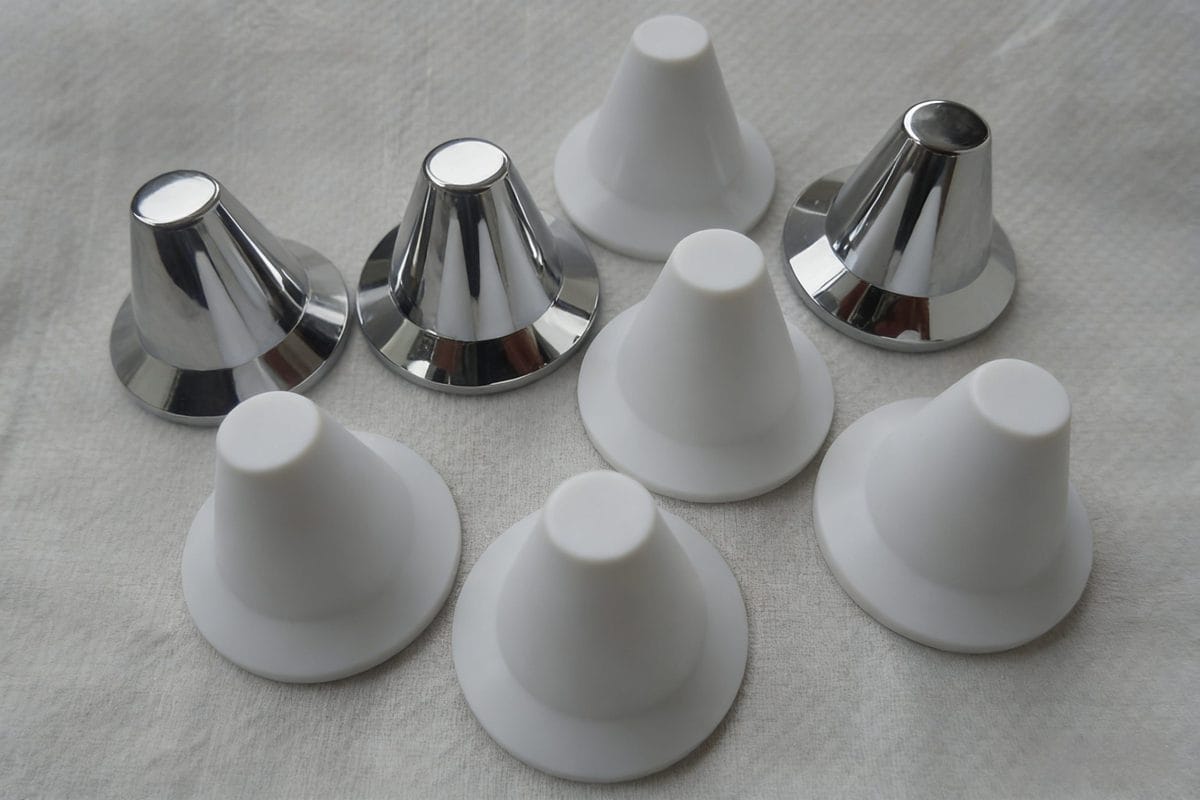
1. Paint Adhesion: The Critical Role of EPDM Surface Distribution
Pure PP exhibits very low surface energy and weak polarity, resulting in poor paint adhesion. In PP + EPDM formulations, the primary mechanism for improved coating adhesion relies on the surface enrichment of EPDM domains2 during melt flow.
Key Mechanism:
- During injection molding, shear forces induce phase separation between the faster-flowing PP matrix and the slower-moving EPDM particles.
- With proper process control (e.g., optimized injection speed, gate design, and mold temperature), EPDM can be preferentially migrated toward the part surface—forming a thin, rubber-rich layer that enhances paint bonding.
⚠️ Practical Challenge: In real-world production, this surface migration is often overlooked when optimizing for other quality criteria (e.g., sink marks, warpage). As a result, inconsistent paint adhesion may occur—even with identical material batches.
Recommendation:
- Conduite early-stage paint adhesion validation using molded test coupons under actual production conditions.
- Use techniques like XPS (X-ray photoelectron spectroscopy) or contact angle measurement to verify EPDM surface enrichment.
2. Dimensional Stability: Shrinkage Behavior of PP + EPDM
Dimensional accuracy is highly sensitive to shrinkage—especially for precision assemblies (e.g., snap-fit housings, instrument panels). Two main contributors dominate shrinkage in PP + EPDM:
a) EPDM’s Elastic Recovery
- EPDM acts as a compressible elastomer: under high injection pressure, it deforms; upon ejection, it partially rebounds (“elastic recovery”), causing post-mold dimensional drift.
- Higher EPDM content → greater elastic recovery → increased variability in final dimensions.
b) PP Crystallinity & Thermal History
- PP is semi-crystalline: crystallization rate depends strongly on cooling rate and mold temperature.
- Secondary thermal exposure (e.g., paint oven curing at 80–120°C) can trigger re-crystallization, leading to additional shrinkage or warpage—even after initial molding.
🔍 Note: Shrinkage values provided by suppliers are typically nominal ranges (e.g., 1.2–1.8%) and apply only to standardized geometries (e.g., ASTM plaques). Real-part shrinkage varies significantly with part thickness, flow path, and gating strategy.
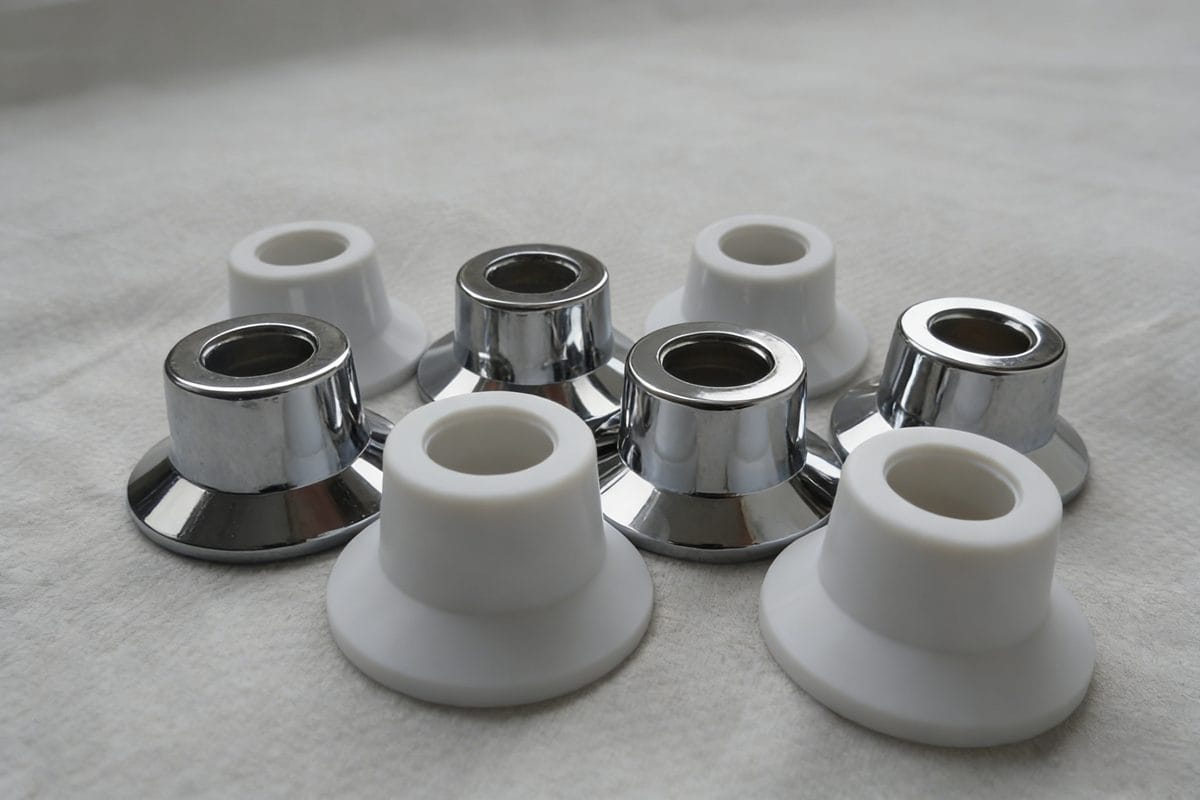
3. Melt Flow Index (MFI): Balancing Flow and Process Stability
Les Melt Flow Index (MFI) quantifies the melt viscosity under standard conditions (e.g., 230°C, 2.16 kg load). It directly influences:
| MFI Level | Impact on Molding |
|---|---|
| Low MFI (< 5 g/10 min) | Poor flow → short shots, weld lines, surface defects (e.g., jetting, splay), localized underfill → smaller dimensions in thin sections. |
| High MFI (> 20 g/10 min) | Excessive flow → high sensitivity to pressure fluctuations; small changes in pack/hold pressure cause large dimensional variations → reduced process robustness3. |
✅ Optimal Range: For most structural automotive interior parts, MFI of 8–15 g/10 min offers the best trade-off between fillability and dimensional control.
4. Material Composition Effects
▶ EPDM Content
- Pros: Increases impact strength, ductility, and low-temperature toughness (critical for bumpers, dashboards).
- Cons:
- Reduces melt flow → higher risk of surface defects (e.g., orange peel, gloss variation).
- Increases stress concentration → potential for micro-cracks or warpage.
- Excess EPDM (>20 wt%) severely narrows process window and complicates surface uniformity.
💡 Proxy Indicator:
→ Elongation at break correlates strongly with EPDM content: higher elongation ≈ higher rubber phase.
▶ Talc (Talcum Powder) Filler Content
- Commonly added (5–20 wt%) to improve stiffness, heat resistance, and dimensional stability.
- Drawbacks:
- Lowers melt flow → exacerbates surface roughness and flow marks.
- Inhomogeneous dispersion → creates localized weak spots and reduces paint adhesion (talc particles interfere with primer wetting).
💡 Proxy Indicator:
→ Tensile strength generally increases with talc loading (up to ~15 wt%), while elongation decreases.
5. Strategic Material Selection for High-Quality Manufacturing
When selecting modified PP grades, consider not just final part performance, but also process robustness:
| Goal | Recommended Approach |
|---|---|
| Maximize paint adhesion consistency | Prioritize grades with controlled EPDM particle size/distribution; validate via molded surface analysis. |
| Improve dimensional repeatability | Choose higher-shrinkage grades (e.g., 1.6–1.8%)—paradoxically, larger shrinkage reduces sensitivity to minor process drifts. |
| Widen process window | Target moderate MFI (10 ± 2), balanced EPDM (10–15%), and well-dispersed talc (<12%). |
| Reduce VOC/odor (e.g., for interiors) | Specify low-odor, stabilized PP+EPDM grades (e.g., with adsorbent masterbatches or vacuum devolatilization). |
📌 Conseil de pro: Always request molding guidelines4 from your resin supplier—including recommended barrel/mold temps, injection speed profile, and hold pressure duration—for the specific grade you intend to use.
Conclusion
Modified PP (especially PP+EPDM) remains a cornerstone material for high-volume injection molding—but its success hinges on a systems-level understanding of material formulation, processing physics, et downstream finishing requirements. Ignoring the interplay between EPDM migration, shrinkage dynamics, and MFI can lead to costly rework, paint failures, or assembly mismatches.
By integrating material science insights with practical process validation, manufacturers can achieve both high aesthetics and functional reliability—without compromising cycle time or cost.
Understand the factors that affect dimensional accuracy and how to mitigate them. ↩
Learn how EPDM migration during molding improves coating adhesion. ↩
Explore methods to enhance manufacturing consistency and reduce defects. ↩
Get insights on optimal processing conditions to achieve high-quality molded parts. ↩
 English
 French
 Dutch
Dutch German
 Japanese
 Korean