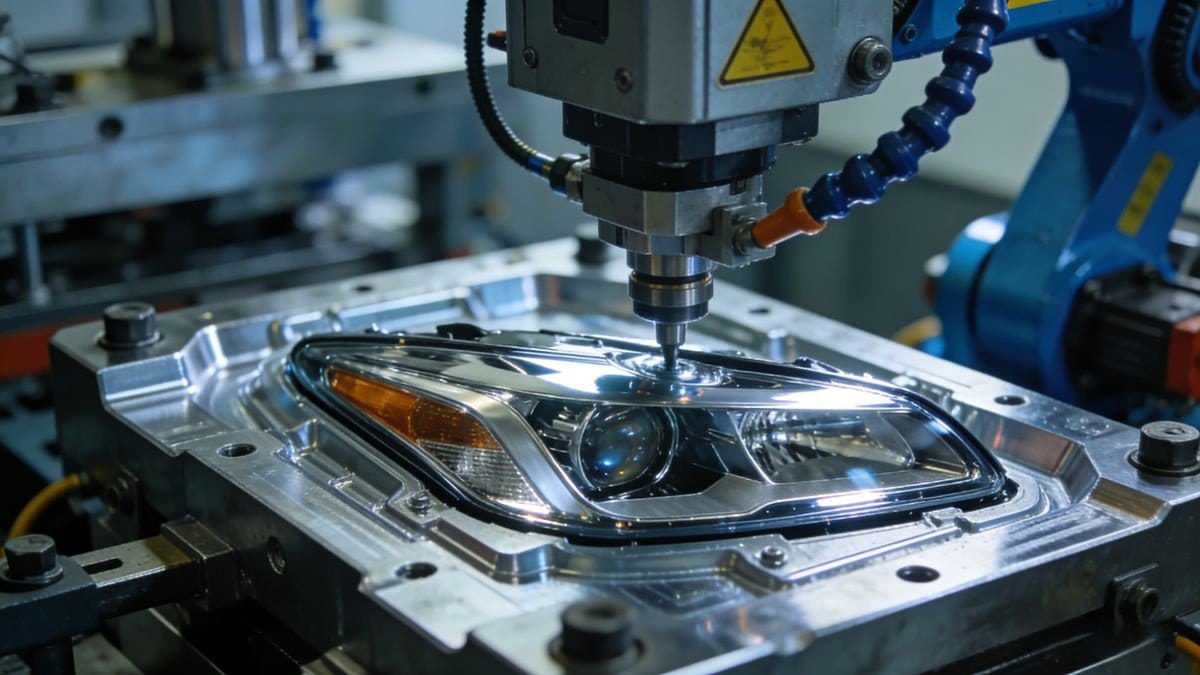
La qualité de l'éclairage automobile est essentielle à la sécurité de la conduite. C'est pourquoi les réglementations du monde entier imposent des exigences strictes aux systèmes d'éclairage automobile. La conception des lampes doit non seulement répondre aux normes de sécurité, mais aussi à d'autres critères : elles doivent s'intégrer parfaitement à l'esthétique générale du véhicule, être à la fois fonctionnelles et visuellement attrayantes, respecter les principes aérodynamiques et améliorer le confort et la commodité du conducteur et des passagers. Par conséquent, la technologie de conception de l'éclairage automobile a progressé rapidement, parallèlement au développement de l'industrie automobile.
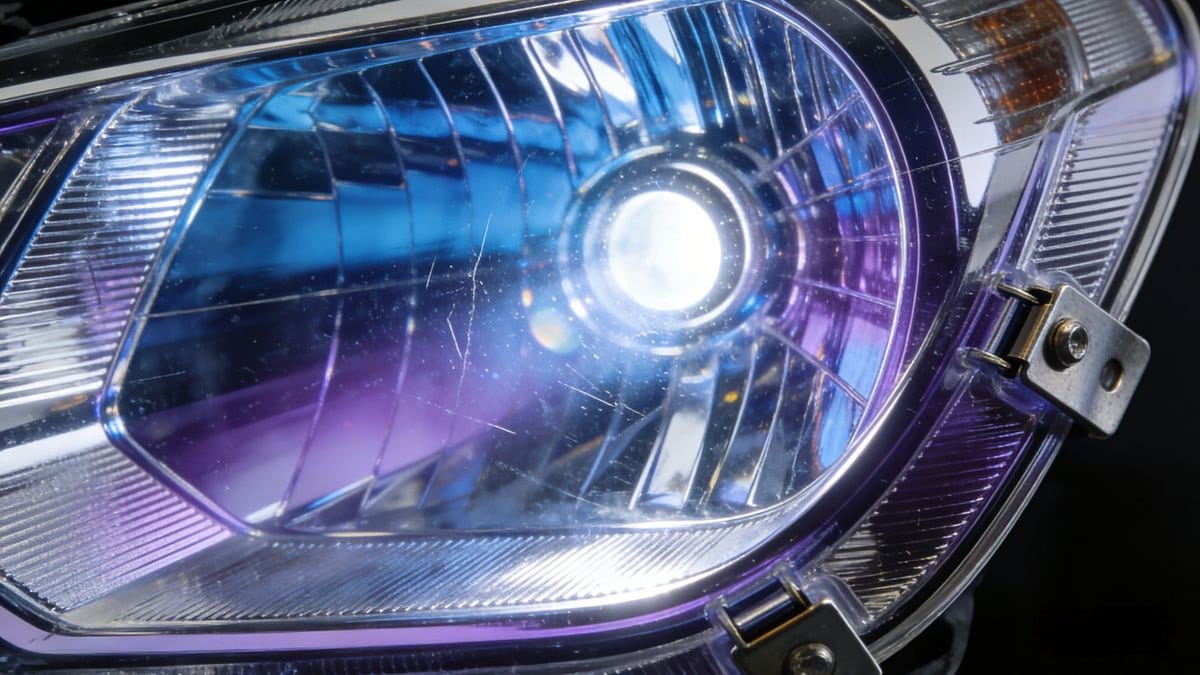
Caractéristiques des matériaux et des processus des lampes automobiles
Les lampes automobiles se composent généralement d'un culot et d'un boîtier. Le culot est généralement fabriqué à partir d'un matériau thermodurcissable.BMC (composé de moulage en vrac). Le boîtier, quant à lui, peut être fabriqué à partir de matériaux tels que PMMA, PP ou ABS, Les produits de cette catégorie sont souvent fabriqués à l'aide de procédés de moulage bicolores ou tricolores.
Pour la production de lampes bicolores, un aspect critique est l'unité d'injection de la lampe. moulage par injection bicolore1 machine. L'entraxe entre les deux vis doit correspondre précisément à l'entraxe du moule bicolore.
Considérations clés pour la fabrication de lampes
1. Facteurs affectant la stabilité du moulage des lampes
- Réponse de l'unité de contrôle: Temps de commutation longs, interférences de bruit électrique, sortie de commande instable et fluctuations de température.
- Bruit du système hydraulique: Pression instable, mauvais positionnement de la vanne, hystérésis et variations de l'amortissement de la tuyauterie.
- Variations du système mécanique: Fuite du joint d'huile interne, effets d'amortissement, différences de frottement, positionnement de la bague de contrôle de la vis et performance du clapet de retenue.
- Plastification incohérente: Variations de la qualité de la plastification.
- Contrôle de la température des moules.
2. Problèmes courants dans la conception d'ensembles canon et vis spécialisés pour les feux arrière
- La vis tourne à vide sans alimentation en matière.
- Couple requis excessif empêchant la rotation de la vis.
- Fusion incomplète du plastique.
- Dosage instable de la vis.
- Mauvais mélange et homogénéisation du plastique.
- Problèmes d'élévation de température avec les plastiques de moulage à basse température.
- Bulles à l'intérieur de la pièce moulée.
- Taches noires ou jaunissement de la pièce moulée.
- Corrosion de la vis, usure et courte durée de vie.
3. Points clés de la conception des assemblages de vis et de cylindres de plastification
L'ensemble vis et cylindre de plastification est le cœur d'une machine de moulage par injection. Il est responsable de l'alimentation, de la fusion, du mélange et du dosage de la matière première plastique. Ses performances sont donc directement liées à la qualité de la pièce moulée finale. Les principaux objectifs de l'optimisation d'une vis de plastification sont les suivants :
- Amélioration du cisaillement et de l'action de mélange.
- Obtenir un mélange uniforme.
- Amélioration de la capacité de plastification.
- Assurer une température de fusion uniforme.
4. Paramètres de conception clés pour les vis de feu arrière spécialisées2
- Rapport L/D: 21~23
- Finition de la surface: Extrêmement lisse pour éviter l'accumulation de matière.
- Placage: Augmentation de l'épaisseur du placage pour une meilleure résistance à la corrosion.
- Taux de compression: 2.3
- Répartition des zones:
- Zone d'alimentation : Environ 50%
- Zone de compression : Environ 30%
- Zone de comptage : Environ 20%