 Custom Plastic Injection Molding | High…

 English



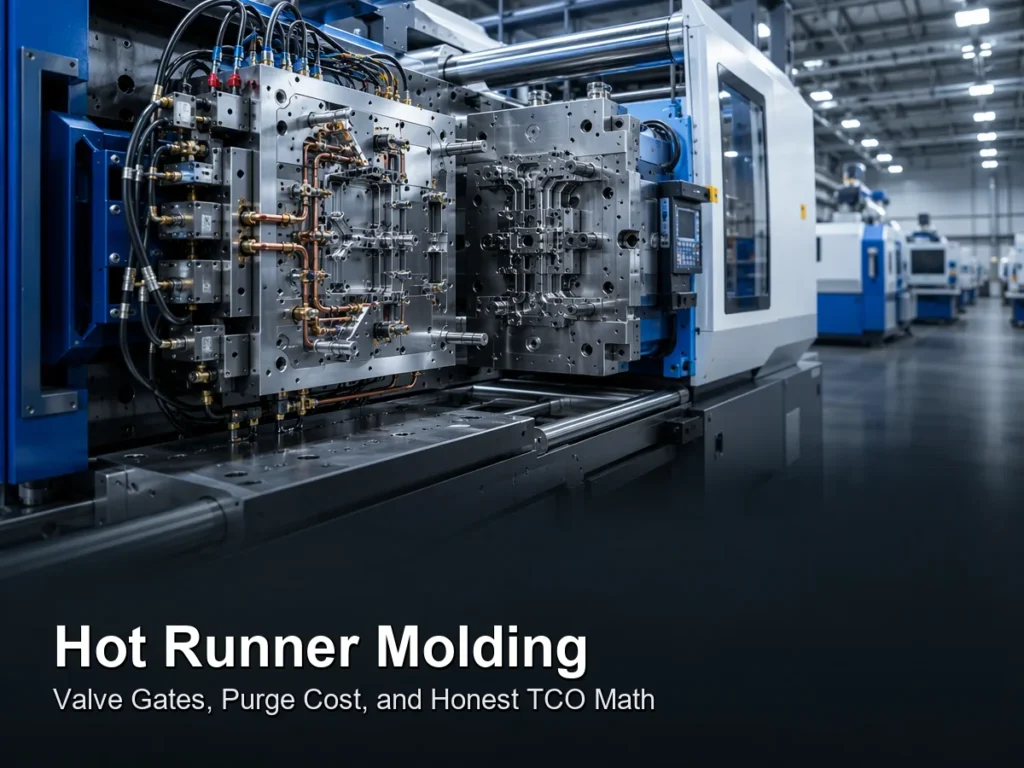
TL;DR the honest version: a hot runner is not an upgrade, it is a trade. You buy material and cycle time with money up front, maintenance discipline, and a permanent exposure to a system that must stay at temperature while your production does. Plenty of guides stop at “hot runners save runner waste and improve balance.” This one does the total-cost arithmetic with the assumptions written down — including the energy line that almost nobody puts on the comparison — and states plainly when a cold runner is the better engineering answer.
A customer asked us to price the same 8-cavity connector tool two ways. The hot-runner version saved roughly a gram and a half of resin per part and about 1.6 seconds of cycle. It also added a manifold, five nozzle zones, a valve-gate actuation stack, and a colour-change routine that grew from forty minutes to over two hours. On a 120,000-part programme with three colour changes per month, the cold-runner tool won. On their next part — 48 cavities, one colour, three years — it was not close.
Key Takeaways
- Hot runner is a volume and stability decision, not a quality tier. It pays back on runner mass saved, cycle seconds removed, and cosmetic consistency — and only if the programme is long enough to collect those savings.
- The energy line is real and usually omitted. A manifold held at temperature draws power continuously, including during mould changes, breaks and weekends. Put it in the same table as the resin saving.
- Colour change and purge are the hidden tax. Melt held in a manifold has to be displaced. Multi-colour or frequent-material-change programmes can lose the entire resin saving to purge.
- Thermally unstable resins are a genuine exclusion. Long residence time is the enemy of POM, PVC and some flame-retardant grades; that is a chemistry answer, not a supplier preference.
- A leak is not a defect, it is an outage. Failure modes in hot runner systems destroy the assembly and stop production, so the maintenance plan is part of the quote.
Why Trust This Hot Runner Guide?
Because we build the tool and then run it. Ideal Pro designs moulds, cuts steel, moulds production parts and owns the dimensional record under one ISO 9001:2015 system in Huzhou, on presses up to 1,600 tons, producing over a thousand mould sets a year. When we recommend a runner system we are recommending our own future overtime, so the arithmetic below is the arithmetic we actually use in the quote.
Every number here is either one of our published shop standards, an arithmetic result on stated assumptions, or a planning range to argue with. We flag which is which. Where the answer depends on your resin, your colour count or your annual volume, the honest answer is a formula and your own inputs — not a figure invented to win the argument.
Quick Reference Guide: Hot Runner VS. Cold Runner
| Dimension | Cold runner | Hot runner | Which wins |
|---|---|---|---|
| Material per shot | Parts + solid runner | Parts only | Hot — if the runner mass is significant or regrind is restricted |
| Cycle time | Runner must cool and eject | No runner to cool | Hot — usually the largest real saving |
| Gate vestige / cosmetic | Witness from a solidified gate | Thermal or valve gate, controllable | Hot — for visible faces |
| Multi-cavity balance | Runner geometry only | Zoned heating plus valve sequencing | Hot — above roughly 8–16 cavities |
| Tool cost | Lower, simpler steel | Premium for manifold, nozzles, controllers | Cold |
| Colour / material change | Fast — the runner leaves the machine | Slow — displaced melt must be purged | Cold |
| Energy | None continuous | Continuous heating load, including idle | Cold |
| Downtime exposure | Clear a blocked runner in minutes | A leak or failed heater can scrap the assembly | Cold |
| Heat-sensitive resins | Short residence | Long residence in manifold | Cold — decisively for some grades |
| Automation and post-ops | Runner separation, sprue handling | Part-only drop | Hot |
If your programme is high-cavity, single-material, long-running and cosmetically fussy, six or seven of those rows point the same way. If it is a family of small parts in four colours on a six-month programme, count them again.
What Is a Hot Runner System, Exactly?
A hot runner is a heated, insulated distribution system that keeps the material between the injection unit and the cavity gates in a permanently molten state, so each shot delivers only part volume into the tool. The manifold splits the melt to each nozzle; zones of heaters and thermocouples hold it; thermal or valve gates control when melt is allowed into each cavity.
The distinction that matters operationally: in a cold-runner tool the runner is a consumable you eject and manage. In a hot-runner tool the runner becomes part of the machine. It has its own thermal control loop, its own failure modes, its own startup behaviour, and its own spare-parts list, and it is bolted into your production tool.
Thermal gate — flow is stopped by freezing a land. Cheaper, simpler, less precise; gate vestige and sequencing are consequences rather than controls.
Valve gate — a driven pin mechanically opens and closes the orifice. You control timing, sequence and gate-blush behaviour, which is why high-cosmetic and multi-material work tends here. You also buy the actuation stack, the pin wear item, and the seal that wants to fail eventually.
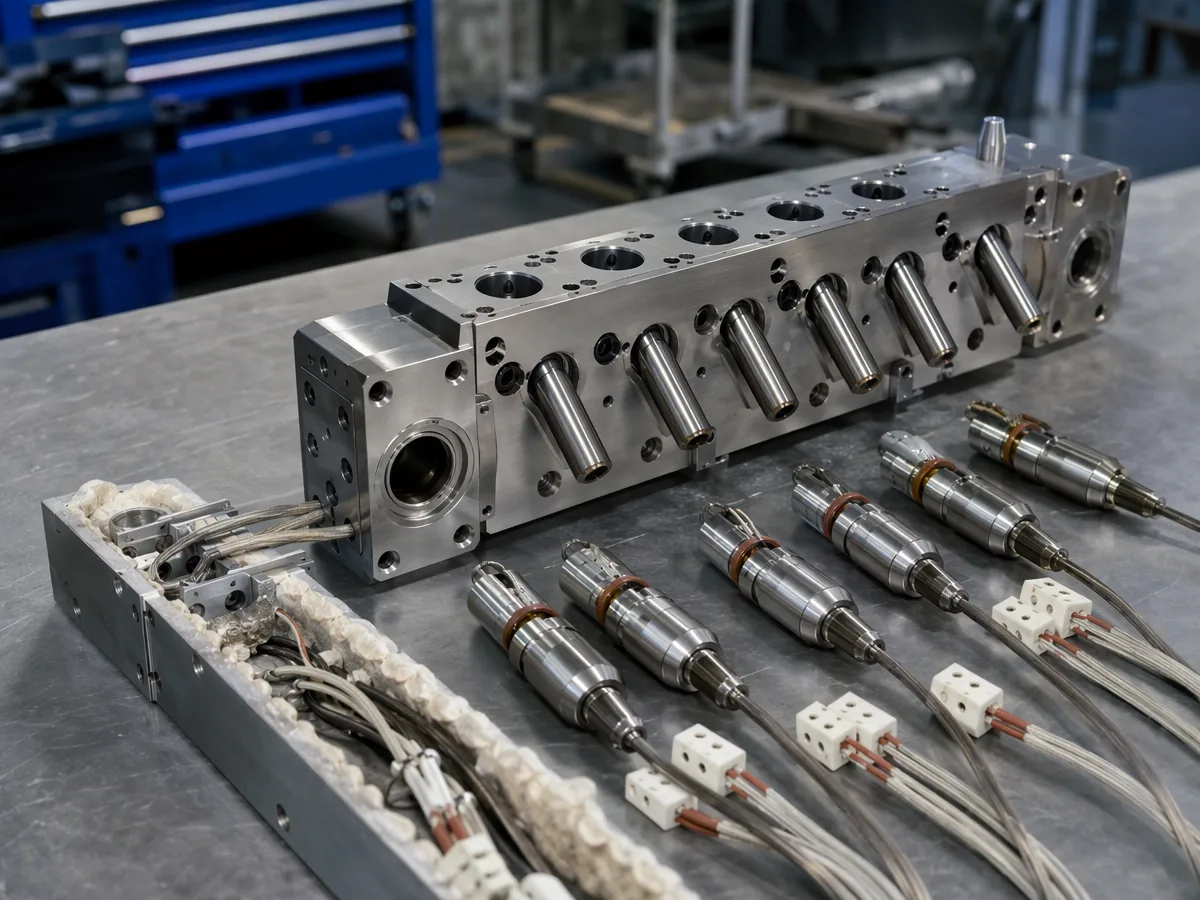 Figure 1: Manifold and nozzles out of the tool. Every zone you can see is a thermocouple, a heater and a failure mode with its own spare.
What Does the Cycle-Time Saving Look Like in Arithmetic?
The material saving is easy and small; the cycle saving is smaller-looking and much larger. Runner cooling is dead time that comes straight out of your cycle, and at production volume seconds are where the margin lives.
Worked example, assumptions printed so you can substitute your own. Connector, 8 cavities, part mass 1.1 g, cold runner 22 g per shot. Resin at $2.60/kg. Cold cycle 21.0 s, hot cycle 19.4 s. Three shifts, 6,600 h/year, 92 percent uptime.
| Line | How it is computed | Result |
|---|---|---|
| Runner resin avoided | 22 g ÷ 8 cavities × $2.60/kg | ≈ $0.0072 per part |
| Regrind handling avoided | Cost of a controlled stream, per our regrind policy guide | Qualitative: no stream, no ceiling, no records |
| Capacity from 1.6 s | 8 ÷ 19.4 vs 8 ÷ 21.0 parts per hour | ≈ 1,485 vs 1,371 parts/h ≈ +8.3% |
| Annual parts per press | 6,600 h × 92% × rate | ≈ 9.03 M vs 8.34 M — ≈ +0.69 M parts |
| Contribution of that capacity | Your margin × 0.69 M, or the press you did not buy | Usually dwarfs the resin line |
| Continuous heating load | Manifold + nozzle zones × hours energised, including idle | A debit — get the real kW from the system maker |
Then the break-even, which is the only number that should decide the conversation:
break-even parts = (hot-runner tool premium + expected maintenance) ÷ (resin saved per part + cycle-value per part − energy per part − purge cost per part)
Put your own premium in. The point is not the result — it is that the denominator frequently shrinks once someone remembers the purge column. Our injection molding cost whitepaper walks the same structure on a general part.
Where Hot Runner Actually Earns Its Premium
Three conditions justify a hot runner on their own: high cavitation needing balance, a visible cosmetic face where gate witness is unacceptable, and automated cells where a sprue has no home. Everything else is a cost argument to be won or lost on the table above.
Cavity balance above eight cavities
In a cold-runner multi-cavity tool, balance comes from runner geometry alone, and the last cavity fills later and cooler. Above roughly 8–16 cavities the runner gets long, the pressure drop climbs, and the steel temperature at each gate stops being uniform. Zoned heating plus valve sequencing lets you equalise arrival and packing per cavity instead of hoping the layout did it. The verification discipline is the same one we apply to any multi-cavity tool: weigh every cavity inside the process window rather than averaging them into silence, as covered in our T1 evidence package guide.
Cosmetic control
Gate vestige, sink over the gate, and weld-line placement are all controllable when the gate is a valve with a timing curve. Where the part is a bezel, a lens surround, or anything a consumer touches, that control is often the entire reason for the spend. It is also the reason a valve-gate tool quote looks strange next to a cold-runner quote.
Automation and part-only drop
A robot that handles one part geometry is cheap. A cell that separates a sprue from eight parts, or a machine that cannot feed an automated vision system because the runner is still attached, is where cold-runner tools quietly lose their cost advantage. If your line is already automated, this row matters more than the resin row.
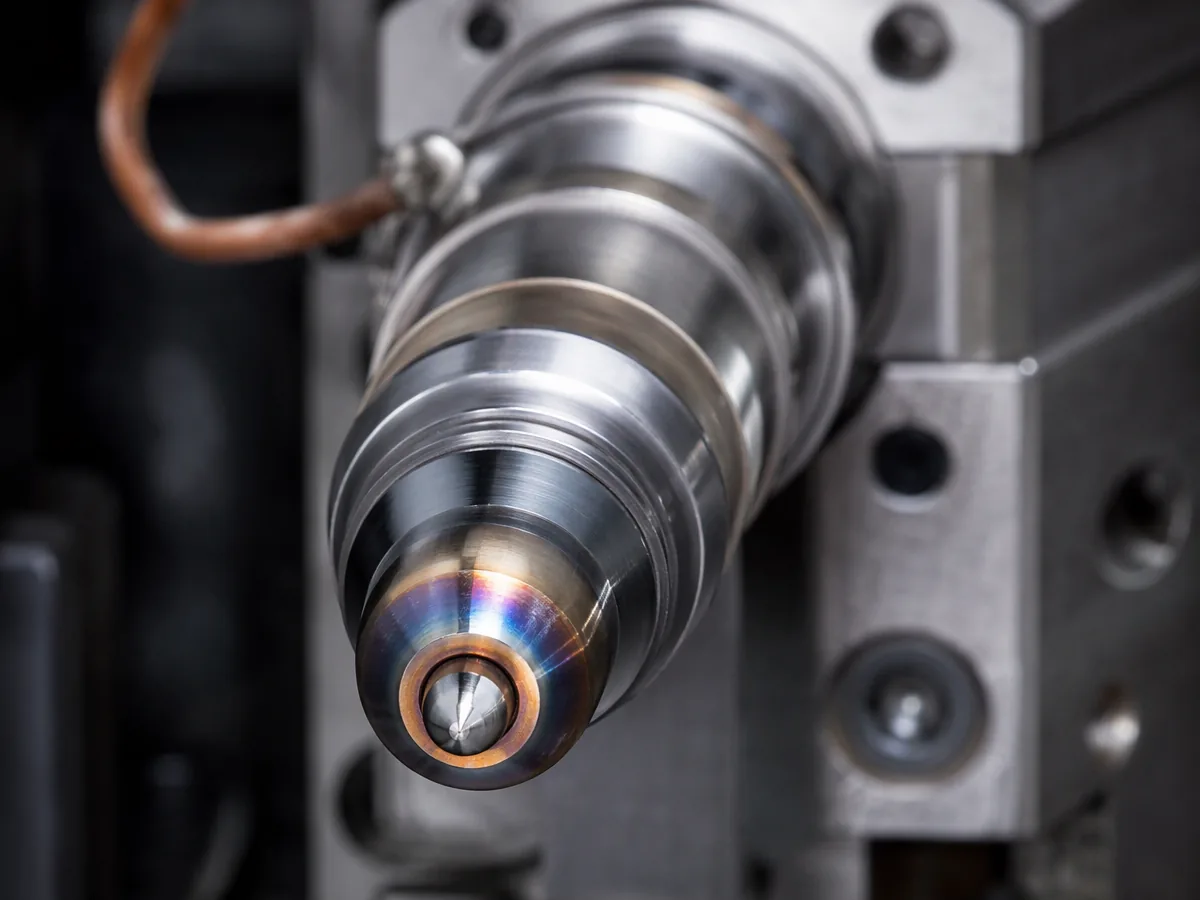 Figure 2: A valve-gate pin and its land. This is the wear item that decides whether your cosmetic spec survives month eighteen.
Where Hot Runner Loses Money
The three debit columns are energy, purge and downtime, and they are systematically left off the comparison. None of them is a reason to avoid hot runners. All of them are reasons to stop pretending the saving is free.
- Energy is continuous, your cycle is not. Zones stay hot through mould changes, breaks, weekends and the eight hours your schedule called a colour change. Ask the system supplier for kilowatts per zone and multiply by hours energised, not by hours injected — those are different numbers and only one is on your bill.
- Purge scales with melt volume in the manifold. The material already in there must be displaced before your colour and your additive are. Change frequently across grades and colours and the purge volume can absorb the entire resin saving, plus the machine time to clear it and the parts you cannot sell from the transition.
- Downtime is not a repair, it is an outage. A leaking seal lets melt into the assembly; you do not clean it, you pull it and send it out. A failed heater or thermocouple left running can take a zone past what the resin tolerates and turn a good tool into a carbon problem.
- Startup is a documented step. Thermal gradients during warm-up are where seals and nozzle assemblies die. Soak times and sequence belong in the setup sheet the night shift actually follows — the same class of problem we describe under hidden tooling costs.
- Colour and regrind freedom disappear. Melt held hot for hours ages. If your quality plan depends on a closed-loop regrind stream, hot runner removes the stream and also removes the option of running a wide palette.
Then the exclusion that is not a preference. Thermally sensitive resins — POM, PVC, and several flame-retardant systems — degrade in the residence time a manifold imposes. Discolouration, gas, corrosive breakdown products and lost mechanical properties follow. If your material is on that list, cold runner or a strictly minimised hot volume is the engineering answer, and a supplier offering you a hot runner anyway is offering you a reject rate.
Design Decisions That Decide Whether It Works
A hot runner is not a catalogue item dropped into a plate. Manifold layout, nozzle selection, gate type, zoning, expansion allowance and sensor placement are tooling decisions that survive for the life of the mould.
Manifold and nozzle layout
Equal arrival is the goal and symmetric geometry is how you get there; anything else must be compensated deliberately, with a zone, rather than discovered at tryout. Nozzle selection follows part geometry, gate type and the space actually available in the plate — and the manifold plus nozzles must behave as one assembly under both heat and pressure.
Thermal zoning
Manifold, nozzle body and gate lose heat at different rates, so they need independent control. Poorly built heating circuits, thin insulation, or a thermocouple sensing the skin rather than the melt give you a reading that lies and a process that drifts over a long run. Ask which medium is being measured.
Expansion allowance
The hot assembly runs far above the temperature of the surrounding steel. If it is constrained without allowance, you get seal distortion, mechanical interference and eventually leakage. If it is under-constrained, the nozzle moves in the bore and your gate position wanders. Sealing surfaces, fasteners and locators all have to work across the whole operating range, which is a mechanical design conversation, not a thermal one.
Gate type and position
Thermal or valve, and where. Position the gate so weld lines miss structurally and cosmetically sensitive areas, and so cooling stays as uniform as the geometry allows. This is ordinary mould-flow reasoning with higher stakes, because after the tool is cut you cannot lengthen a runner — see our mould-flow validation article.
Steel and service access
Where a nozzle passes near a corrosive or abrasive resin path, the surrounding steel grade matters; we specify hardened and corrosion-resistant grades case by case, as covered on our H13 and S136 pages, and in the mold tooling overview.
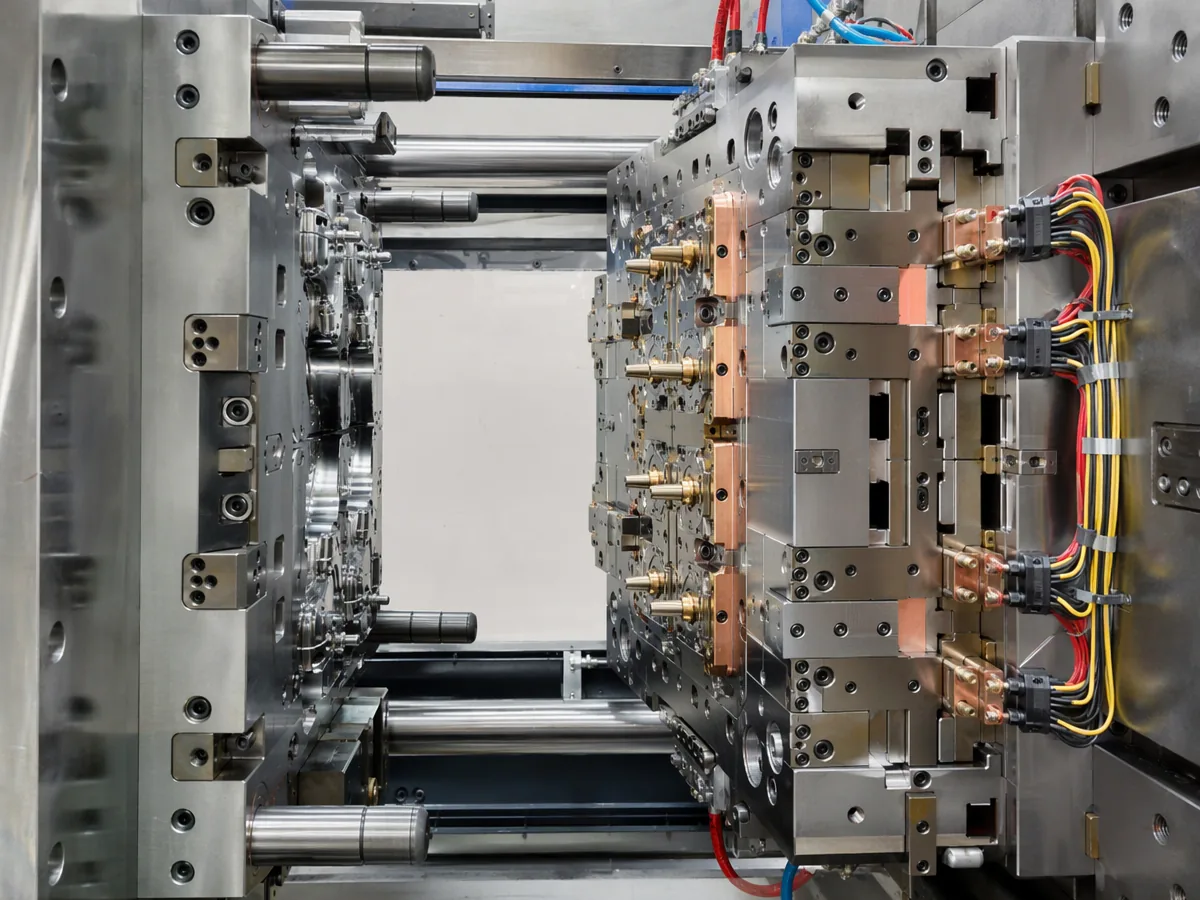 Figure 3: Hot runner plate installed in the mold half. Insulation plates, spacer blocks and a harness routed clear of the parting line — all decisions made before steel.
What to Verify Before You Accept a Hot Runner Tool
- Per-cavity fill and weight inside the window, on the hot system, not the cold mock-up. Averaged results hide the cavity that will fail your cosmetic spec in month three.
- Short-shot study showing arrival order, and a written explanation of anything asymmetric.
- Zone map with measured melt-side readings, plus a drift record over a continuous multi-hour run — the number that matters is what happens at hour six.
- Valve-gate timing documented per cavity, including the sequence used for the approved cosmetic result.
- Cold-start procedure and soak times written down, and demonstrated by whoever will run it at 03:00.
- Spare list with the tool: heaters, thermocouples, seals, valve pins and at least one complete nozzle assembly, stored against your mould.
- Purge protocol measured, in shots and in minutes, for the actual colour or grade transitions your schedule contains.
These belong in the quality agreement while the tool is still being built. A supplier who produces all seven artefacts unasked has run hot-runner programmes before; one who produces adjectives has not.
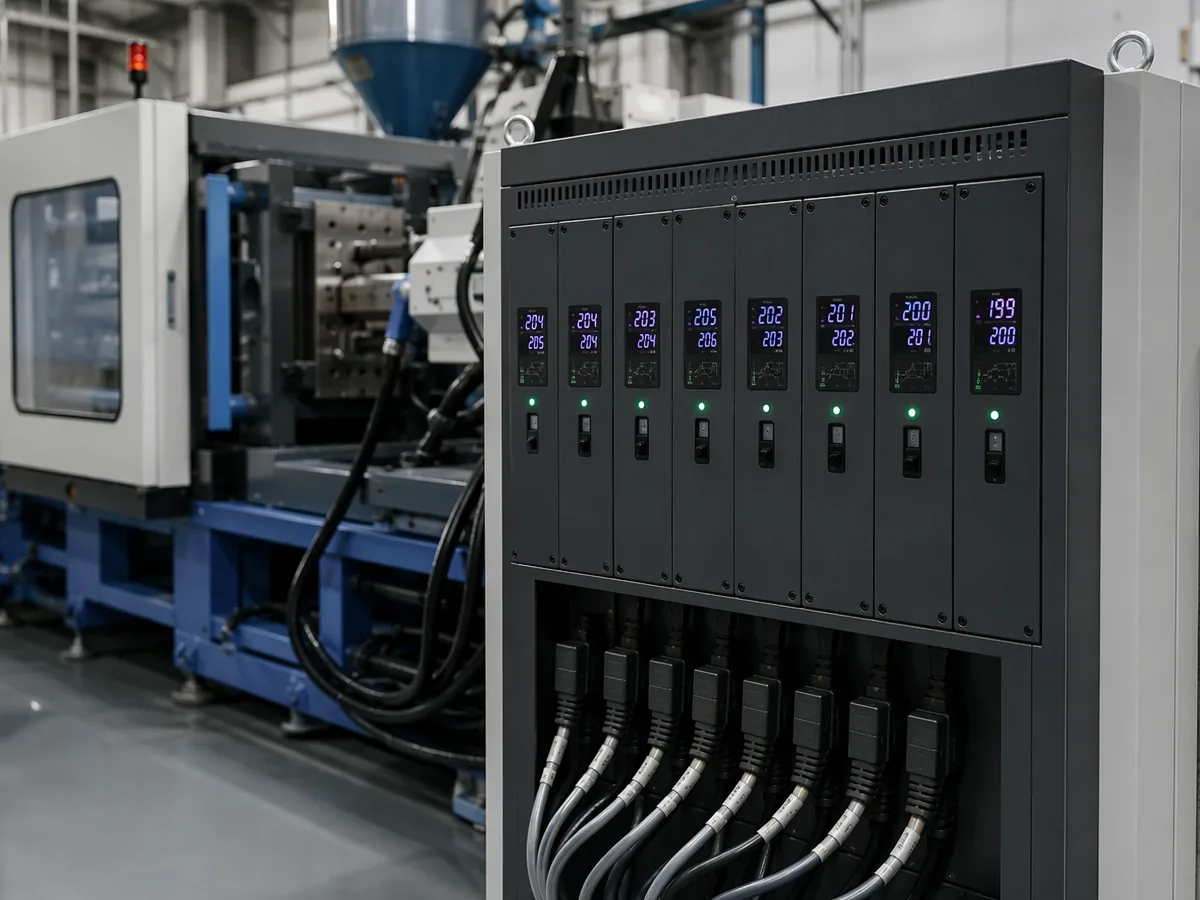 Figure 4: Multizone control cabinet. The count of cards here predicts your maintenance conversation.
The Ideal Pro Way We Decide It
- We run the break-even formula on your part before we quote either option, and we send you both numbers — the premium and the honest denominator. Free DFM and mould-flow ship with every 24-hour quote.
- Exclusions get flagged in writing. If the resin cannot hold residence time, you are told there, not after the manifold is bought.
- Tool designed as an assembly: zoning, expansion allowance, gate positions, service access and a named spare list.
- T1 in 5–10 days on straightforward tools (10–20 on complex), delivered as an evidence package including per-cavity fill and the drift record.
- Process frozen under change control, with the warm-up sequence and purge protocol in the setup sheet — the same discipline behind high-volume molding without re-qualification.
- Continuous value engineering, because at volume the interesting money is in cycle seconds and gate wear; our cooling-time article is where that argument starts.
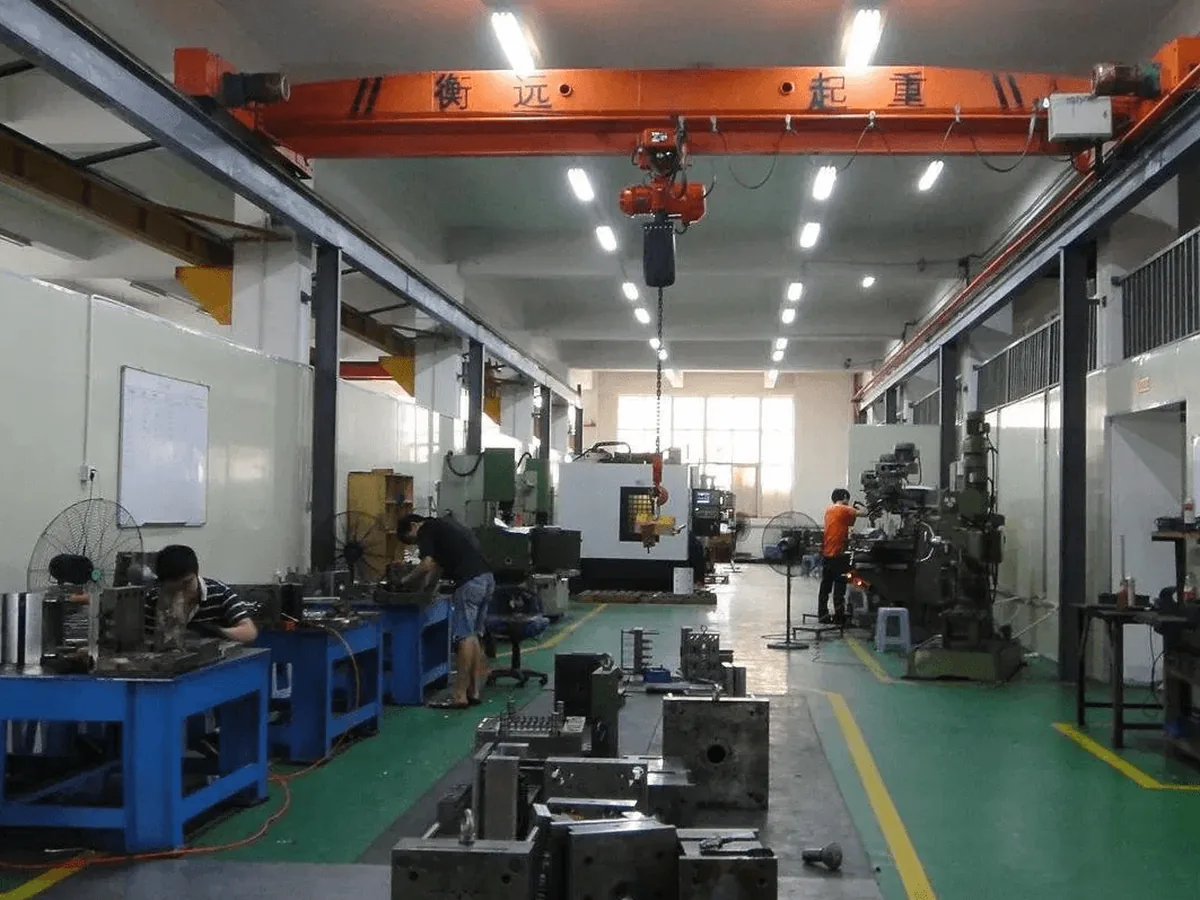 Figure 5: Where the hot runner plate gets machined, fitted and serviced — the reason the maintenance plan is written by the people who execute it.
When a Cold Runner Is the Right Answer
Frequently. Choose cold runner for thermally sensitive resins with no argument. Choose it for low volumes where the premium never amortises, for programmes with many colours or frequent material changes, for family tools whose cavities will never balance anyway, and anywhere your maintenance capability cannot support a heated system through a night shift. Choose it when a sprue is not a problem — a shop with a granulator and an operator has already paid for runner handling. A cold-runner tool that runs is worth more than a hot-runner tool that waits for a manifold. And if you are being sold a hot runner on the strength of “better quality” alone, ask which of the three rows in the comparison table they are referring to and what the purge protocol costs per change.
Summary
A hot runner trades capital, energy, purge time and downtime exposure for material, cycle seconds, cavity balance and cosmetic control. It wins on high-cavity, single-material, long-running, visible-face parts, and it loses on short programmes, colour-heavy schedules, heat-sensitive resins and shops without a maintenance discipline. Decide it with the break-even formula and your own numbers, insist on the seven verification artefacts, and put the spare list and warm-up sequence in the quality agreement before the steel is cut. Send us the part and your production schedule and we will price it both ways — the comparison is free, and it is the honest way to find out whether the premium comes back.
📞 Tel/WhatsApp: +86 156 0682 1288 · 📧 [email protected] · 🌐 Get a two-way quote
Sources
- ISO 9001:2015 — the documented quality framework these decisions sit inside at Ideal Pro.
- Society of Injection Design guidance on mould life and maintenance planning: the framing behind gate, seal and nozzle service intervals.
- SPI AN-1355 — plastic injection moulding surface textures: the finish language behind cosmetic gate decisions.
- Ideal Pro published shop standards: 24-hour quote with free DFM and mould-flow, T1 in 5–10 days on straightforward tooling, presses up to 1,600 tons, over 1,000 mould sets per year, 99.8 percent on-time delivery.
- Every figure in the worked example is arithmetic on the stated assumptions. Substitute your own resin price, cycle, cavitation, hours and premium; treat ours as planning inputs to argue with, not as your quote.
Is a hot runner always cheaper per part?
No, and the reason is usually the purge column. The resin saving on a small part is measured in fractions of a cent, while the tool premium is measured in thousands. What tips the arithmetic across is cycle time and capacity, then cosmetic rejects. Run the break-even formula with your own premium: if the programme ends before the break-even volume, or if your schedule contains several colour changes a week, the cold-runner tool is frequently the cheaper part.
Valve gate or thermal gate — how do I choose without overspending?
Buy a valve gate when you need to control when melt enters, not just whether it can. That means visible faces where gate vestige matters, multi-material or sequential filling, or a cavity array whose balance cannot be fixed by geometry alone. Buy a thermal gate when the face is hidden, the cavities are few enough to balance by layout, and your budget is better spent on steel temperature uniformity. The cost gap is not the pin — it is the actuation stack, its wear items and its maintenance window.
How much energy does a hot runner actually add?
Enough that it belongs in the comparison, and not enough that you can quote a universal figure. It depends on manifold mass, insulation quality, number of zones, and above all on hours energised versus hours injecting. Get watts per zone from the system supplier, multiply by the hours your schedule will actually keep it hot including mould changes and breaks, and price it at your tariff. If that number changes your decision, you wanted to know before the tool was cut.
What kills hot runner systems in production?
Three things, in rough order: thermal cycling abuse during start-up and shutdown, seal failure that lets melt into the assembly, and running a degraded zone while everyone trusts a lying thermocouple. All three are procedural before they are mechanical, which is why the warm-up sequence, the drift record over a long run and the spare-parts kit belong in the acceptance paperwork rather than in a binder nobody opens.
Can we convert an existing cold-runner tool to hot runner?
Often yes, sometimes wrongly. The questions that decide it are whether the plate thickness and clamping can carry the manifold assembly, whether there is a sane path for the harness and thermocouples, whether the existing gate positions still work once the runner no longer freezes, and whether the steel around the new bores is the grade you want there. A conversion that only replaces steel without re-doing the flow and thermal balance usually buys you a second tool later. Send us the existing tool drawings and we will tell you honestly whether it is a conversion or a new build.
About the Author

Alex Yu
Ideal Pro Manufacturing
Alex is the co-founder of Ideal Pro, but when he's not overseeing key projects or steering the technical team, you'll likely find him on a long bike ride, hunting for the best coffee in town, or planning his next travel adventure. With over 20 years of experience spanning international trade sales and project management, he's seen it all — tight deadlines, tricky engineering problems, and everything in between. He believes great work comes from a well-rested mind and a good cup of coffee, and he brings that same curiosity and attention to detail to every project he takes on. When he's not in the office, he's usually somewhere outdoors, exploring new places and collecting stories to share.




 English
 French
 Dutch
 German
 Japanese
 Korean