

In the fiercely competitive manufacturing industry, the internal quality of an injection molding product is crucial, but its "face"—the surface finish—is often what ultimately determines its added value, market appeal, and lifespan. Whether you are aiming for a premium metallic feel, realistic wood grain, vibrant colors, or specialized functional properties, surface treatment technology acts as a custom-tailored outfit for your product.
This comprehensive guide dives deep into the 10 mainstream surface treatment processes for injection molded products. We will explore their principles, workflows, and applications to provide you with a practical technical reference.
Water Transfer Printing: The Master of Curved Surface Decoration
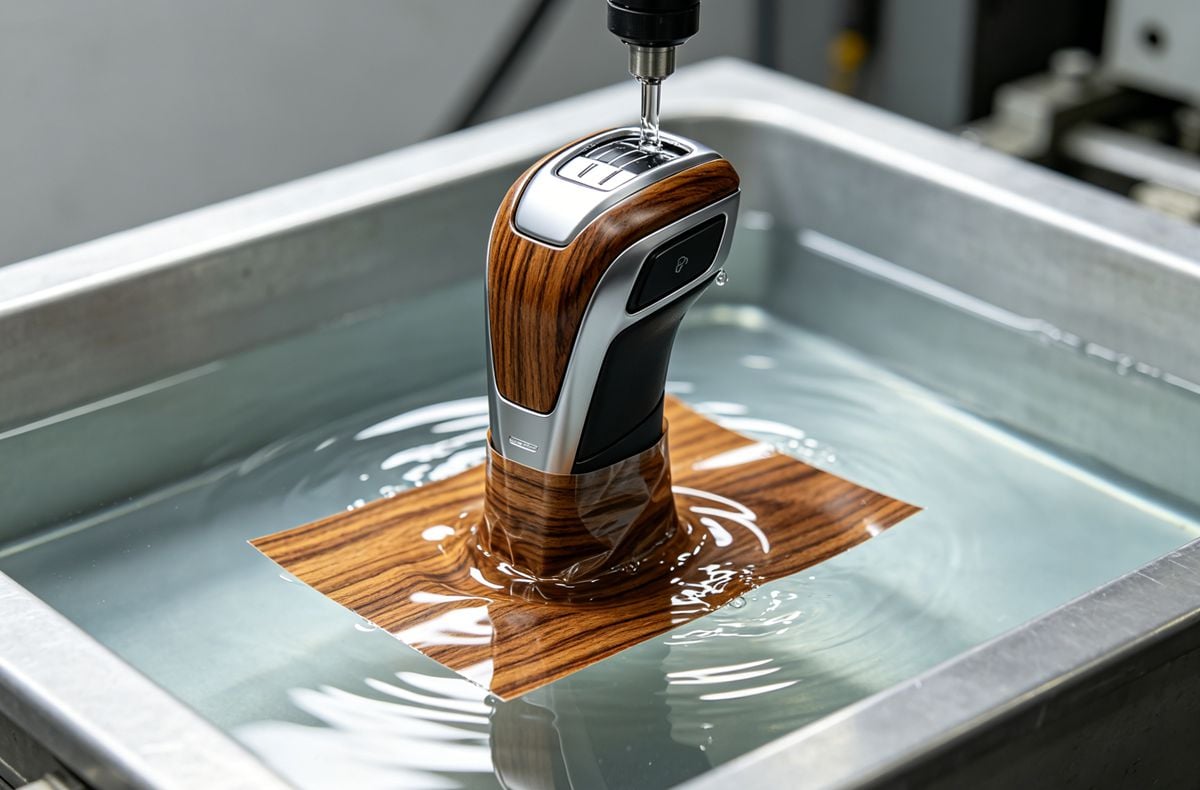
Water transfer printing (also known as hydro dipping) excels at applying full-wrap patterns to irregular and complex 3D surfaces. It is the go-to process for achieving realistic wood grain, marble, or camouflage textures.
- How it Works: Water pressure activates a specialized transfer film floating on the water's surface, precisely wrapping the pattern onto the product.
- Core Workflow: Film printing → Film floating & stretching → Pattern activation → Water pressure transfer → Washing → Drying → Clear coat spraying.
- Key Applications: Automotive interiors (gear shifts, dashboards), military gear (helmets, gun stocks), home appliance housings, and sports equipment.
Technical Nuances:
- Water Curtain Transfer: Ideal for full-coverage patterns on complex curves due to strong film tension.
- Water Slide Decal: Better suited for localized logos or text.
- 전문가 팁: The final clear coat is critical—it directly dictates the pattern's durability, gloss, and tactile feel.
Metal Brushing: Crafting Texture and Tactile Feel
Metal brushing uses physical friction to create directional or random textures on metal surfaces (primarily aluminum alloys). It hides minor scratches while elevating the product's visual and tactile premium feel.
- How it Works: Mechanical friction using nylon wheels or stainless steel brushes creates continuous wire-like patterns.
- Common Textures:
- Straight Line: Clean, tech-forward look.
- Random: Matte, elegant, and delicate.
- Spiral/Cross-hatch: Highly decorative, often used for circular knobs or badges.
- Key Applications: Consumer electronics (phone frames, laptop shells), elevator interiors, kitchen appliances, and hardware.
Anodizing: The "Reinforced Armor" for Lightweight Metals
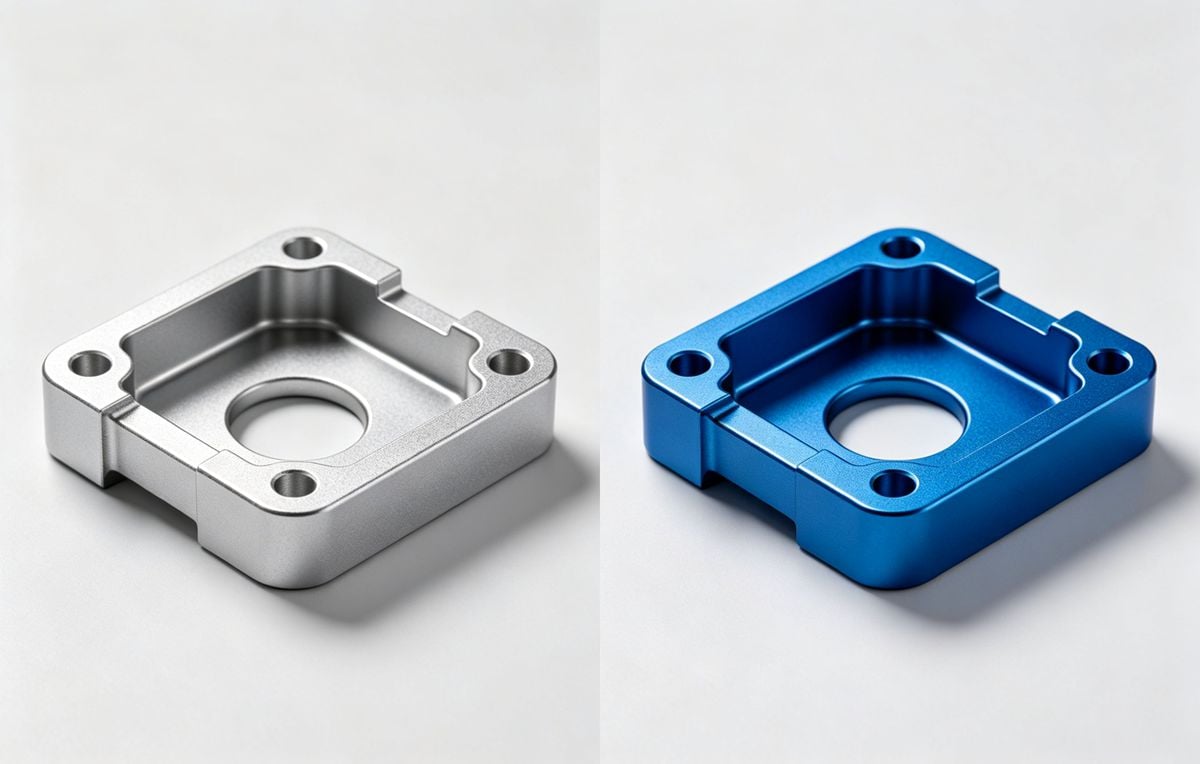
Anodizing is the core surface treatment for aluminum, magnesium, and titanium. It uses electrochemistry to generate a hard, porous oxide film on the substrate.
How it Works: The aluminum part acts as an anode in an electrolyte solution. When an electric current is applied, a dense $Al_2O_3$ oxide layer forms on the surface.
Core Benefits:
- Enhanced Protection: Massive boost in corrosion and wear resistance.
- Decorative Coloring: The porous structure absorbs dyes easily (e.g., the vibrant colors of Apple products).
- Functional Improvements: Acts as an insulator and increases surface hardness.
Diamond Cutting on Aluminum: Precision Texture Engraving
Diamond cutting utilizes CNC machines with diamond-tipped tools to carve high-precision 3D patterns or textures onto aluminum surfaces.
- How it Works: CNC programming controls the path, depth, and angle of the diamond tool to cut specific designs into the aluminum.
- Advantages: High precision and consistency for batch production; strong 3D visual hierarchy through varying cut depths.
- Key Applications: Premium electronic decorative panels, automotive interior badges, architectural panels, and awards.
Electroplating: Multi-Functional Surface Coating
Electroplating deposits a layer of metal or alloy onto a product via electrolysis to alter its surface characteristics.
- How it Works: TThe part acts as a cathode in an electrolyte containing target metal ions. When an electric current is applied, these ions are reduced into metal atoms, forming a solid coating.
Quick Guide: Common Electroplating Types
| Plating Type | Key Characteristics | Typical Applications |
|---|---|---|
| Decorative Chrome/Nickel | High gloss, aesthetic, moderate corrosion resistance | Bathroom fixtures, auto trim, appliance parts |
| Zinc Plating | Cost-effective, sacrificial protection, excellent rust resistance | Fasteners, structural parts, chassis |
| Hard Chrome | Extreme hardness (HV800-1000), highly wear-resistant | Hydraulic rods, molds, engine pistons |
| Precious Metals (Au/Ag) | High conductivity, superior corrosion resistance, luxurious look | Electronic connectors, jewelry, premium gifts |
🌱 Eco-Trend: Cyanide-free plating and trivalent chromium (replacing hexavalent chromium) are now the industry standards.
Nickel Plating: The Versatile Workhorse
Nickel plating serves as a standalone decorative finish, but it is most famous as an indispensable intermediate or functional layer in electroplating systems.
- Key Applications:
- Base/Intermediate Layer: Improves overall corrosion resistance and smoothness before chrome or gold plating.
- Functional Coating: Electroless nickel (Nickel-Phosphorus alloy) offers uniform hardness and wear resistance for precision parts.
- Tech Evolution: Pulse and nano-composite nickel plating allow precise control over internal stress and hardness.
Chrome Plating: The Classic Standard for Gloss & Wear
Chrome plating is the ultimate finish for protection and decoration, renowned for its mirror-like gloss and extreme hardness.
- Decorative Chrome: Very thin (~0.5μm), requires copper/nickel underlayers.
- Hard Chrome: Thick (up to hundreds of microns), applied directly to the substrate for extreme wear resistance or dimension repair.
- Critical Challenge: Traditional hexavalent chromium is highly toxic. Trivalent chromium is growing rapidly, though hard chrome still relies on improved hexavalent processes. Note: High-strength steel parts require baking to prevent hydrogen embrittlement.
Plastic Spraying: Direct Color & Protection
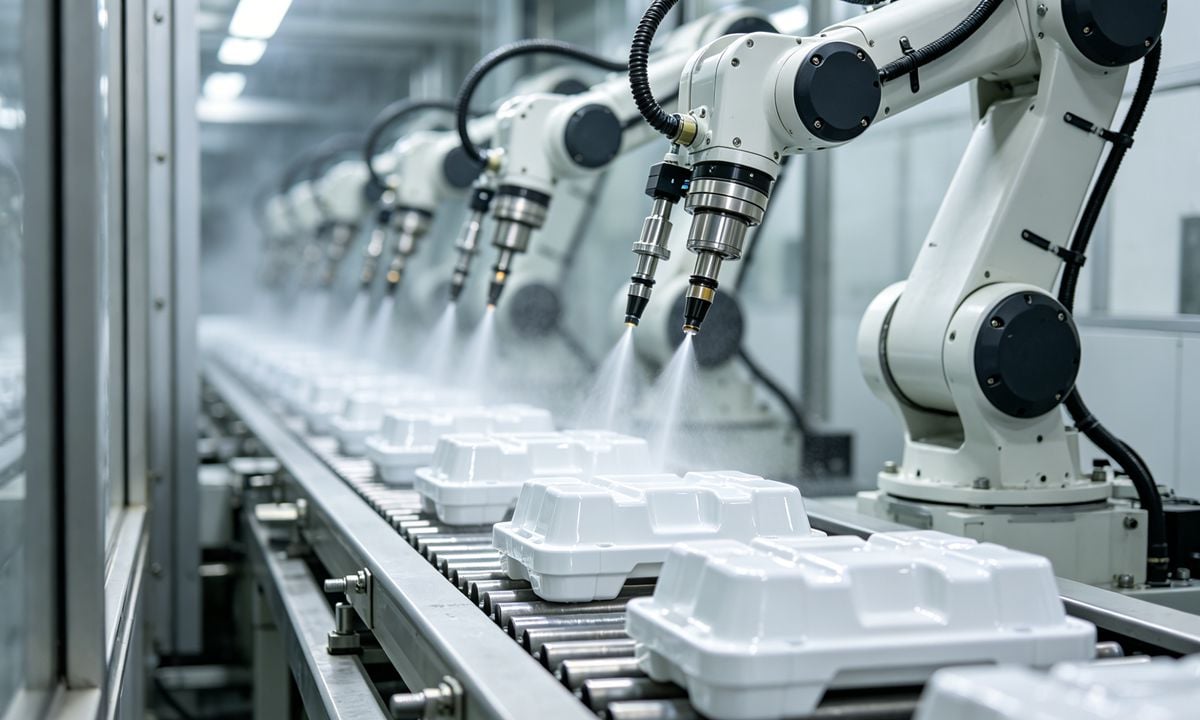
Spraying is the most straightforward method to change the color and texture of plastic parts while providing a protective barrier.
- How it Works: Liquid or powder coatings are evenly sprayed onto the plastic, then leveled and cured into a continuous film.
- Material Matching: ABS/PC are easy to coat; non-polar plastics like PP/PE require flame or corona treatment first.
- Coating Choices: UV coatings (fast cure, wear-resistant), PU (flexible), Epoxy (strong adhesion).
Pad Printing: The Expert for Small, Irregular Surfaces
Pad printing is designed specifically for applying precise graphics to small, uneven, or recessed areas (e.g., buttons, toy eyes, medical devices).
- How it Works: Ink fills an etched steel plate, is picked up by a silicone pad, and stamped onto the product like a seal.
- Core Advantage: The flexible silicone pad conforms to complex 3D shapes with high-precision registration.
- Automation: Modern CNC pad printers with vision systems drastically improve efficiency and consistency.
Heat Transfer Printing: Efficient Multi-Color Transfer
Ideal for transferring complex, multi-colored patterns onto flat or regularly curved surfaces in a single pass.
- How it Works: A printed film is pressed against the part using heated rollers. Heat causes the dye to sublimate or the adhesive to melt onto the surface.
- Types:
- Dye Sublimation: Dye penetrates the coating/fabric; highly durable and smooth to the touch.
- Hot Melt Transfer: Uses an adhesive layer; versatile for various plastics and labels.
- Key Applications: Advertising signs, custom drinkware, phone cases, and wood-grain appliance panels.
Summary: How to Choose the Right Surface Treatment
With so many options, how do you decide? Prioritize your product's core requirements:
| Priority | Recommended Processes |
|---|---|
| Aesthetics & Complex Patterns | Water Transfer (3D curves), Heat Transfer (flat multi-color), Pad Printing (small precision) |
| Metallic Feel & Durability | Anodizing (Al/Mg alloys), Electroplating (Chrome/Nickel), Metal Brushing |
| Special Functions | Hard Chrome / Electroless Nickel (High hardness); Silver/Copper (Conductive shielding); Powder/Fluorocarbon Coating (Outdoor weather resistance) |
| Cost & Eco-Friendliness | Plastic Spraying (flexible, water-based options); Anodizing (more controllable pollution than electroplating) |
전문가 팁: In actual production, combining multiple processes often yields the best results. For example, anodizing followed by laser engraving, 또는 electroplating followed by a clear coat spray. Understanding the core capabilities and limitations of each process is the foundation of making the perfect engineering decision.

 English
 French
 Dutch
Dutch German
 Japanese
 Korean