

Struggling with failed thin-wall parts? It's a complex process where standard rules fail, leading to costly errors. This guide reveals the secrets to getting it right from the start.
Thin-wall injection molding is a specialized process for manufacturing plastic parts with wall sections typically under 1mm. It requires injecting molten plastic at extreme speeds and pressures into a precision-engineered mold. Success depends on special high-flow materials, robust tooling, and high-performance machinery to create lightweight parts quickly.
Related reading: Draft Angle & Wall Thickness Guidelines For Injection Molded Parts

I've spent countless hours staring at mold flow simulations. If there's one thing I've learned, it's that thin-wall molding is not just regular molding made smaller. It is an entirely different beast. When you try to make a part that thin, the physics of plastic completely change. It becomes a high-speed race against thermodynamics. If you don't have the right strategy, you're designing a part to fail before you even cut the first piece of steel. This is where so many projects hit a wall, but it's also where the biggest opportunities for innovation and cost savings are found. Let's break down how to win that race.
What Exactly is Thin Wall Injection Molding? (Beyond the Basics)?
You might think thin-wall molding is just about making parts thinner. This oversimplification is a direct path to failed projects and expensive tooling mistakes. Let's clarify what it really means.
The process is truly defined by the flow-length-to-thickness ratio (L/T), which often exceeds 150:1. It’s not just about thinness; it’s about the extreme challenge of filling a long, thin cavity before the plastic solidifies, which completely changes the manufacturing physics.
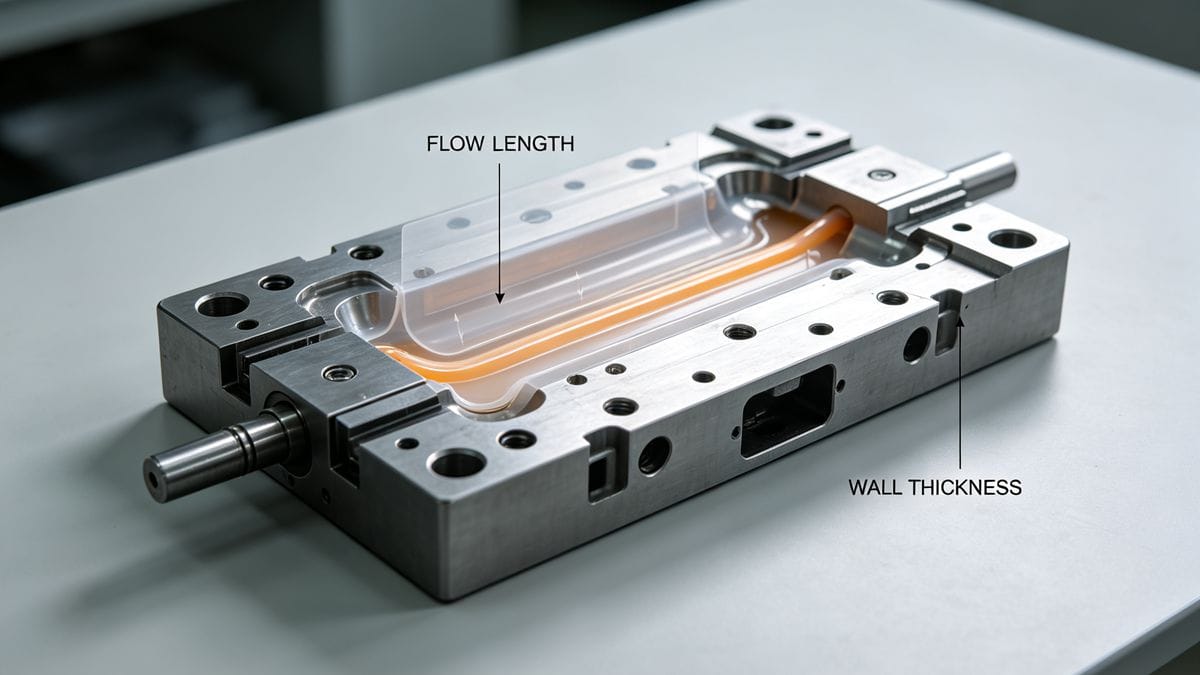
When we talk about thin-wall molding, we're usually referring to parts with a wall thickness below 1mm. But the real challenge is the L/T ratio. Imagine trying to push honey through a very long, very thin straw. That's the problem we face. The molten plastic hits the relatively cool steel of the mold and wants to freeze almost instantly. In standard molding, you have more time. Here, you have milliseconds. This is why I say the physics are different. You are no longer just filling a cavity; you are fighting a rapid phase change from liquid to solid. If the plastic freezes before the mold is full, you get a "short shot"—an incomplete part. This fundamental difference is why you can't use standard molding rules or equipment and expect to succeed.
Related reading: Injection Molding Short Shot (Underfill): Causes, Analysis & Solutions
| Feature | Standard Molding | Thin Wall Molding |
|---|---|---|
| 벽 두께 | > 1.5 mm | < 1.0 mm (often < 0.5 mm) |
| L/T Ratio | < 100:1 | > 150:1 (can exceed 300:1) |
| 사출 압력 | 70-140 MPa | 140-250+ MPa |
| 사출 속도 | Moderate | Extremely Fast |
| Cycle Time | Slower (15-60+ sec) | Faster (3-10 sec) |
The Core Business & Technical Advantages of Thin Wall Molding?
Are you hesitant to invest in thin-wall technology? You could be missing out on significant competitive advantages that your rivals are already using to get ahead in the market.
The primary advantages are reduced material cost and much faster cycle times, leading to higher productivity and a lower cost-per-part. Technically, it enables lighter, more compact product designs, which is essential for modern electronics and automotive lightweighting.

The business case for thin-wall molding is incredibly strong. First, material savings. Plastic is bought by weight, so a part that is 40% lighter costs 40% less in raw material. Over a production run of millions of parts, this adds up to massive savings. Second, cycle time. Because the walls are so thin, they cool and solidify almost instantly. This allows for cycle times as low as 3-5 seconds, compared to 30 seconds or more for a standard part. You can produce more parts per hour from a single machine, dramatically increasing your factory's output and lowering the cost attributed to each part. From a technical standpoint, the benefits are just as compelling. Lighter parts are critical in the automotive industry for improving fuel efficiency and in consumer electronics for making devices portable and comfortable to hold. It allows designers to create sleek, minimalist products that weren't possible before.
Related reading: LFT Injection Molding: The Key To High-Performance Lightweight Auto Parts
Critical Material Selection: Flowability Meets Structural Integrity?
Are you choosing the wrong plastic for your thin-wall part? This is a common mistake that almost guarantees defects like short shots, cracks, and parts that are simply too weak to function.
The key is selecting high-flow resins with a high Melt Flow Index (MFI) to fill the mold cavity quickly. However, you must balance this flowability with the material's mechanical properties, like stiffness and impact strength, to ensure the final part is durable.

Choosing the right material is a critical balancing act. To fill the part fast enough, you need a plastic that flows like water, not like molasses. We measure this using the Melt Flow Index, or MFI. For thin-wall applications, we look for materials with a high MFI. Common choices include specific grades of Polypropylene (PP), Polystyrene (PS), and Acrylonitrile Butadiene Styrene (ABS). However, materials that flow very easily are often not the strongest. You might successfully mold a part that is so brittle it cracks when you look at it. This is where expertise comes in. You have to find the sweet spot. You need a material that can withstand the incredible stresses of the molding process and also perform its function in the real world. We often work with material suppliers to find specialized grades developed specifically for high-flow, high-strength applications, ensuring the part is not just manufacturable but also robust.
Advanced Mold Design Strategies for Zero Defects?
Are your thin-wall molds flashing, deforming, or breaking? A standard mold design is a recipe for disaster when subjected to the extreme pressures required for thin-wall molding.
A robust mold design is non-negotiable. This means using high-hardness tool steels, designing strategic cooling channels for uniform temperature control, and implementing a perfectly balanced hot runner system. Proper venting is also critical to prevent trapped air.
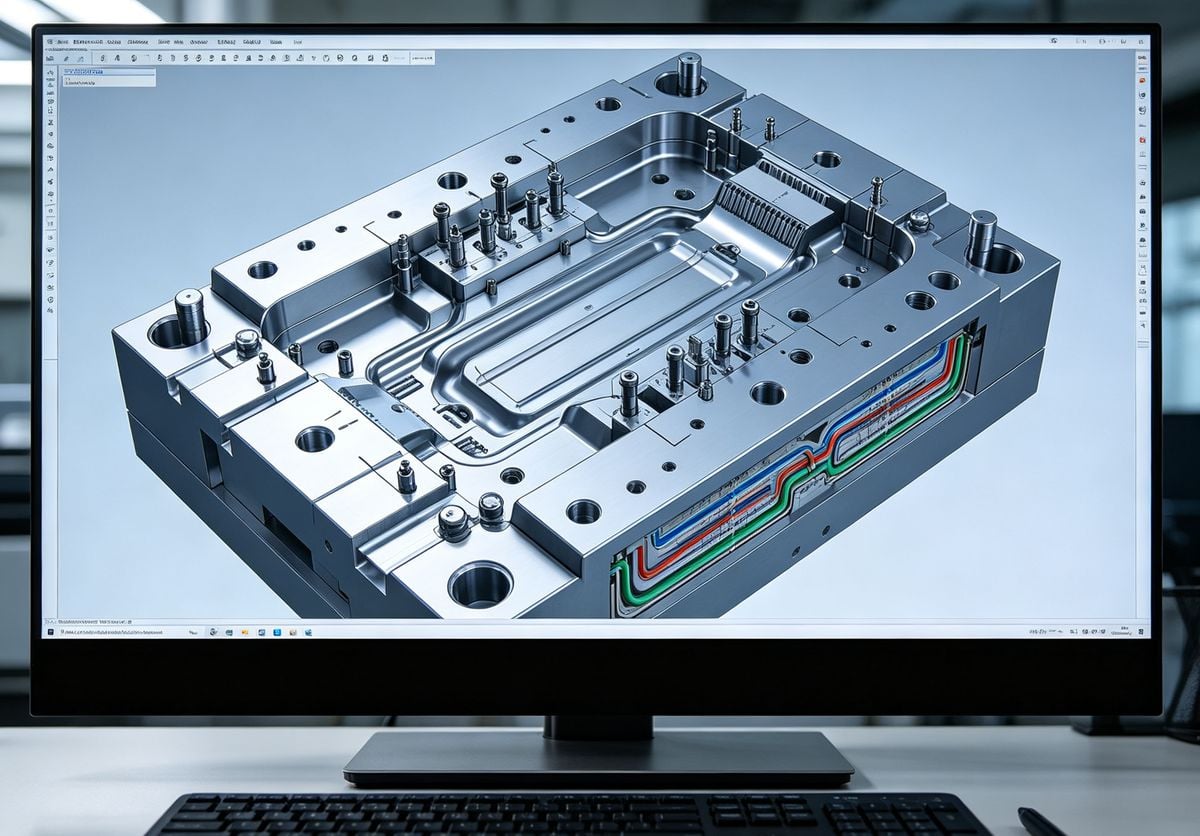
I've seen it firsthand at Ideal Pro: molds built for standard molding will literally be pushed apart by the force of thin-wall injection. The injection pressures are so immense, often over 200 MPa, that they can deform the steel. To prevent this, your mold needs to be engineered like a fortress. We use high-quality, hardened steels like H-13. The mold base needs to be thicker and reinforced to prevent any flex. Cooling is also paramount. Any small difference in temperature across the mold surface can cause the part to warp as it cools. We design complex cooling channels that run close to the part surface to pull heat away evenly. Finally, the gate and runner system is the highway for the plastic. We use advanced hot runner systems with multiple gates to ensure the plastic fills all corners of the part at the same time and pressure. This isn't about brute force; it's about surgical precision.
Overcoming Top 5 Thin Wall Molding Challenges (And How to Fix Them)?
Are you plagued by defects like warpage, short shots, and flash? These common issues can quickly derail your production run, costing you time and money with every rejected part.
Common challenges include short shots, warpage, flash, and air traps. Solutions involve a combination of optimizing injection speed and pressure, ensuring uniform mold temperature, improving mold venting, and strategically placing gates to control melt flow patterns.

In my experience, almost all thin-wall defects come back to a few core issues related to flow, pressure, and temperature. The key is to know what to look for and how to fix it. Relying on trial-and-error on the factory floor is a luxury you cannot afford. This is why at Ideal Pro, we lean so heavily on CAE simulation before we ever cut steel. By simulating the injection process, we can predict where these problems will occur and fix them in the design phase. For example, we can see where weld lines will form and move a gate to make them less visible or weaker. We can identify a spot where air will get trapped and add a vent to the mold design. This proactive approach saves our clients from expensive headaches and delays down the line.
| Challenge | 설명 | How to Fix |
|---|---|---|
| 1. Short Shot | The mold cavity does not fill completely. | Increase injection speed/pressure, increase melt temperature, improve venting. |
| 2. Warpage | The part distorts or twists as it cools. | Optimize cooling channel design, adjust packing pressure, increase cooling time. |
| 3. Flash | Excess plastic seeps out of the mold parting line. | Increase clamp tonnage, ensure mold surfaces are flat, use a rigid mold base. |
| 4. Air Traps | Trapped air causes burn marks or voids. | Add or enlarge vents in the mold, optimize gate location, reduce injection speed. |
| 5. Weld Lines | Weak lines where two plastic fronts meet. | Adjust gate location, increase melt/mold temperature to help fronts meld. |
Essential Machinery Requirements: Why Standard Presses Fail?
Are you trying to use a standard injection molding press for thin-wall parts? It likely lacks the speed, power, and precision required, leading to a constant stream of failed parts.
Thin-wall molding demands machines with extremely high injection speeds, rapid control response times, and high injection pressure capabilities. All-electric or hybrid presses are often preferred over standard hydraulic ones for their superior precision, speed, and repeatability.
A standard molding machine just can't keep up. The process requires filling the mold in a fraction of a second—sometimes as fast as 0.1 seconds. Your machine needs incredible acceleration and speed to achieve this. It also needs the power to generate and hold the immense pressures we've talked about. A standard hydraulic press is often too slow to respond and not precise enough to manage the narrow process window. This is why the industry has shifted to high-performance all-electric or hybrid machines for thin-wall applications. They use powerful servo motors that provide blistering speeds and acceleration with digital precision. This allows us to control the injection profile down to the millisecond and millibar, ensuring every single shot is identical. Without this level of control and repeatability, producing consistent, defect-free thin-wall parts is nearly impossible.
Related reading: Injection Molding Process Parameters Optimization Guide
Precision Process Parameters & Narrow Operating Windows?
Are you struggling to find and maintain the right machine settings? The process window for successful thin-wall molding is incredibly small and unforgiving, where tiny deviations can ruin the part.
Success hinges on a very narrow processing window. Key parameters include extremely high injection speeds, high packing pressure to minimize shrinkage, precise mold temperature control to manage solidification, and an exact switchover point from filling to packing.
Setting up a thin-wall process is a science. You are working within a tiny window of opportunity. The injection speed has to be fast enough to outrun solidification. The melt temperature must be hot enough to flow easily but not so hot that the plastic degrades. The mold temperature needs to be controlled precisely; too cold and you get a short shot, too hot and your cycle time suffers and the part might warp. The switchover from the high-speed filling stage to the high-pressure packing stage must happen at the exact moment the cavity is 95-98% full. If you switch too early, you get sink marks. If you switch too late, you get flash. These parameters are all interconnected. Changing one affects all the others. This is why a "scientific molding" approach, where you systematically test and document each parameter, is the only way to establish a stable and repeatable process.
Real-World Industry Applications & Success Cases?
Are you wondering where thin-wall injection molding is actually used? You might be surprised by how common and essential this advanced manufacturing technology is in the products you use every day.
Thin-wall molding is dominant in food packaging (containers, lids), disposable medical devices (petri dishes), consumer electronics (phone casings, laptop parts), and automotive components (interior trim, covers) where weight reduction, speed, and cost are critical drivers.
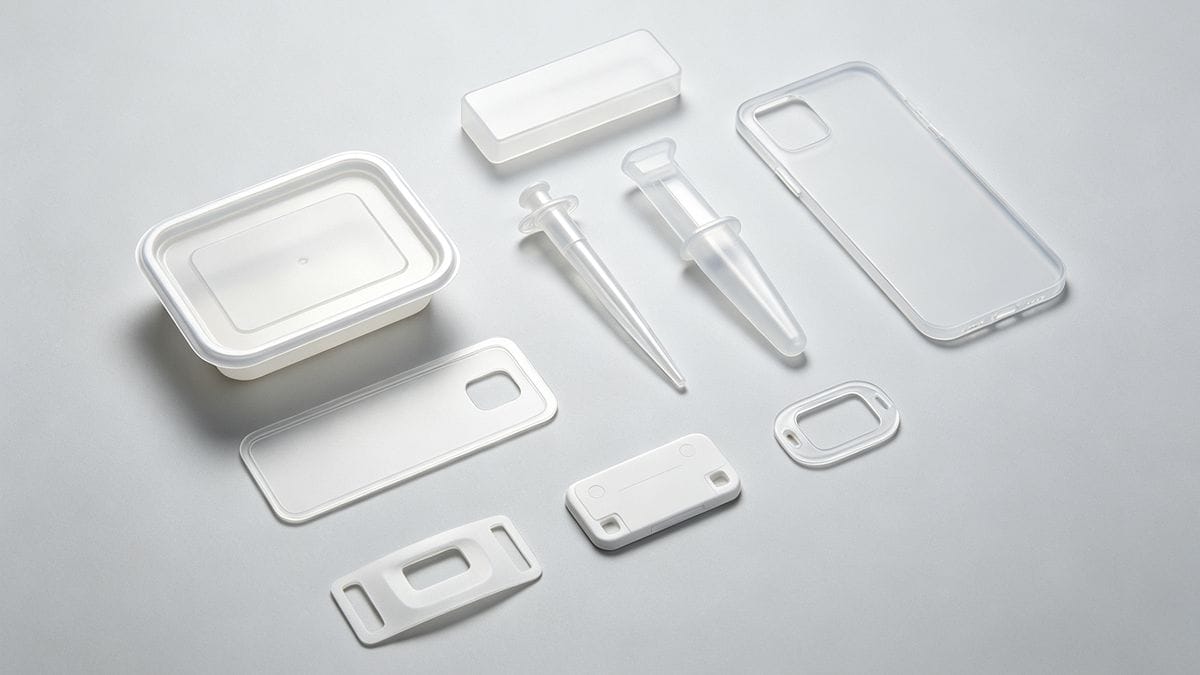
The impact of thin-wall molding is all around us. The next time you open a yogurt cup or a margarine tub, you are holding a product of this technology. The packaging industry was an early adopter because of the massive cost savings from reduced material and faster cycles. In consumer electronics, the sleek and lightweight case of your smartphone or TV remote was made possible by thin-wall molding. At Ideal Pro, we've worked with startups bringing disruptive electronics to market where every gram of weight matters. In the automotive sector, we help suppliers shave weight off interior components to meet fuel efficiency targets. And in the medical field, precision and cleanliness are key. Thin-wall molding is used to produce millions of identical, disposable items like pipette tips and diagnostic test cartridges with incredible accuracy and speed. The applications are vast and growing every day.
Future Trends in Thin Wall Manufacturing?
Do you want to stay ahead of the curve in a competitive manufacturing landscape? Thin-wall technology is constantly evolving with new materials, machines, and software that are pushing the boundaries of what's possible.
Future trends include the use of more sustainable and biodegradable materials, advancements in micro-molding for even smaller parts, and wider adoption of Industry 4.0 concepts like AI-optimized process control for real-time adjustments and zero-defect production.
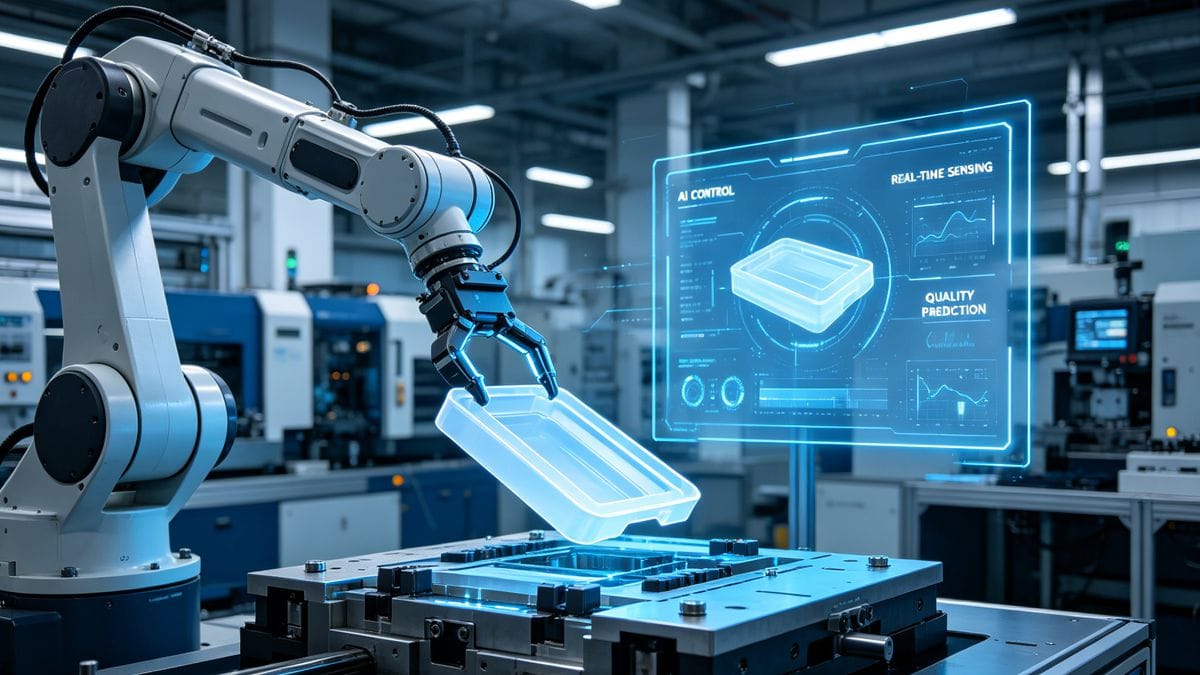
The future of thin-wall molding is exciting. One of the biggest pushes is toward sustainability. We are seeing more research into high-flow biodegradable plastics (like PLA) and developing ways to use recycled materials in thin-wall applications. The technology is also getting smaller, pushing into the realm of "micro-molding" for tiny, complex components in medical devices and microelectronics. But the biggest change I see coming is the integration of smart technology. Imagine a molding machine that uses AI and sensors inside the mold to monitor pressure and temperature in real-time. This system could automatically adjust process parameters on the fly to correct for variations and guarantee that every single part is perfect. This "digital twin" concept, combined with advanced simulation, is the future. It moves us from reactive problem-solving to proactive, predictive manufacturing.
결론
Thin-wall molding is a challenge, but the rewards are huge. It demands a complete strategy covering design, materials, molds, and machines. Simulation is your most powerful tool, and partnering with an expert is essential.




 English
 French
 Dutch
Dutch German
 Japanese
 Korean