 한국어



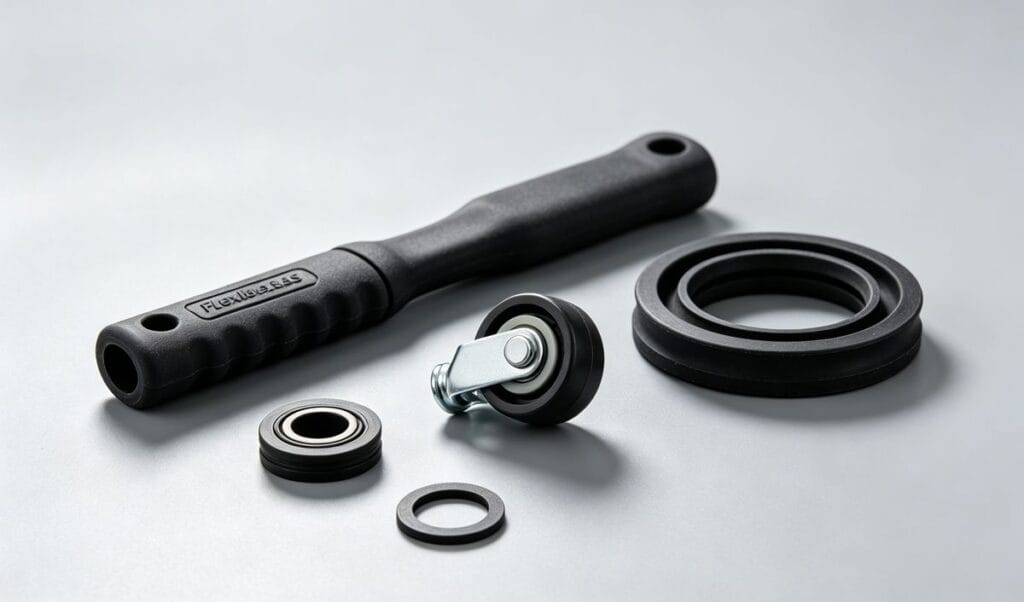
Understanding Common Plastic Alloys: Properties, Applications, and Processing Data
In the world of polymer engineering, plastic alloys (or polymer blends) are revolutionizing material science. A plastic alloy is not a simple mixture of two or more plastics; it is a highly engineered material created using specialized equipment, unique processes, and compatibilizers. The goal? To combine the best properties of each base resin into a single, superior material.
Common plastic alloys include PC-ABS, PC-PBT, PC-PMMA, TPU, TPR, 그리고 TPE. In this guide, we will explore the unique characteristics, advantages, and processing data of these essential engineering plastics.

1. PC-ABS: The Perfect Balance of Toughness and Flow
PC-ABS is a widely used blend of Polycarbonate (PC) and Acrylonitrile Butadiene Styrene (ABS). Crucial Note: This material must be pre-compounded into granules. Simply mixing raw PC and ABS before injection molding will result in severe delamination and poor mechanical properties.
- Why blend them? PC offers exceptional rigidity and toughness but suffers from stress cracking and high melt viscosity. ABS provides excellent flowability but lacks surface hardness.
- The Result: PC-ABS delivers high surface hardness, excellent impact resistance, and superior stress-crack resistance, with mechanical properties perfectly balanced between the two parent materials.
2. PC-PBT: High-Temperature Dimensional Stability
PC-PBT blends Polycarbonate with Polybutylene Terephthalate (PBT). Like PC-ABS, it requires professional compounding to prevent layer separation during molding.
- Why blend them? While PC is tough at room temperature, it suffers from severe thermal deformation at high temperatures. PBT, on the other hand, maintains its rigidity and dimensional stability under heat.
- The Result: PC-PBT offers high surface hardness, excellent toughness, and outstanding resistance to high-temperature deformation and stress cracking. This makes it the ideal choice for large automotive or electronic housings where heat resistance is critical.

3. PC-PMMA: The Safe, Pearlescent Packaging Solution
PC-PMMA combines Polycarbonate and Poly(methyl methacrylate). Both are highly transparent, but they have different refractive indices. When properly compounded, this difference creates a unique pearlescent (pearl-like) glow without the need for toxic pearlescent powders.
- Key Advantage: Traditional pearlescent powders are often toxic and unsuitable for food contact. PC-PMMA is transparent, odorless, non-toxic, and naturally emits a beautiful pearlescent sheen, making it a premium, food-safe packaging material.
4. TPU: The Ultimate Thermoplastic Elastomer
Thermoplastic Polyurethane (TPU), often referred to as urethane rubber, bridges the gap between rigid plastics and traditional rubber. While standard PU is used for foams (sponges), TPU is specifically modified for 사출 성형.
- Key Properties: TPU offers rubber-like elasticity at low and room temperatures, exceptional oil resistance, outstanding abrasion and puncture resistance, and excellent outdoor weathering.
- 애플리케이션: Because it is quiet against hard surfaces and highly durable, TPU is widely used in wheels, tires, seals, and vibration-dampening components. It also boasts strong chemical resistance. (Processing is similar to ABS).
5. TPR & TPE: Versatile Rubber Alternatives
- TPR (Thermoplastic Rubber): Modified to allow injection molding (unlike traditional vulcanized rubber). TPR offers excellent elasticity, oil/abrasion resistance, and weatherability, similar to TPU but processed at temperatures closer to PVC.
- TPE (Thermoplastic Elastomer): A broad category of rubber-like materials that combine the processing ease of plastics with the elastic properties of vulcanized rubbers.

? Mechanical & Processing Data for Plastic Alloys
Note: The following data represents typical industry averages. Always consult your specific material supplier's Technical Data Sheet (TDS) for exact specifications.
| Property | Unit | PC-ABS | PC-PBT | PC-PMMA | TPU | TPR |
|---|---|---|---|---|---|---|
| Specific Gravity | g/cm³ | 1.10 - 1.20 | 1.90 | 1.05 - 1.25 | 0.88 - 0.90 | - |
| Water Absorption | % | 0.20 - 0.35 | - | 0.33 | 0.70 - 0.90 | 0.10 |
| Light Transmission | % | 0 (Opaque) | Pearlescent | 0 (Opaque) | 0 (Opaque) | - |
| Surface Hardness | Scale | R106 - R120 | M95 - M97 | R60 | A65 | - |
| Continuous Heat Res. | °C | 93 - 120 | - | ~100 | 88 | 120 - 148 |
| HDT (1.8 MPa) | °C | 104 - 127 | 103 - 105 | - | - | - |
| Tensile Strength | kg/cm² | 527 - 460 | 720 - 750 | 316 - 590 | 46 - 140 | - |
| Elongation at Break | % | 10 - 150 | 40 - 65 | 100 - 650 | 150 - 300 | - |
| Izod Impact (Notched) | ft-lb/in | 0.8 - 1.3 | 2.4 - 4.0 | No Break | No Break | - |
| Drying Temperature | °C | 120 | - | 100 | - | - |
| Drying Time | Hours | 2 - 4 | - | 2 - 4 | - | - |
| 용융 온도 | °C | 240 - 280 | - | 180 - 240 | - | - |
| 금형 온도 | °C | 40 - 90 | - | 40 - 90 | - | - |
? Pro Tips for Injection Molding Plastic Alloys
- Never Mix Raw Resins: Always purchase pre-compounded masterbatch or granules to ensure chemical compatibility and prevent delamination.
- Dry Thoroughly: Polycarbonate-based alloys (like PC-ABS and PC-PBT) are highly hygroscopic. Proper drying (e.g., 120°C for 2-4 hours) is mandatory to prevent hydrolysis and surface defects.
- Optimize Mold Temps: Maintaining the correct mold temperature (typically 40-90°C for PC blends) is crucial for achieving optimal surface finish and minimizing internal stresses.
자주 묻는 질문
What is a plastic alloy, and how is it different from just mixing two plastics?
Can we supply our own PC and ABS and have you mix them before molding?
Which alloy should we pick when the part has to survive heat?
Can we get a pearlescent look on a food-contact part?
How do TPU, TPR and TPE differ, and which one do we actually mold?
What do we have to do to the material before running a PC-based alloy?
저자 소개

Alex Yu
아이디얼 프로 매뉴팩처링
알렉스는 Ideal Pro의 공동 창립자이지만, 주요 프로젝트를 총괄하거나 기술 팀을 이끌지 않을 때는 장거리 자전거 타기를 즐기거나, 동네에서 가장 맛있는 커피를 찾아다니거나, 다음 여행 계획을 세우는 모습을 볼 수 있습니다. 국제 무역 영업과 프로젝트 관리 분야에서 20년 이상의 경력을 쌓아온 그는 촉박한 마감 기한부터 까다로운 엔지니어링 문제까지, 그 사이의 모든 상황을 다 겪어보았습니다. 그는 훌륭한 성과는 충분한 휴식을 취한 마음과 맛있는 커피에서 나온다고 믿으며, 맡은 모든 프로젝트에 그와 같은 호기심과 세심한 주의를 기울입니다. 사무실에 있지 않을 때는 대개 야외 어딘가에서 새로운 장소를 탐험하며, 나중에 나눌 이야기를 수집하곤 합니다.
 English
 French
 Dutch
 German
 Japanese
 Korean