

Introduction: Why Choose Liquid Silicone Rubber?
In the world of precision injection molding, Liquid Silicone Rubber (LSR) has emerged as a game-changer. While traditional plastics dominate many sectors, LSR is the go-to material for high-performance, flexible, and durable components. From complex medical devices to overmolded automotive parts, LSR offers unmatched versatility.
But what makes LSR injection molding so unique? Unlike thermoplastics, LSR is a thermoset elastomer that requires specialized processing. In this comprehensive guide, we’ll explore the chemistry, equipment, and distinct advantages of LSR manufacturing.
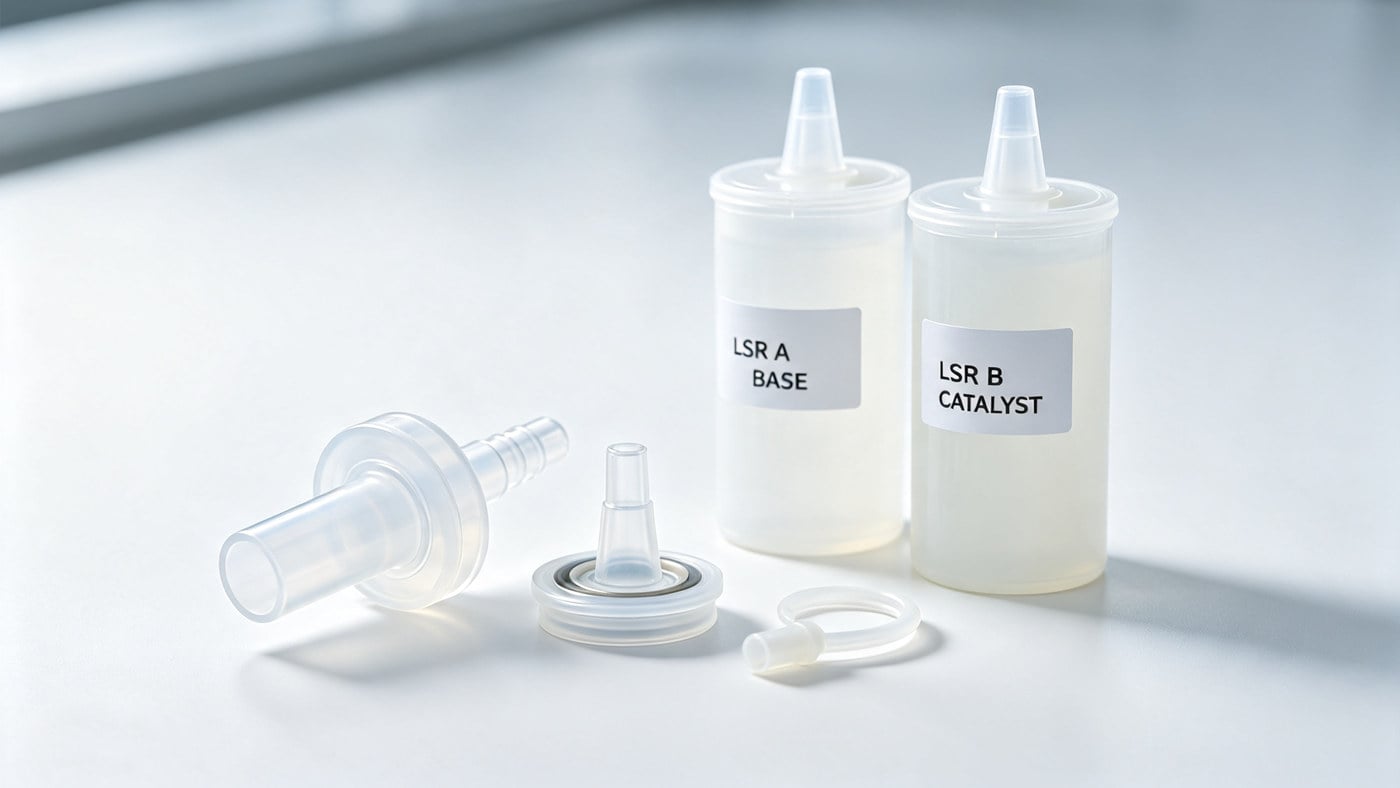
The Chemistry Behind LSR
Chemically, silicone rubber is a thermoset elastomer featuring a backbone of alternating silicon and oxygen atoms, with methyl or vinyl side groups. It represents about 30% of the silicone family and is its largest category.
The presence of methyl groups gives these materials exceptional hydrophobicity, making them ideal for electrical surface insulation. Furthermore, LSR maintains its mechanical properties across an incredibly wide temperature range, resisting both extreme heat and freezing cold.
Key Properties of Liquid Silicone Rubber
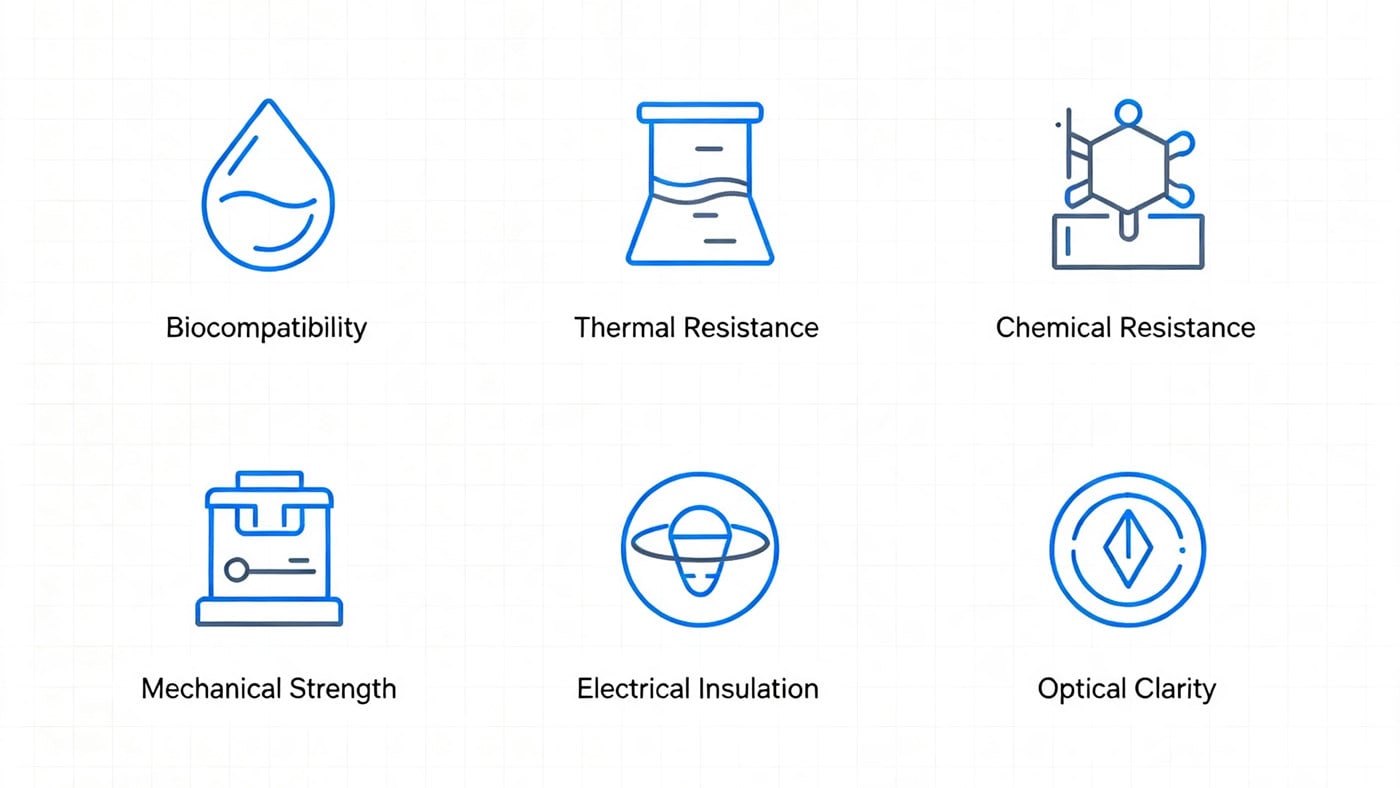
LSR is chosen for demanding applications because of its superior physical and chemical characteristics.
| Property | Description | Ideal For |
|---|---|---|
| Biocompatibility | FDA, USP Class VI, and BfR XV compliant. Resists bacterial growth and can be sterilized via ETO, Gamma, or Autoclave. | Medical devices, baby products. |
| Thermal Resistance | Withstands extreme high and low temperatures without melting. Naturally flame retardant. | Automotive under-hood components, bakingware. |
| 耐薬品性 | Highly resistant to water, oxidation, acids, and alkalis. | Seals, gaskets, industrial tubing. |
| Mechanical Strength | High tear and tensile strength. Excellent elongation and flexibility (5 to 80 Shore A). | Dynamic seals, flexible connectors. |
| Electrical Insulation | Superior dielectric properties that outperform traditional insulators at temperature extremes. | Multi-pin electrical connectors. |
| Optical Clarity | Naturally transparent with excellent pigmentability for custom colors. | Consumer goods, aesthetic covers. |
For detailed design pitfalls and critical design rules for LSR parts, check our dedicated guide: Key Considerations for LSR Thermosetting Liquid Silicone Rubber Injection Molding Design
Essential Equipment for LSR Injection Molding
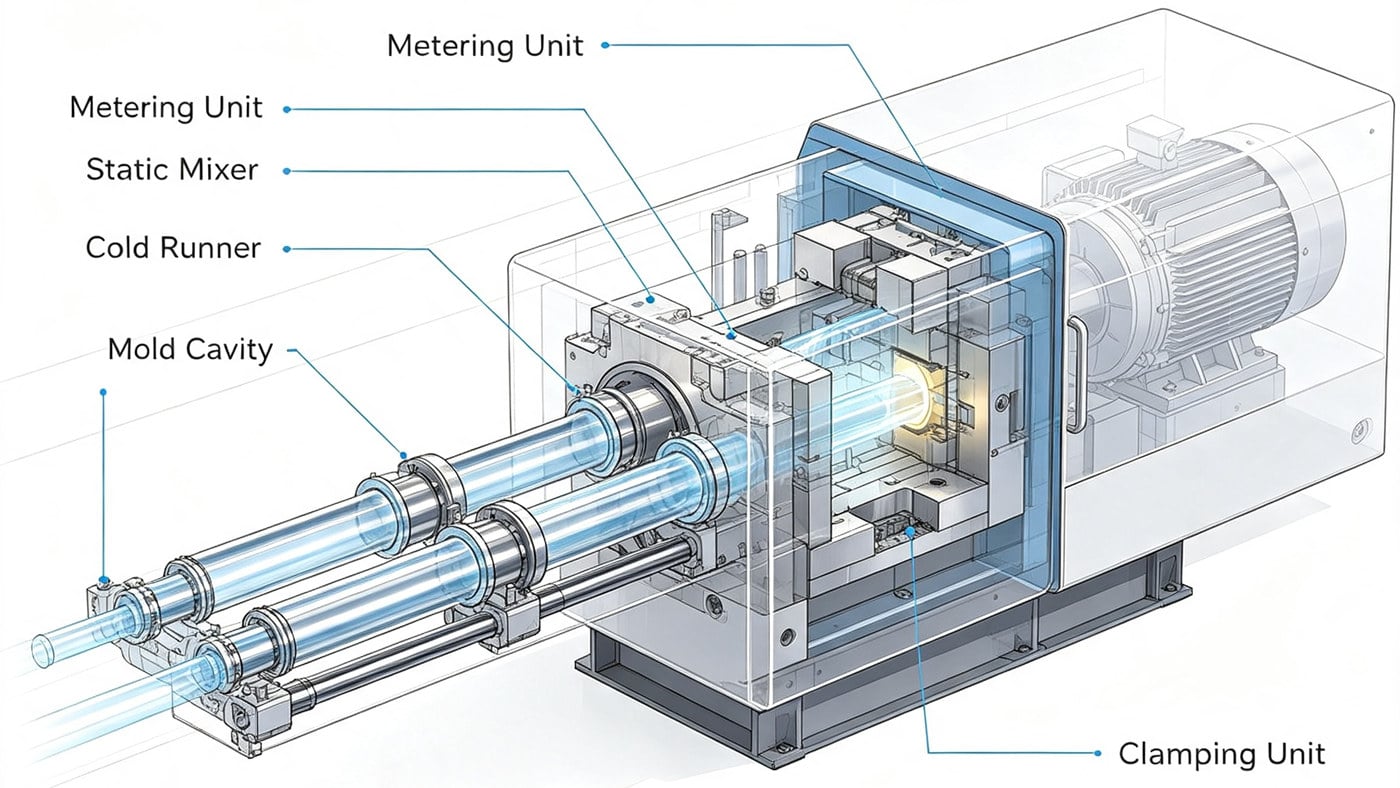
LSR requires a highly integrated, specialized molding system. The low viscosity of the material demands precise metering and mixing. Key components include:
- Metering Unit: Pumps the "A" (base) and "B" (catalyst/platinum) components at a strict 1:1 ratio.
- Static or Dynamic Mixer: Ensures a perfectly homogeneous blend before the material enters the mold.
- Supply Barrels: Pressurized containers (often 55-gallon drums) that feed the metering unit.
- Injection Unit: Applies pressure (typically 500–5000 psi) to push the mixed compound into the mold.
- Cold Runner System: Cools the sprue and runner system to prevent premature curing in the delivery channels.
- Mold Clamping Unit: Securely holds the mold during high-pressure injection and opens it for part ejection.
The LSR Injection Process: Cold Runner vs. Traditional Methods
LSR is supplied in two separate containers (A and B kits). The magic happens during the mixing and curing phase:
- Precision Metering: The A and B compounds are pumped at a 1:1 ratio. Color pigments can be injected via a closed-loop color dosing system right before mixing.
- Static Mixing: The components are blended uniformly. This guarantees consistency within a part and between parts, vastly superior to traditional transfer molding of solid silicones.
- Cold Runner Injection: The mixed compound is pushed through a cooled sprue and runner system into a heated mold cavity.
- Curing (Vulcanization): The heat in the mold triggers the platinum-catalyzed crosslinking process.
Why Cold Runners Matter
Because the runner system is actively cooled, the material inside it does not cure. This results in near-zero material waste, eliminates the need for degating/trimming, and significantly reduces overall material costs. However, achieving a true "flashless" part still requires precision mold design that accounts for steel expansion and silicone's natural shrinkage.
If you want to learn more about how cold runner technology cuts material costs and streamlines production, read our breakdown of gas-assisted and cold runner molding advantages
Top Advantages of LSR Injection Molding
Switching to LSR injection molding offers massive ROI for manufacturers:
- Batch Stability: Consistent, ready-to-use material with minimal variability.
- Process Repeatability: Automated metering ensures identical parts every cycle.
- Zero Waste: Direct injection via cold runners eliminates scrap.
- Fast Cycle Times: Rapid vulcanization compared to solid silicone.
- Flashless Technology: Precision tooling yields clean edges, reducing secondary operations.
- Full Automation: Compatible with robotic demolding and automated assembly.
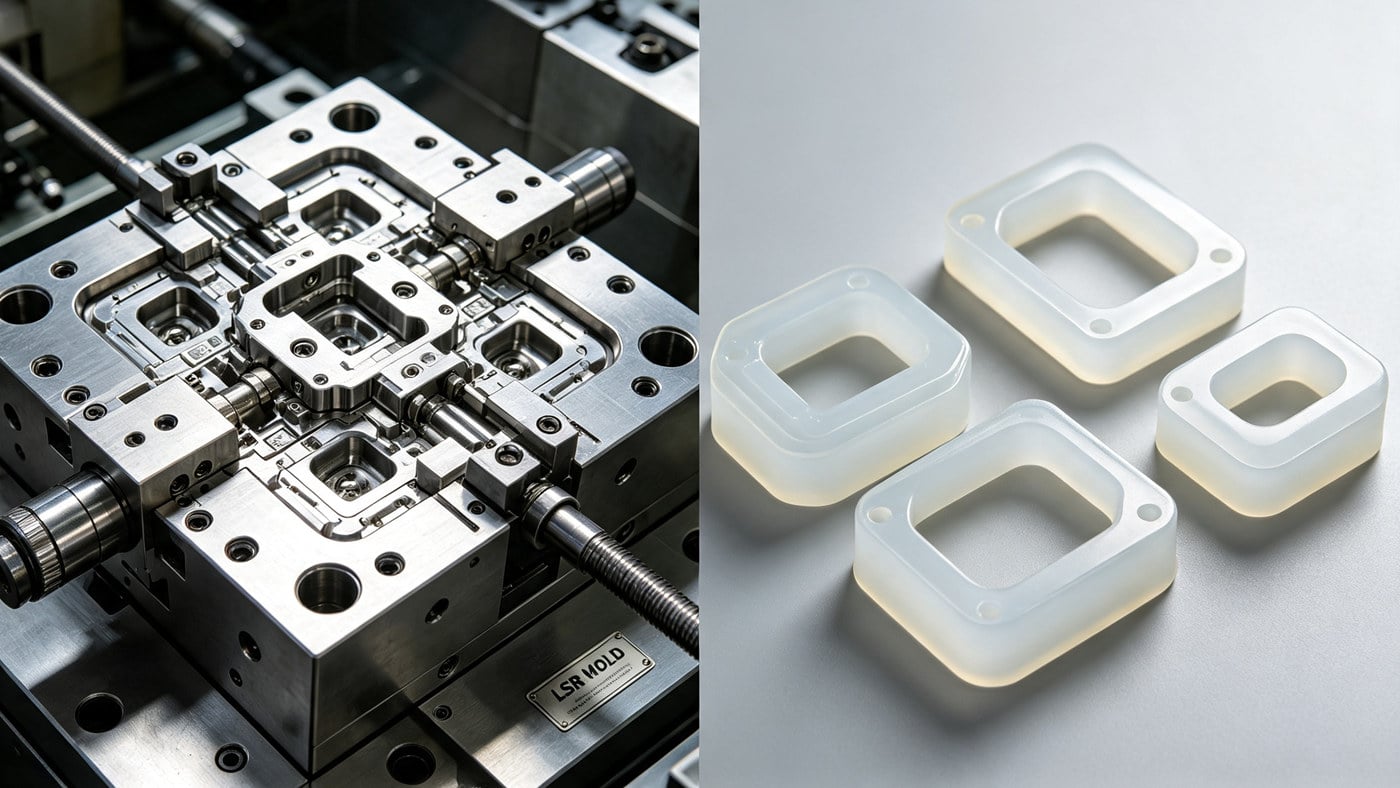
LSR excels for medical and automotive overmolding applications; our article on two-shot & overmolding differences explains how LSR pairs with hard plastic substrates for composite components.
結論
Liquid Silicone Rubber injection molding is a highly specialized process that delivers unparalleled quality for medical, automotive, and consumer applications. By leveraging cold runner technology and precise 1:1 metering, manufacturers can achieve flashless parts with zero waste and exceptional batch consistency.
Are you looking to integrate LSR into your next product design? Contact our engineering team today to discuss mold design, material selection, and prototyping!


 English
 French
 Dutch
Dutch German
 Japanese
 Korean