 日本語




Introduction: The Evolution of Injection Molding
In today's competitive manufacturing landscape, rising raw material costs and increasingly stringent quality demands place immense pressure on manufacturers. The industry urgently needs a solution that enhances product quality while simultaneously reducing production costs. Microcellular Injection Molding has emerged as the answer to this challenge.
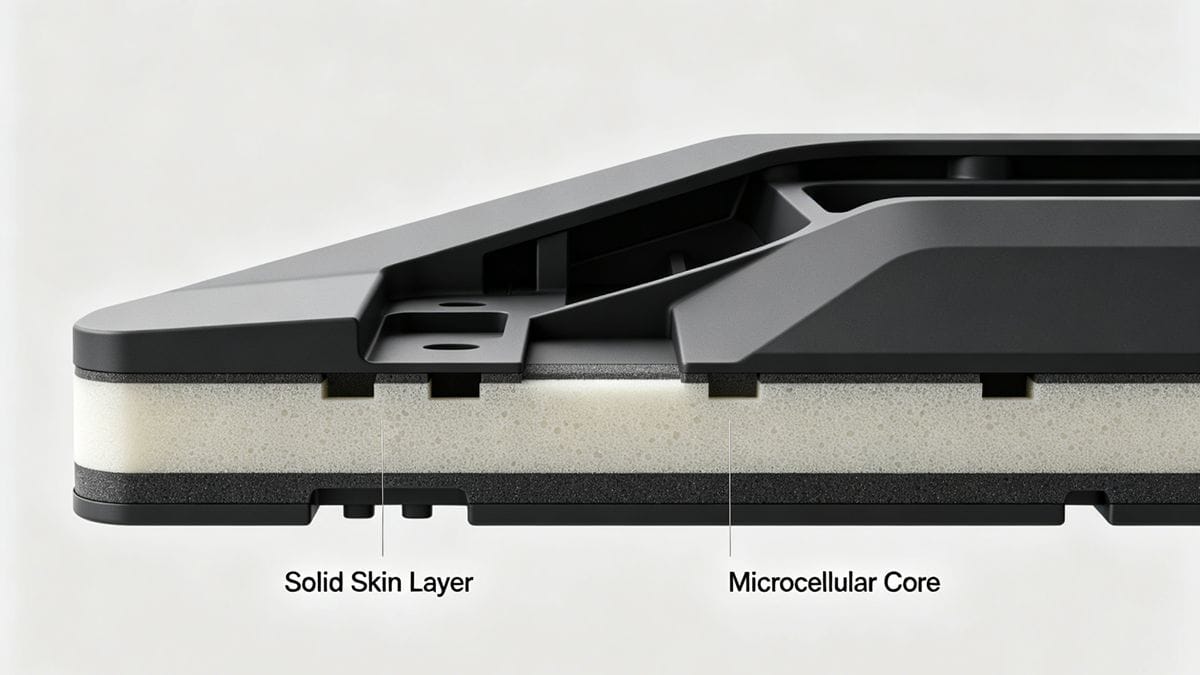
Microcellular foaming creates a thermoplastic matrix with a core layer densely packed with closed cells ranging from 10 to 50 microns in size. This technology breaks through the limitations of traditional 射出成形 . It significantly reduces part weight and cycle times, lowers required clamping force, and minimizes internal stress and warpage.
> 主なポイント: For high-precision parts and expensive materials, microcellular technology offers distinct advantages over conventional methods, marking a major direction for the future of injection molding.
A Brief History of Microcellular Technology
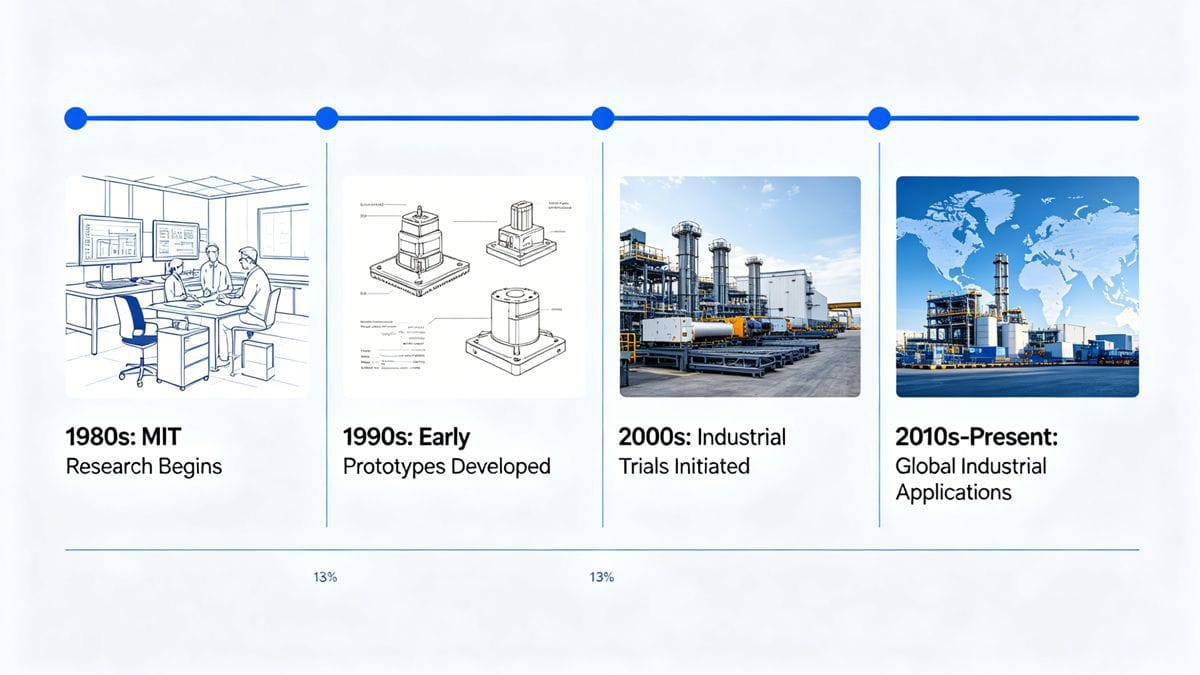
The concept of microcellular foaming was first proposed in the 1980s by researchers at the Massachusetts Institute of Technology (MIT). Their goal was to generate high-density closed cells within a part to reduce material usage without compromising rigidity or strength.
Adoption began in the United States and Europe before expanding to Japan and Southeast Asia. While adoption in China started later, the user base is growing rapidly. After years of mass production in commercial equipment, automotive components, and electronics globally, the economic and quality benefits of this technology are well-verified.
How It Works: Principles and Hardware
Understanding the microcellular process requires looking at both the workflow and the specialized hardware involved.
1. The Process Workflow The process utilizes supercritical fluids (Nitrogen or Carbon Dioxide).
- Supercritical Fluid Generation: N₂ or CO₂ is converted into a supercritical fluid via a control system.
- Injection & Mixing: The fluid is injected into the plasticizing screw's mixing zone. Through shear forces, the polymer melt and supercritical fluid dissolve completely to form a single-phase solution under constant high pressure.
- Mold Filling: Upon the injection command, a shut-off nozzle opens. The single-phase solution is射入 (injected) into the mold cavity.
2. The Foaming Principle The formation of the microcellular structure happens in three distinct stages:
- Gas Dissolution: Supercritical fluid dissolves into the polymer melt under high pressure.
- Nucleation: As the melt enters the lower-pressure, lower-temperature mold cavity, thermodynamic instability triggers the formation of millions of microscopic bubbles (nuclei).
- Cell Growth: These nuclei expand to fill the part, creating the final microcellular structure.
3. Essential Hardware Upgrades To achieve this, standard injection molding machines require specific upgrades:
- Specialized Screw & Barrel: The screw features unique thread designs to chop and mix the supercritical fluid effectively. The barrel includes a shut-off nozzle and a check ring to maintain the high-pressure zone required for the single-phase solution.
- Control Systems: Dedicated gas injectors and microcontroller interfaces manage the precise dosage of gas.
Note: Users can purchase dedicated microcellular machines or retrofit existing ones (typically requiring an L/D ratio of 22:1). Crucially, these machines can often switch back to traditional molding modes when needed.
Technical Advantages: Why Switch?
Unlike traditional molding, which relies on holding pressure to pack the mold, microcellular molding fills the cavity via cell growth under low, uniform pressure. This fundamental difference drives its benefits.
1. Significant Cost Reduction
- Material Savings: Reduces resin usage by 8% to 15%. Allows for thinner wall designs.
- Energy Efficiency: Lowers clamping force requirements by 40% to 80%, allowing the use of smaller tonnage machines and reducing energy consumption.
- Cycle Time: Shortens cycles by 20% to 30% due to faster cooling and no holding phase.
- Tooling: Reduced wear and tear extends mold life.
2. Superior Part Quality Microcellular technology solves common defects found in traditional molding:
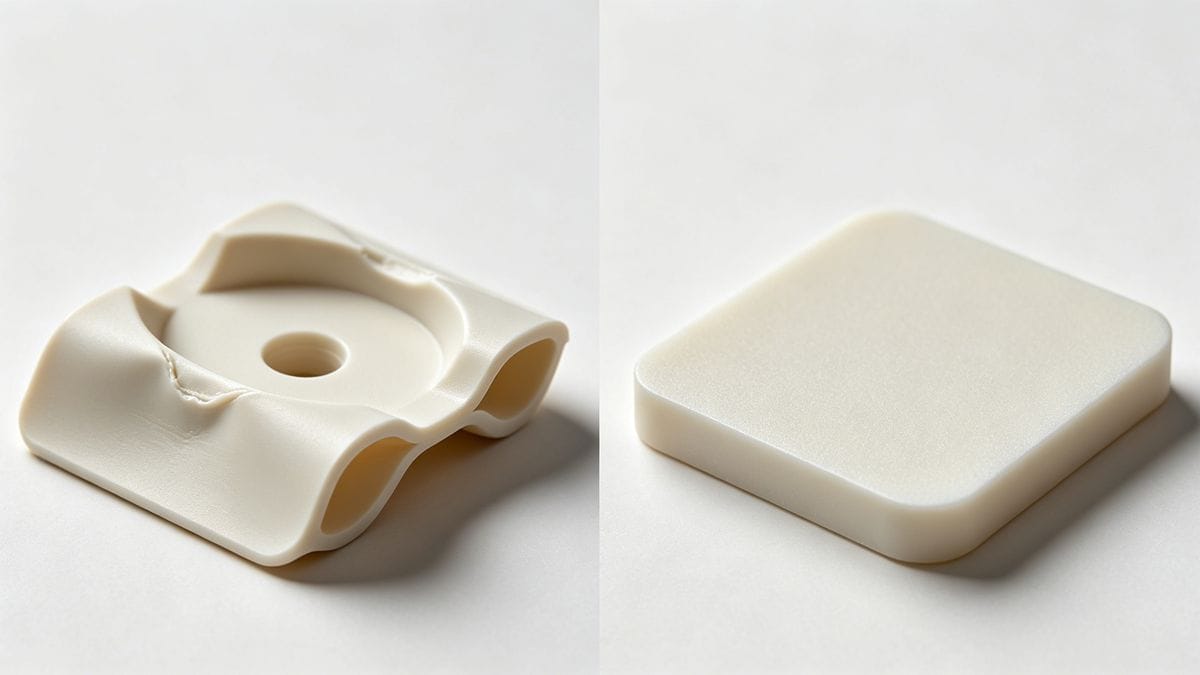
- Warpage & Sink Marks: Uniform shrinkage eliminates sink marks and drastically improves flatness. For example, in paper guide boards, deviation dropped from 0.807mm to 0.429mm (a 47% improvement) without modifying the mold.
- Dimensional Stability: Excellent Cp and Cpk values reduce rejection rates.
- Gear Precision: Improved concentricity and roundness can upgrade gear precision by 1-2 AGMA grades.
- Flow Length: Lower viscosity allows the melt to fill thin walls easily. In one case using Valox 4521 (PBT), a 4-cavity mold went from requiring two gates to just one.
Common Applications
Almost all thermoplastics can be processed using microcellular technology. However, it is most economically viable for high-quality, expensive materials used in:
| 業界 | Typical Applications |
|---|---|
| Commercial Equipment | Printer trays, paper guides, rollers, copier parts |
| 自動車 | Engine covers, intake manifolds, connectors, HVAC vents |
| エレクトロニクス | Chip trays, electrical switches, junction boxes, IMD parts |
| 医療 | Trays, non-transparent housings |
Comparison with Other Technologies
It is important to distinguish microcellular molding from other foaming techniques.
1. Vs. Gas-Assisted Injection Molding While both use Nitrogen, the principles differ. Gas-assist is ideal for thick-walled, hollow parts and requires special mold channels. Microcellular molding works best for thin-walled parts, requires no special mold runners (standard runners are actually 20% smaller), and improves the entire part structure rather than just local areas.
2. Vs. Chemical Foaming Agents (CFA) CFAs decompose at specific temperatures to create bubbles. However, they often leave residues, can degrade mechanical properties in thin walls, and make recycling difficult. Microcellular physical foaming (using N₂/CO₂) is cleaner, leaves no residue, and offers better density reduction.
Limitations and Future Developments
Currently, microcellular injection molding has limitations regarding aesthetics. It is generally not suitable for transparent parts or Class-A surfaces directly out of the mold due to the cellular structure affecting light transmission and surface finish.
However, new technologies are bridging this gap. Combining microcellular molding with:
- Rapid Heat Cycle Molding (RHCM)
- In-Mold Decoration (IMD)
- Variotherm processes
These combinations allow manufacturers to produce high-gloss, defect-free surfaces while retaining the internal structural and cost benefits of microcellular foaming.
結論
Microcellular injection molding represents a significant leap forward for manufacturers seeking to optimize costs without sacrificing quality. By reducing weight, energy consumption, and cycle times, it offers a compelling ROI for automotive, electronics, and commercial equipment sectors.
Are you considering upgrading your injection molding process? Contact us today to discuss how microcellular technology can benefit your production line.
著者について

アレックス・ユー
アイデアル・プロ・マニュファクチャリング
アレックスはIdeal Proの共同創業者ですが、重要なプロジェクトの監督や技術チームの指揮をとっていないときは、長距離サイクリングを楽しんだり、街で一番おいしいコーヒーを探し回ったり、次の旅の計画を立てたりしている姿を見かけるでしょう。 国際貿易の営業やプロジェクト管理に20年以上の経験を持つ彼は、厳しい納期や厄介な技術的課題など、ありとあらゆる状況を経験してきました。彼は、素晴らしい仕事は十分な休息と一杯の美味しいコーヒーから生まれると信じており、その好奇心と細部へのこだわりを、手掛けるすべてのプロジェクトに注ぎ込んでいます。 オフィスにいないときは、たいてい屋外で、新しい場所を探索したり、皆と共有できるエピソードを集めたりしています。.
 English
 French
 Dutch
 German
 Japanese
 Korean