
In today's manufacturing landscape, choosing the right molding process can feel overwhelming. With overmolding and insert molding both offering unique advantages, how do you decide which is best?
Overmolding and insert molding each have distinct benefits for grip and function. Understanding their differences helps you make informed decisions tailored to your project needs.
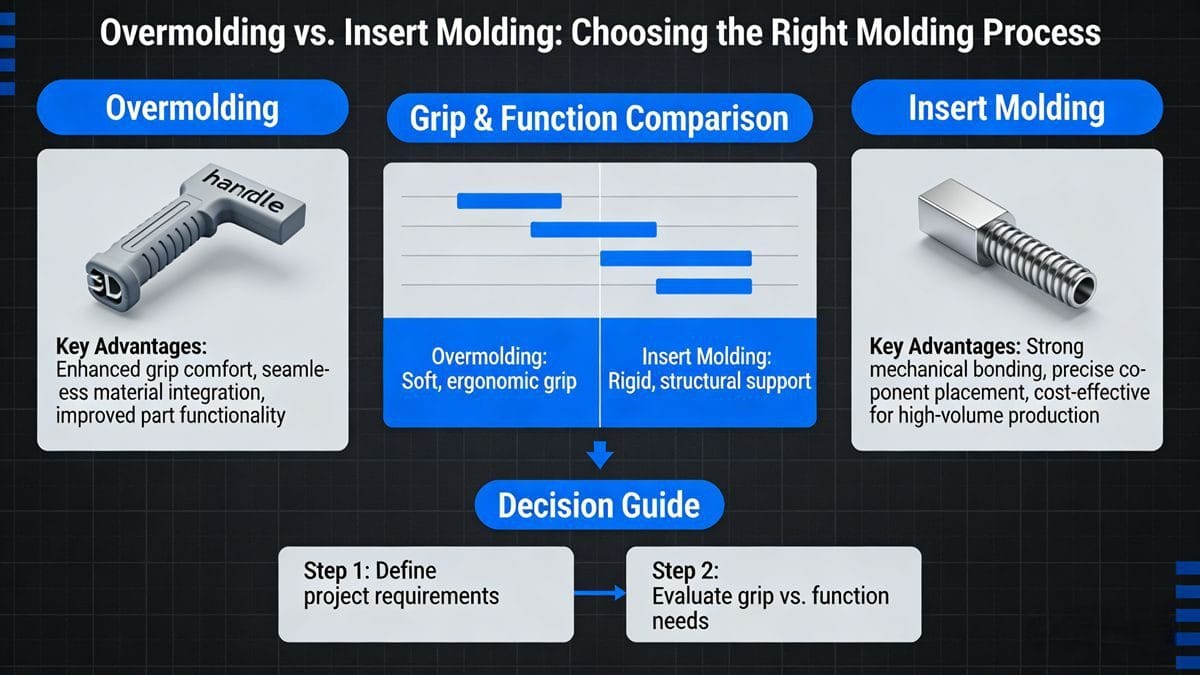
When it comes to molding processes, the choice is rarely straightforward. Each method has its pros and cons that can greatly impact the overall performance of your product. As I dive into the details, you'll discover critical insights that will guide your decision-making process.
Beyond Delamination: A Physics-of-Failure (PoF) Framework for Overmolding vs. Insert Molding Reliability?
The reliability of your product is paramount. It's essential to consider how each molding method impacts the long-term performance of your components.
Overmolding provides enhanced grip and function through a cohesive bond between materials, while insert molding can offer precision through embedded parts. Understanding these dynamics is crucial for reliability.
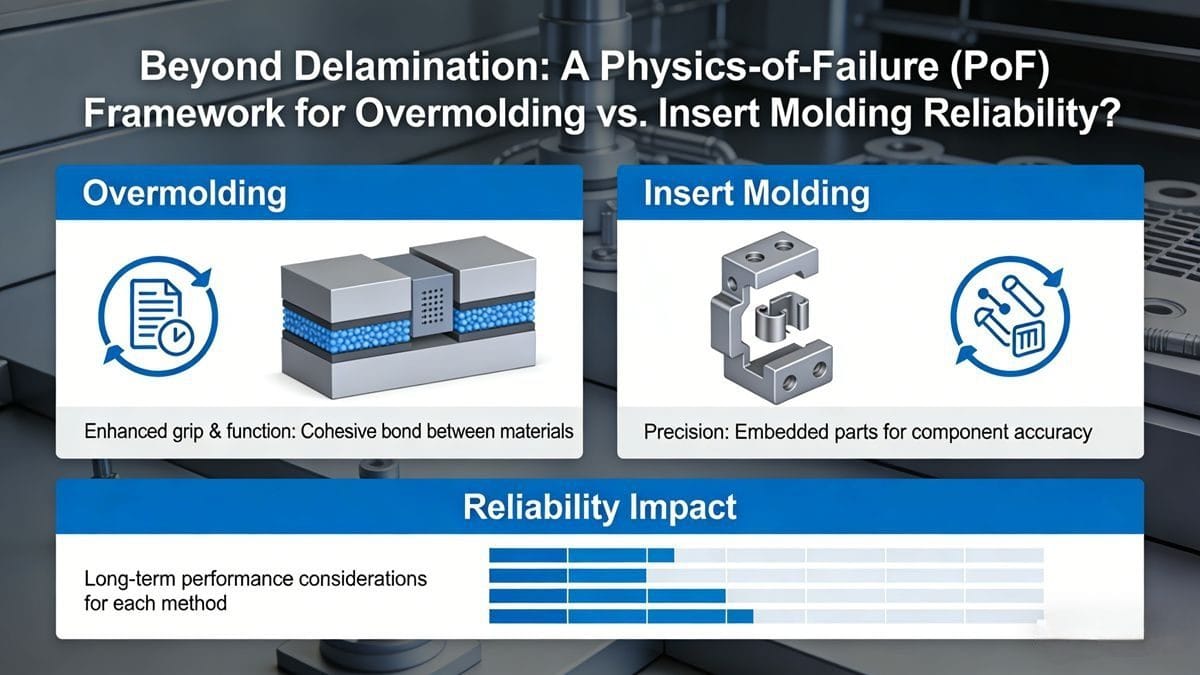
Overmolding involves placing one material over another to create a unified part. This method minimizes the risk of delamination when properly executed. In contrast, insert molding allows you to embed components within a molded part, which can enhance structural integrity. However, the connection between materials must be strong to prevent failures.
To better understand the reliability of these methods, I’ve developed a Physics-of-Failure (PoF) framework. This framework aids in assessing potential failure modes, such as thermal stress or mechanical strain. By analyzing these factors, I can predict how well each method will perform under real-world conditions.
Material Pairing 2.0: AI-Augmented CAE Workflow for Predictive Adhesion in Multi-Material Overmolding?
Choosing the right materials is crucial in achieving optimal adhesion between layers in overmolding.
AI-driven tools can augment Computer-Aided Engineering (CAE) workflows, allowing for predictive analysis of adhesion strengths in multi-material configurations. This insight enables more reliable designs.
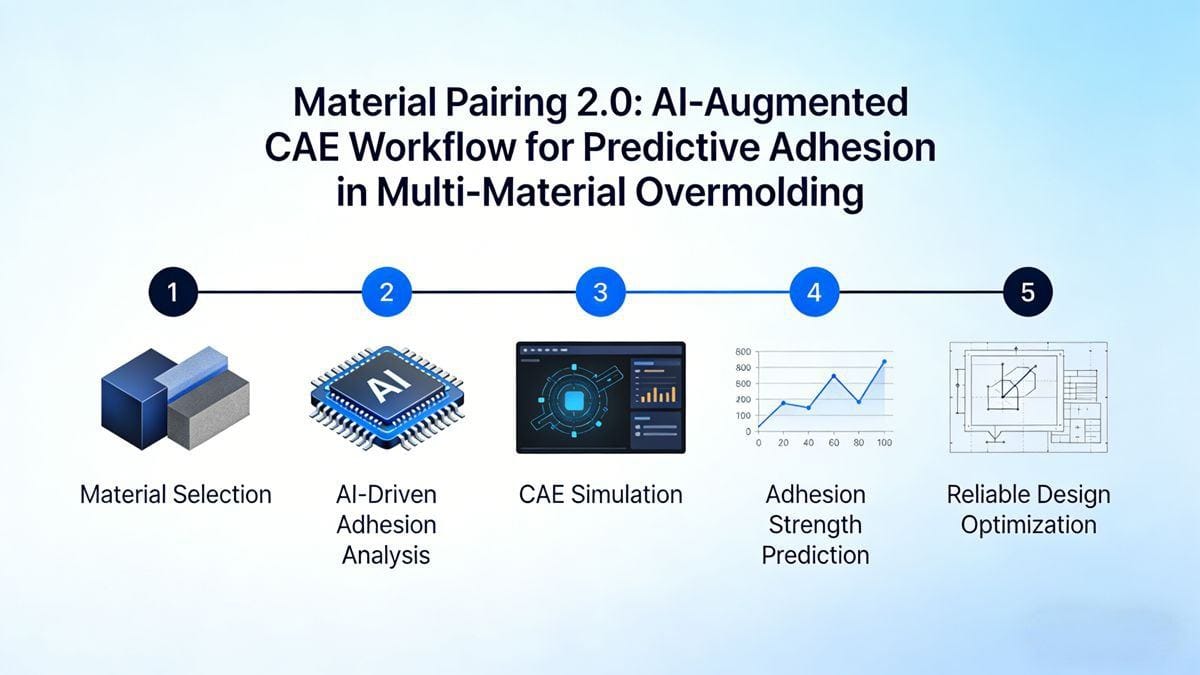
In my experience, the choice of materials can make or break your project. With advancements in AI technology, we now have the ability to predict how different materials will bond. This predictive approach requires an understanding of not just the materials themselves, but also their behavior under varying conditions.
Through AI-augmented CAE workflows, I can evaluate adhesion strengths before production begins. This leads to informed decisions about material pairings that enhance performance while minimizing risks. In this fast-paced industry, leveraging these tools can give you a competitive edge.
The Hidden Cost of Inserts: ROI Analysis of Automated Insert Loading vs. Manual Fixturing in High-Mix Production?
Cost is often a deciding factor in manufacturing processes.
Analyzing the return on investment (ROI) of automated insert loading versus manual fixturing reveals significant differences that can impact your overall budget.
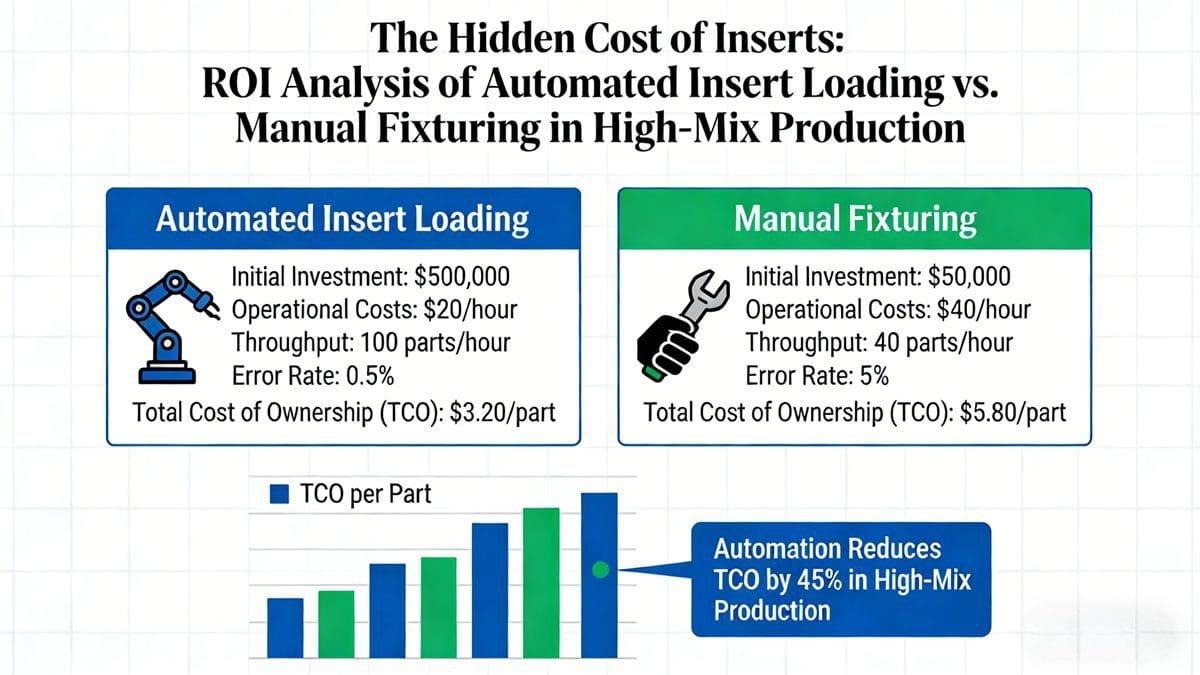
As someone who has witnessed both automated and manual processes first-hand, I can confirm that the hidden costs often surface in unexpected ways. Automated insert loading can reduce labor costs and increase efficiency. However, the initial investment may be daunting.
On the other hand, while manual fixturing may seem cost-effective initially, it can lead to longer cycle times and potential errors. By conducting a thorough ROI analysis, I can determine which method will ultimately save more money in high-mix production environments.
Sustainable Integration: LCA-Driven Comparison of Bio-Based TPE Overmolding vs. Recycled Metal Inserts?
Sustainability is a growing concern for manufacturers.
A Life Cycle Assessment (LCA) can shed light on the environmental impact of bio-based thermoplastic elastomer (TPE) overmolding compared to recycled metal inserts. Choosing sustainable options can benefit your brand.
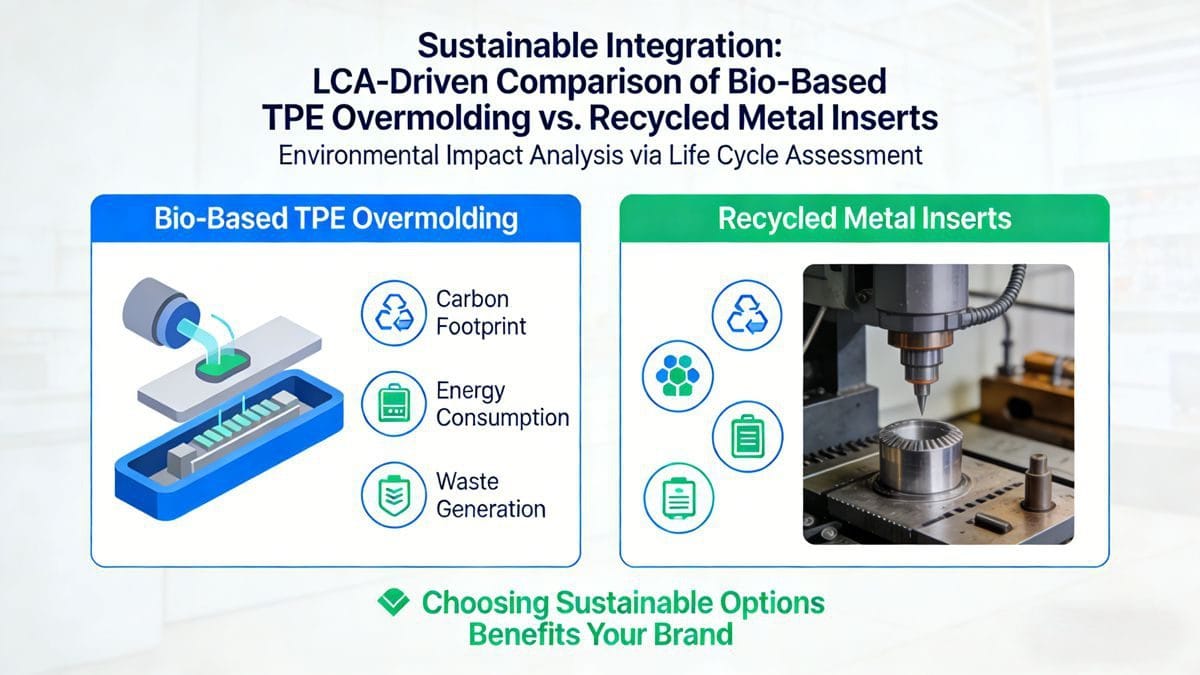
I’ve often faced the challenge of balancing sustainability with performance. Bio-based TPE overmolding offers flexibility and durability, while recycled metal inserts provide structural integrity.
Conducting an LCA allows me to evaluate factors such as energy consumption, waste production, and overall environmental impact. This assessment highlights the long-term benefits of integrating sustainable practices into my manufacturing processes. By choosing eco-friendly materials, I not only contribute to a healthier planet but also improve my brand’s public perception.
Zero-Failure Design for Mission-Critical Applications: Redundant Bonding Strategies in Aerospace & Implantable Medical Devices?
In mission-critical applications, failure is not an option.
Implementing redundant bonding strategies can enhance the reliability of systems in aerospace and medical devices, ensuring safety and performance even in the most challenging environments.
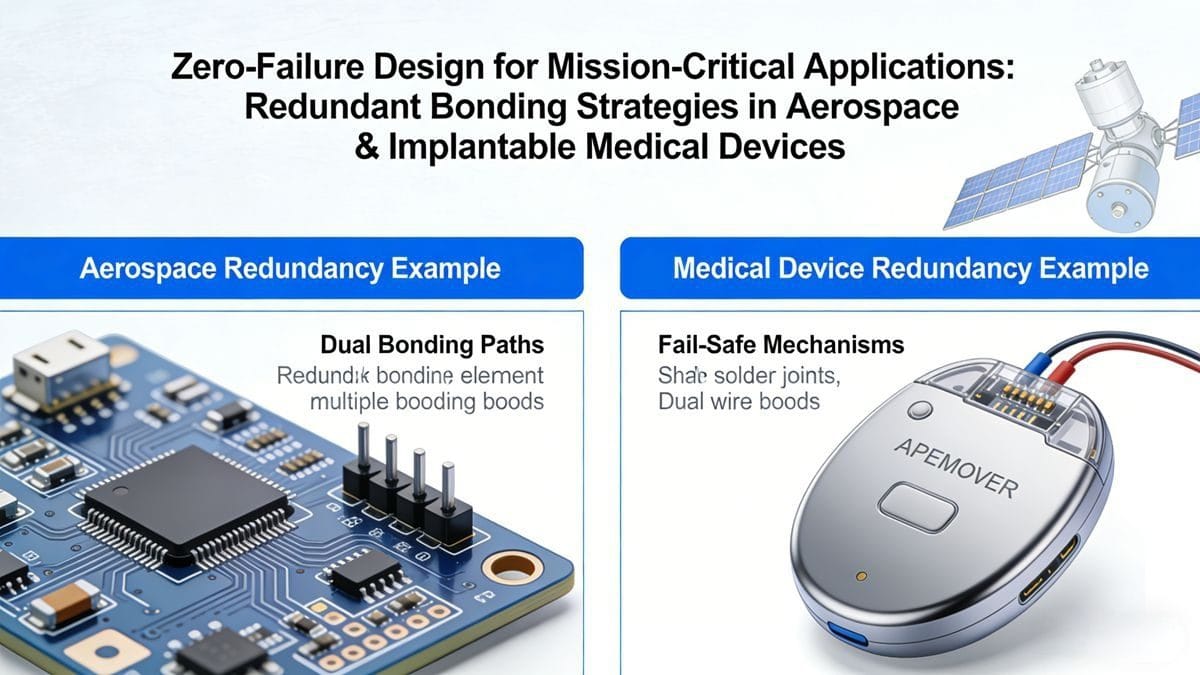
Working in industries where lives are at stake has taught me the importance of reliability. Redundant bonding strategies mitigate risks associated with bond failures. By using multiple bonding methods, I can ensure that even if one bond fails, the overall system remains intact.
This strategy is vital for aerospace components and medical devices, where any failure could have catastrophic consequences. By prioritizing zero-failure design, I am committed to ensuring the utmost reliability in every product I create.
From Grip to Intelligence: Embedding Sensors & Conductive Traces Within Overmolded Housings—A Manufacturing Blueprint?
The future of manufacturing lies in smart products.
Embedding sensors and conductive traces within overmolded housings transforms traditional designs into intelligent systems, enhancing functionality and user experience.
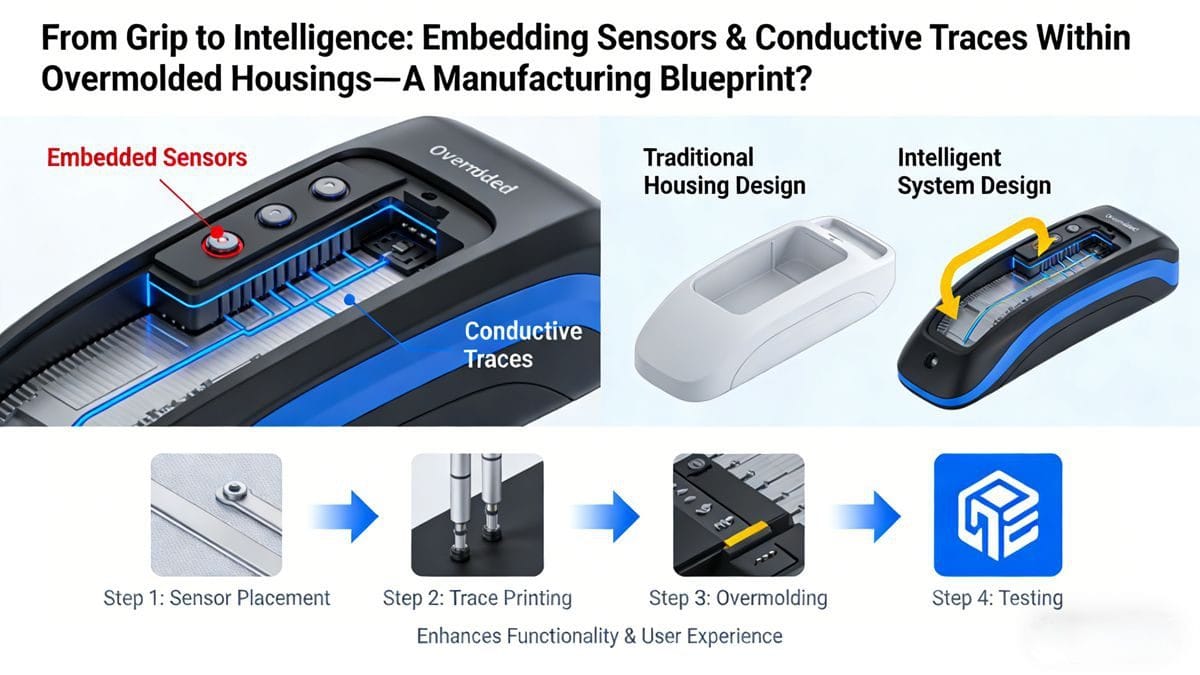
The potential for overmolding extends beyond simple functionality. By embedding sensors within the molded components, I can create interactive products that monitor conditions and provide real-time data. This capability leads to smarter designs that meet the growing demands of the market.
As I work on developing this technology, I am excited about the endless applications. From monitoring environmental factors to enabling user interactions, the possibilities are vast. This shift towards intelligence in manufacturing is something I am eager to embrace.
Dynamic Process Selection: A Stage-Gated Decision Matrix for Product Lifecycle-Optimized Molding Strategy?
Choosing the right molding process is not a one-size-fits-all approach.
A stage-gated decision matrix allows for dynamic process selection based on product lifecycle stages, optimizing your molding strategy for maximum efficiency and effectiveness.
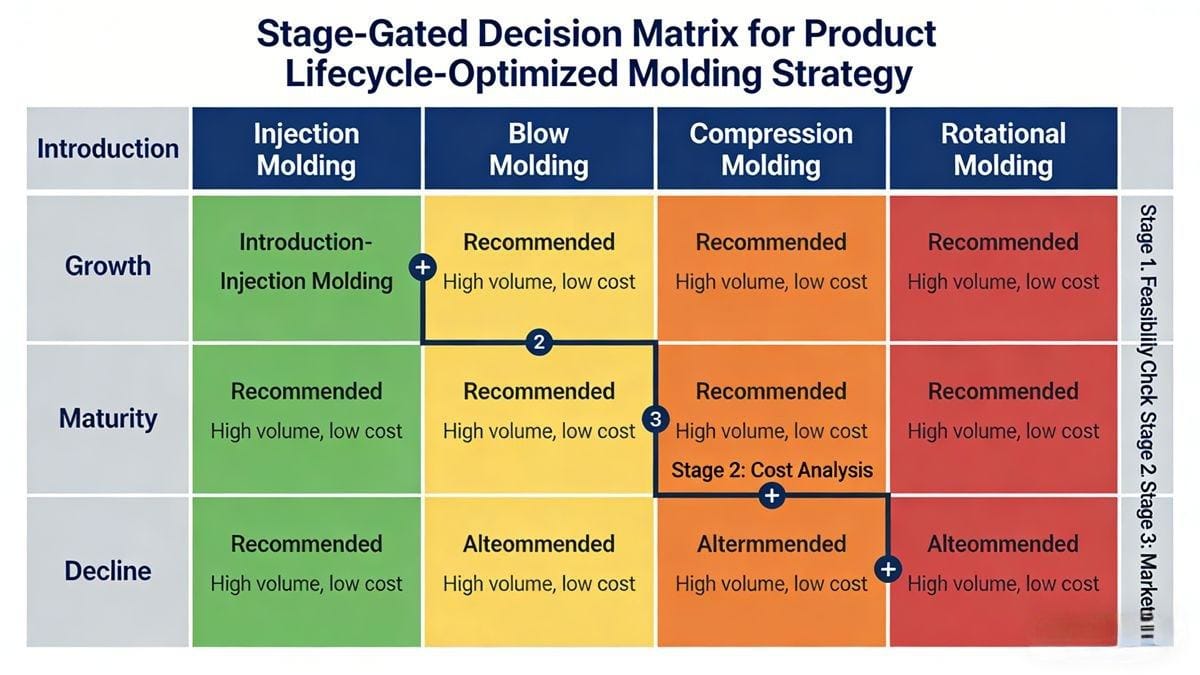
I have learned that the needs of a project can evolve over time. A stage-gated decision matrix helps me adapt my molding strategy based on the product's lifecycle. This approach allows me to optimize processes, ensuring that I meet project demands while maintaining high-quality standards.
By evaluating factors like production volume, complexity, and material requirements at each stage, I can make informed decisions that benefit both my clients and my business. This flexible approach to process selection ensures that I stay ahead of the curve in an ever-changing industry.
Conclusion
In the debate between overmolding and insert molding, understanding your specific needs is essential. Make informed choices to ensure the success and reliability of your products.


 English
 French
 Dutch
Dutch German