

Struggling to find a material with both rubber-like flexibility and plastic's processability? Choosing wrong leads to costly failures. TPE injection molding offers the perfect hybrid solution you need.
TPE injection molding is a process that melts thermoplastic elastomer pellets and injects them into a mold to create parts with a unique combination of flexibility and durability. This method is ideal for creating soft-touch grips, seals, and flexible components efficiently and at high volumes.
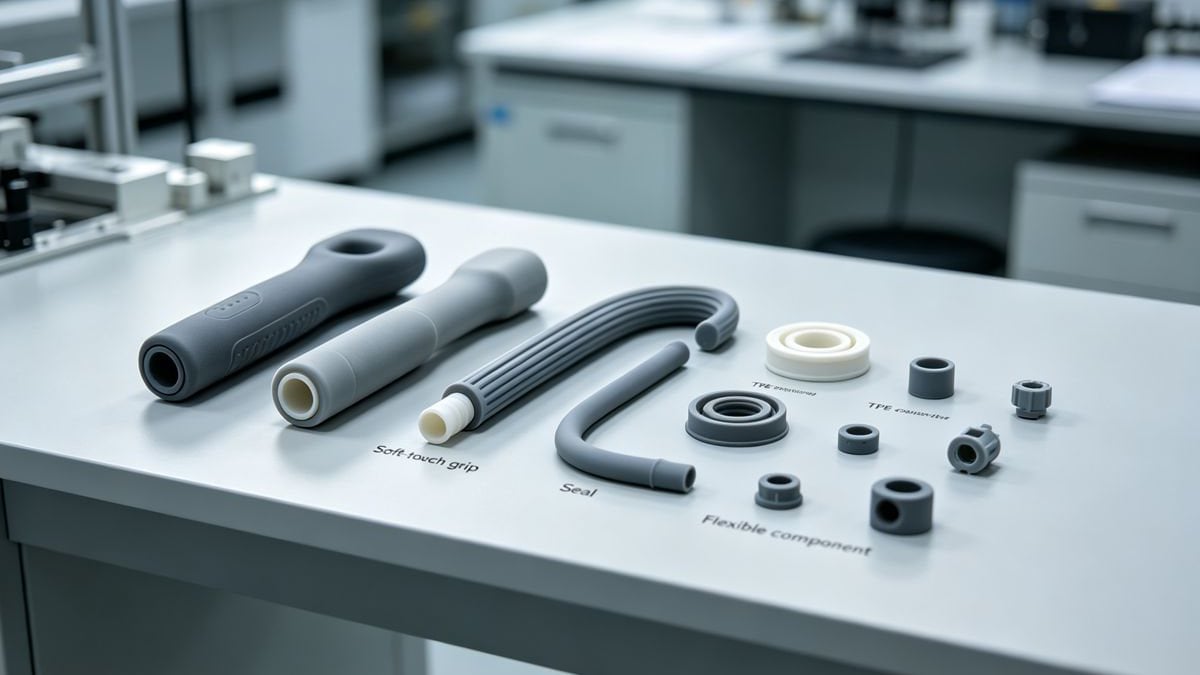
In my years of engineering at Ideal Pro, I’ve seen countless projects stall because teams treat TPE like standard rigid plastic. It’s not. TPE is a unique hybrid, and mastering it requires respecting its dual nature. It demands more than just a good design; it requires a deep understanding of material science, mold engineering, and process control. This guide will walk you through everything I've learned over 18 years and nearly 3,000 product developments to help you succeed.
What Exactly is TPE Injection Molding and Why Should You Care?
Confused by the manufacturing jargon? A misunderstanding of the core process can lead to poor design choices and costly mistakes down the line. Let's break down exactly what it is.
TPE injection molding is a manufacturing process where thermoplastic elastomer pellets are heated to a molten state and injected into a custom mold. This creates durable, flexible parts efficiently, combining the properties of rubber with the high-volume production advantages of plastic molding.
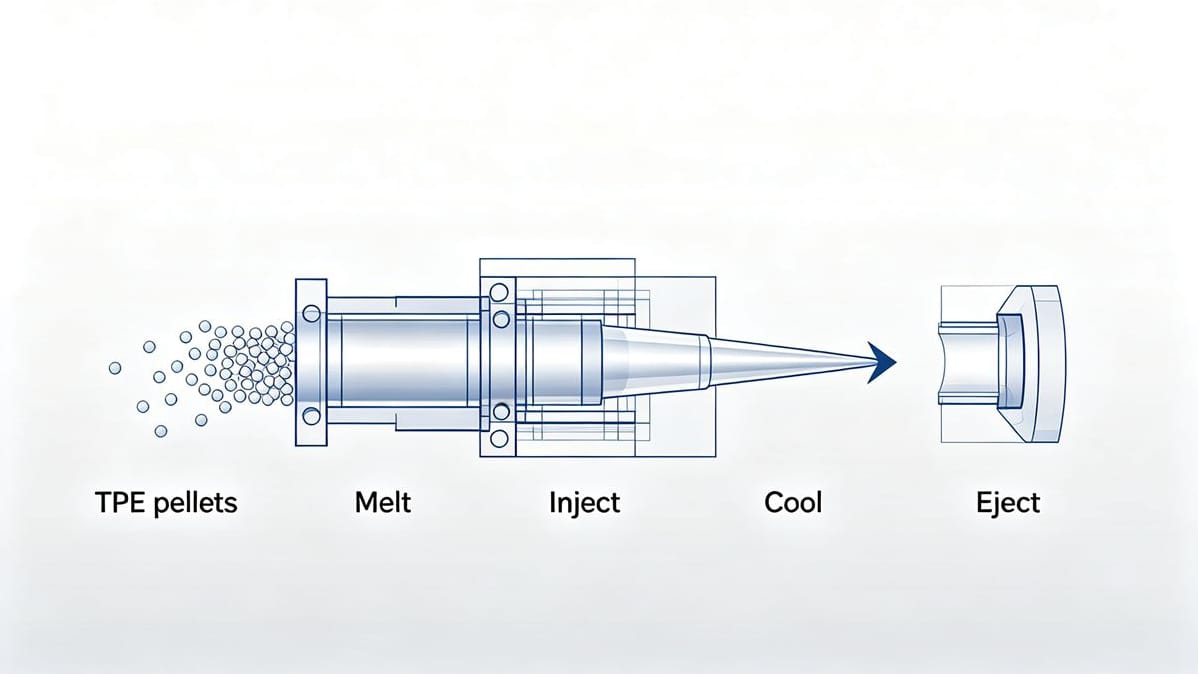
To really get it, you need to understand two words: "thermoplastic" and "elastomer." "Elastomer" means it's elastic like rubber. "Thermoplastic" means it can be melted, processed, and then re-melted again without losing its core properties. This is different from thermoset rubbers, which undergo a chemical change (curing) and cannot be recycled. This single difference is a game-changer for cost and sustainability. At Ideal Pro, we emphasize this benefit because it directly impacts your total cost of ownership. In-process scrap can be reground and reused, dramatically reducing material waste. The cycle times are also much faster, as there's no lengthy curing step involved.
Here's a simple breakdown:
| Feature | TPE Injection Molding | Traditional Rubber Molding |
|---|---|---|
| Cycle Time | Fast (e.g., 30-90 seconds) | Slow (e.g., 3-10 minutes) |
| Recyclabilité | Yes, in-process scrap is reusable | No, it's a thermoset material |
| Energy Cost | Lower (just melt and cool) | Higher (requires heat for curing) |
| Design Freedom | High (complex shapes, overmolding) | More limited |
How Do You Choose the Right TPE Material for Your Application?
Overwhelmed by the countless TPE grades available? Picking the wrong one means your product could fail, leading to wasted investment and a damaged reputation. Let's simplify the selection process.
To choose the right TPE, you must first define your product's non-negotiable requirements: hardness (durometer), chemical resistance, UV stability, and operating temperature range. Then, you can match these needs to a specific TPE family, like TPE-S (SEBS), TPE-V (TPV), or TPE-U (TPU), to ensure optimal performance.
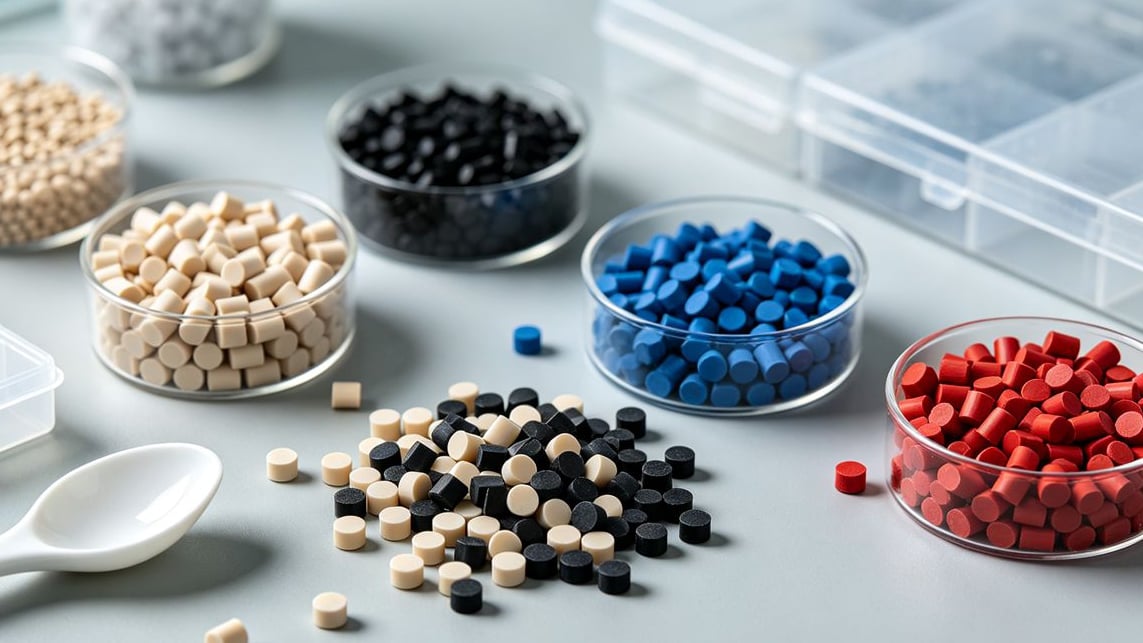
I've seen firsthand that TPE success is 50% material science. A client once came to us with a failing automotive seal. They used a low-cost TPE-S for its soft feel, but it couldn't handle the under-hood temperatures and exposure to oils. The part became brittle and cracked. The fix was simple for us: we switched them to a TPE-V (TPV), which is designed for exactly that environment. The problem was solved instantly, but the initial mistake cost them a recall. This is why we always start with the application. Don't just select a TPE grade—engineer your choice around its end use.
Here is a table to help guide your selection:
| TPE Family | Key Properties | Common Applications | Popular Brands |
|---|---|---|---|
| TPE-S (Styrenic) | Soft-touch, great elasticity, easy to color | Handles, grips, toys, general-purpose seals | KRAIBURG®, Medalist® |
| TPE-V (TPV) | Excellent chemical & heat resistance | Automotive seals, industrial hoses, gaskets | Santoprene™, Sarlink® |
| TPE-U (TPU) | High abrasion & tear resistance, strong | Caster wheels, power tool parts, cables | Elastollan®, Desmopan® |
| TPE-E (COPE) | High strength, flex-fatigue resistance | Medical tubing, bellows, sporting goods | Hytrel®, Arnitel® |
| TPE-A (COPA) | Excellent heat & chemical resistance, flexible | Catheters, automotive fuel lines, wiring | PEBAX®, Vestamid® |
What Are the Key Process Parameters for Flawless TPE Injection Molding?
Are your TPE parts coming out with defects like flash or sink marks? Ignoring the specific process parameters for TPE is a recipe for scrap, rework, and missed deadlines. Let's master the key settings.
Key TPE process parameters include melt temperature, injection speed, holding pressure, and cooling time. Proper drying of the material before molding is also absolutely critical. Optimizing these variables is essential to prevent defects like flash, sink marks, and poor adhesion, especially in overmolding applications.
Many TPE grades are hygroscopic, meaning they absorb moisture from the air. If you don't dry them properly in a desiccant dryer before molding, that moisture turns to steam in the barrel, causing ugly silver streaks (splay) on your part and, worse, making it brittle. We also frequently troubleshoot issues like gate blush, which are faint streaks radiating from the gate. This is almost always caused by the injection speed being too high for the gate size, creating excessive shear heat that damages the material. It’s a perfect example of how process settings and mold design are completely interlinked. You can't fix one without considering the other.
Here’s what you need to control:
| Paramètres | Why It's Critical for TPE | Common Issue if Set Incorrectly |
|---|---|---|
| Séchage | Many TPEs absorb moisture, which causes defects. | Splay marks, bubbles, weakened part structure. |
| Température de fusion | Too low results in poor flow; too high degrades the material. | Short shots, burns, discoloration, loss of properties. |
| Vitesse d'injection | TPEs are shear-sensitive; speed affects surface finish. | Gate blush, flash, flow marks, shear burn. |
| Température du moule | Affects surface finish, cycle time, and part shrinkage. | Poor surface quality, warping, sink marks. |
| Pression de maintien | Compensates for material shrinkage as the part cools. | Sink marks, voids, dimensional instability. |
What Design for Manufacturability (DFM) Rules Must You Follow for TPE Molds?
Have you designed a beautiful TPE part that looks great on your screen? If it's not designed for the realities of injection molding, it will become a manufacturing nightmare. Let's cover the DFM rules.
For successful TPE mold DFM, prioritize smooth melt flow with generous radii and uniform wall thickness. Use appropriate gate types (e.g., tab or fan gates) to reduce shear stress. Proper venting is crucial to prevent trapped air, and well-designed cooling channels ensure consistent shrinkage.
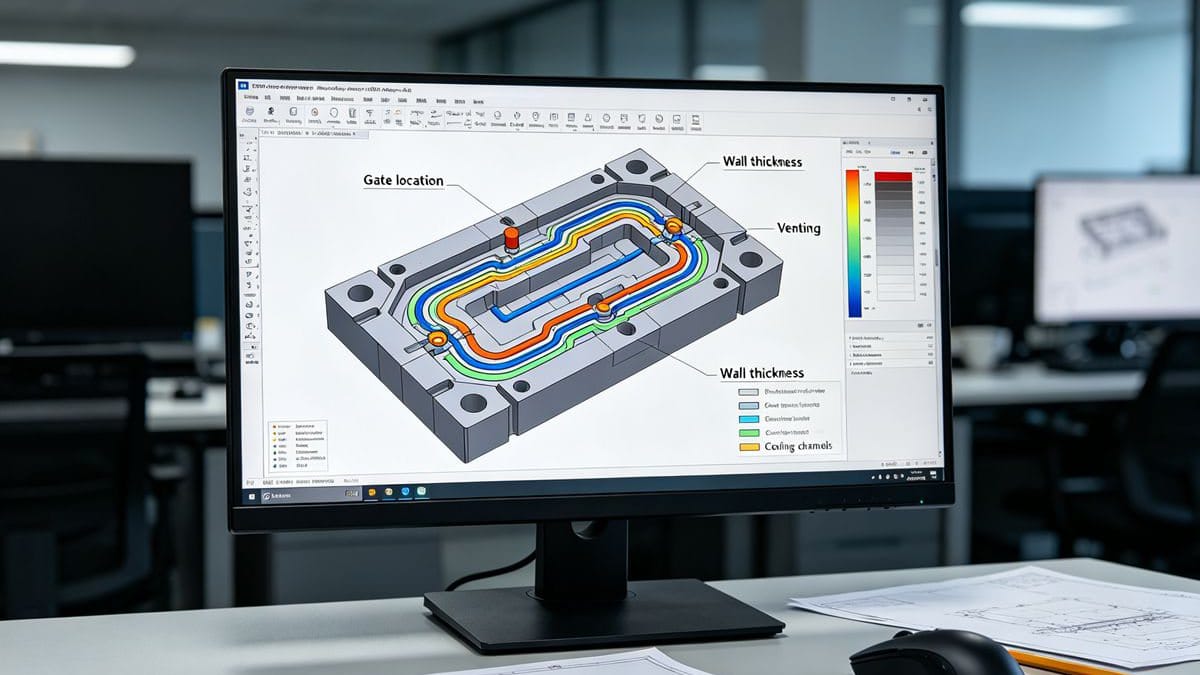
This is the other 50% of the puzzle: mold design. At Ideal Pro, our turnkey approach means we optimize your Conception pour la fabrication (DFM) before a single piece of steel is cut. For TPEs, this is non-negotiable. Because TPEs are soft and have low viscosity when molten, they will find any escape route, leading to flash. Vents must be precise—deep enough to let air out, but shallow enough to stop the TPE. We also focus heavily on cooling. TPEs have poor thermal conductivity, meaning they hold onto heat. If your mold's cooling channels aren't placed strategically, you'll have long cycle times and warped parts. We frequently see sink marks in thick-walled TPE parts, which trace back to inadequate cooling and holding pressure, a problem we design out from the start.
Key DFM Considerations for TPE:
- Gating: Use tab, fan, or submarine gates to allow gentle filling. Avoid small pin-point gates that create high shear.
- Venting: Place deep, wide vents at the end of the flow path and along the parting line to let trapped air escape.
- Wall Thickness: Keep it as uniform as possible. If thickness variations are needed, make the transition gradual.
- Overmolding: For a strong bond, design mechanical interlocks (holes, channels) in the rigid substrate. This, combined with a good chemical bond from compatible materials, creates a part that will never delaminate.
How Do You Troubleshoot the Most Common TPE Injection Molding Defects?
Are you plagued by frustrating defects in your TPE parts? Guessing at solutions wastes material, machine time, and money. Here’s a practical guide to diagnosing and fixing common issues.
To troubleshoot TPE defects, start by methodically checking for the root cause. For flash, reduce injection pressure or check clamp tonnage. For sink marks, increase holding pressure or time. For poor overmold adhesion, verify material compatibility and increase melt temperature for a better chemical bond.
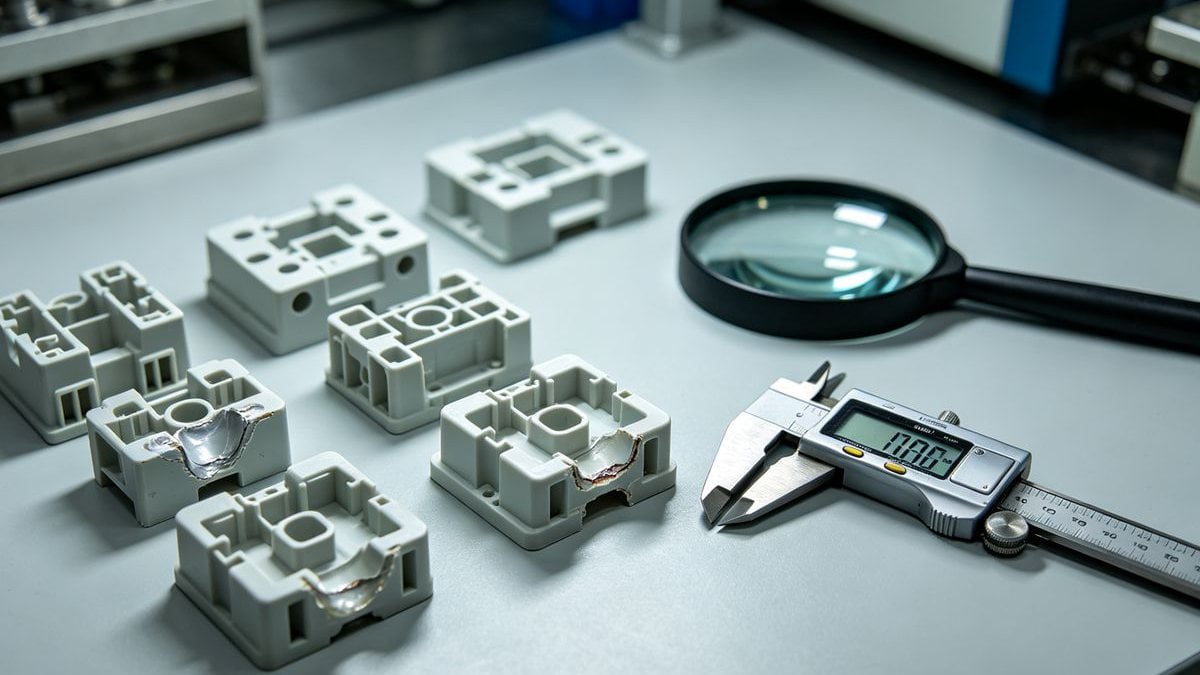
Troubleshooting shouldn't be a random process. It's a logical deduction. When a client comes to us with a problem, we don't just tweak settings. We look at the part, the material data sheet, the mold design, and the process sheet. A common issue is poor adhesion in overmolding. The operator might blame the machine, but we first check: Are the materials compatible? Is the substrate pre-heated? Is the substrate clean and free of mold release? Is the TPE melt temperature high enough to create a good weld with the substrate? 90% of the time, the answer lies in one of these questions, not a machine fault. Our goal at Ideal Pro is to build this troubleshooting logic into the initial DFM, so you never have to deal with it during mass production.
Here's a quick troubleshooting chart based on my experience:
| Défaut | Possible Cause(s) | Actionable Solution(s) |
|---|---|---|
| Flash | Clamp force too low; Injection pressure too high; Mold vents too deep. | Increase clamp tonnage; Reduce injection pressure/speed; Check mold parting line for damage. |
| Marques d'évier | Section too thick; Inadequate holding pressure/time; Mold too hot. | Core out thick sections in the design; Increase holding pressure/time; Improve cooling at the problem area. |
| Coup court | Material froze before filling the cavity; Trapped air; Not enough material. | Increase melt/mold temp; Increase injection speed; Check that vents are not clogged. |
| Poor Adhesion | Material incompatibility; Melt temp too low; Contaminated substrate. | Verify TPE/substrate compatibility; Increase TPE melt temp; Ensure substrate is clean, dry, and hot. |
| Gate Blush | High shear stress at the gate; Injection speed is too fast for the gate size. | Enlarge the gate; Switch to a tab or fan gate design; Reduce injection speed. |
You can find more proven fixes in our guide on common injection molding defects troubleshooting.
Where Are TPEs Making a Real-World Impact Across Industries?
Wondering if TPE is just a niche material for squishy toys? Thinking this way means you might miss its huge potential to improve your product and disrupt your market. Let's explore where TPE is the go-to solution.
TPEs are used everywhere. In automotive for seals and interior grips. In consumer electronics for protective cases and cable overmolding. In medical devices for ergonomic grips and biocompatible tubing. And in consumer goods for tool handles and kitchenware, providing both function and feel.
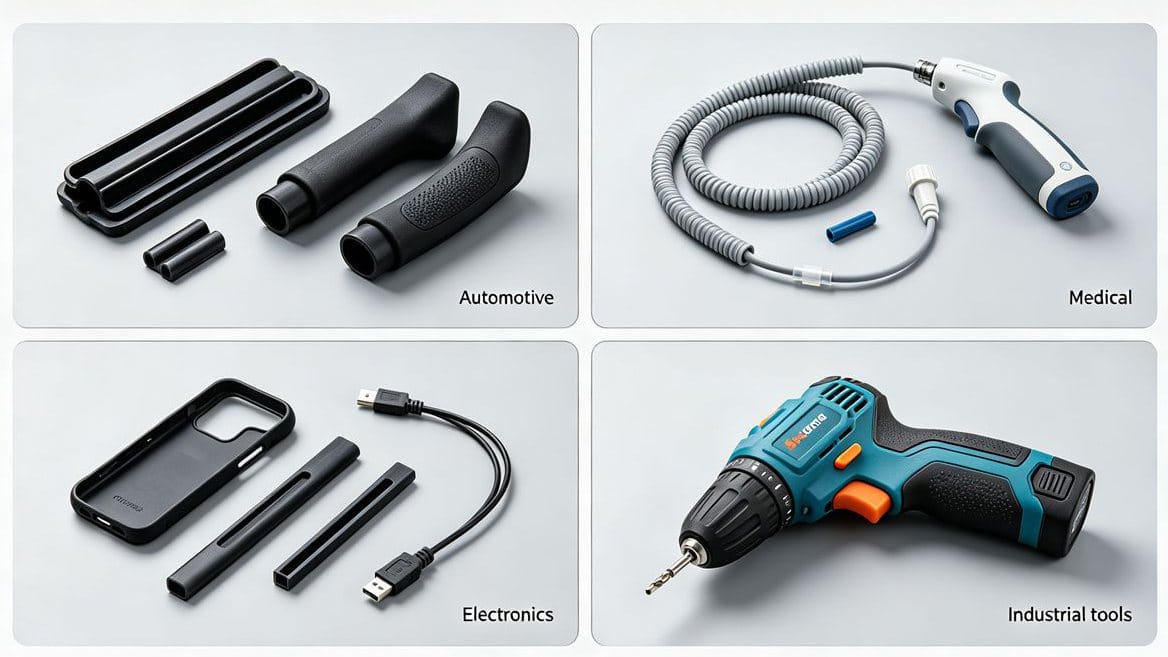
Across the nearly 3,000 diverse product developments we've guided at Ideal Pro, the versatility of TPE is simply astounding. We've seen it solve problems in nearly every industry.
Automotive Sector: Durability and Feel
In cars, TPEs are used for everything from the soft-touch interior surfaces of dashboards and door panels to the durable, weather-resistant exterior seals and gaskets. Their ability to resist chemicals and extreme temperatures makes them ideal for under-hood applications.
Medical Devices: Safety and Biocompatibility
The medical field relies on TPEs for their purity, lack of PVC and latex, and ability to be sterilized. You'll find them in syringe plungers, flexible tubing, respirator masks, and ergonomic grips for surgical instruments.
Consumer Electronics: Protection and Ergonomics
That soft, grippy case protecting your smartphone is likely TPE. It's also used for the flexible strain relief on charging cables, water-resistant seals on wearables, and non-slip feet on laptops, combining protection with a premium feel.
Industrial & Power Tools: Grip and Vibration Dampening
The comfortable, non-slip handle on a modern power drill is a classic TPE overmolding application. The material provides a secure grip, absorbs vibration, and withstands the rough environment of a job site.
Is TPE a Sustainable and Cost-Effective Choice in the Long Run?
Are you worried about the environmental impact and the true cost of using TPE? Focusing only on the per-kilogram price of the raw material can be a misleading and ultimately costly mistake.
Yes, TPE is often a more sustainable and cost-effective choice. It's fully recyclable, which drastically reduces manufacturing waste. Its lower processing energy and faster cycle times compared to thermoset rubber reduce production costs, lowering the Total Cost of Ownership (TCO) significantly.
This aligns perfectly with our mission at Ideal Pro: "Sustainable Solutions, Enduring Excellence." We guide our clients to look beyond the initial quote. A slightly more expensive TPE grade might process faster or eliminate a secondary assembly step, saving you much more money in the long run. The ability to recycle scrap in-house is a massive cost-saver that thermoset rubber simply can't offer. When you factor in lower energy consumption, faster production, and reduced waste, the TCO for TPE is often much more attractive than traditional materials. It's about making a smarter, more sustainable choice for your product and your bottom line.
| Cost Factor | TPE Injection Molding | Traditional Rubber Molding |
|---|---|---|
| Material Cost | Varies by grade | Varies by compound |
| Cycle Time | Lower (Faster production) | Higher (Slower production) |
| Energy Usage | Lower (No curing step) | Higher (Requires energy for vulcanization) |
| Scrap Recyclability | Yes (Reduces waste & cost) | No (Scrap is waste) |
| Tooling Amortization | Faster (Higher throughput) | Slower (Lower throughput) |
What Do Overseas Buyers Need to Know Before Starting a TPE Project in China?
Are you nervous about managing a complex TPE molding project from thousands of miles away? Communication gaps and cultural misunderstandings can quickly derail your project and budget.
Overseas buyers should ask a potential supplier about their specific DFM process for TPEs, their experience with the exact TPE brands you need, and their quality control systems for material handling and drying. Clear, unambiguous communication on material specs is vital for success.
As a company that works with clients worldwide, we understand the anxieties. That's why we've built our process around transparency and communication. Don't just tell your supplier you want "TPE"; specify "Santoprene 101-87 TPV" or "Kraiburg TF8STE TPE-S." If you don't, you might get a cheaper, local equivalent that doesn't meet your performance needs. At Ideal Pro, we provide Material Certifications with every shipment to guarantee authenticity. Ask to see their DFM reports from past TPE projects. Ask about their drying equipment. A good partner won't be annoyed by these questions; they'll be impressed. They show you're a serious buyer who understands the technical challenges.
Key Questions to Ask Your Chinese Partner:
- Q: How do you guarantee you will use the exact TPE grade I specified?
- A: We provide a Material Certificate of Analysis (COA) for every production run and allow clients to audit our material inventory.
- Q: What is your DFM and mold flow analysis process for TPE?
- A: Before cutting steel, we provide a full DFM report highlighting gate location, venting, cooling, and potential issues like sink or warp, validated by mold flow simulation.
- Q: How do you manage project communication and updates?
- A: Each client is assigned a dedicated Project Manager, fluent in English, who provides weekly updates with photos and progress reports.
- Q: How do you protect my Intellectual Property (IP)?
- A: We operate under strict Non-Disclosure Agreements (NDAs). Our business is built on long-term partnerships and trust, and protecting your IP is fundamental to that.
What's the Final Checklist Before You Commit to a TPE Grade?
Ready to make a final decision on your material and move into tooling? A last-minute oversight can undo all your hard work and lead to costly changes later. Run through this final checklist.
Before finalizing your TPE grade, confirm its hardness (durometer), operating temperature range, and its resistance to any chemicals or UV light it will encounter. For overmolding, double-check bonding compatibility. Always get a material data sheet and prototype with the exact grade before production.
This is the last gate before you commit tens of thousands of dollars to a steel mold. Go through this list with your team and your manufacturing partner. I can't count the number of times a quick review of this list has caught a critical detail, like realizing a product would be sold in Arizona and needed a much higher level of UV protection than originally planned. At Ideal Pro, we walk through this checklist with every client. It’s a simple but powerful tool and part of our commitment to getting it right the first time, every time.
- [ ] Environmental Needs: Will it be outdoors (UV)? Exposed to specific chemicals (oils, cleaners, acids)?
- [ ] Mechanical Needs: What is the target hardness (durometer)? Does it need high tear strength or abrasion resistance?
- [ ] Thermal Needs: What is the continuous minimum and maximum operating temperature?
- [ ] Aesthetic Needs: Are there specific color matching requirements? What surface texture is needed (matte, glossy, tacky)?
- [ ] Regulatory Needs: Is it for medical use (ISO 10993)? Food contact (FDA)? Children's toys (CPSIA)?
- [ ] Bonding Needs: Will it be overmolded? What is the exact grade of the substrate material? Is a chemical or mechanical bond required?
- [ ] Cost Target: What is the target cost per part? Does the TCO justify the material choice?
Conclusion
Mastering TPE molding isn't just about picking a material; it's about engineering the entire process. Let our expertise guide your project from design to flawless production.




 English
 French
 Dutch
Dutch German
 Japanese
 Korean