

Le polyamide (PA) change la donne dans l'industrie du moulage par injection. Comprendre ses propriétés peut vous aider à prendre de meilleures décisions pour vos projets.
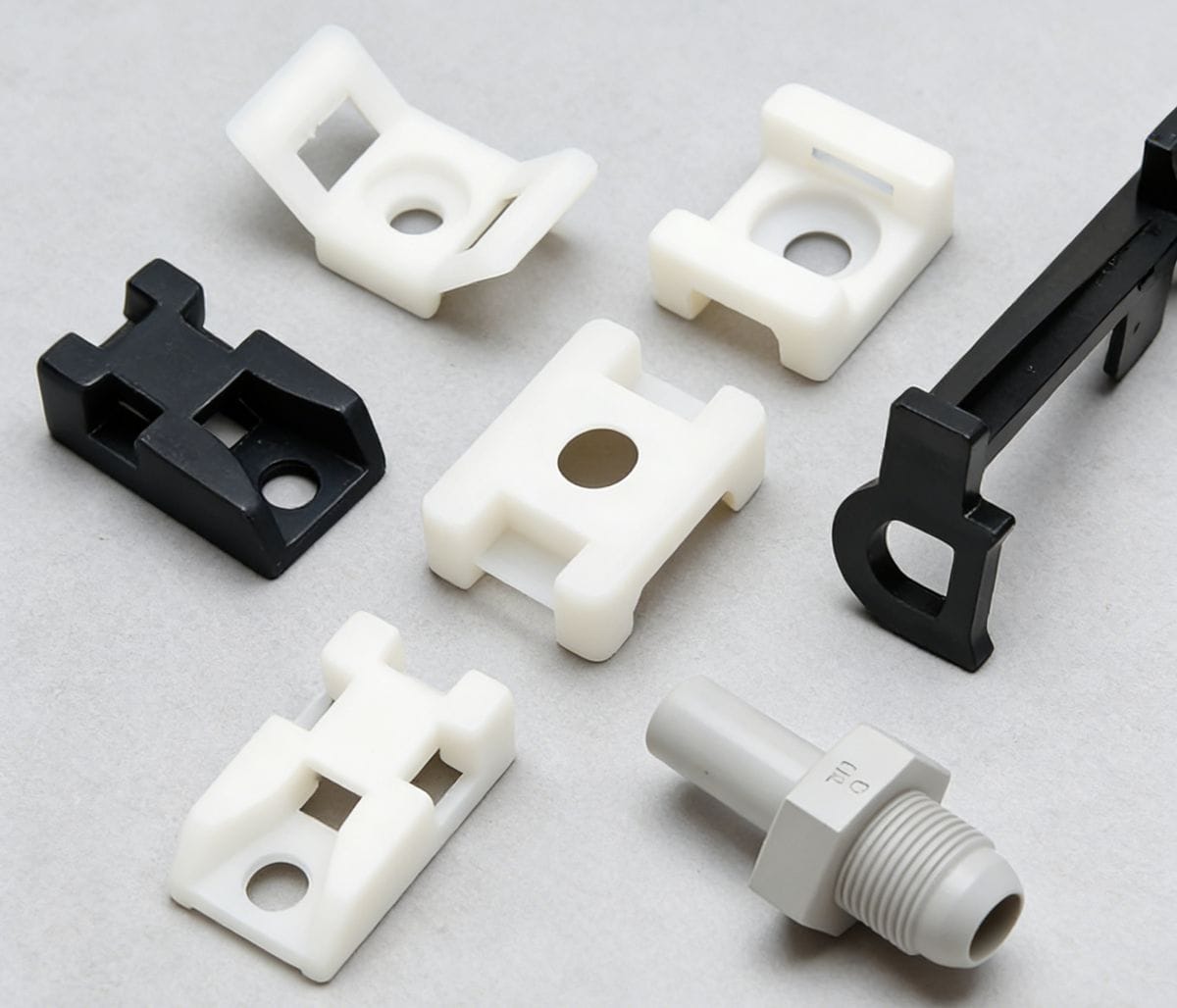
Le polyamide (PA), également connu sous le nom de nylon, est un matériau polyvalent utilisé dans de nombreuses industries, notamment dans le domaine du moulage par injection. Ses excellentes propriétés mécaniques en font un choix idéal pour diverses applications.
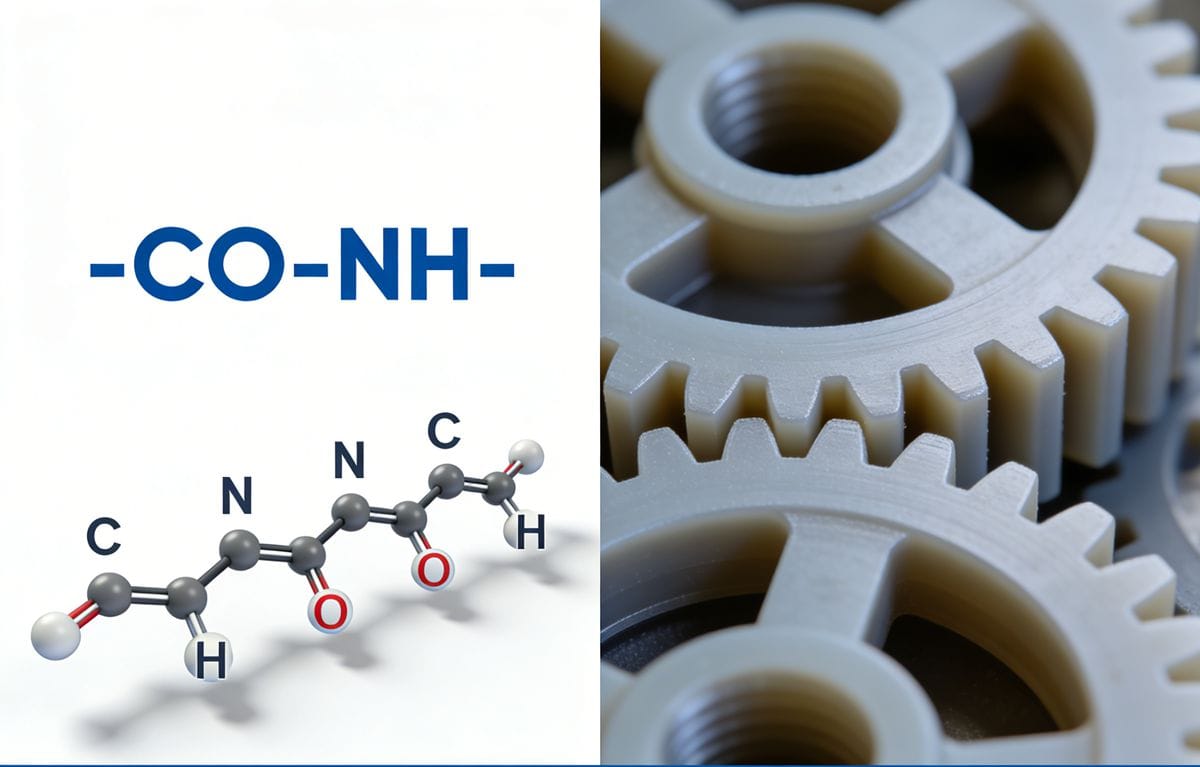
Les sections suivantes explorent les différents aspects du PA, ses types, ses propriétés et les considérations à prendre en compte lors de son utilisation pour le moulage par injection.
Qu'est-ce que le polyamide (PA) ?
Le polyamide (PA), communément appelé nylon, est un polymère synthétique caractérisé par la répétition de liaisons amides (-CO-NH-) dans sa structure moléculaire. Cette caractéristique unique confère au PA des propriétés mécaniques remarquables, qui en font un produit de base pour les applications techniques et industrielles. Je me souviens avoir travaillé sur un prototype où la résistance à l'usure du PA était cruciale pour la longévité du produit.
Le polyamide est créé par la polymérisation de diamines et d'acides dicarboxyliques ou par la condensation d'acides aminés, ce qui lui confère un caractère durable.
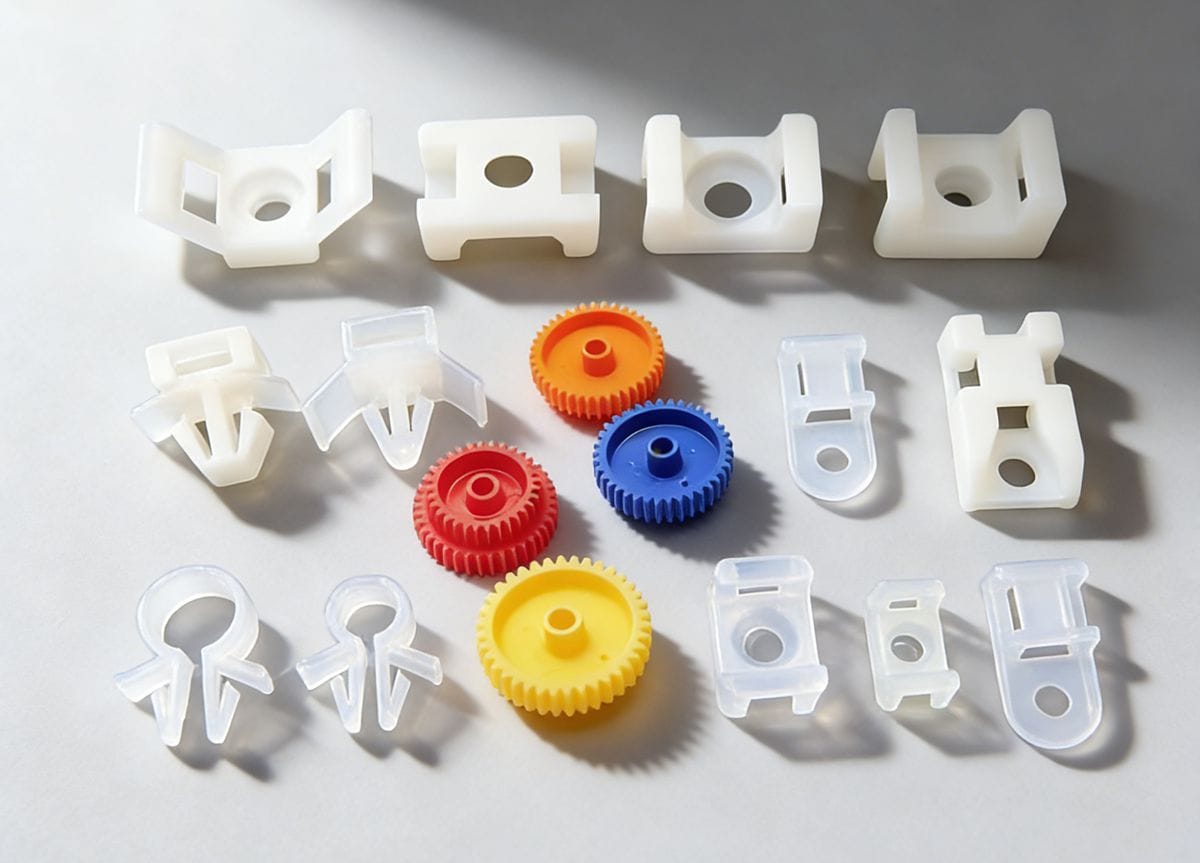
La polyvalence du PA est évidente dans ses différentes formes. Chaque type possède des atouts spécifiques adaptés à différentes applications, ce qui m'amène au point suivant.
Quels sont les différents types de matériaux PA ?
Le PA est une famille de polymères synthétiques qui offrent une gamme de propriétés mécaniques, thermiques et chimiques. Décortiquons les principaux types de PA afin de comprendre leurs caractéristiques uniques :
1. PA 6 (Nylon 6) :
Le nylon 6 est produit à partir de caprolactame et est connu pour sa résistance et sa flexibilité. Je l'utilise souvent dans des applications qui exigent une résistance à l'usure.
2. PA 66 (Nylon 66) :
Cette variante est synthétisée à partir d'hexaméthylènediamine et d'acide adipique. Elle offre une résistance supérieure à la chaleur, ce qui la rend idéale pour les pièces automobiles.
3. PA 12 (Nylon 12) :
Connu pour sa faible absorption d'humidité, le Nylon 12 est idéal pour les pièces de précision. J'ai eu un jour un projet qui reposait sur sa flexibilité.
4. PA 11 (Nylon 11) :
Option biosourcée dérivée de l'huile de ricin, le Nylon 11 présente une excellente flexibilité et une bonne résistance aux chocs.
5. PA 46 (Nylon 46) :
Ce grade est reconnu pour sa stabilité thermique, ce qui le rend adapté aux applications à haute performance.
6. PA 610 (Nylon 610) :
Copolymère de PA 6 et d'acide sébacique, il offre une meilleure résistance chimique et est respectueux de l'environnement.
7. PA 612 (Nylon 612) :
Ce matériau présente une faible absorption d'humidité et des propriétés lubrifiantes, idéales pour les pièces mobiles.
8. Polyphtalamide (PPA) :
Variante haute performance, le PPA excelle dans les applications à haute température.
9. Polyamide-imide (PAI) :
Connu pour sa résistance à la chaleur et sa durabilité, le PAI est utilisé dans des environnements exigeants.
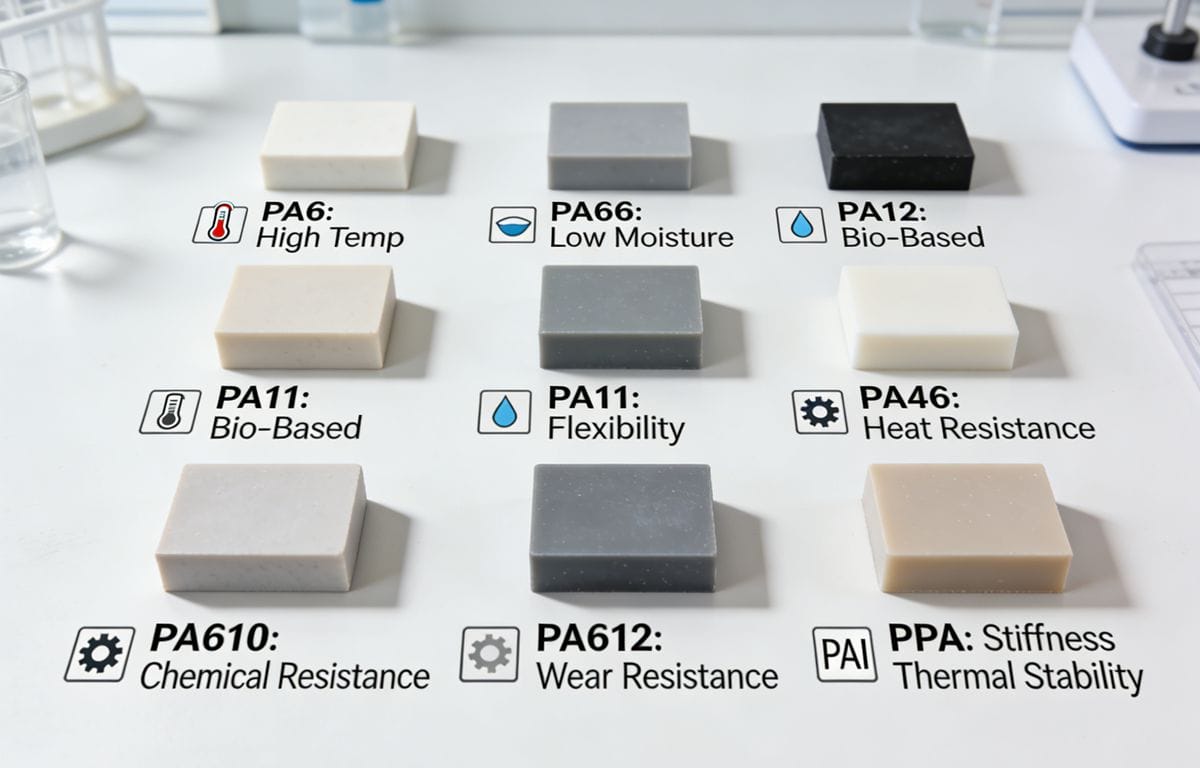
Chaque type de PA possède ses propres atouts, ce qui les rend adaptés à diverses applications. La compréhension de ces types peut vous aider à sélectionner le matériau adapté à vos besoins.
Quelles sont les caractéristiques de l'AP ?
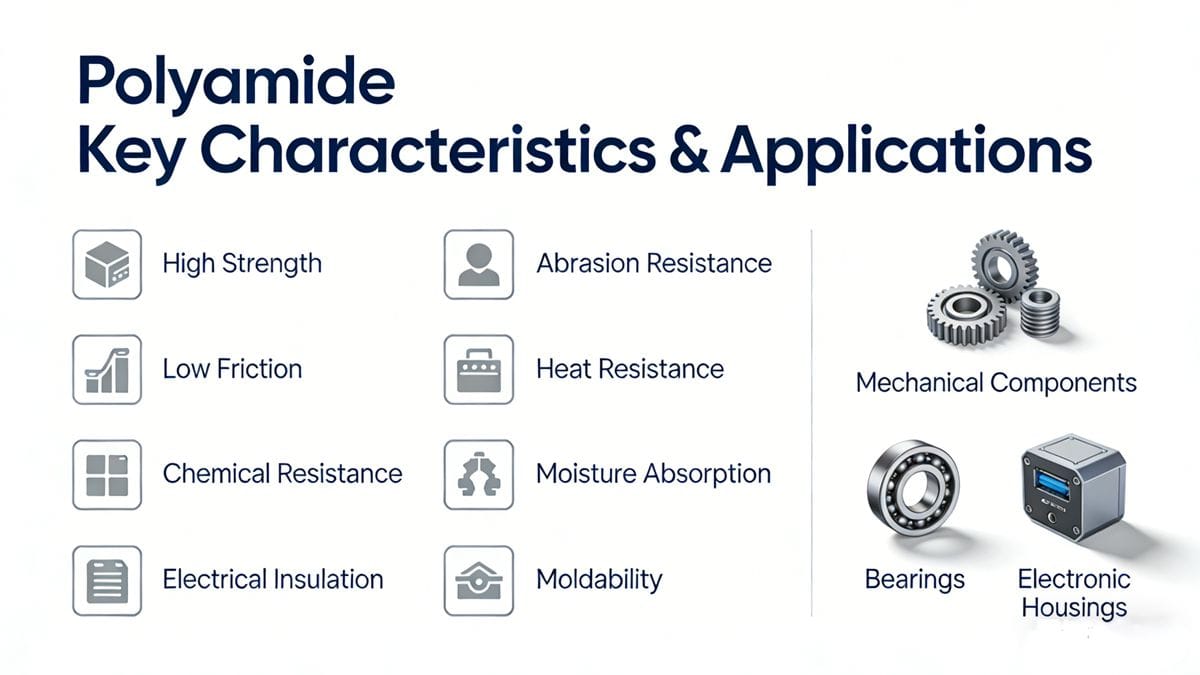
Le polyamide possède une série de caractéristiques qui lui permettent de s'adapter à diverses applications. Voici un résumé de ses principales caractéristiques :
- Haute résistance: Le PA présente une excellente résistance à la traction, parfaite pour les applications soumises à des contraintes mécaniques.
- Bonne résistance: Il absorbe bien l'énergie et protège les composants en cas d'impact.
- Résistance à l'abrasion: Très résistant au frottement, il donne de bons résultats dans les engrenages et les roulements.
- Faible friction: Idéal pour les composants coulissants, le PA garantit des performances durables.
- Bonne résistance à la chaleur: Résistant à des températures modérées à élevées, le PA convient aux composants de moteurs.
- Faible conductivité thermique: Agit comme un isolant, bénéfique pour les appareils électroniques.
- Résistance chimique: Le PA résiste aux huiles et aux solvants, ce qui le rend idéal pour diverses industries.
- Absorption de l'humidité: Bien qu'il puisse absorber l'humidité, certaines qualités comme le PA12 minimisent ce phénomène.
- Bonne isolation électrique: Le PA est souvent utilisé dans les composants électriques pour éviter les fuites.
- Bonne aptitude au moulage: Facilement moulable, il est parfait pour les formes de pièces complexes.
Quelles sont les propriétés du PA ?
Comprendre les propriétés des différents types de PA est essentiel pour sélectionner le bon matériau pour le moulage par injection. Voici un résumé sous forme de tableau :
| Matériau | Point de fusion (℃) | Résistance à la traction (MPa) | Résistance à l'impact (kJ/㎡) | Absorption d'humidité (%) | Retrait du moule (%) | Capacité d'écoulement | Température d'injection recommandée (℃) | Pression d'injection (MPa) |
|---|---|---|---|---|---|---|---|---|
| AP 6 | ~223 | 80-90 | 5-10 | 2-3% | 0.4-0.8% | Moyen | 240-270 | 70-130 |
| PA 66 | ~255 | 90-100 | 5-7 | 1-2% | 0.3-0.6% | Moyenne-élevée | 270-300 | 80-150 |
| PA 12 | ~178 | 50-70 | 7-10 | 0.1-0.3% | 0.2-0.5% | Haut | 230-260 | 60-120 |
| AP 11 | ~185 | 70-90 | 10-15 | 0.2-0.5% | 0.3-0.6% | Moyen | 240-270 | 70-130 |
| PA 46 | ~310 | 120-140 | 4-6 | 0.1-0.3% | 0.3-0.6% | Faible | 290-320 | 90-160 |
| PA 610 | ~215 | 80-90 | 6-9 | 0.3-0.6% | 0.4-0.8% | Moyen | 240-270 | 70-130 |
| PA 612 | ~230 | 90-100 | 8-12 | 0.2-0.4% | 0.3-0.7% | Moyenne-élevée | 250-280 | 80-140 |
| PPA | ~310-350 | 140-180 | 6-8 | 0.1-0.3% | 0.1-0.3% | Faible | 300-330 | 100-180 |
| PAI | ~350-400 | 150-200 | 10-15 | 0.1-0.3% | 0.1-0.3% | Faible | 320-350 | 120-200 |
Ce tableau permet de comprendre quel type de PA répond à des besoins spécifiques en matière de moulage par injection.
Les matériaux PA peuvent-ils être moulés par injection ?
Oui, les matériaux PA sont largement utilisés dans le moulage par injection en raison de leurs excellentes propriétés mécaniques. Je choisis souvent le nylon pour des projets qui requièrent durabilité et polyvalence.
Grades de PA courants pour le moulage par injection :
- PA6 (Nylon 6): Connu pour son équilibre entre robustesse et résistance.
- PA66 (Nylon 66): Offre de meilleures propriétés mécaniques pour les applications exigeantes.
- PA12 (Nylon 12): Convient aux applications à faible taux d'humidité.
L'optimisation du processus de moulage par injection des matériaux PA peut améliorer la qualité et l'efficacité des produits.
Quelles sont les principales considérations pour le moulage par injection de PA ?
Le moulage par injection du PA nécessite une attention particulière à différents paramètres :
1. Propriétés du matériau :
L'absorption d'humidité peut avoir un impact sur la qualité du produit final. Le séchage du PA avant le moulage est essentiel pour éviter les défauts.
2. Conception du moule :
Un moule bien conçu, doté d'une porte et d'une ventilation appropriées, garantit un remplissage efficace et minimise les défauts.
3. Paramètres du processus de moulage par injection :
Le contrôle de la pression d'injection, de la vitesse et de l'emballage est essentiel pour obtenir des pièces moulées de haute qualité.
4. Post-traitement :
Le recuit et le traitement de surface peuvent améliorer les performances et l'aspect des pièces moulées en PA.
5. Optimisation des processus :
Un refroidissement efficace, la prise en compte du retrait et l'entretien régulier des moules sont nécessaires pour garantir une qualité constante.
6. Composition des matériaux :
L'ajout d'additifs au PA permet d'améliorer ses propriétés, mais nécessite des ajustements minutieux lors de la transformation.
En gardant ces considérations à l'esprit, je garantis l'application réussie du PA dans divers projets de moulage par injection.
Conclusion
Le PA est un matériau polyvalent qui excelle dans le moulage par injection. Comprendre ses propriétés et ses caractéristiques peut vous aider à choisir les meilleures options pour vos projets.



 English
 French
 Dutch
Dutch German
 Japanese
 Korean