

Warum Silikongummi-Formen wählen?
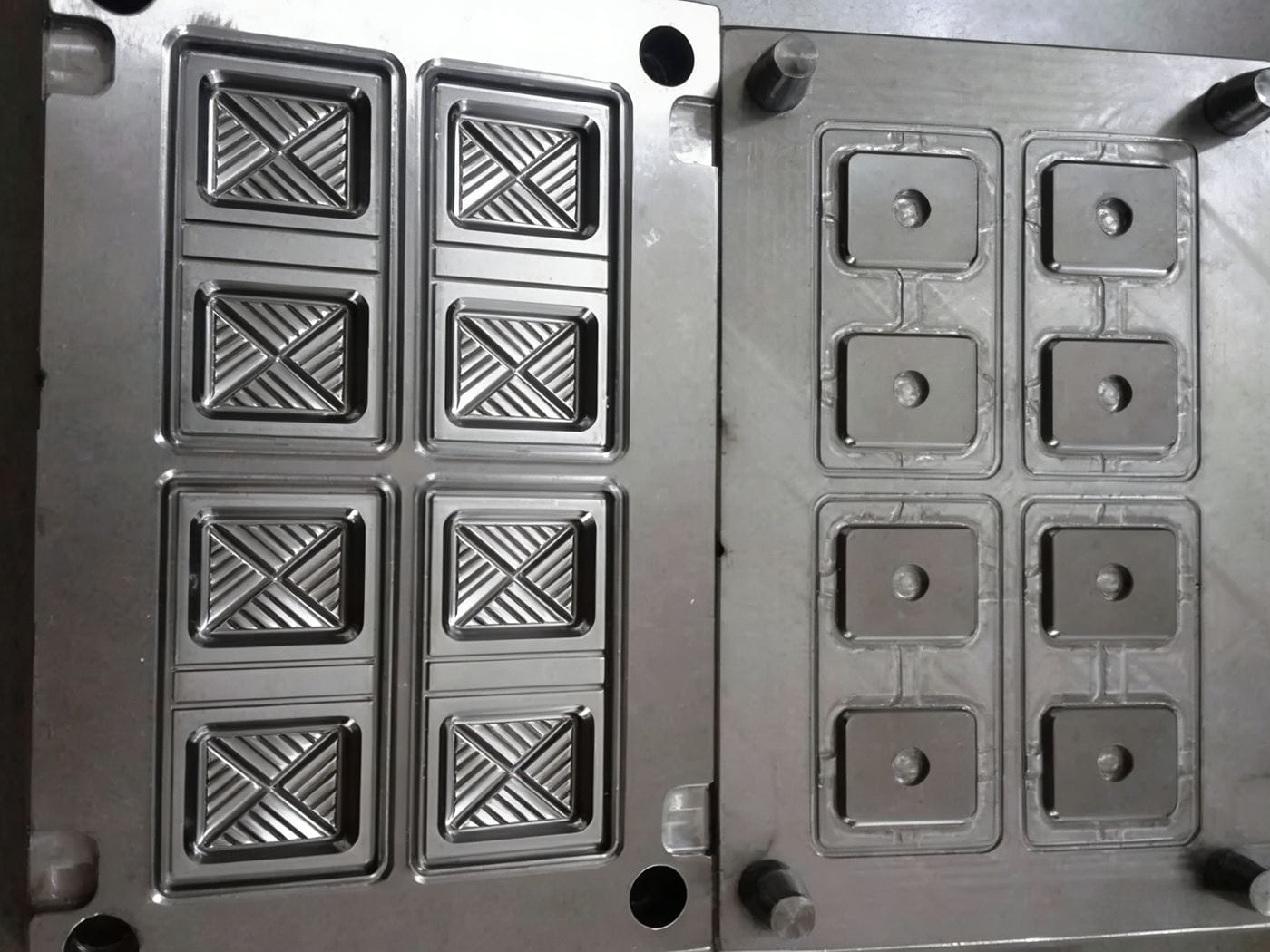
Formen aus Silikonkautschuk1 gehören zu den zugänglichsten Rapid-Tooling-Lösungen im Prototyping. Diese Formen werden durch die Replikation von RP-Vorlagen (Rapid Prototyping) mit flüssigem Silikon hergestellt und bieten eine außergewöhnliche Elastizität, Maßgenauigkeit und Replikationsgenauigkeit. Die Lebensdauer ist in der Regel begrenzt auf 10-30 Würfe, Die wichtigsten Vorteile sind:
✅ Keine Auszugswinkel erforderlich
Minimale Auswirkungen auf die Abmessungen des Prototyps
✅ Nahtloser monolithischer Guss (keine komplexe Formtrennung)
✅ Einfache Entformung durch strategisches Schneiden entlang der Trennlinien
Arten von RTV-Silikonkautschuk
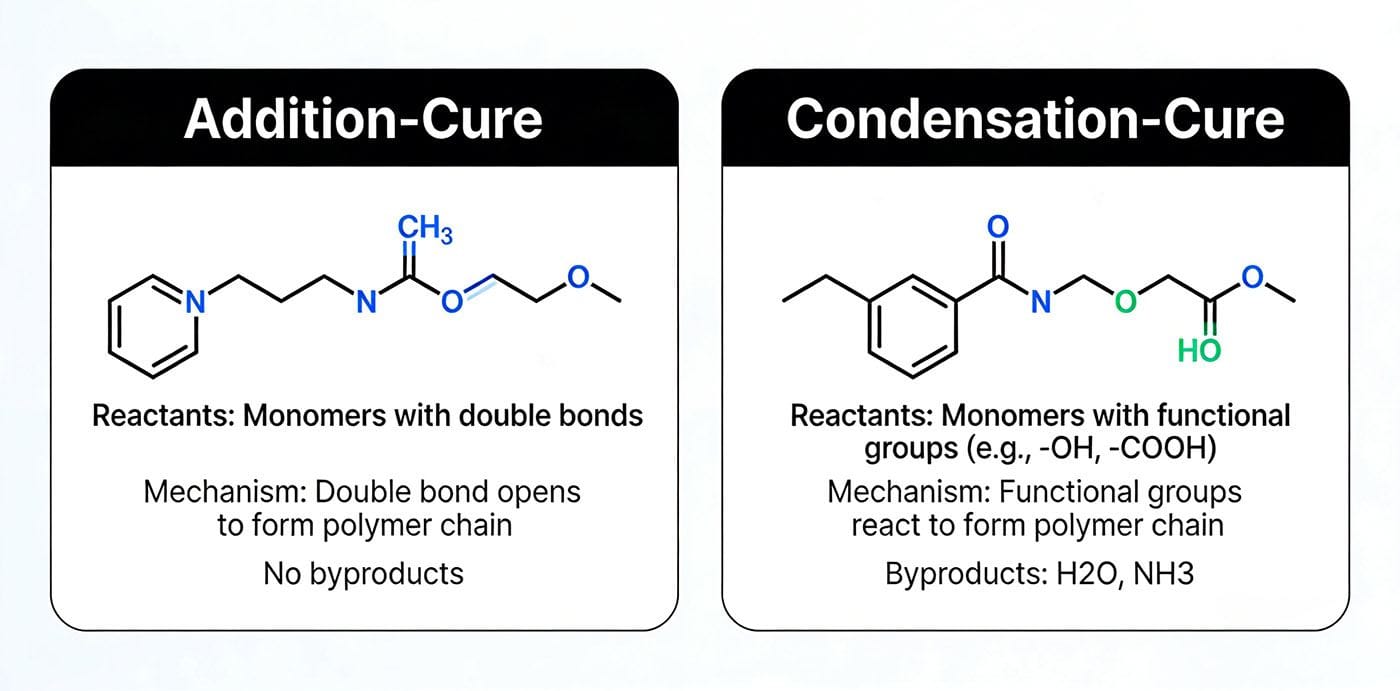
Raumtemperatur-Vulkanisierung (RTV)2 Silikonsysteme fallen in zwei Kategorien:
| Typ | Eigenschaften | Am besten für |
|---|---|---|
| Zusatz-Kur | Platin-katalysiert, minimale Schrumpfung, geruchlos | Hochdetaillierte Prototypen, lebensmittelsichere Anwendungen |
| Kondenswasser-Kur3 | Zinn-katalysiert, kostengünstig, leichte Schrumpfung | Formen für allgemeine Zwecke, unkritische Toleranzen |
Materialien, Verhältnisse & Mischungsprotokoll
Kommerzielles Silikon für den Formenbau wird als zweiteiliges System:
- Teil A: Basispolymer (vorpigmentierte Silikonverbindung)
- Teil B: Katalysator (feuchtigkeitsempfindliches Aushärtungsmittel)
Anleitung zum Präzisionsmischen (nach Gewicht)
| Umgebungstemperatur | A:B-Verhältnis | Anmerkungen zur Anpassung |
|---|---|---|
| 20-25°C (68-77°F) | 100 : 1.5 | Standardbedingung |
| <20°C (mindestens 10°C/50°F) | +0.1-0.3 B | Beschleunigen Sie die Aushärtung in kühlen Umgebungen |
| >25°C | -0.1-0.3 B | Langsame Reaktion unter warmen Bedingungen |
🔧 Kritische Schritte:
- Rühren Sie Teil A gründlich um vor Messen (verhindert das Absetzen der Füllung)
- Verwenden Sie eine digitale Waage (±0,1g Genauigkeit)
- Mischen Sie langsam in kreisenden Bewegungen für 3-5 Minuten, um den Lufteinschluss zu minimieren.
- Sofort arbeiten - Die Lebensdauer des Topfes beginnt mit dem Mischen
Techniken zur Herstellung von Formen
🖼️ Gießverfahren (Reliefs/Flächendekoration)
- Bauen Sie den Rahmen an allen Seiten 4-6 cm größer als den Prototyp
- Legen Sie den Rahmen auf die Glasplatte; zentrieren Sie den Prototyp mit 2-3 cm Abstand.
- Gießen Sie das entgaste Silikon langsam aus einer Ecke
- Profi-Tipp: Eingebettetes Glasfasernetz zwischen den Schichten für mehr Zugfestigkeit
🎨 Pinselmethode (Komplexe 3D-Objekte)
- Tragen Sie 2-3 dünne Schichten mit einem weichen Pinsel auf.
- Zwischen den Anstrichen klebfrei aushärten lassen (30-60 Min.)
- Verstärken Sie tiefe Hinterschneidungen mit zusätzlichen Schichten
⏳ Zeitleiste der Heilung:
- Erstes Aushärten: ~2 Stunden bei 20°C
- Vollständige Entformbarkeit: 24 Stunden
7 Unverzichtbare Sicherheits- und Qualitätsvorkehrungen
- 🔒 Katalysator sofort versiegeln: Teil B hydrolysiert bei Feuchtigkeitseinwirkung - luftdicht mit Trockenmittel lagern
- ⏱️ Mischen Sie nur, was Sie brauchen: Die Reaktion ist unumkehrbar; Abfall = Kosten
- 📏 Verhältnis Präzision = Leistung: Zu viel Katalysator = spröde Form; zu wenig = klebrige Oberfläche
- 🌬️ Entgasen vor dem Gießen: Die Vakuumkammer (29 inHg, 2-3 Minuten) eliminiert Mikrobläschen
- 🧼 Prototyp vorbereiten: Reinigen Sie den Master mit Isopropylalkohol; tragen Sie minimal Formtrennung
- 🌡️ Umgebungsbedingungen überwachen: Ideal: 22°C ±3°C, <50% Luftfeuchtigkeit
- 🧤 PSA Unverzichtbar: Nitrilhandschuhe, Augenschutz, belüfteter Arbeitsbereich
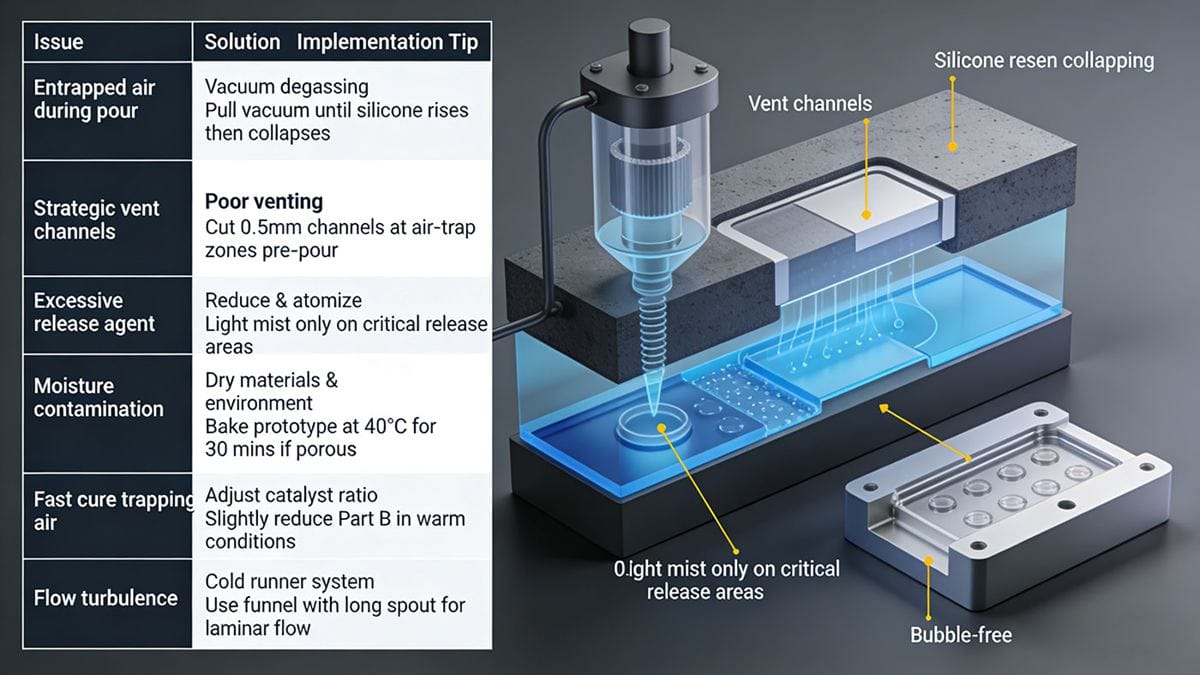
Beseitigung von Luftblasen: Bewährte Lösungen
| Ausgabe | Lösung | Tipp zur Implementierung |
|---|---|---|
| Eingeschlossene Luft beim Gießen | Vakuum-Entgasung | Ziehen Sie das Vakuum an, bis das Silikon aufsteigt und dann in sich zusammenfällt. |
| Schlechte Belüftung | Strategische Belüftungskanäle | Schneiden Sie vor dem Ausgießen 0,5 mm starke Kanäle in die Luftabscheiderzonen. |
| Überschüssiges Trennmittel | Reduzieren & zerstäuben | Leichter Nebel nur auf kritischen Freisetzungsbereichen |
| Verunreinigung durch Feuchtigkeit | Trockene Materialien & Umgebung | Backen Sie den Prototyp bei 40°C für 30 Minuten, wenn er porös ist. |
| Schnelle Aushärtung unter Einschluss von Luft | Katalysatorverhältnis anpassen | Reduzieren Sie Teil B bei warmen Bedingungen leicht |
| Turbulenz der Strömung | Kaltkanalsystem | Verwenden Sie einen Trichter mit langer Tülle für eine laminare Strömung |
Abschließende Empfehlungen für den Erfolg
✅ Führen Sie immer eine kleine Testcharge durch, bevor Sie eine vollständige Form produzieren.
✅ Dokumentieren Sie Ihre Verhältnisse, Temperaturen und Ergebnisse zur Prozessverbesserung
✅ Lagern Sie ausgehärtete Formen flach in staubfreien Behältern vor UV-Licht geschützt.
✅ Für >30 Abgüsse: Erwägen Sie Alternativen mit Urethan oder Epoxid
Das Abformen von Silikonkautschuk verbindet Kunstfertigkeit und technische Präzision. Durch die Beherrschung von Materialwissenschaft, Umweltkontrolle und Technik können Sie zuverlässige Replikate für Skulpturen, Schmuck, Requisiten und funktionale Prototypen herstellen.
Entdecken Sie die Vorteile von Silikonkautschukformen für das Rapid Prototyping, einschließlich Elastizität und Maßhaltigkeit. ↩
Erfahren Sie mehr über die einzigartigen Eigenschaften von RTV-Silikon und seine besten Anwendungen im Formenbau. ↩
Finden Sie heraus, wie Condensation-Cure-Silikon eine kosteneffektive Lösung für Allzweckformen sein kann. ↩



 English
 French
 Dutch
Dutch German
 Japanese
 Korean