

The injection molding process is essential for achieving high-quality production standards. As demands increase and technology advances, understanding and optimizing process parameters becomes crucial.
To ensure high-quality production, it’s critical to optimize injection molding process parameters. Key factors such as machine specifications, clamping force, and temperature settings all play a vital role in the final product's quality.
The injection molding process is complex, and getting it right can make all the difference in product quality. If you overlook any parameters, it might lead to defects, inefficiencies, and increased costs. Let’s dive deeper into the key aspects of the injection molding process to understand how they can be optimized for better results.
Selection of Injection Molding Machine Specifications?
Choosing the right injection molding machine is the first step in the production process. It requires careful consideration of the mold's condition and the product's requirements.
When selecting an injection molding machine, consider the mold size, part weight, and the required clamping force and injection volume. This ensures that the machine can handle a variety of molds effectively.
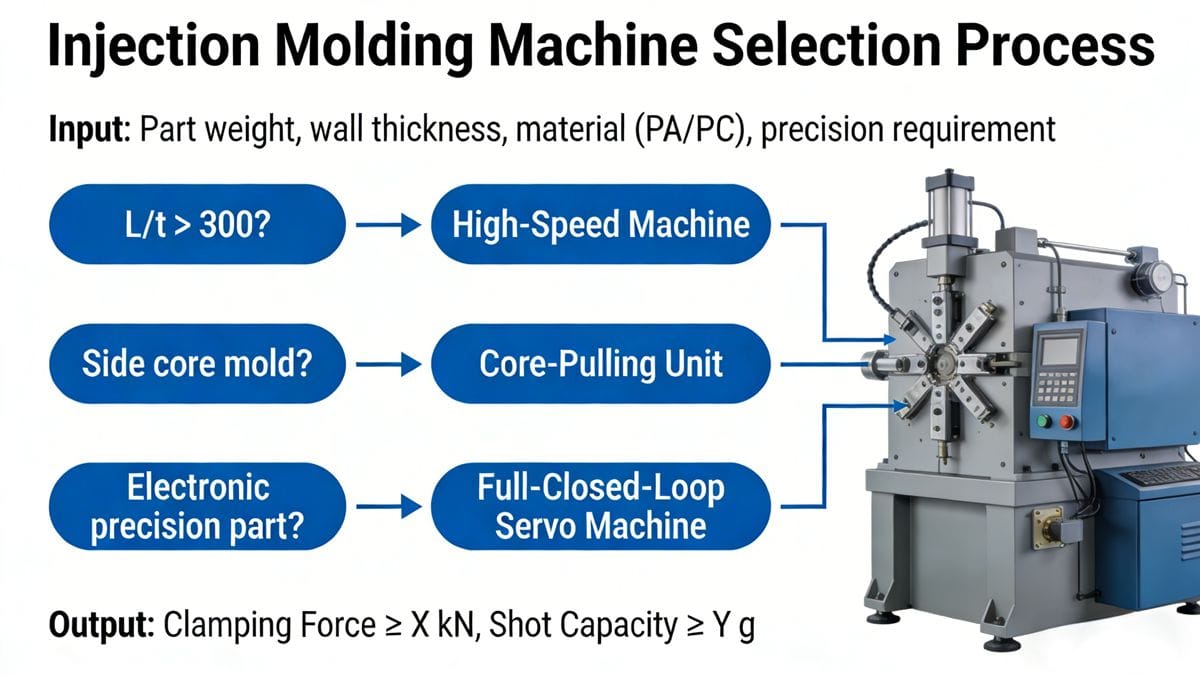
To make an informed choice, you must evaluate the specifications provided by the machine manufacturers. This includes understanding whether you need special configurations. For example, when producing materials like PA or PC, you should use a specialized screw. If your mold has specific features like a core pull or thread removal, additional devices may be necessary.
In some cases, you might require machines with special functions, such as high-speed injection for thin-walled products or fully closed-loop controlled machines for precision electronic parts. Therefore, it's essential to align your machine choice with product quality requirements to ensure smooth operations.
Clamping Force Setting?
Setting the correct clamping force is critical for product quality. The theoretical calculation of clamping force can be expressed as:
Fcm >= K × Pavg × Aproduct × 10
Where:
- Fcm is the clamping force (KN)
- K is the safety factor (typically 1-1.2)
- Pavg is the average cavity pressure (MPa)
- Aproduct is the maximum projected area of the product on the mold parting surface (cm²)
Clamping force should be set low enough to ensure quality but high enough to prevent the mold from opening during injection. Adjustments are necessary based on thermal expansion during production.

In practical scenarios, I often leave a margin of 0.1 to 0.2mm in the clamping force setting. This ensures that the product's quality is maintained without unnecessary wear on the machine. The principle is clear: use the lowest clamping force necessary to guarantee product quality.
Key Process Parameter Settings?
Temperature control is vital for producing high-quality injection molded parts. The temperature settings for the barrel and mold must be suitable for the specific plastic material being used.
The barrel temperature should typically be set 10°C to 30°C above the plastic's melting point. This ensures that the material can flow smoothly into the mold.
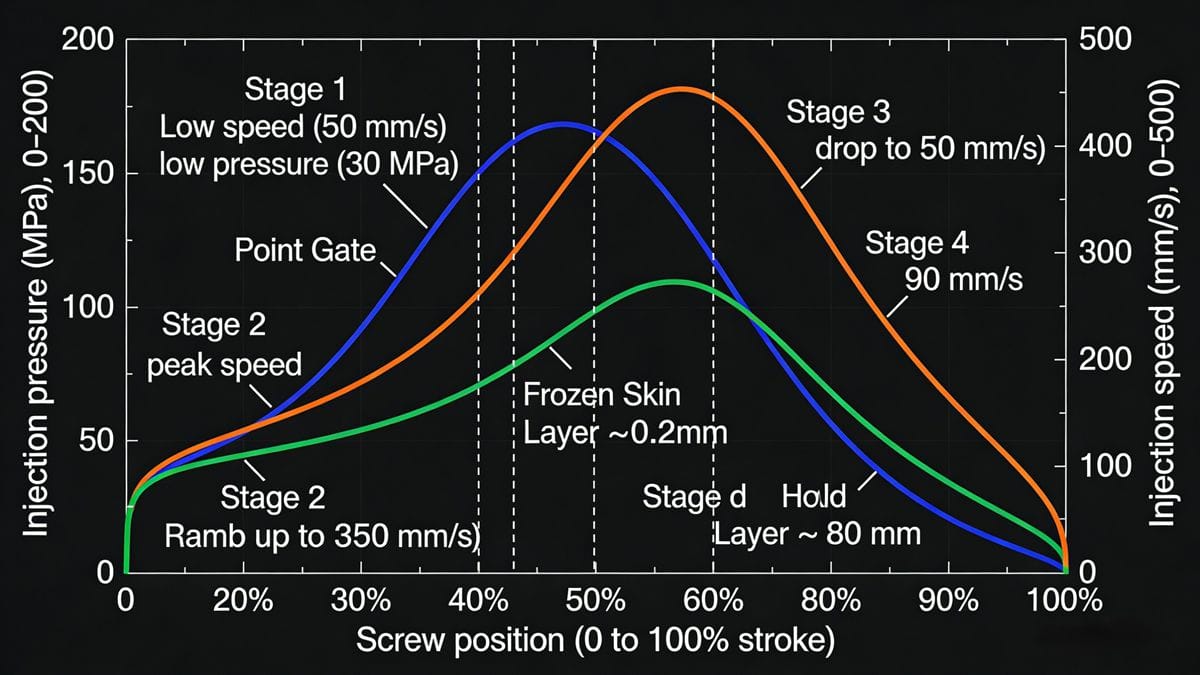
For the mold temperature, I recommend using a water cooling system during production. However, when precision and surface quality are paramount, a temperature control unit may be necessary for more accurate temperature management.
Other essential parameters include injection time, holding time, and cooling time. These must be adjusted based on factors such as product thickness and material properties. It's crucial to avoid excessive injection times, which can lead to wear and increased energy costs.
In my experience, maintaining a proper balance in these parameters is key to achieving the desired result without sacrificing quality.
Other Critical Parameters?
In addition to the main settings, several other parameters are integral to the injection molding process. Factors like back pressure, screw speed, and various action parameters must also be carefully set.
Ignoring these parameters can lead to defects and inconsistencies in the final product. For instance, back pressure can affect the melt consistency, and screw speed can impact the injection cycle time.
To illustrate how these parameters interact, let’s consider a practical example: producing nylon cable ties.
- Flow Length and Thickness: Given the product's long flow length (L/t ratio of 511), high-speed injection is appropriate.
- Gate Type: With a point gate design, higher injection pressure is necessary to overcome flow resistance.
- Material Flow: The melting temperature must ensure material flowability.
When you set parameters, approach them systematically. Start with pressure adjustments, followed by speed, and finally, temperature. It’s essential to document changes accurately to control the product quality consistently.
Fazit
Optimizing injection molding parameters is crucial for achieving high-quality production. Correct settings lead to better products and more efficient processes.



 English
 French
 Dutch
Dutch German
 Japanese
 Korean