 English




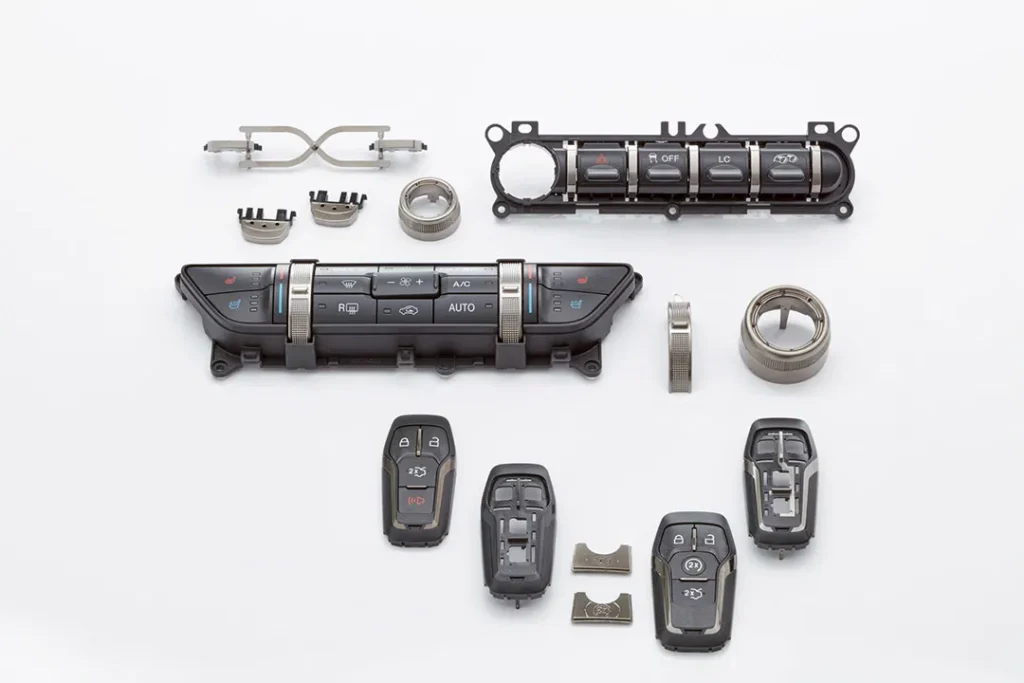
Composite injection molding materials combine different materials to enhance specific properties such as strength, thermal stability, and chemical resistance. These advanced composites are often used in high-performance applications but come with increased costs and production complexities. Examples include:

PC-ABS (Polycarbonate-ABS Blend)
- Mechanical Strength: High impact resistance and toughness.
- Weather Resistance: Moderate, better than ABS alone.
- Chemical Resistance: Good, resistant to various chemicals.
- Applications: Automotive parts, electronics housings, medical devices.
- Processing: 230°C – 290°C.
GFPP (Glass-Fiber Reinforced Polypropylene)
- Mechanical Strength: Enhanced strength and stiffness compared to regular polypropylene.
- Weather Resistance: Good, with improved performance in outdoor conditions.
- Chemical Resistance: Good, resistant to many chemicals.
- Applications: Automotive components, industrial parts, and construction materials.
- Processing: Typically processed at 200°C – 250°C.
GFPE (Glass-Fiber Reinforced Polyester)
- Mechanical Strength: High, with excellent stiffness and durability.
- Weather Resistance: Excellent, suitable for harsh outdoor environments.
- Chemical Resistance: Good, resistant to various chemicals.
- Applications: Electrical components, automotive parts, and construction materials.
- Processing: Typically processed at 240°C – 280°C.
GFN (Glass-Fiber Reinforced Nylon)
- Mechanical Strength: Very high, with improved stiffness and strength.
- Weather Resistance: Good, suitable for many environmental conditions.
- Chemical Resistance: Good, resistant to many chemicals.
- Applications: Automotive parts, industrial machinery, and consumer goods.
- Processing: Typically processed at 260°C – 300°C.
CFRP (Carbon-Fiber Reinforced Polymer)
- Mechanical Strength: Very high strength-to-weight ratio.
- Weather Resistance: Excellent, suitable for extreme conditions.
- Chemical Resistance: Good, resistant to many chemicals.
- Applications: Aerospace components, high-performance sports equipment, and automotive parts.
- Processing: Typically processed at 350°C – 400°C.
CFRN (Carbon-Fiber Reinforced Nylon)
- Mechanical Strength: Very high, with superior stiffness and strength.
- Weather Resistance: Good, suitable for various environmental conditions.
- Chemical Resistance: Good, resistant to many chemicals.
- Applications: High-performance automotive parts, industrial machinery, and sports equipment.
- Processing: Typically processed at 260°C – 300°C.
CFRPC (Carbon-Fiber Reinforced Polycarbonate)
- Mechanical Strength: High, combining the benefits of carbon fiber and polycarbonate.
- Weather Resistance: Good, suitable for various conditions.
- Chemical Resistance: Good, resistant to many chemicals.
- Applications: Electronics housings, automotive parts, and high-performance components.
- Processing: Typically processed at 270°C – 320°C.
About the Author

Alex Yu
Ideal Pro Manufacturing
Alex is the co-founder of Ideal Pro, but when he's not overseeing key projects or steering the technical team, you'll likely find him on a long bike ride, hunting for the best coffee in town, or planning his next travel adventure. With over 20 years of experience spanning international trade sales and project management, he's seen it all — tight deadlines, tricky engineering problems, and everything in between. He believes great work comes from a well-rested mind and a good cup of coffee, and he brings that same curiosity and attention to detail to every project he takes on. When he's not in the office, he's usually somewhere outdoors, exploring new places and collecting stories to share.


 English
 French
 Dutch
 German
 Japanese
 Korean