

Coloring plastics is a complex process that blends chemistry with engineering. Choosing the right colorant involves more than just picking a shade; it requires understanding how the material interacts with the plastic resin and the environment.
Here is a comprehensive guide to the principles of plastic coloring and the essential conditions for selecting the right pigments.
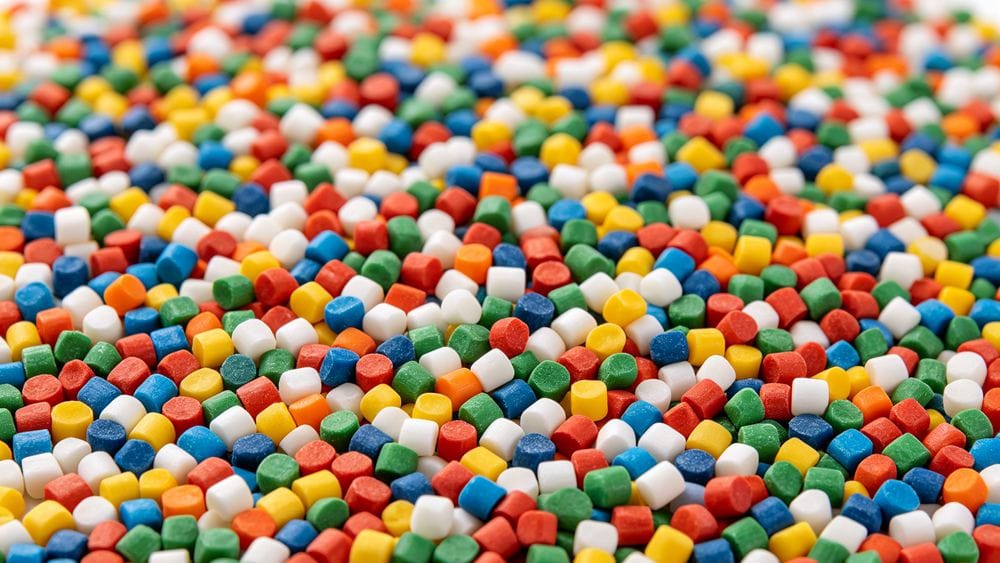
🧪 Types of Colorants: Pigments vs. Dyes
There are thousands of colorants used in the plastics industry today. They are generally classified into two main categories: Pigments and Dyes.
1. The Mechanism of Coloring
- Pigments: These exist as solid particles dispersed throughout the plastic matrix. They do not dissolve but remain suspended, providing opacity and color.
- Dyes: These dissolve completely into the plastic, coloring it at a molecular level. This results in high transparency and clarity.
2. Organic vs. Inorganic Pigments
Pigments are further divided into organic and inorganic types, each with distinct characteristics:
| Feature | Organic Pigments & Dyes | Inorganic Pigments |
|---|---|---|
| Color Quality | Bright, vivid colors with high tinting strength. | Lower brightness and tinting strength. |
| Durability | Generally weaker resistance to heat and UV light. | Excellent fastness against heat and UV radiation. |
Key Takeaway: If you need vibrant colors, organic options are superior. If you need weather resistance for outdoor applications, inorganic pigments are often the safer choice.
🏭 Application-Specific Requirements
Different plastic products face different environmental challenges. Therefore, the choice of pigment must align with the product's intended use.
- Outdoor Applications: Products exposed to the elements must have excellent weatherability (UV resistance) to prevent fading or degradation.
- Hot Spring/Spa Environments: Materials used in these areas require superior sulfur resistance to prevent discoloration caused by sulfur compounds.
- Toys & Food Packaging: Safety is paramount. These applications require non-toxic pigments that meet strict regulatory standards.
- Agricultural & Packaging Films: These often require high transparency to allow light transmission or product visibility.
- Shading & Covering: Applications requiring light blockage need pigments with high opacity (hiding power).
✅ Essential Conditions for Plastic Pigments
When applying pigments to plastic products, they must meet a rigorous set of performance criteria to ensure quality and longevity.
To ensure a successful formulation, the pigment must possess the following characteristics:
Optical Properties:
- Brightness: The intensity and vividness of the color.
- Tinting Strength: The ability of the pigment to impart color to the surrounding material.
- Hiding Power (Opacity): The ability to cover the underlying surface or substrate.
Physical Stability:
- Dispersion: The pigment must disperse evenly throughout the plastic without clumping.
- Heat Resistance: It must withstand the high temperatures of the molding or extrusion process without degrading.
- Weatherability: Resistance to sunlight, rain, and temperature fluctuations.
- Migration Resistance: The color should not bleed or migrate to the surface or adjacent materials over time.
Chemical & Functional Compatibility:
- Compatibility: It must not negatively affect the physical properties of the base plastic.
- Chemical Resistance: It must resist water, solvents, acids, and alkalis depending on the environment.
- Sulfur Resistance: Crucial for specific industrial or geothermal applications.
- Electrical Insulation: For electronic components, the pigment must maintain the dielectric properties of the plastic.



 English
 French
 Dutch
Dutch German
 Japanese
 Korean