

PP, oder Polypropylen, ist ein weit verbreitetes thermoplastisches Polymer. Das Wissen um seine Eigenschaften und Merkmale ist für den erfolgreichen Spritzguss unerlässlich.
PP ist ein leichtes, vielseitiges Kunststoffmaterial, das sich ideal für verschiedene Anwendungen im Fertigungssektor eignet. Dieser Leitfaden hilft Ihnen, sich mit den wesentlichen Aspekten des PP-Spritzgießens vertraut zu machen.
Wenn es um das Spritzgießen geht, kann die Kenntnis der Besonderheiten Ihres Materials den Unterschied ausmachen. PP bietet einzigartige Vorteile und Herausforderungen, die ich aus erster Hand erfahren habe. Lassen Sie uns tiefer in die Welt des Polypropylens eintauchen.
Was ist Polypropylen (PP)?
PP ist ein thermoplastisches Polymer, das durch Polymerisation von Propylen mit der chemischen Formel (C3H6)n entsteht. Es erscheint als weiße, wachsartige Substanz, die sowohl transparent als auch leicht ist. Als einer der leichtesten Kunststoffe mit einer Dichte von nur 0,89-0,91 g/cm³ sticht PP aus der Masse hervor. Sein Schmelzpunkt liegt zwischen 164-170°C, während die Erweichungstemperatur bei 155°C liegt.
Polypropylen ist aufgrund seines geringen Gewichts und seiner Haltbarkeit eine beliebte Wahl für verschiedene Anwendungen. Seine Fähigkeit, einer Reihe von Temperaturen zu widerstehen, macht es für zahlreiche Branchen geeignet.
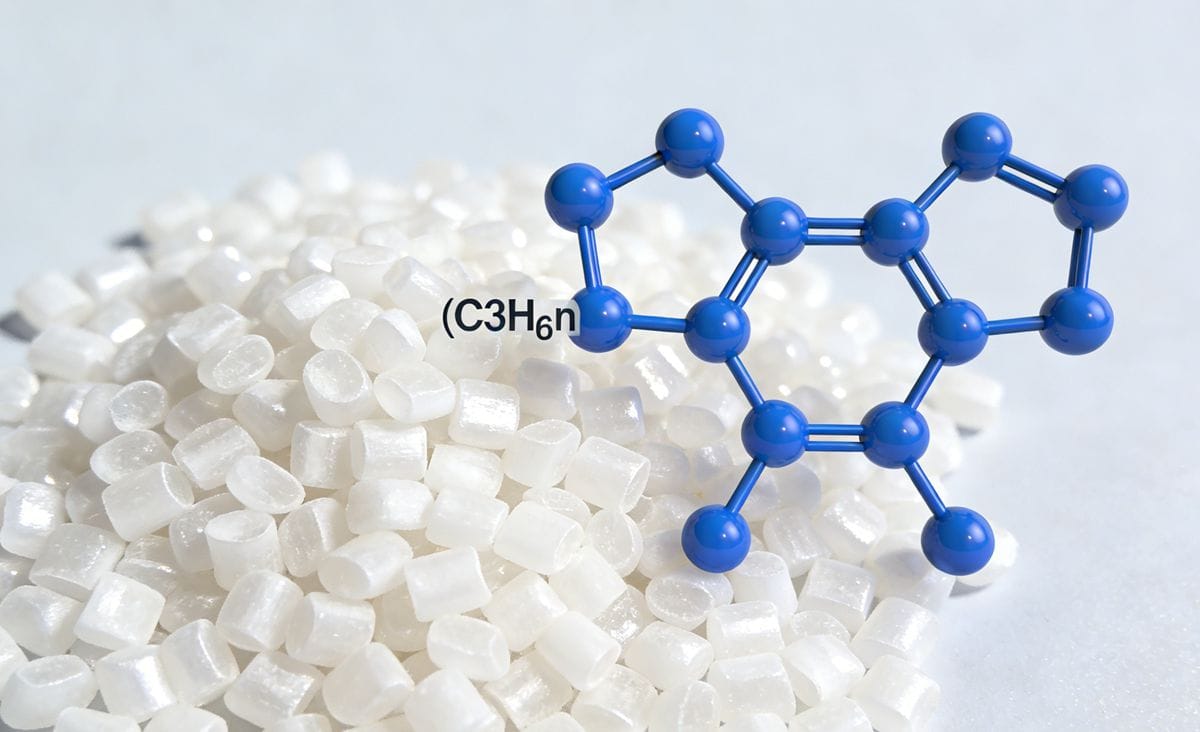
PP kann Temperaturen von -30°C bis 140°C standhalten und ist korrosionsbeständig gegenüber Säuren, Basen, Salzlösungen und verschiedenen organischen Lösungsmitteln unter 80°C. Allerdings zersetzt es sich bei hohen Temperaturen und unter oxidativen Bedingungen. Das Verständnis dieser Eigenschaften ist entscheidend für eine erfolgreiche Herstellung.
Welche Arten von PP-Materialien gibt es?
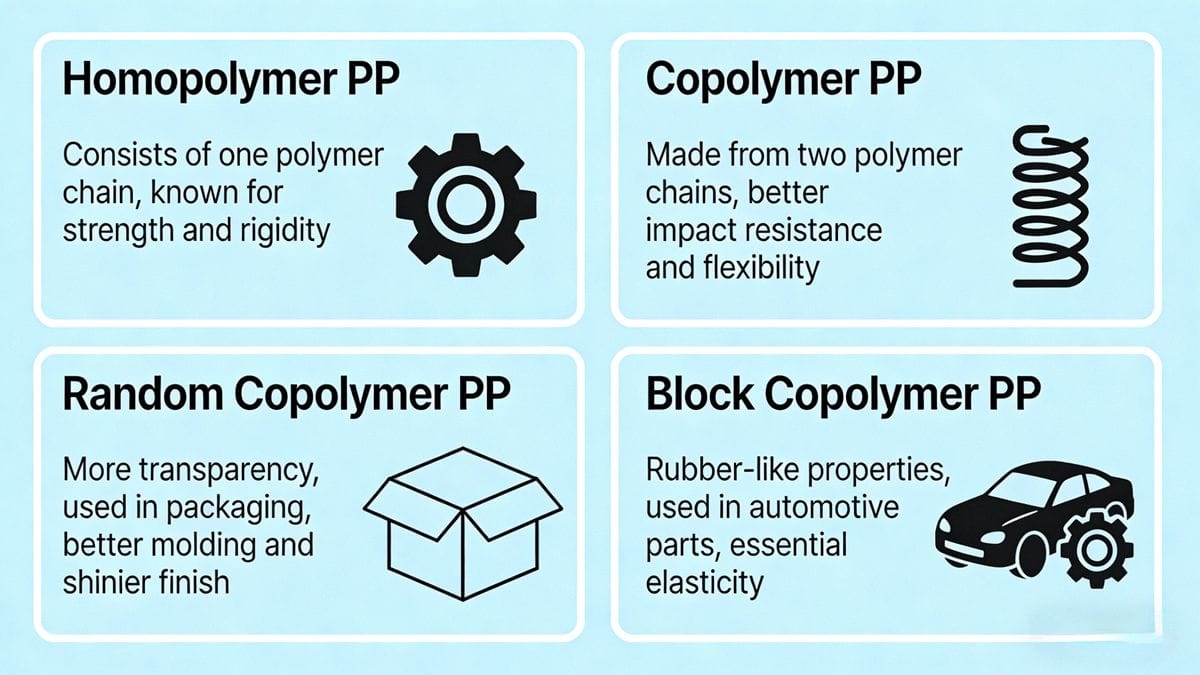
Es gibt verschiedene Arten von Polypropylen-Materialien, die jeweils unterschiedliche Eigenschaften und Verwendungszwecke haben. Zu den wichtigsten Typen gehören:
Homopolymer PP: Dieser Typ besteht aus einer Polymerkette und ist für seine Stärke und Steifigkeit bekannt. Er wird üblicherweise für Anwendungen verwendet, die eine hohe Festigkeit erfordern.
Copolymer PP: Hergestellt aus einer Mischung aus zwei verschiedenen Polymerketten, bietet copolymeres PP eine bessere Schlagfestigkeit und Flexibilität. Es ist ideal für Produkte, die eine höhere Haltbarkeit benötigen.
Zufälliges Copolymer PP: Diese Variante bietet mehr Transparenz und wird häufig für Verpackungszwecke verwendet. Ihre Struktur ermöglicht eine bessere Verformung und ein glänzenderes Finish.
Block-Copolymer PP: Das für seine gummiähnlichen Eigenschaften bekannte Blockcopolymer PP wird für Automobilteile und Anwendungen verwendet, bei denen es auf Elastizität ankommt.
Diese verschiedenen Arten von PP-Materialien ermöglichen eine breite Palette von Anwendungen in verschiedenen Branchen und machen es zu einer äußerst vielseitigen Wahl.
Was sind die Merkmale von PP?
PP hat mehrere wichtige Eigenschaften, die es für verschiedene Anwendungen geeignet machen:
Leichtgewicht: Mit einer Dichte von 0,89-0,91 g/cm³ ist es einer der leichtesten Kunststoffe auf dem Markt.
Chemische Beständigkeit: PP kann vielen korrosiven Substanzen widerstehen und ist für die Lagerung von Chemikalien geeignet.
Geringe Feuchtigkeitsabsorption: Es nimmt nur 0,01% Wasser auf, was eine gute Wasserstabilität gewährleistet.
Ungiftig: PP ist aufgrund seiner ungiftigen und geruchsneutralen Beschaffenheit sicher für Anwendungen im Lebensmittelbereich.
Gut formbar: Seine Formbarkeit ermöglicht komplizierte Designs und Formen.
Trotz seiner Vorteile hat PP einige Nachteile, wie z.B. eine hohe Schrumpfung (1% bis 2,5%), die bei der Herstellung von Hochpräzisionsteilen zu Problemen führt. Das Verständnis dieser Eigenschaften hilft bei der Optimierung des Designprozesses.
Was sind die Eigenschaften von PP?
Die Eigenschaften von Polypropylen sind entscheidend für seine Anwendungen:
Hohe Festigkeit: PP weist eine beeindruckende Zugfestigkeit auf, was es zu einer zuverlässigen Wahl für verschiedene Anwendungen macht.
Flexibilität: Besonders in seinen copolymeren Formen kann PP Flexibilität bieten, was bei vielen Verbraucherprodukten wichtig ist.
Temperaturbeständigkeit: Es hält einer Vielzahl von Temperaturen stand und ist somit in verschiedenen Umgebungen einsetzbar.
Gute Stoßfestigkeit: Copolymere PP-Varianten bieten eine ausgezeichnete Schlagfestigkeit und eignen sich daher für anspruchsvolle Anwendungen.
Elektrische Isolierung: PP wirkt als guter elektrischer Isolator, was für elektronische Komponenten von Vorteil ist.
Diese Eigenschaften machen PP zu einer bevorzugten Wahl in Branchen, die von der Automobilindustrie bis zu Konsumgütern reichen. Allerdings muss jede Eigenschaft bei der Entwicklung und Herstellung von Produkten berücksichtigt werden.
Können PP-Materialien spritzgegossen werden?
Ja, Polypropylenmaterialien können erfolgreich im Spritzgussverfahren hergestellt werden. Ihre hohe Formbarkeit macht sie ideal für dieses Herstellungsverfahren. Es gibt jedoch einige wichtige Überlegungen, die Sie berücksichtigen müssen.
Spritzgießen mit PP ist möglich, aber wenn Sie seine Eigenschaften kennen, können Sie den Prozess optimieren. Wenn Sie wissen, wie sich das Material unter verschiedenen Bedingungen verhält, können Sie die Produktqualität verbessern.
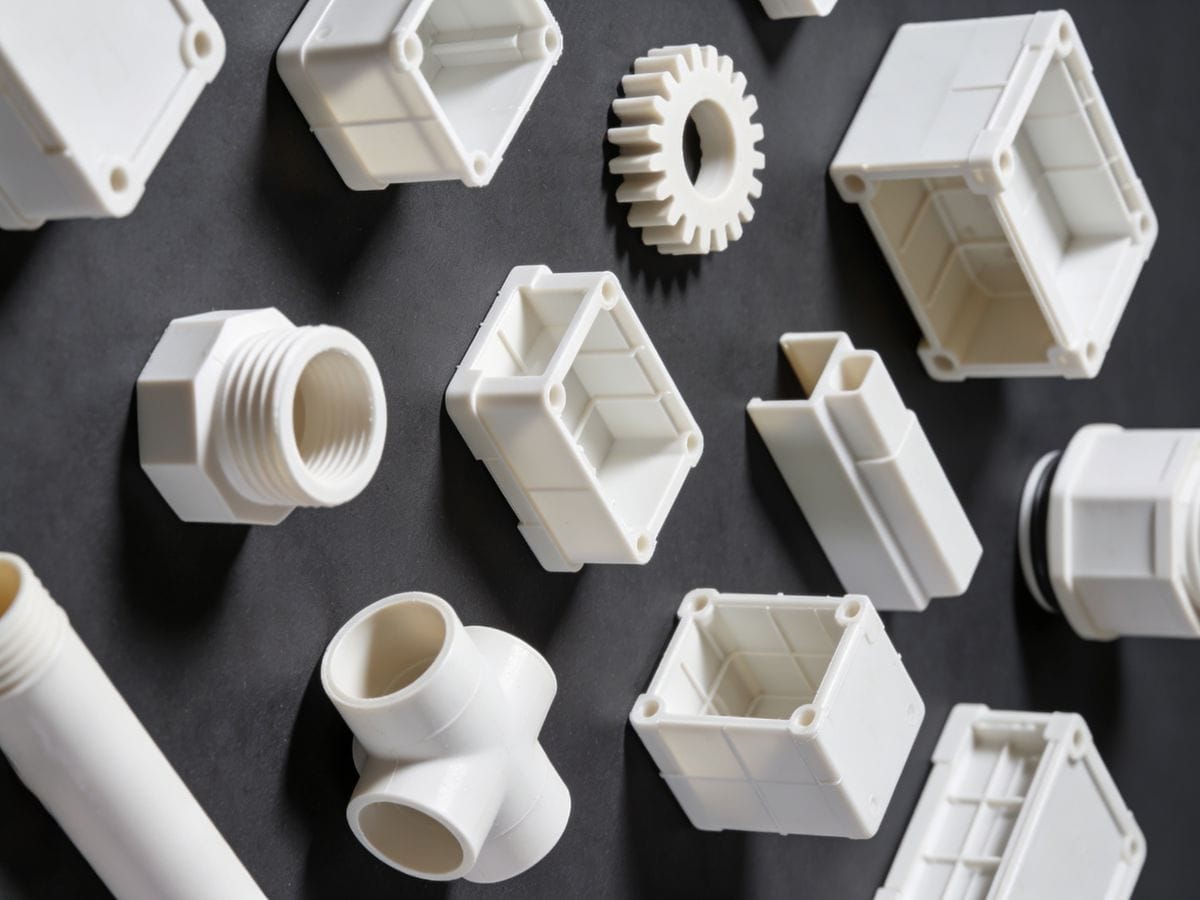
Meiner Erfahrung nach erfordert die Arbeit mit PP beim Spritzgießen die Beachtung von Details, insbesondere bei Temperatur und Druck. Die Anwendung von Best Practices kann zu besseren Ergebnissen führen und Fehler minimieren.
Was sind die wichtigsten Überlegungen beim PP-Spritzgießen?
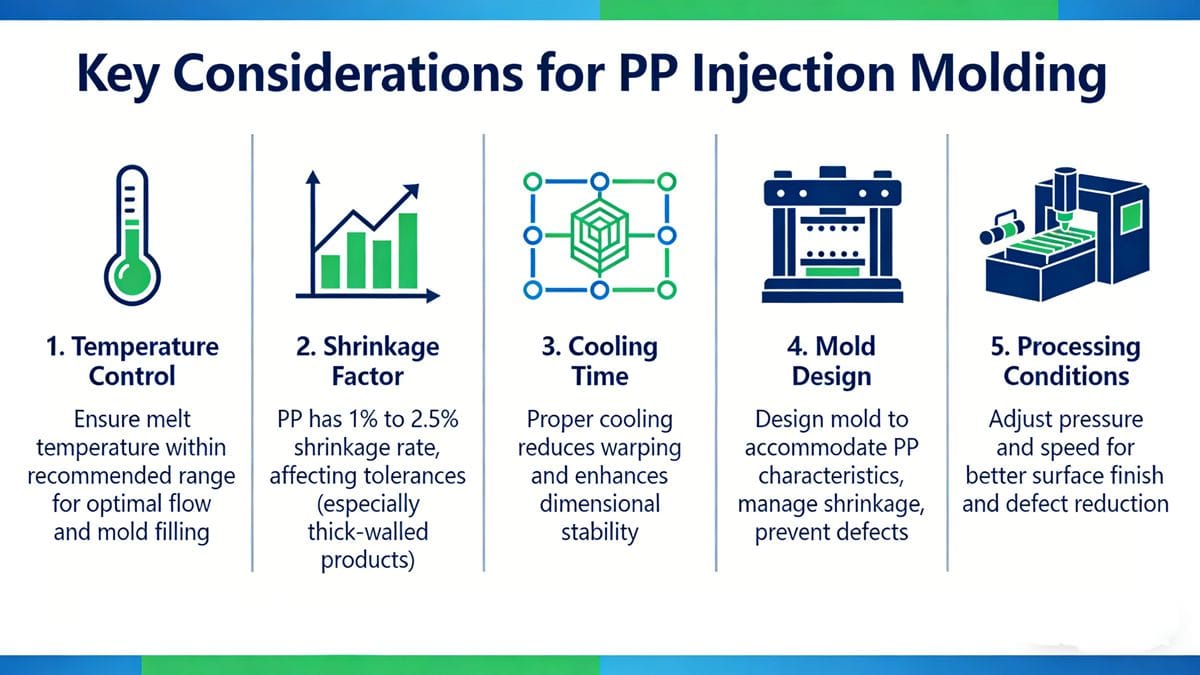
Beim Spritzgießen mit PP sollten Sie einige wichtige Punkte beachten:
Temperaturkontrolle: Die Sicherstellung, dass die Schmelztemperatur innerhalb des empfohlenen Bereichs liegt, ist entscheidend für einen optimalen Fluss und eine optimale Formfüllung.
Schrumpfungsfaktor: Denken Sie daran, dass PP eine Schrumpfungsrate von 1% bis 2,5% hat. Dies kann die Toleranzen beeinträchtigen, insbesondere bei dickwandigen Produkten.
Abkühlzeit: Die richtige Abkühlzeit ist wichtig, um Verformungen zu vermeiden und die Dimensionsstabilität zu verbessern.
Formdesign: Stellen Sie sicher, dass die Form für die Eigenschaften von PP ausgelegt ist. Dazu gehören Funktionen, die die Schrumpfung kontrollieren und Defekte verhindern.
Verarbeitungsbedingungen: Die Anpassung von Druck und Geschwindigkeit während der Injektion kann zu einer besseren Oberflächenqualität und zur Reduzierung von Defekten beitragen.
Wenn Sie diese Faktoren berücksichtigen, können Sie die Qualität und Präzision Ihrer Polypropylen-Spritzgießprodukte verbessern.
Fazit
Das Verständnis von Polypropylen und seinen Eigenschaften ist für erfolgreiches Spritzgießen entscheidend. Die richtige Vorbereitung und das entsprechende Wissen können zu hochwertigen Ergebnissen bei der Herstellung führen.
 English
 French
 Dutch
Dutch German
 Japanese
 Korean