

Injection molding PET preforms can be challenging. Ignoring key factors can lead to poor quality products and increased costs.
To ensure the best results in injection molding PET preforms, pay close attention to these eight crucial factors that can significantly impact your production process.

When it comes to injection molding, the details matter. Overlooking any of these eight issues can lead to inefficiencies and defective products. In this article, I will explore each issue in depth, providing insights on how to avoid common pitfalls and ensure high-quality PET preforms.
What should you know about handling plastics when molding PET preforms?
Handling plastics correctly is crucial in the injection molding process. PET has a high molecular weight, which can be sensitive to moisture. If the moisture content exceeds the limit, the molecular weight of PET decreases. This can lead to discoloration and brittleness in the final product.
To avoid these issues, it is essential to dry the material before processing. The drying temperature should be set at 150°C for a minimum of four hours, though 170°C for three to four hours is generally recommended. The emptiness method can be used to check if the material is fully dried. Additionally, the proportion of recycled PET should not exceed 25%, and it must be thoroughly dried.
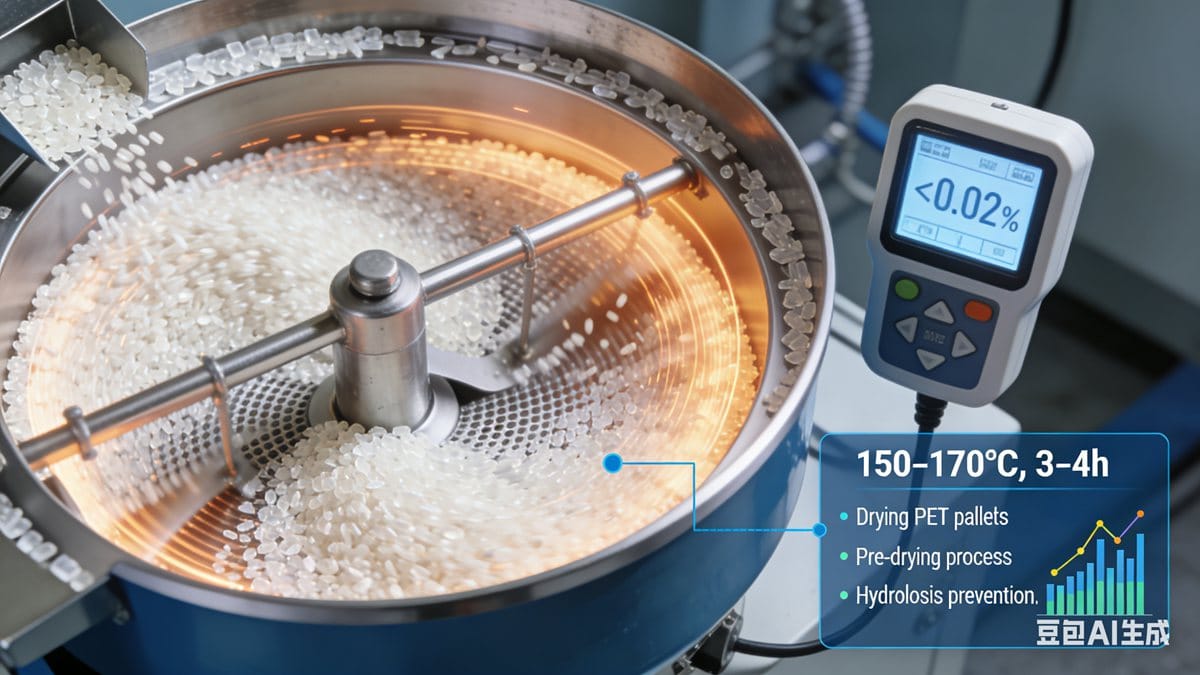
To dive deeper, let's analyze how moisture affects the processing of PET and why proper drying is crucial. Moisture can lead to hydrolysis, which significantly lowers the molecular weight of PET. This results in products that are not only weaker but also visually flawed. Implementing a precise drying schedule can help maintain the integrity of the material and ultimately improve the quality of the PET preforms.
How to choose the right injection molding machine for PET?
Choosing the right machine is vital. PET requires a machine with multiple temperature control zones and minimal self-friction heat during plasticization. The actual weight of the preform must be at least two-thirds of the machine's injection capacity.
Using a machine that meets these specifications can help optimize the molding process and produce high-quality PET preforms. A suitable machine reduces the risk of defects and ensures consistency in production.
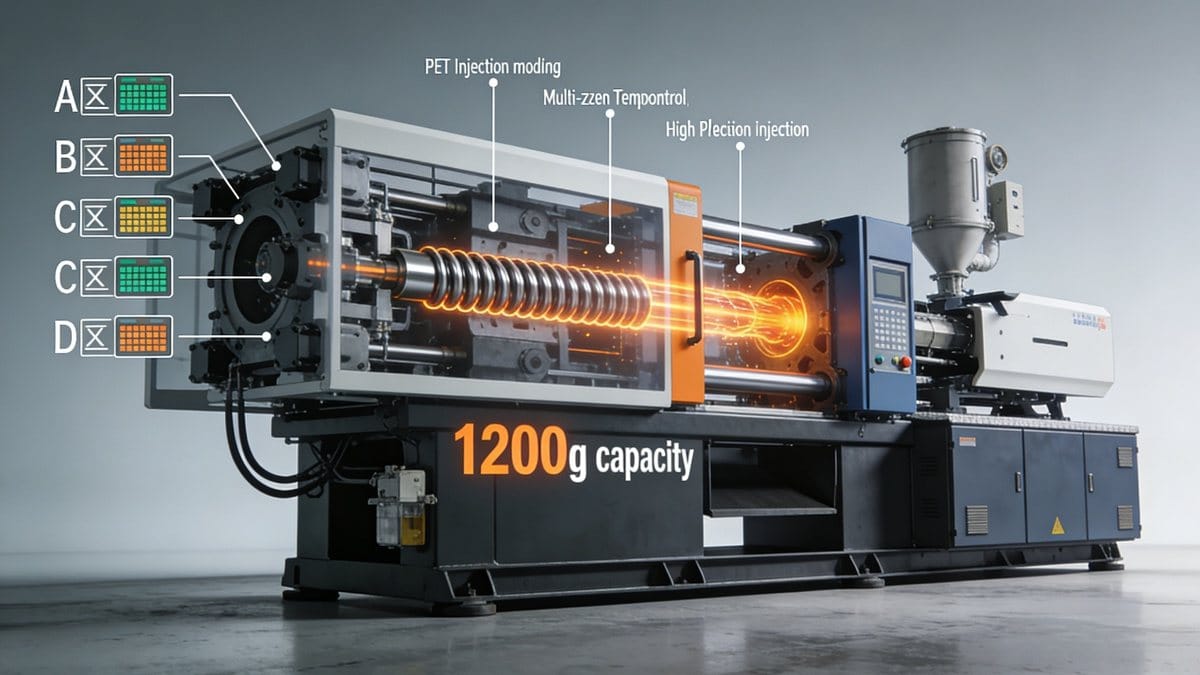
Let's explore the significance of proper machine selection for PET molding. The machine's design impacts not just the quality of the preforms but also operational efficiency. A machine with insufficient control over temperature can lead to inconsistent results and wasted material. Therefore, investing in the right equipment is essential for long-term success in production.
What about mold and gate design for PET preforms?
The design of the mold and gates plays a crucial role in the injection molding process. Generally, hot runner molds are used for PET bottle preforms. It is advisable to have thermal insulation boards placed between the mold and the injection machine, typically about 12mm thick, that can withstand high pressure.
Sufficient venting is necessary to prevent local overheating or cracking. However, the depth of venting should not exceed 0.03mm, as this can lead to flash. Proper venting ensures a smooth flow of material and reduces defects in the final product.
Delving deeper into the importance of mold design, the cooling and heating of the mold directly affect the cycle time and the quality of the preforms. An optimally designed mold can enhance cooling efficiency while maintaining the temperature precisely. This balance prevents issues like warping or uneven surfaces, ensuring that the final products meet quality standards.
What is the ideal melting temperature for PET?
The melting temperature of the material must be monitored closely. Typically, the melting temperature for PET ranges from 270-295°C, while the enhanced GF-PET grades should be set between 290-315°C.
Monitoring and adjusting the melting temperature can prevent issues such as incomplete filling of the mold and defects in the preforms. Proper temperature control is essential for achieving the desired properties in the final products.
Understanding the impact of melting temperature on the product's properties is essential. Higher temperatures can lead to material degradation, while lower temperatures can result in incomplete melting. Therefore, maintaining the correct melting temperature not only enhances the molding process but also ensures the durability and clarity of the final preform.
Why is injection speed important in the molding process?
Injection speed is another critical factor in the molding process. Generally, a faster injection speed is necessary to prevent the material from solidifying too early during injection. However, if the speed is too high, it can lead to high shear rates that make the material brittle.
A typical injection should complete within four seconds to avoid these problems. Finding the right balance in injection speed is key to achieving high-quality preforms without defects.
Examining the effects of injection speed reveals its significant role in ensuring a successful molding process. If the speed is too low, it can lead to premature solidification, resulting in incomplete shapes. Conversely, excessive speed may cause shear stress, damaging the material's structure. Therefore, careful consideration of injection speed is essential for achieving the desired quality and integrity in PET preforms.
What is the optimal back pressure for injecting PET?
The back pressure during the injection process should be kept as low as possible. Typically, it should not exceed 100 bar, and often, it may not even be necessary.
Low back pressure helps avoid wear and tear on the machine while maintaining a steady flow of material. This practice ensures the longevity of the equipment and consistency in production.
Exploring the effects of back pressure emphasizes its importance in the molding process. High back pressure can lead to excessive wear on the machine components, causing maintenance issues and production downtime. By keeping back pressure low, we ensure smoother operation and reliable results in the injection molding of PET preforms.
How to manage residence time in the injection molding process?
Managing residence time is crucial when molding PET. Never use excessively long residence times, as this can decrease the molecular weight of the material. It is essential to avoid temperatures above 300°C. If the machine is idle for less than 15 minutes, an empty shot can be performed. If the downtime exceeds 15 minutes, it is recommended to clean the machine with viscosity PE, reducing the barrel temperature to the PE temperature until starting again.
Proper management of residence time helps maintain the quality of the PET and prevents degradation of the material.
Examining how residence time affects PET quality reveals its importance in maintaining product standards. Excessive residence time can lead to thermal degradation, affecting the strength and clarity of the final product. Therefore, implementing effective practices for managing residence time is vital to achieving optimal results in injection molding.
What are the key considerations when using recycled materials?
When using recycled materials, it's important not to have them too large to avoid bridging at the feed point, which can affect plasticization.
Controlling the size of recycled materials is crucial for ensuring a smooth molding process and maintaining the quality of the final product.
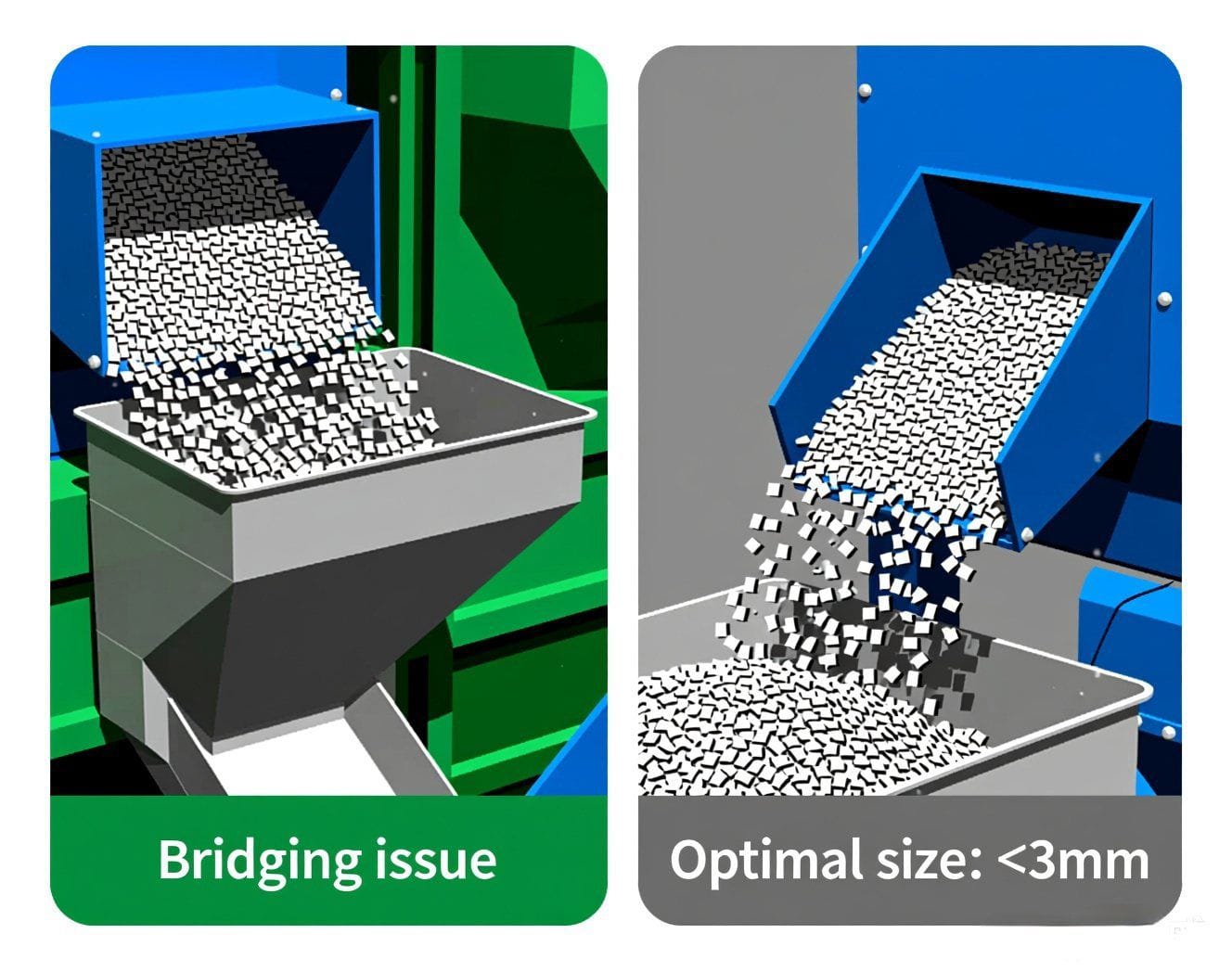
Diving into the considerations regarding recycled materials highlights their potential impact on the molding process. Large pieces can cause blockages and disrupt the flow of material, leading to inconsistencies in the final product. Therefore, proper management of recycled material size is essential for maintaining a smooth and efficient molding process.
Conclusion
By paying attention to these eight critical issues, you can enhance the quality and efficiency of your injection molding process for PET preforms.


 English
 French
 Dutch
Dutch German
 Japanese
 Korean