

Are you losing money on overmolded parts with flash and weak bonds? These defects delay product launches. At Ideal Pro, we solve these issues before production starts.
Custom overmolding services combine two materials into one part. To stop flash and bonding failures, you must balance injection pressure, use precise mold tolerances, and pick compatible materials. A good manufacturer uses DFM analysis to fix hidden tooling risks early.
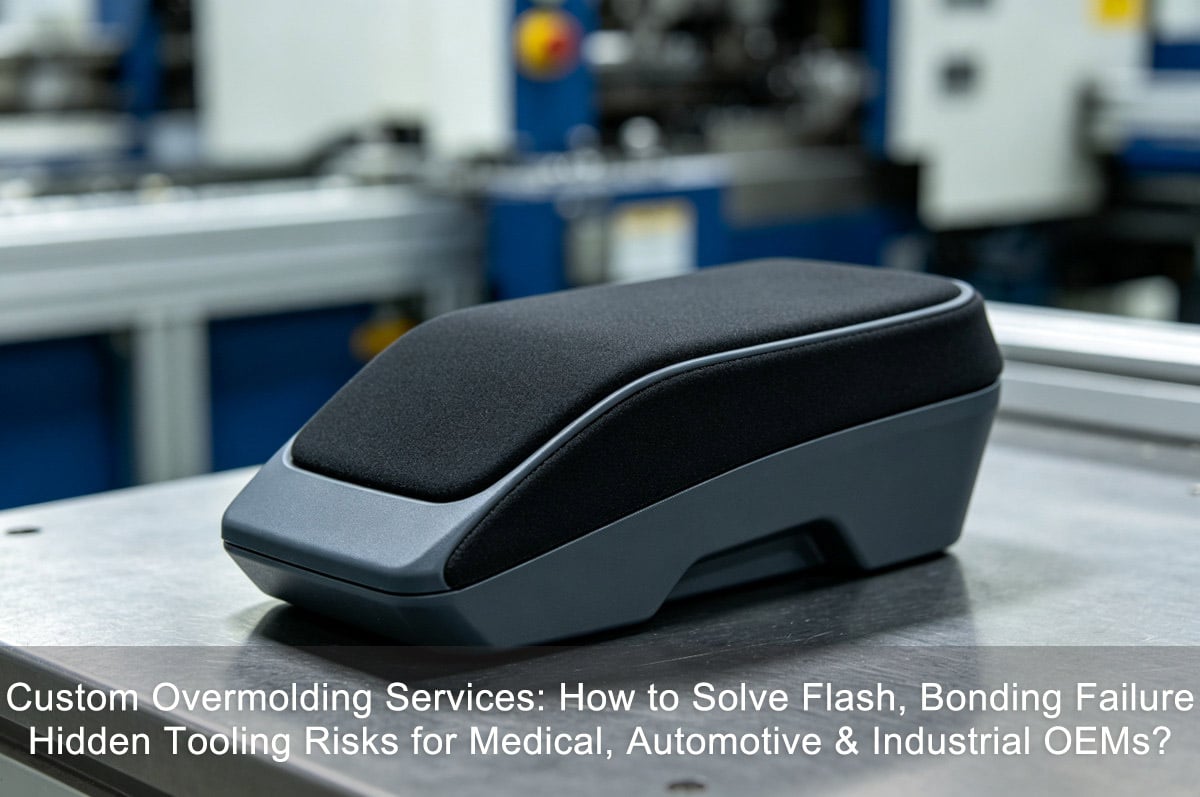
You might think overmolding is too complex to get right on the first try. But once you understand the hidden risks, you can control the entire process. Let me show you how we do it.
What is the Flash‑Prevention Quick Reference & Root‑Cause Checklist?
Flash ruins part quality. It costs time and money to remove by hand. We use a strict checklist to find the root cause and stop flash completely.
The best flash-prevention checklist targets core design parameters and process triggers. By managing seal-gap tolerances and controlling injection speed, you can prevent the micro-flash that causes 85% of field failures in overmolded parts.
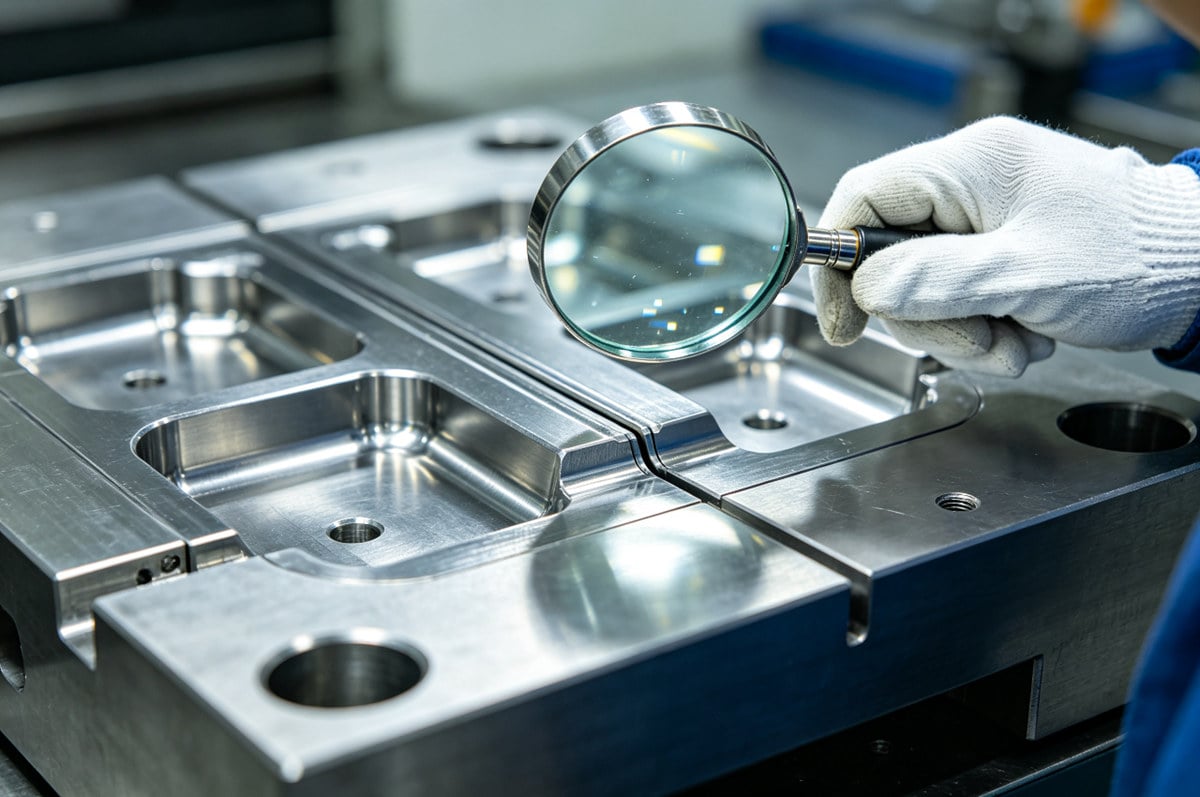
When we build custom injection molds, we focus on the small details. Flash happens when plastic leaks out of the mold cavity. I remember a time when a new client came to us with parts covered in flash. They were losing thousands of dollars every week. We fixed the problem by looking at the core design.
Core Design Parameters to Eliminate Flash on Overmolded Parts
You need perfect shut-off areas. The mold must close tight around the first part. We call this first part the substrate. If the gap is too big, the second material will leak. We keep our mold tolerances very tight to stop this leak.
Process‑Related Triggers That Generate Micro‑Flash (85% Field Failure Statistics)
Sometimes the mold is perfect, but the machine settings are wrong. If the injection pressure is too high, it pushes the mold open. If the material is too hot, it flows too easily into tiny gaps. This causes micro-flash. Micro-flash is tiny, but it causes most field failures.
| Root Cause | Problem | Our Solution |
|---|---|---|
| Bad Mold Design | Loose shut-off gaps | Precise CNC machining to achieve ≤0.01mm shut-off tolerance |
| High Pressure | Pushes mold open | Scientific molding setup with cavity-pressure closed-loop control |
| High Heat | Material flows too fast | Strict temperature control with ±1°C thermolator regulation |
We check these items every time. This stops flash before it starts.
Why Does This Practical Engineering Guide Beat Theoretical Overmolding Documentation?
Textbooks give you theories, but theories do not run machines. Bad advice leads to broken molds. You need real advice from the factory floor.
Practical guides use real-world data from thousands of validated overmold tool sets. This real experience solves actual problems for high-reliability applications like medical, automotive, aerospace, and industrial components, instead of just guessing.

I read many books on plastic injection molding over the years. Most of them are too theoretical. They do not help when a machine stops working at 2 AM. That is why we share practical guides.
Real‑World Production Background: Thousands of Validated Overmold Tool Sets
At Ideal Pro, we have built thousands of molds. We know what works and what fails. I once saw a textbook design fail on the first test. The theory was good, but the real plastic behaved differently. We changed the design based on our shop experience. Then it worked perfectly.
Target High‑Reliability Applications: Medical, Automotive, Aerospace & Industrial Components
These industries cannot accept mistakes. A medical device must be completely safe. A car part must last for many years. Theoretical books do not teach you how to meet strict industry standards in real life. We use our daily production data to guide you.
| Guide Type | Source | Result |
|---|---|---|
| Theoretical | Textbooks | Guesses, high risk of costly rework and field failures |
| Practical | Factory Floor | Proven solutions, low risk with validated process data |
Our practical engineering guide saves you from expensive trial and error. We focus on what truly works.
Why Do Early‑Stage DFM & Mold‑Flow Simulation Determine Overmolding Success?
Skipping design checks will ruin your mold. Fixing a bad mold wastes weeks and thousands of dollars. DFM and simulation catch these errors early.
Early Design for Manufacturability (DFM) and mold-flow simulation predict interface pressure imbalances. By keeping seal-gap tolerances between 0.005 and 0.01mm, you stabilize injection pressure and use data-driven quoting to avoid budget overruns.
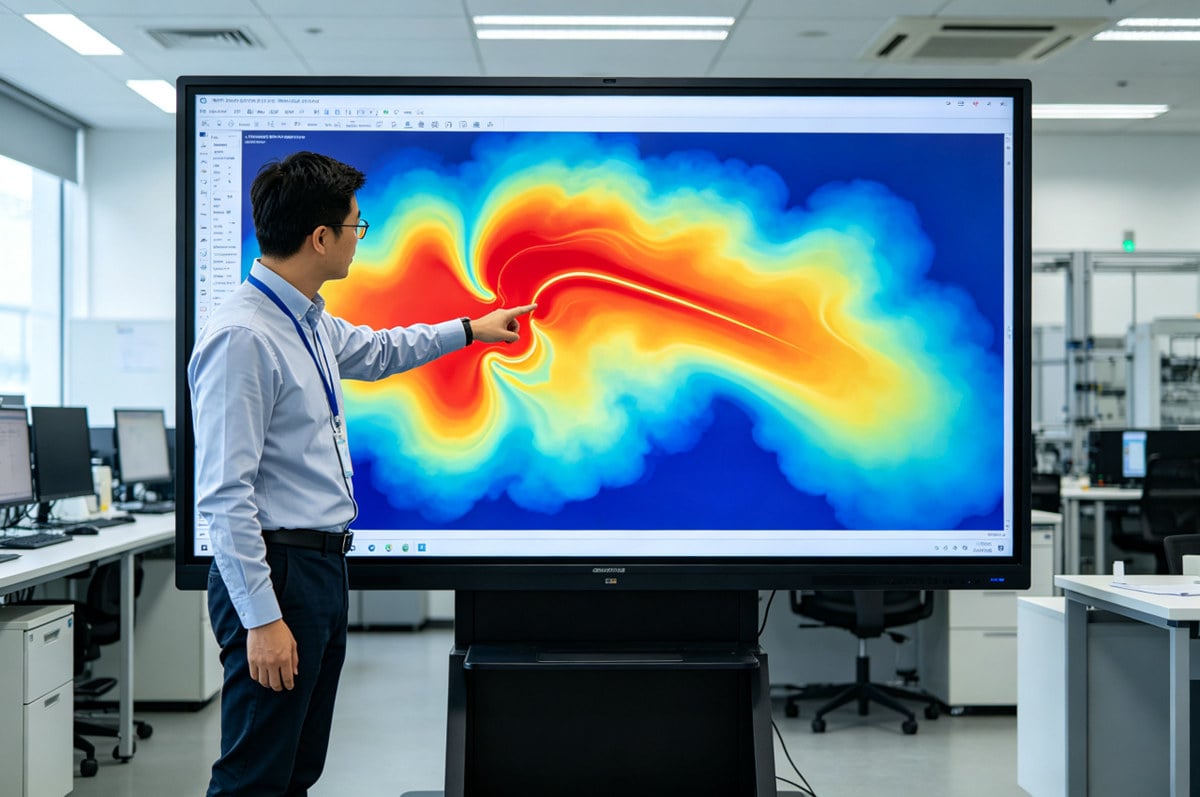
We never start cutting steel without a solid plan. DFM is our plan. It shows us how to make the part better and cheaper.
Interface Pressure Imbalance: #1 Root Cause for Overmold Flash Defects
When the second material enters the mold, it pushes against the first part. If the pressure is not balanced, the first part moves. This creates flash. Mold-flow simulation shows us exactly where the pressure builds up. We can fix it before we build the mold.
Controllable Seal‑Gap Tolerance: 0.005‑0.01mm Gap to Stabilize Second‑Shot Injection Pressure
The gap between the mold and the first part must be tiny. We aim for 0.005 to 0.01mm. This small gap holds the pressure steady. It stops the soft material from leaking.
Data‑Driven Quoting: Avoid Budget Overruns Before PPAP & Mass Production
Simulation gives us real data. We use this data to give you an accurate price. You will not see surprise costs later.
| Step | Action | Benefit |
|---|---|---|
| DFM | Check part design | Finds errors early, saves 30–50% on tooling rework costs |
| Mold-Flow | Check plastic flow | Balances pressure to eliminate flash before T1 sample |
| Quoting | Use simulation data | Stops surprise costs with transparent, data-backed pricing |
This process builds enduring excellence for our clients.
How Does Design Optimization Cut Tool‑Revision Cost for Silicone & TPE Overmolding?
Tool revisions are very expensive. They also delay your project. Smart design features trap extra material and protect the mold from heat damage.
Optimizing design with progressive wall thicknesses and retention grooves controls thermal erosion and traps extra melt. This eliminates manual deflashing and gives a clear ROI by reducing the costly T1-to-T2 modification cycles.
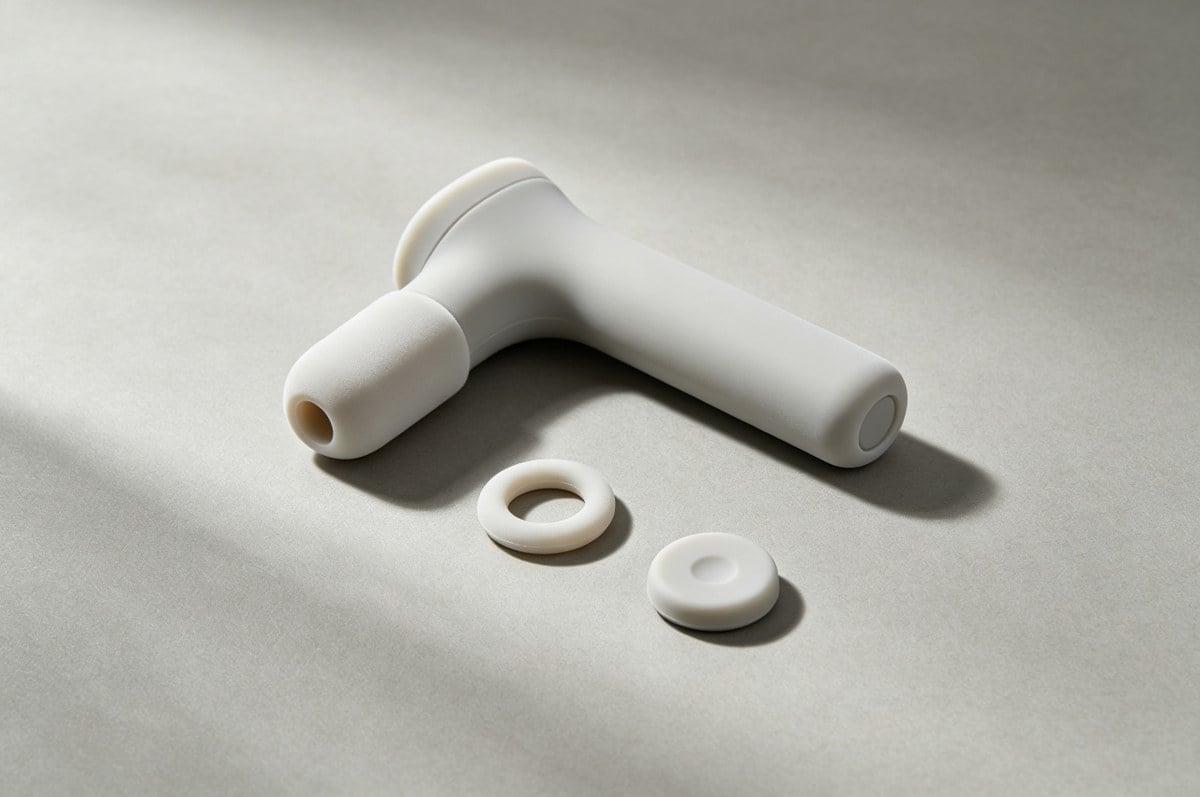
Silicone and TPE are very tricky materials. They flow like water when they are hot. If you do not design for them, you will pay for many mold changes. I helped a client who paid for five revisions before they found us. We fixed their problem with two simple design changes.
Progressive Wall‑Thickness Transition to Mitigate Thermal Erosion
Hot plastic can wash away the mold steel over time. We call this thermal erosion. If the part wall changes thickness too fast, the hot material hits the steel hard. We design smooth, slow transitions. This protects the mold and makes it last longer.
Retention Groove Geometry: Trap Extra Melt and Remove Manual Deflashing
We add small grooves near the edge of the part. If a tiny bit of material leaks, it goes into the groove. It does not go on the main part. You do not need to cut the flash off by hand.
Quantified ROI: How These Geometry Features Reduce T1‑to‑T2 Modification Cycles
Fewer mold changes mean you save money. You get your parts faster.
| Design Feature | Problem Solved | ROI Benefit |
|---|---|---|
| Smooth Walls | Tool wear from thermal erosion | Longer mold life by 2–3×, reducing annual tooling replacement costs |
| Grooves | Flash on part surface | No manual deflashing labor, saving $0.02–0.05 per part in post-processing |
These optimizations save you money every time you run the mold.
What Are the Key Parameters That Shape Your Custom Overmolding Tooling Quotation?
Confusing quotes hide bad choices. Choosing the wrong mold steel or runner system will cost you more later. You must understand what drives the price.
Your quote depends on cavitation strategy, mold steel grade, and the choice between hot or cold runners. Balancing upfront costs with long-term waste reduction, plus adding CMM inspections, ensures you get high quality without hidden costs.
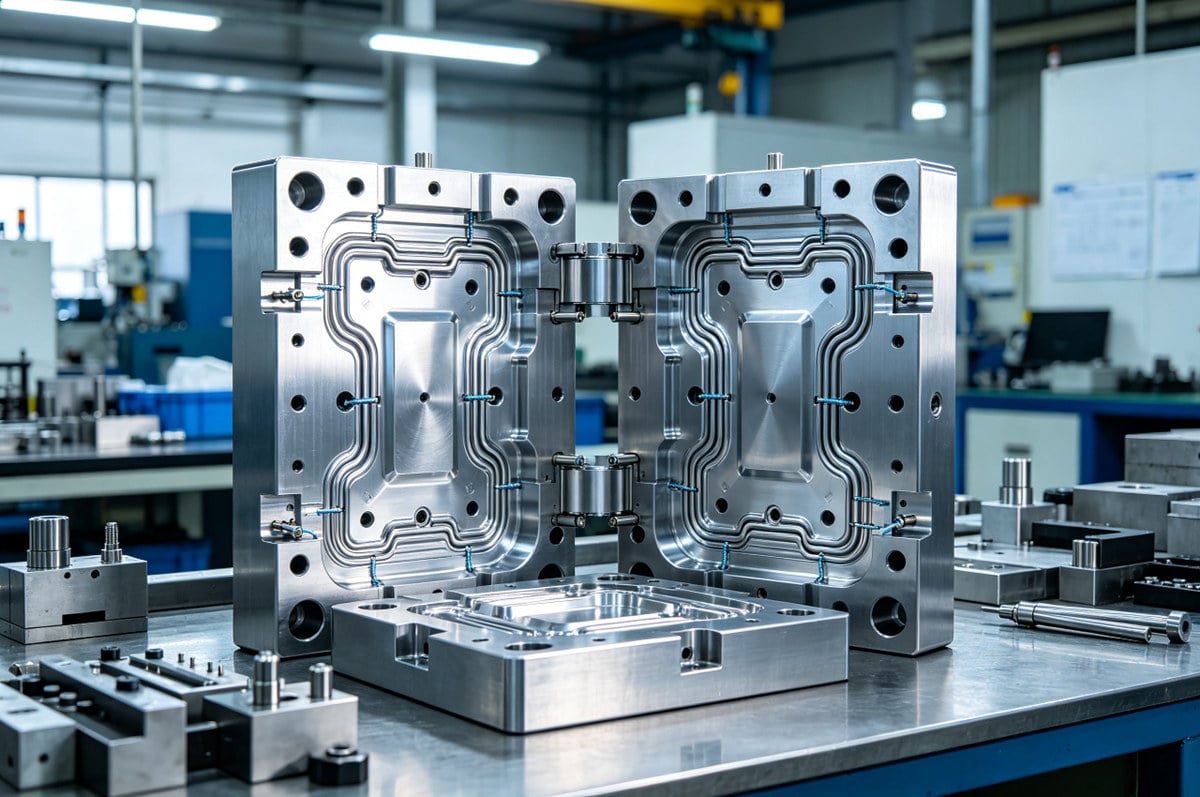
When I send a quote, I want the client to understand every single line. A cheap quote often means a cheap mold that will break quickly. We focus on long-term value instead of just low prices today.
Cavitation Strategy: Balance Unit‑Part Cost vs Annual Production Volume
More cavities mean you can make more parts at once. The part price goes down. But a mold with more cavities costs more to build. We help you find the right balance based on how many parts you need in a year.
Mold Steel Grade, Hardness & Surface Coating Choices
Hard steel lasts longer. Soft steel is cheaper but wears out fast. We often use hard steel with special coatings for overmolding. This keeps the mold precise.
Hot Runner vs Cold Runner: Waste Rate, Upfront Cost & Long‑Term ROI
Cold runners waste plastic on every shot. Hot runners do not waste plastic, but they cost more at the start. For long runs, hot runners save a lot of money.
CMM & Periodic Mold Inspection to Maintain Micron‑Level Tolerances
We inspect our molds regularly. We use CMM machines to measure the steel in microns.
| Parameter | Cheap Choice | Ideal Pro Choice |
|---|---|---|
| Steel | Soft P20 (HRC 28–32), wears after ~100K shots | Hard H13 with PVD coating (HRC 48–52), lasts 1M+ shots |
| Runner | Cold (wastes 15–30% plastic per shot) | Hot (near-zero waste, saves $10K–50K/year on material) |
| Inspection | Visual only, misses micron-level deviations | CMM precision at ±0.003mm with full dimensional reports |
Understanding these choices helps you make a smart investment.
How Does Design Optimization for Thin‑Wall Overmolding (<1.0 mm) Avoid Substrate Collapse & Flash?
Thin walls break easily under high pressure. If the base part collapses, the whole batch is ruined. We use strong supports to protect thin parts.
Thin-wall overmolding requires hydraulic assist supports to resist high secondary injection pressure. By optimizing draft angles for mechanical self-locking and using scientific molding parameters to control injection speed, you stop the substrate from collapsing and prevent flash.
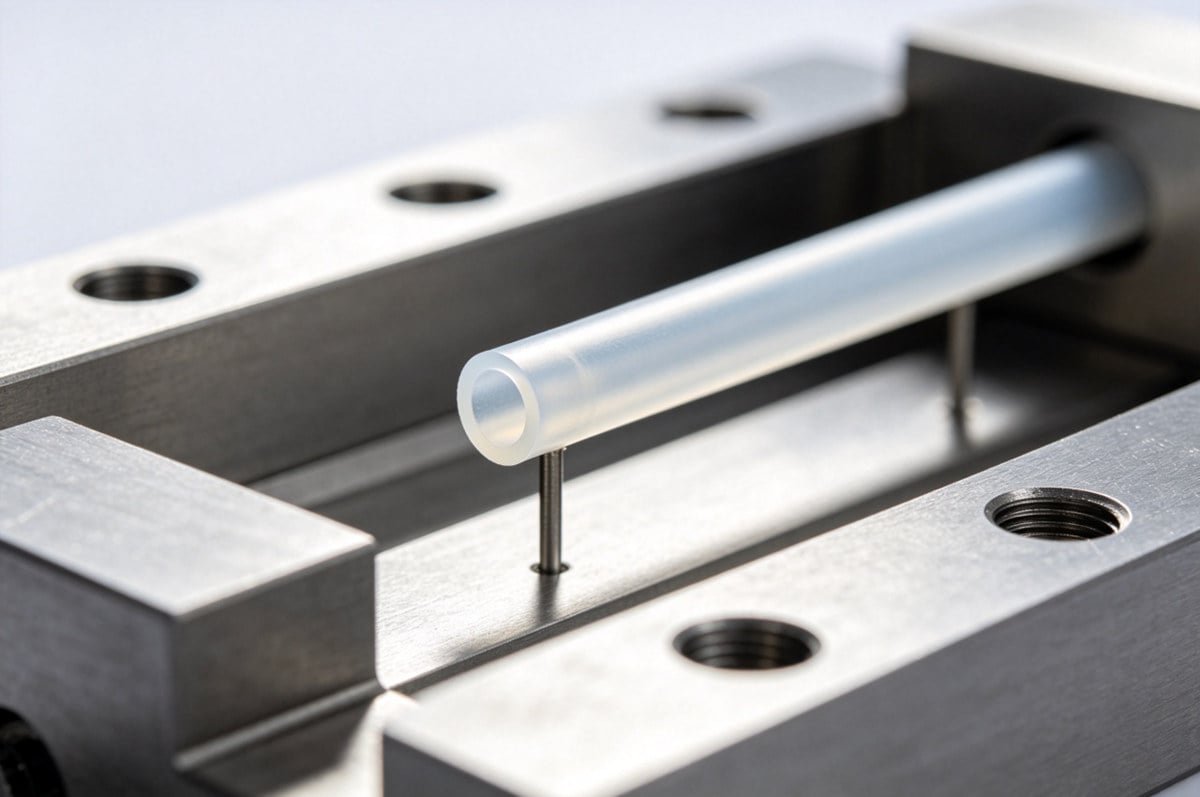
Thin parts are very difficult to overmold. The pressure of the second plastic shot can crush the first part easily. I once worked on a very thin medical tube. The pressure kept crushing it. We had to change our whole approach to fix it.
Hydraulic Assist Support to Resist High Secondary Injection Pressure
We use moving metal pins powered by hydraulics. These pins hold the thin part in place while the second plastic enters. They fight the high pressure. When the plastic cools, the pins pull back.
Optimized Draft Angles for Mechanical Self‑Locking at Parting Lines
We design the angles of the part so the mold locks tightly around it. This is mechanical self-locking. It stops the part from moving or bending when the pressure hits.
Scientific Molding Parameters: Injection Speed & Cavity‑Pressure Closed‑Loop Control
We do not guess the machine settings. We use sensors inside the mold. These sensors measure the pressure. The machine adjusts the injection speed automatically.
| Solution | Function | Result |
|---|---|---|
| Hydraulic Pins | Support thin walls against 2nd-shot pressure | No substrate collapse, scrap rate drops from 25% to <1% |
| 초안 각도 | Mechanically lock the part at the parting line | No part movement or bending, flash-free seal achieved |
| Sensors | Real-time cavity-pressure closed-loop speed control | Perfect fill consistency shot after shot, CpK ≥ 1.67 |
These steps make thin-wall overmolding safe and reliable.
What Can We Learn From a Real‑World Case Study on Zero‑Defect Custom Overmolding for Medical Devices?
Medical parts fail if they have tiny defects. Failed tests mean project delays. We used advanced engineering to turn a failing project into a success.
A medical client faced micro-flash, failed biocompatibility tests, and delays. We solved this by using PVD-coated inserts, precise Wire-EDM clearances, and multi-stage pressure control. This led to massive scrap reduction, annual cost savings, and qualified mass production.
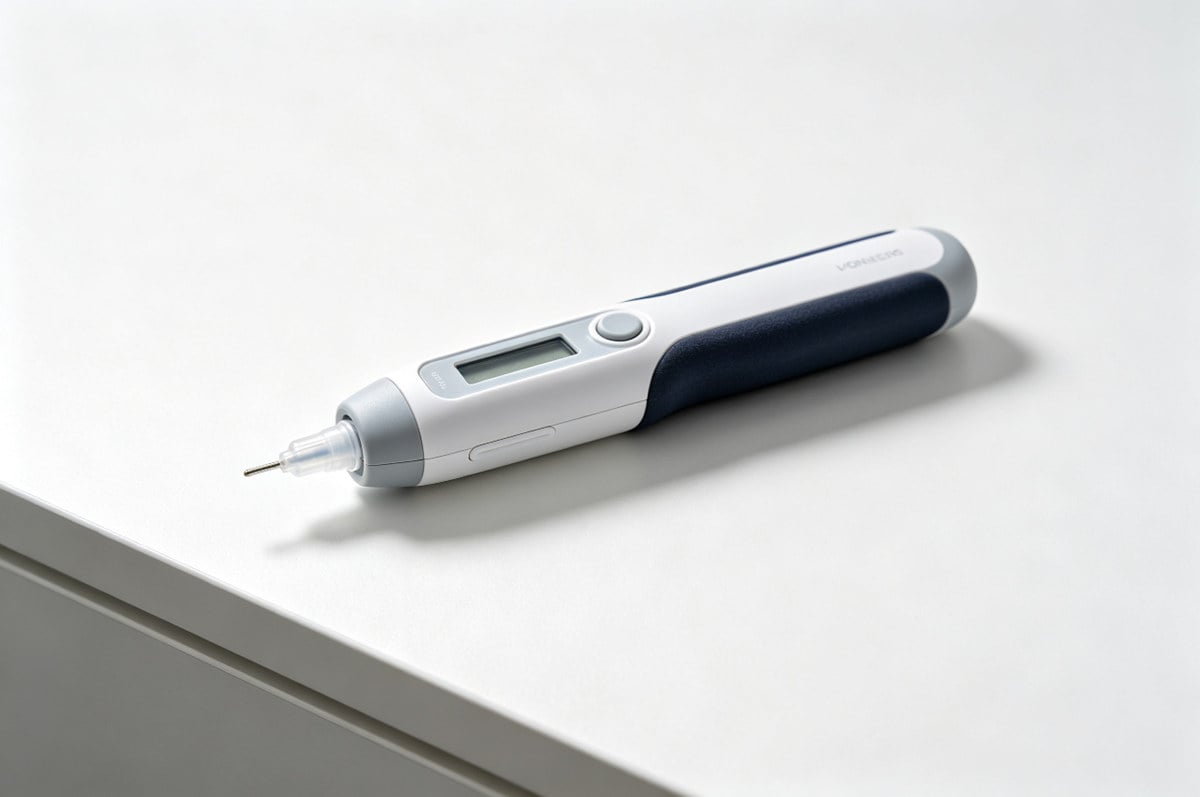
I want to share a story about a medical client. They were very stressed. Their current supplier could not make good parts. They came to Ideal Pro for a better solution.
Original Client Challenges: Micro‑Flash, Biocompatibility Test Failure & Project Delay
The parts had tiny flash. The flash scratched the users. Worse, the bad process caused the parts to fail safety tests. The project was six months late.
Engineering Solutions: PVD‑Coated Inserts, Wire‑EDM Clearance & Multi‑Stage Pressure Control
We built a completely new mold. We used very precise wire-EDM cutting. We added PVD coatings to the steel to make it slide smoothly without wear. Then, we set up multi-stage pressure control on the injection machine. This stopped the flash completely.
Measurable Business Outcomes: Scrap Reduction, Annual Cost Saving & Qualified Mass‑Production
The results were great. We cut their scrap rate to almost zero.
| Metric | Before Us | With Ideal Pro |
|---|---|---|
| Flash Defect Rate | 30% scrap rate, manual trimming required | 0% flash, zero-defect mass production achieved |
| Biocompatibility Test | Fail — flash particles caused skin irritation risk | Pass — ISO 10993 certified, smooth edge finish |
| Project Status | Delayed 6 months, client losing market window | On-track mass production, $200K+ annual cost savings |
We saved them money and finally got their product to the market.
How Does Mold Steel Selection Sustain Long‑Term Flash‑Free Overmolding Performance?
Cheap steel bends and wears out quickly. When the steel wears, flash appears. Choosing the right steel keeps your parts perfect for years.
Selecting premium mold steel controls thermal expansion and offers abrasion resistance against glass-filled substrates. It also provides corrosion resistance against high-temperature elastomers. Comparing total cost of ownership shows premium steel like H13 beats standard P20 over time.
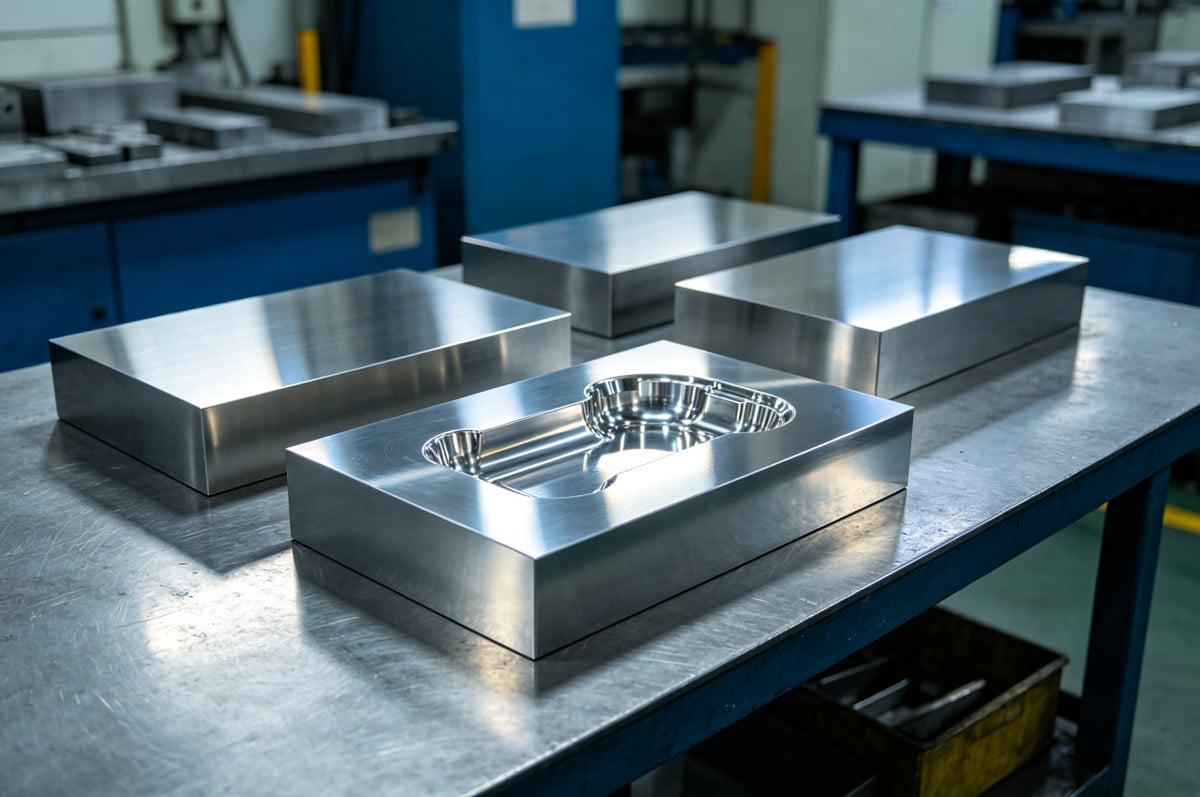
Steel is the heart of the mold. If you buy cheap steel, you will pay for it later in broken parts. I always tell my clients to think about the long term.
Thermal Expansion Control Under High Molding Temperature
Molds get very hot. Metal grows when it gets hot. If the steel grows too much, the mold will not close right. We pick steel that stays stable even when very hot.
Abrasion Resistance for Glass‑Filled Reinforced Substrates
Sometimes the first plastic part has glass in it to make it strong. Glass acts like sandpaper. It scratches soft steel. We use hardened steel to fight this scratching.
Corrosion Resistance for High‑Temperature Elastomer Materials
Some soft plastics give off bad gases when heated. These gases rust the mold. We use stainless steel or special coatings to stop the rust.
Total‑Cost‑of‑Ownership Comparison: Premium H13 /1.2344 vs Standard P20 Steel
P20 steel is cheap today. H13 steel costs more today but lasts forever.
| Steel Type | Initial Cost | Tool Life | Total Cost over 5 Years |
|---|---|---|---|
| P20 (Standard) | Low (~$3,000–5,000 less) | Short (~200K–300K shots), frequent repairs needed | Very High — $30K–60K in rework, polishing & downtime |
| H13 (Premium) | Medium (higher upfront) | Long (1M–2M+ shots with PVD coating) | Low — minimal maintenance, no unplanned downtime |
Good steel is a smart choice for sustainable solutions.
What Are the Advanced QC & In‑Line Inspection Methods for Global Overseas Buyers?
Buying from overseas can feel risky. You cannot see the factory floor. We use advanced cameras and sensors to prove our quality every single day.
We protect overseas buyers with vision measurement systems for real-time bond-line detection and inline infrared thermography to monitor seal-face heat. This guarantees defect isolation and full batch traceability, which is required for highly regulated industries.
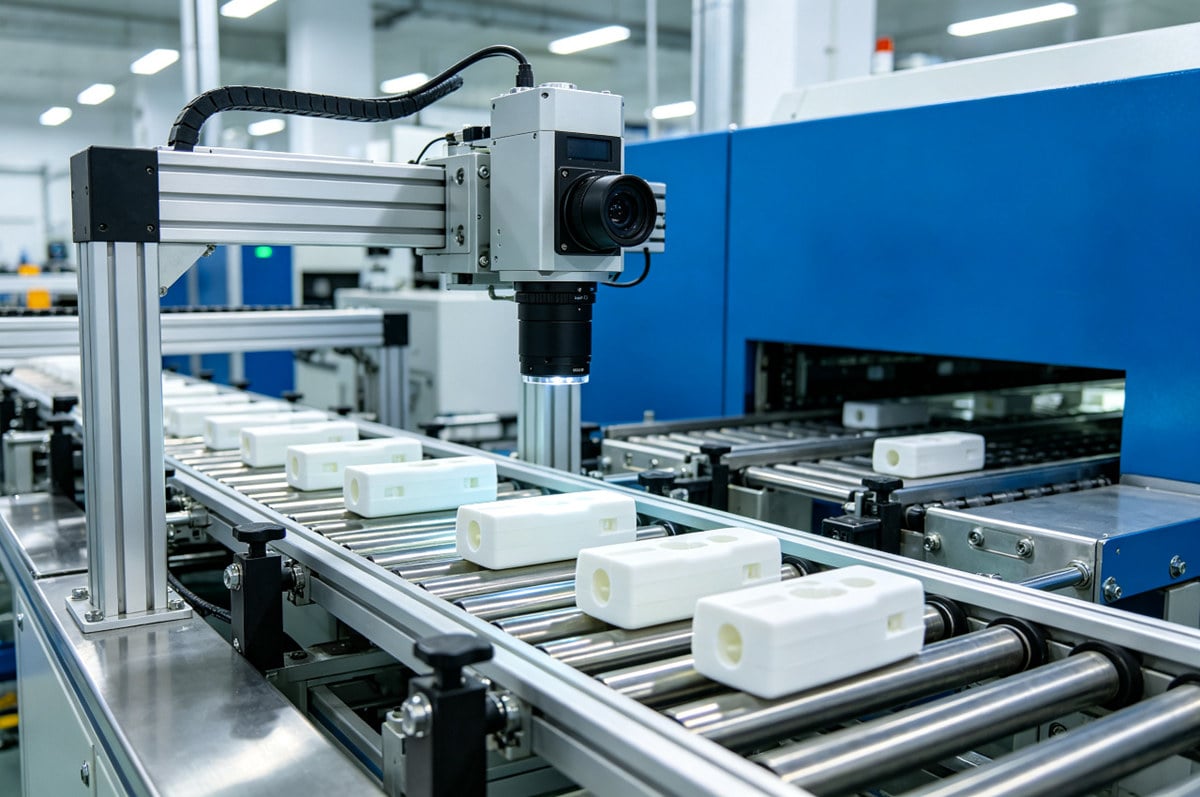
Our clients are far away. They need to trust us. I know it is hard to trust a factory across the world. So, we use technology to show you our work clearly.
Vision Measurement System for Real‑Time Bond‑Line & Flash Detection
We put smart cameras on the production line. Every time a part comes out, the camera looks at it. It checks the bond line. It looks for flash. If it sees a mistake, it stops the machine right away.
Inline Infrared Thermography to Monitor Seal‑Face Thermal Profiles
We also use heat cameras. We look at the heat of the mold face. If one spot is too hot or too cold, the plastic will not bond right. We fix the heat before bad parts are made.
Defect Isolation & Full Batch Traceability for Regulated Industries
If a bad part happens, we know exactly when and why. We track every batch.
| Tech Tool | What It Checks | Client Benefit |
|---|---|---|
| Vision Camera | Flash, bond-line integrity & dimensions | No bad parts shipped — 100% inline inspection, zero escapes |
| Heat Camera (IR) | Mold seal-face temperature uniformity | Strong material bond — detects thermal anomalies before defects form |
| Batch Tracker | Production time, machine settings & material lot | Easy recalls if needed — full lot traceability for FDA & IATF audits |
You can sleep well knowing we watch your parts closely.
How to Audit Overmolding Quotations & Filter Low‑Performance Suppliers?
Many suppliers promise good parts but deliver trash. They hide their bad methods in the quote. You must know what questions to ask them.
Audit a quote by reviewing the full cavity layout, cooling loops, and ejector layout. Validate the hot-runner specifications and demand a complete DFM report with mold-flow data. Finally, always verify the steel material certificates and heat-treatment records.

I have seen many bad quotes from bad suppliers. They leave out important details to make the price look low. You must act like a detective to find the truth.
Review Full Cavity Layout Drawing, Cooling Loops & Ejector Layout
Ask to see the drawings. Look at the cooling lines. If there are not enough cooling lines, your parts will warp. Look at the ejector pins. They must push the part out evenly.
Validate Hot‑Runner Brand, Model & Technical Specifications
A cheap hot runner will leak plastic. Ask for the brand name. Make sure it is a reliable brand.
Demand Complete DFM Report Including Mold‑Flow & Flash‑Prevention Recommendations
Never accept a quote without a DFM report. The DFM shows if they actually thought about your part.
Verify Steel Material Certificates & Vacuum‑Hardening Heat‑Treatment Records
Some suppliers lie about the steel. They say it is hard, but it is actually soft. Ask for the official paper certificate from the steel factory.
| Audit Check | Good Supplier | Bad Supplier |
|---|---|---|
| Drawings | Shares full cavity, cooling & ejector layout drawings | Hides details, only provides vague PDFs or no drawings at all |
| DFM Report | Provided free with mold-flow analysis & flash-prevention notes | Refuses to do it or charges extra, no simulation data included |
| Steel Certs | Shows official mill certificates & vacuum-hardening heat-treatment records | Makes excuses, provides fake or generic documents with no traceable lot numbers |
Use this checklist to find a true partner.
What Are the Common Pain Points Beyond Flash: Bonding Strength, Delamination & Substrate Warpage?
Flash is not the only enemy. Sometimes the two materials peel apart. Sometimes the base part bends. You must solve these hidden chemical and mechanical problems.
Beyond flash, you must solve bonding strength, delamination, and substrate warpage. By matching material compatibility for hard-soft combinations and designing mechanical interlock geometry, you vastly improve peel and pull-out resistance, beating competitors who ignore these steps.
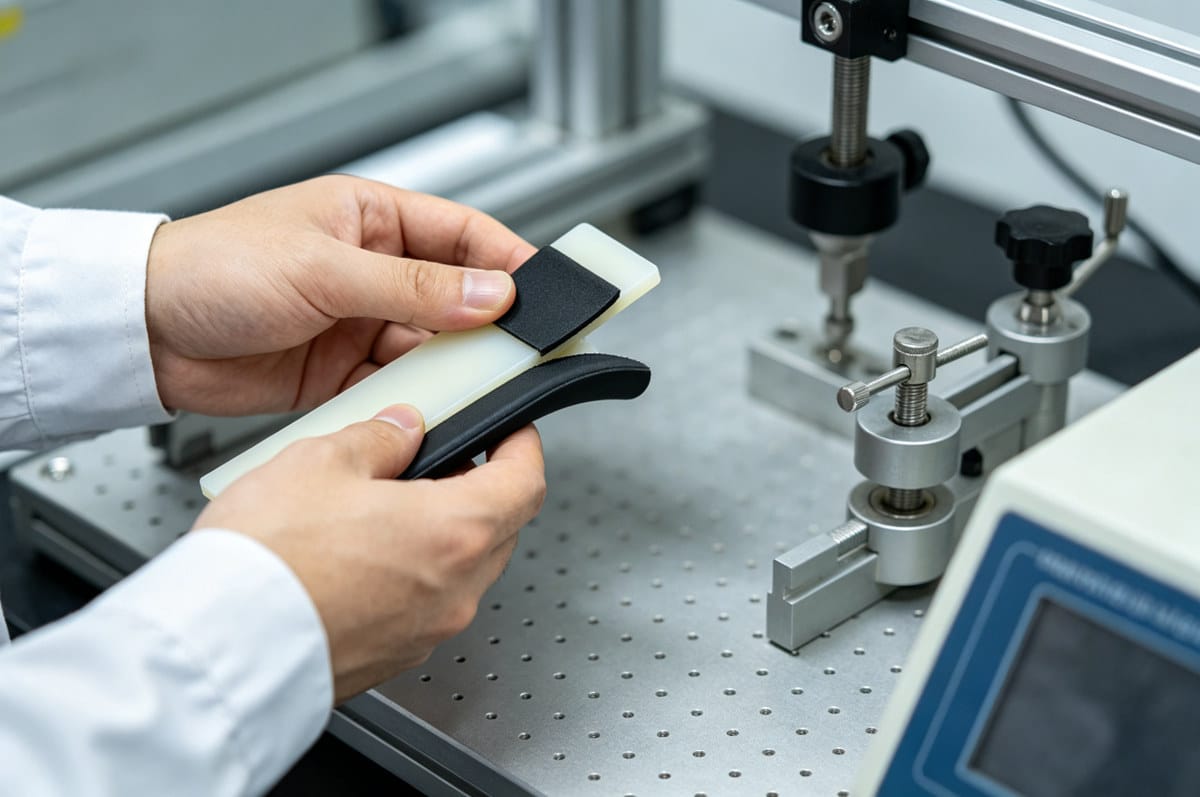
Many factories only worry about flash. They forget that the part must hold together. I have seen parts look beautiful, but they peel apart in the user's hand. This is called delamination.
Material Compatibility Matching for Hard‑Soft Overmold Combinations
Not all plastics like each other. You cannot stick any soft plastic onto any hard plastic. They must have a chemical bond. We check material charts carefully. We make sure the two plastics will melt together and stay together forever.
Mechanical Interlock Geometry to Improve Peel & Pull‑Out Resistance
Sometimes a chemical bond is not enough. We need a physical lock. We design holes or ridges in the hard part. The soft plastic flows into these holes. When it cools, it is locked in place. You cannot pull it off.
| Problem | Cause | Our Fix |
|---|---|---|
| Delamination | Bad chemical match between substrate & overmold material | Check compatibility charts & run adhesion pull-tests before T1 |
| Weak Bond | Smooth substrate surface, no mechanical engagement | Add mechanical interlocks (undercuts, through-holes, knurling) for 2–3× peel strength |
| Warpage | Uneven cooling across thick & thin wall sections | Optimize conformal cooling channel layout to balance shrinkage |
We solve these issues so your product stands above the competition.
What Are the Frequently Asked Questions About Custom Overmolding Service?
You probably have many questions before starting a project. We want to be open and honest. Here are the most common questions our clients ask.
Clients often ask about material combinations, tight tolerances, and lead times. We offer free DFM reviews, rapid prototype sampling, and full PPAP support to ensure your overmolding project transitions smoothly from early design to high-volume mass production.

I talk to new clients every day. They all want to know how we work. Here is what I tell them about our process.
What material combinations do you support?
We support hundreds of combinations. We do hard plastic with soft TPE. We do metal inserts with plastic. We will guide you to the right choice.
Do you charge for DFM?
No, our DFM review is always free. It is part of our commitment to enduring excellence.
Can you make prototypes first?
Yes. We make rapid prototypes so you can test the design before we build the expensive mass-production mold.
Do you offer PPAP support?
Yes, we provide full Production Part Approval Process (PPAP) documents. We test and prove everything.
| FAQ Topic | Our Promise | Client Benefit |
|---|---|---|
| DFM | 100% Free with mold-flow analysis | Save money early — catch design risks before tooling investment |
| Prototypes | Fast turnaround in 5–7 days | Test form, fit & function before spending on production molds |
| PPAP | Full Level 1–5 support with CMM & material certs | Easy quality audit — complete documentation for regulatory approval |
We are here to answer every question with patience and expertise.
What Are the Summary & Actionable Next Steps?
You now know how to stop flash and build strong overmolded parts. It is time to turn this knowledge into real action for your business.
Stop losing money on bad molds and weak bonds. Upload your STEP or IGS drawings to our website today. We will give you a free DFM review and an accurate, data-driven quotation to start your project right.
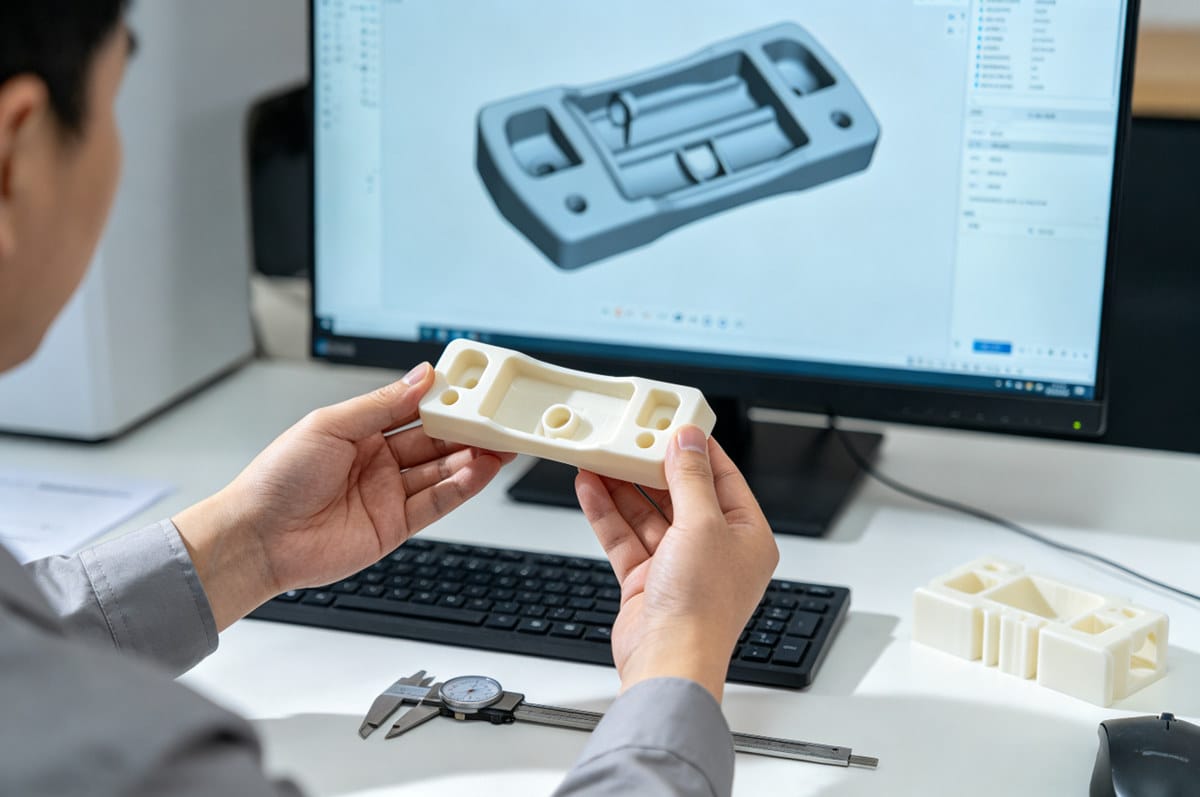
We have covered a lot of information. You know why early DFM is important. You know how to choose the right mold steel. You know how to audit a quote. Now, you need a partner who actually does these things.
Upload STEP/IGS Drawings for Free DFM Review
Do not wait for problems to happen. Send us your 3D files. We accept STEP and IGS formats. Our engineering team will look at them right away. We will find any risks before they cost you money.
Get Your Official Data‑Driven Quotation
After the DFM, we give you a clear quote. You will see exactly what you are paying for. There are no hidden fees.
| Your Action | Our Action | Result |
|---|---|---|
| Send 3D files (STEP/IGS) | Do free DFM within 24–48 hours | Find design risks early before any steel is cut |
| Request quote | Provide clear, itemized cost breakdown | No hidden fees — transparent pricing you can trust |
| Start project | Build precision mold with full QC support | Sustainable success — on-time delivery with zero-defect parts |
Contact Ideal Pro today. Let us build lasting partnerships and enduring excellence together.
결론
Custom overmolding requires precise mold tolerances, smart material choices, and strict process control. By partnering with Ideal Pro, you eliminate flash, ensure strong bonds, and achieve long-term production success.


 English
 French
 Dutch
Dutch German
 Japanese
 Korean