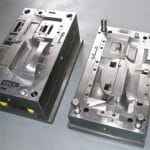
Introduction: Why Wall Thickness Matters More Than You Think
In the world of injection molding1, the wall thickness of a plastic part is not just a dimensional specification; it is the single most critical factor determining the part's structural integrity, manufacturing cost, and overall quality.
Getting the wall thickness right is a delicate balance. If the walls are too thin, the molten plastic faces high flow resistance, making it impossible to fill large or complex mold cavities completely. Conversely, walls that are too thick waste raw materials and drastically increase cycle times.
The Risks of Improper Wall Thickness
1. When Walls Are Too Thin
When the wall thickness falls below the minimum requirement, the flow resistance increases significantly. This leads to:
- Incomplete Filling: Large and complex parts fail to fill the mold cavity.
- Structural Weakness: The part lacks the necessary strength and stiffness for its application.
- Ejection Failure: The part may break under the shock and vibration of the ejection mechanism.
- Assembly Issues: The part cannot withstand the clamping forces during assembly (e.g., screw tightening).
2. When Walls Are Too Thick
Excessive wall thickness is equally detrimental and often more costly:
- Material Waste: Unnecessary use of raw plastic resin.
- Extended Cycle Times:
- For Thermosetting plastics: It increases molding time and risks incomplete curing.
- For Thermoplastics: It significantly extends cooling time, which is the longest phase of the molding cycle, reducing production efficiency.
- Quality Defects: Non-uniform cooling causes internal stresses, leading to warping and dimensional instability.
How to Determine the Optimal Wall Thickness
Determining the ideal wall thickness starts with the part's functional requirements, including:
- Mechanical strength2 and load-bearing capacity.
- Cost targets.
- Electrical performance requirements.
- Dimensional stability.
- Assembly constraints.
While specific values vary based on the plastic material grade and part size, industry experience provides reliable benchmarks:
- Electric Irons: Typically ~2mm
- Vacuum Cleaners: Typically ~2.5mm
General Design Guidelines for Success
To ensure high-quality production, follow these golden rules:
1. Maintain Uniformity
Wall thickness should be as uniform as possible. Abrupt changes in thickness cause uneven shrinkage, leading to:
- Warping and deformation.
- Reduced structural strength.
- Flow hesitation during injection.
Pro Tip: If a change in thickness is unavoidable, always use a gradual transition or a filleted corner (arc transition). Never use sharp steps.
2. Stick to the Standard Range
- General Range: 1mm – 5mm
- Optimal Sweet Spot: 2mm – 3mm (Most common for general applications)
3. Design Ribs and Bosses Correctly
Do not make reinforcing ribs or screw bosses as thick as the main wall.
- Rule of Thumb: Rib thickness should be approximately 50% (half) of the nominal wall thickness.
- Why? Thicker ribs cause sink marks (visible depressions on the opposite surface) due to differential cooling rates.
4. Avoid Large Flat Plates
Avoid designing parts as standalone flat plates unless they are very small. Large flat areas are prone to warping and will rarely remain perfectly flat. Use ribbing or texturing to add stiffness without adding bulk.
Conclusion
Optimizing injection molding wall thickness is essential for balancing part performance with manufacturing efficiency. By adhering to the 2-3mm standard where possible, ensuring uniform wall distribution, and correctly sizing ribs and bosses, manufacturers can significantly reduce defect rates, lower costs, and improve product quality.
Whether you are designing consumer electronics or industrial components, respecting these wall thickness principles is the first step toward a successful molding project.