

When consumers select a new vehicle, comfort, performance, technology, safety, and cost remain the five core decision-making factors. According to 2024 MarketingCharts data, product quality is the top consideration for global car buyers, and automotive interior comfort is a core component of overall quality. Modern automobiles are no longer just means of transportation—they have evolved into personalized spaces for work and relaxation. This drives automotive interior manufacturers to continuously innovate in materials, processes, and design, with injection molding emerging as the dominant manufacturing technology for non-load-bearing automotive interior parts due to its advantages in complex structure forming, precision, and mass production efficiency.
This article will detail the classification, material selection, and injection molding processes of automotive interior parts suitable for injection molding, and recommend top Chinese suppliers (including Ideal Pro), while providing a professional procurement guide to help global automakers and suppliers find reliable cooperation partners.
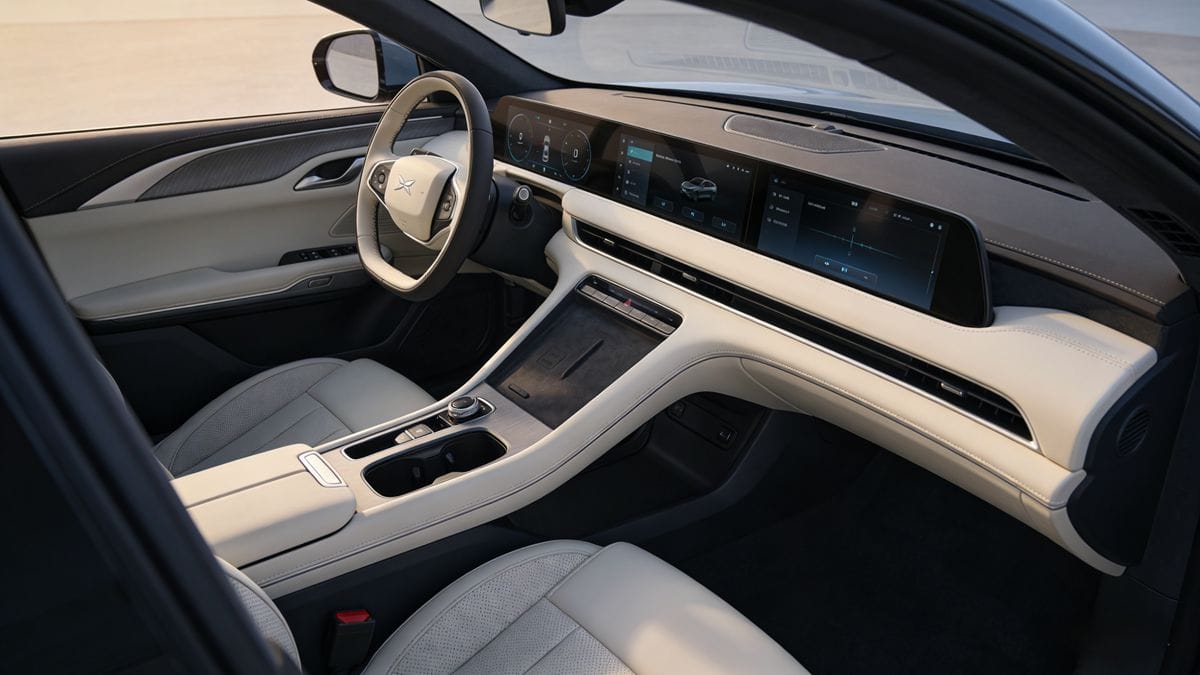
Injection-Moldable Automotive Interior Components: Classification & Manufacturing Requirements
Automotive interior parts processed by injection molding are divided into three categories based on their functions: decorative and cover components, operational and grip components, and functional & auxiliary components. The manufacturing focus, material selection, and injection molding processes vary significantly for each category—decorative parts prioritize appearance and texture, while operational and functional parts focus on dimensional accuracy, durability, and assembly compatibility.
Injection molding is the first choice for manufacturing automotive interior parts when the following conditions are met:
- The part is a non-core load-bearing component (load-bearing components such as seat frames require metal reinforcement);
- The part has complex structures or custom textures (e.g., grooves, clips, non-slip textures) that can be formed in one step via injection molding;
- Mass production is required, with strict requirements for consistency and cost control.
1. Decorative and Cover Components
The core functions are to enhance the aesthetic appeal of the car interior and protect the underlying mechanical/electrical components. Surface finish, texture consistency, and color matching are the key manufacturing priorities.
| Decorative or Cover Parts | Core Use | Material and Injection Molding Process |
|---|---|---|
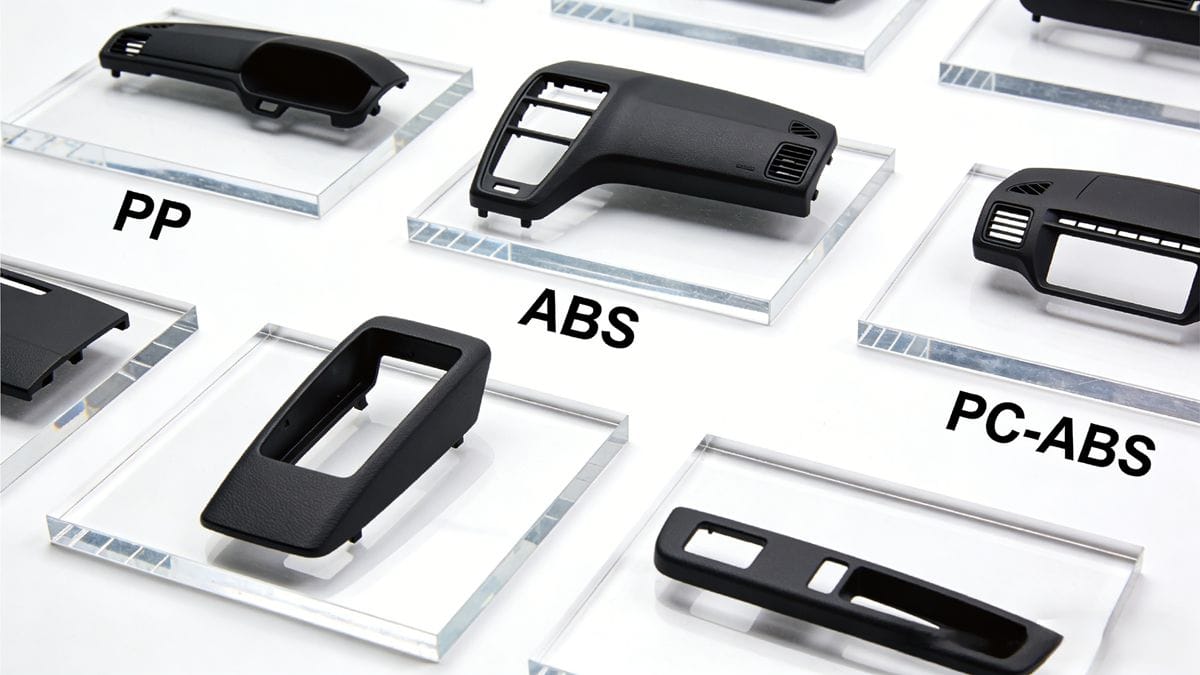
| Panel/dashboard trim | Improves interior aesthetics; conceals and protects core components such as circuits and brackets | Carbon fiber, vinyl, wood, or engineering plastics (ABS/PP); gas-assisted injection molding, overmolding, thermoforming |
| Door interior panel trim | Decorates door panels; protects speakers, motors and other components; integrates ergonomic armrests | PP as the main material, large-scale molds; hot runner systems with sequential gating to eliminate visible weld lines |
| Center console panel housing | Dual aesthetic and functional use; houses gear shift, multimedia controls, and storage compartments | Engineering-grade thermoplastics (PP, ABS, PC, Nylon or blends); high-volume injection molding for mass production |
| Floor mat | Enhances interior design; contains spills and dirt for easy cleaning | Customized injection molding for complex textures and vehicle-specific contour fitting |
Other common decorative and cover parts: storage box lid, glove compartment door, speaker grille, pillar garnish, etc.
2. Operational and Grip Components
These parts directly affect the driving experience and operational safety, requiring high dimensional accuracy, structural stability, and wear resistance. Many parts also integrate decorative functions, achieving a balance of practicality and aesthetics.
| Operational and Grip Parts | Core Use | Material and Injection Molding Process |
|---|---|---|
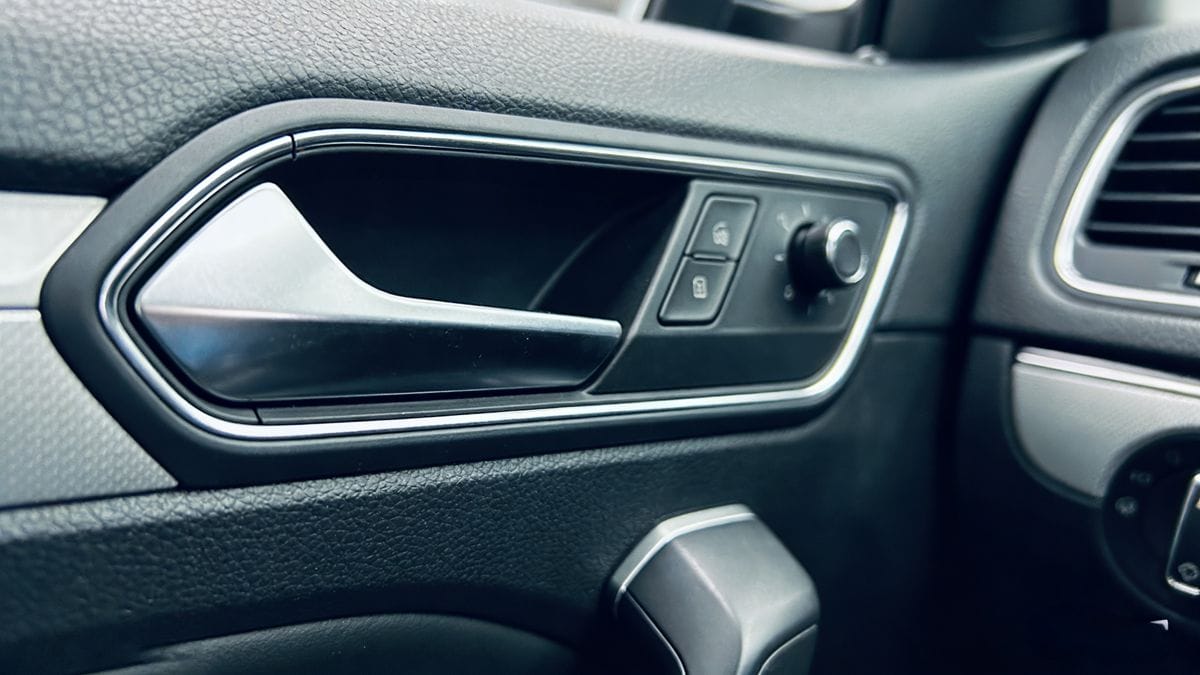
| Door inner handle housing | Contains door opening mechanisms (cables, linkage rods); ensures smooth mechanical/electronic operation | High-precision plastic injection molding; integrated forming of complex mounting points |
| Gear shift lever cover | Improves grip comfort; resists sweat, dirt and wear | Custom material and process design for scratch/oil resistance and long-term durability |
| Air vent louvers/blades | Realizes in-car climate control; adjustable airflow direction | Precision injection molding for intricate blade structures; optimizes airflow dynamics (hard to replicate with other processes) |
| Steering wheel switch bezel | Houses steering wheel control buttons; enables hands-on-wheel operation | ABS/PC/PC-ABS blends; injection molding with metal insert integration and custom surface finishes |
Other common operational parts: seat adjustment buttons/knobs, window switch panels, instrument panels, etc., all manufactured via high-precision injection molding for their complex structural requirements.
3. Functional & Auxiliary Components
Functional parts assist the normal operation of core components, while auxiliary parts improve in-car convenience and comfort. Both require high precision for small parts and compatibility with other components.
| Functional & Auxiliary Parts | Core Use | Material and Injection Molding Process |
|---|---|---|
| Cup holder insert | Secures drinks to prevent spills; organizes small items (keys, coins) | Material customized by performance requirements; injection molding for intricate anti-slip and fixing structures |
| Airbag cover | Protects airbag modules; ensures smooth deployment; conceals wiring | Plastics/composites; color and texture matching with surrounding parts for aesthetic integration |
| Sun visor bracket | Fixes and pivots sun visors; blocks glare to improve driving visibility | High-precision injection molding for small parts; ensures structural stability and smooth rotation |
| Trunk interior panel clips | Secures upholstery, carpets and linings; conceals wires/metal for a clean interior | Injection molding for small, complex structures; high consistency for mass assembly |
Other common parts: steering wheel ornaments, window regulator switch panels, coat hooks, etc., all suitable for injection molding production.
Top Recommended Chinese Automotive Interior Injection Molding Suppliers
China has become a global hub for automotive interior injection molding manufacturing, with suppliers offering advantages in technical maturity, production capacity, and cost efficiency. The following recommended suppliers (in no particular order) cover different product categories and technical strengths, including the one-stop manufacturing solution provider Ideal Pro, to meet the diverse needs of global customers:
1. Changzhou Huawei Mold Co., Ltd
- Founded: 1992 (entered automotive mold industry in 1998)
- Core Strengths: One of China’s largest automotive interior/exterior mold suppliers; rich experience in large-scale mold manufacturing
- Key Products: Console, instrument panel, door panel, pillar garnish, lift gate grab handle
- Contact: No.155 Qinling Road, New District, Changzhou | http://www.huawei-global.com | +86-519-85166323
2. Yuefei Mould
- Founded: 1987
- Core Strengths: Specialized in large-sized precision molds; annual production capacity of 500 mid-to-large injection molds
- Key Products: Pillar parts, door panel components, central console, armrests, air filters
- Contact: No.10/12 Jinshan 2nd Road, Ninghai, Zhejiang | https://www.yfmould.com | 0086-574-65332667
3. First Mold
- Founded: 2011
- Core Strengths: End-to-end production via a unified online platform; eliminates multi-supplier coordination costs
- Key Products: Airbag covers, interior door handles, various precision decorative/functional parts
- Contact: 88 West Shagang Road, Zhongshan | https://www.firstmold.com | +86 13925326660
4. Ideal Pro
- Founded: With 17+ years of manufacturing experience
- Core Strengths: One-stop turnkey manufacturing solutions from concept design to mass production; integrates injection molding, CNC machining, 3D printing, die casting and assembly; serves global top brands such as Toyota, NIO, Hikvision
- Automotive Interior Advantages: High-precision injection molding with ±0.005 mm tolerance; advanced DFM/mold flow analysis; 7x24 online service and dual expert customization (engineer + technical consultant); 98% customer satisfaction rate
- Key Automotive Products: Custom injection-molded interior parts (operational components, decorative trims, functional accessories), mold design, prototyping and mass production
- Contact: Global service coverage | https://ideal-pro.com | 24/7 online technical support
5. Taoshi Mould Group
- Founded: 1978 (entered automotive interior mold industry in 2008)
- Core Strengths: One of China’s largest mold manufacturers; 2014 output value of 320 million RMB
- Key Products: Full range of automotive interior injection molds
- Contact: Xicheng Xintang, Huangyan, Taizhou | https://www.taoshimould.com/en | 0086-576-84111000
6. Silver Basis
- Founded: 1993
- Core Strengths: 740+ patents; high-tech precision injection molds and dies manufacturing
- Key Products: Automotive interior tooling, functional modules, checking fixtures
- Contact: Baoan District, Shenzhen | https://www.silverbasis.com | +86 75527642891
7. Kelon Mold
- Founded: 1995
- Core Strengths: Specialized in large/medium injection and foaming molds; high-end technology and strict quality control
- Key Products: Full range of custom automotive interior parts
- Contact: Shunde District, Foshan | http://kelonmold.com/en | 0086-0757-28362368
8. Zhejiang Kaihua Mould Co. Ltd
- Founded: 2000
- Core Strengths: Cooperates with global mainstream automakers (ICE and EV); large-scale production capacity
- Key Products: Instrument panel, pillar, door panel and other large interior parts
- Contact: Huangyan, Taizhou | https://www.china-kaihua.com/english | +86-576-84025727
Procurement Guide for Automotive Interior Injection-Molded Parts
Overseas automakers often face challenges in selecting Chinese suppliers due to the large number of options and varying technical strengths. The following 5-step procurement checklist helps to make informed decisions and reduce cooperation risks:
Step 1: Define the Application Scenario Clearly
Clarify the part’s type (appearance/operational/functional), installation position, annual procurement volume, and core performance requirements (e.g., heat resistance, UV stability for automotive interior parts exposed to sunlight).
Step 2: Scientific Material Selection with Supplier Guidance
Material directly determines the part’s performance (flexibility, strength, wear resistance). Work with suppliers to select suitable materials (e.g., PP for low-cost decorative parts, PC-ABS for high-strength operational parts) based on the part’s function and usage environment.
Step 3: Confirm Process and Technical Requirements in Writing
Verify the supplier’s surface finish/coating process, critical dimensional tolerances, mold design standards, and production capacity; sign a detailed technical agreement to avoid subsequent disputes.
Step 4: Strict Trial-Production Validation and Mandatory Testing
Require suppliers to provide a complete test report, including:
- Visual defect inspection (no weld lines, bubbles, warpage)
- Dimensional accuracy measurement (matching CAD design)
- Bonding strength test for soft-touch surfaces
- Aging resistance/UV resistance test (simulating long-term in-car use)
Step 5: Standardize the Procurement Contract with 5 Essential Clauses
Ensure the contract includes clear terms for:
- Quality liability and defect compensation
- Delivery timeline and late delivery penalties
- Environmental and industry compliance (e.g., RoHS, REACH)
- After-sales service and mold warranty
- Mold ownership rights (critical for custom mold development)
FAQ: Automotive Interior Injection Molding in China
Q1: Does material selection affect the performance of injection-molded automotive interior parts?
A1: Yes. Material determines key properties such as flexibility, strength, heat resistance, color fastness, and wear resistance. Choosing the wrong material can lead to product failure (e.g., brittle cracking, deformation) and affect driving safety.
Q2: What core factors should be considered when selecting a Chinese injection molding supplier?
A2: Focus on 5 key points:
- Deep understanding of automotive interior part applications and industry standards
- Proficiency in processing the selected materials and mature injection molding processes
- Ability to deliver high surface finish and strict dimensional accuracy
- Robust quality inspection and trial-production test system
- Perfect after-sales support and 7x24 technical service (critical for overseas customers)
Q3: Who are the top 3 suppliers for automotive interior injection molding in China?
A3: Based on market reputation, technical strength and global cooperation experience, Changzhou Huawei Mold Co., Ltd, First Mold, and Ideal Pro are the most recommended suppliers, covering large mold manufacturing, end-to-end production, and one-stop turnkey solutions respectively.
Conclusion
Injection molding is irreplaceable in the manufacturing of automotive interior parts due to its advantages in complex structure forming, precision, and mass production. China’s automotive interior injection molding industry has matured, with suppliers offering diverse solutions from mold design to mass production. Whether you need large-scale mold manufacturing, precision part production, or one-stop turnkey solutions, the above recommended suppliers (especially Ideal Pro with global service capabilities) can meet your customized needs.
By following the scientific procurement guide and selecting the right cooperation partner, global automakers can not only improve the quality and comfort of automotive interiors but also achieve cost control and efficient supply chain management, gaining a competitive edge in the global market.

 English
 French
 Dutch
Dutch German
 Japanese
 Korean