

Injection molding1 is a critical process in manufacturing, and ejector pins play a vital role. Understanding them can save you time, money, and frustration.
Ejector pins are essential components in injection molding that help release the finished part from the mold. This guide will explore their types, design considerations, troubleshooting tips, and material selection to ensure optimal performance.
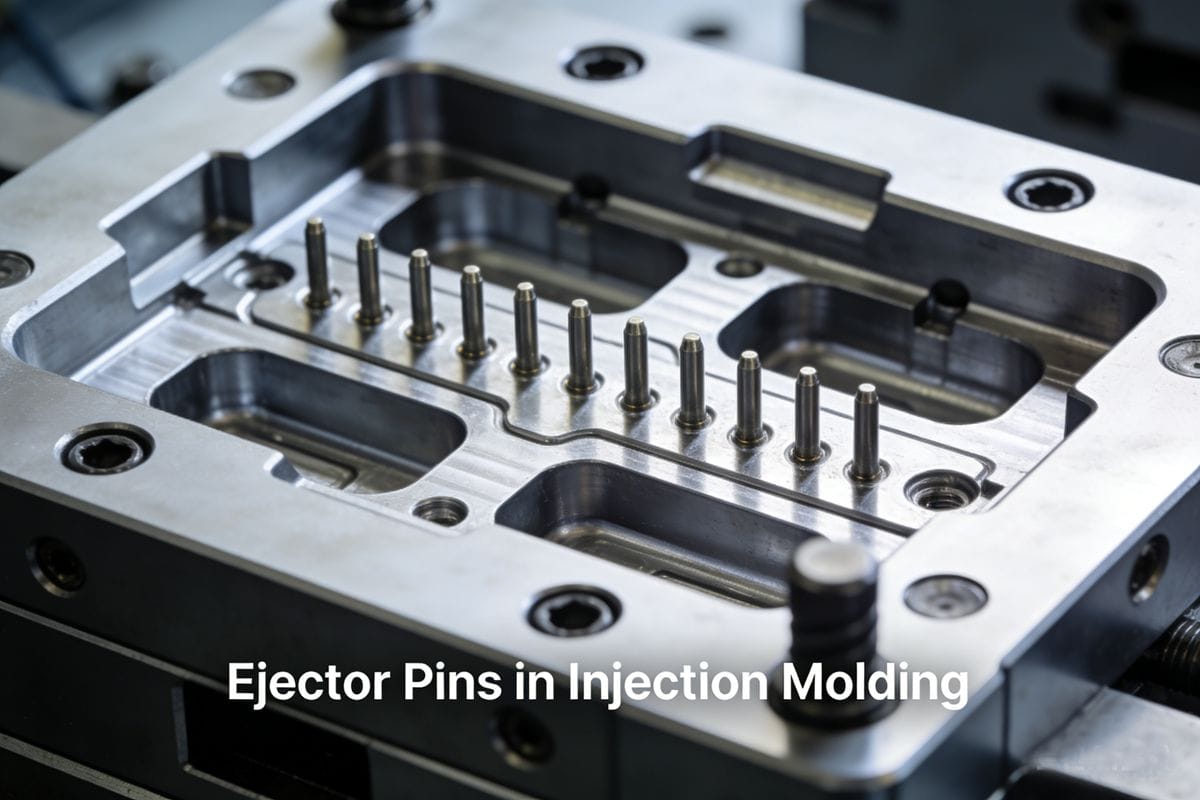
Ejector pins are often overlooked, yet they are crucial in the molding process. They are the unsung heroes, ensuring that parts are released smoothly and efficiently. However, they can also be sources of problems if not designed and used correctly. So, let's delve deeper.
Ejector Pins in Injection Molding: The 2025 Ultimate Guide to Types, Design, Troubleshooting & Material Selection?
Ejector pins may seem simple, but they require careful consideration. Their design and selection can significantly impact the quality of the finished product.
In the context of injection molding, ejector pins are designed to facilitate the smooth release of the molded part, preventing damage and ensuring precision. Understanding different types and their applications is key.
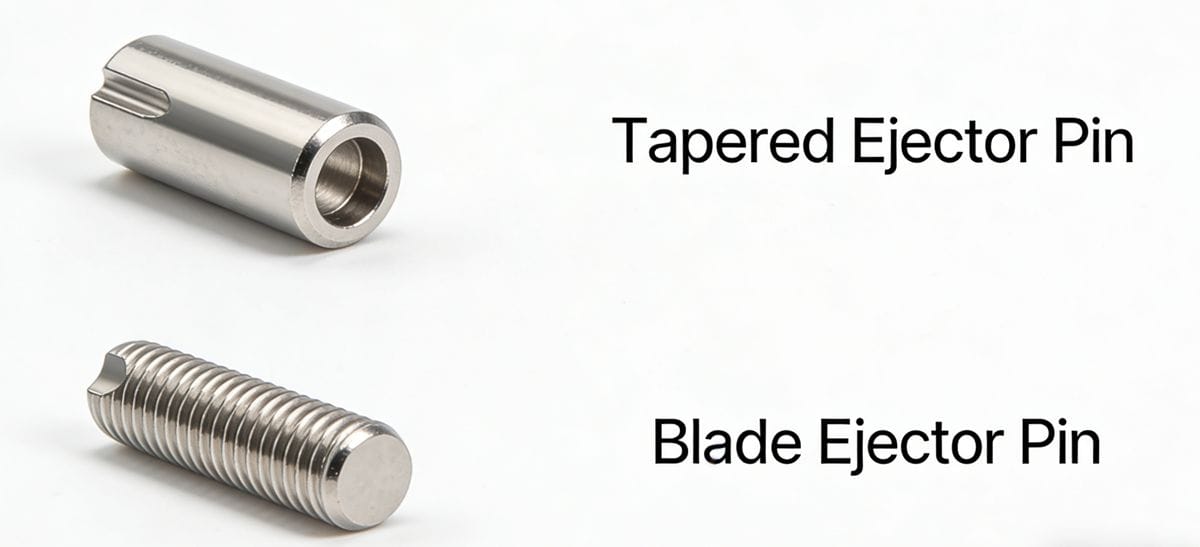
Ejector pins come in various types, each suited for specific applications in molding. The choice of ejector pins depends on factors such as the geometry of the part, material characteristics, and the mold's design. Understanding these factors will help you select the right pin for your project.
Types of Ejector Pins
Standard Ejector Pins: Commonly used for general applications. They are versatile and effective for various shapes.
Blow Ejector Pins: Designed to release parts with undercuts by using air pressure. They are critical for complex designs.
Lifter Pins: These pins help lift parts with undercuts during the ejection process. They require precise alignment.
Sleeve Ejectors: Used for delicate parts. They reduce friction and prevent surface damage.
Blade Ejectors: Ideal for thin-walled parts. They provide uniform pressure during ejection.
Understanding these types allows you to make informed decisions that can enhance productivity and reduce defects.
How to Eliminate Ejector Pin Marks on Plastic Parts: 7 Proven Methods?
Ejector pin marks2 can be a significant concern for manufacturers. They can affect the visual appeal and functionality of the final product.
Eliminating ejector pin marks involves various strategies, including adjusting the design, modifying the ejection system, or using specific materials to minimize these imperfections.
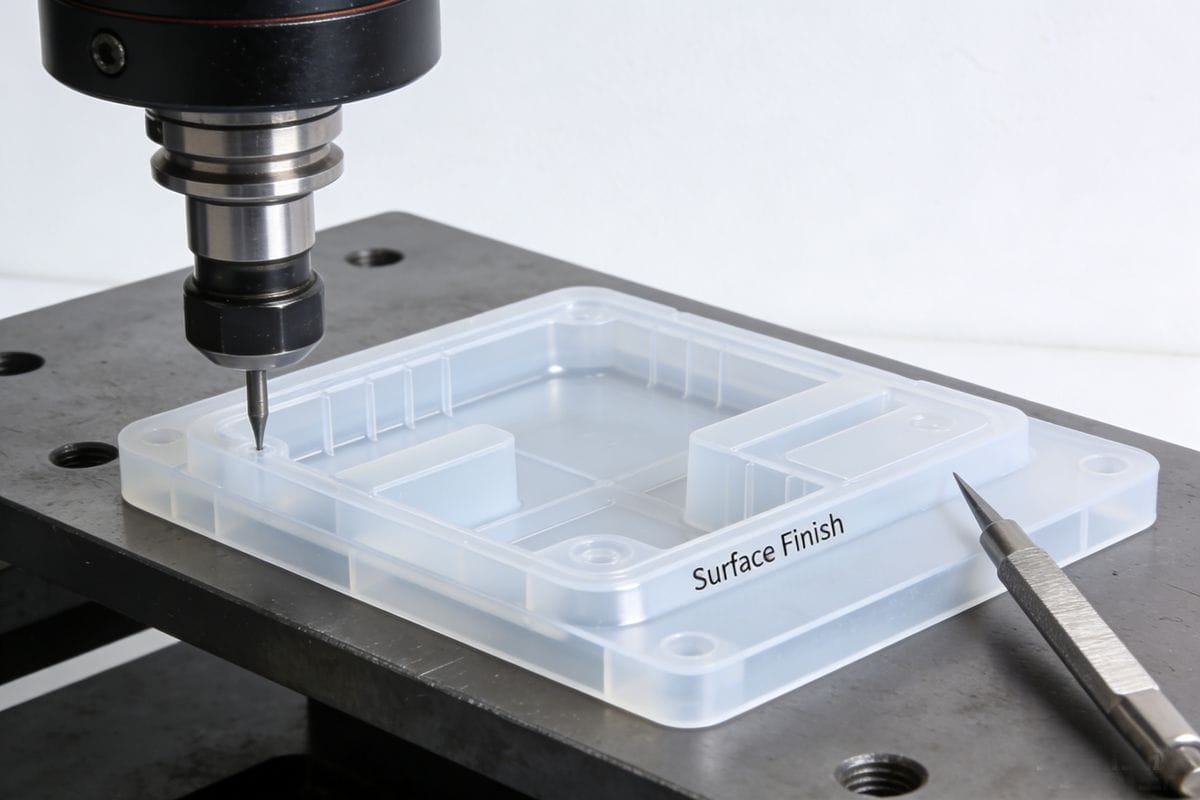
To effectively eliminate ejector pin marks, consider the following methods:
Adjust Pin Placement: Position the pins in less visible areas of the part.
Increase Ejector Pin Size: A larger pin can distribute pressure more evenly.
Modify Cooling Channels: Ensure uniform cooling to reduce warping.
Use Different Materials: Explore materials with better flow properties.
Adjust Ejection Speed: A slower ejection speed can minimize marks.
Use Surface Treatments: Apply coatings that reduce friction.
Fine-Tune Mold Design: Optimize the mold geometry for better part release.
By implementing these methods, you can significantly reduce or eliminate ejector pin marks, leading to higher-quality parts.
Ejector System Design Checklist: 12 Critical Rules to Prevent Sticking, Flash & Part Distortion?
Designing an efficient ejector system involves adhering to several critical rules to ensure consistent quality.
A well-designed ejector system can prevent issues such as sticking, flash, and part distortion, leading to enhanced production efficiency and part quality.
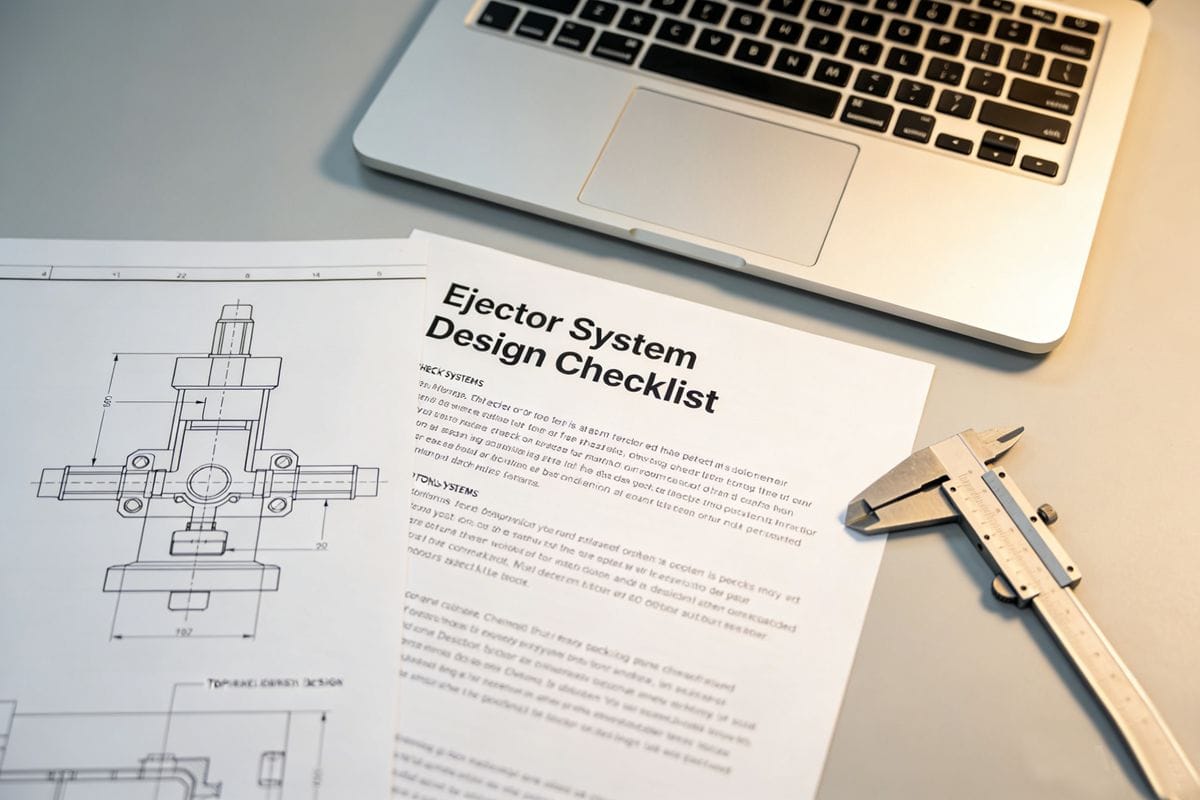
Here are 12 rules to consider when designing your ejector system:
Consistent Pin Orientation: Ensure that pins are aligned properly to prevent uneven pressure.
Use Sufficient Pin Length: Adequate length ensures complete part ejection.
Consider Pin Material: Choose materials that can withstand wear and tear.
Optimize Cooling System: Effective cooling prevents overheating and distortion.
Maintain Proper Draft Angles: Proper angles facilitate easy part release.
Select the Right Ejection Mechanism: Choose mechanisms that suit the part's geometry.
Check for Wear Regularly: Regular checks help maintain system integrity.
Implement Backup Pins: Use backup pins for added security.
Minimize Flash Areas: Design molds to minimize areas prone to flash.
Control Ejection Timing: Synchronize ejection timing with mold closing.
Use Pressure Sensors: Monitor ejection pressure to prevent issues.
Assess Material Flow: Ensure proper flow of the material to prevent sticking.
Following these rules will help you design an efficient ejector system, reducing the risk of defects and improving overall productivity.
H13 vs SKD61 vs Stainless Steel3: Which Ejector Pin Material is Best for Your Plastic?
Choosing the right material for ejector pins is crucial for their performance.
Materials like H13, SKD61, and stainless steel offer different properties that can significantly impact the effectiveness of the ejector pins in various applications.
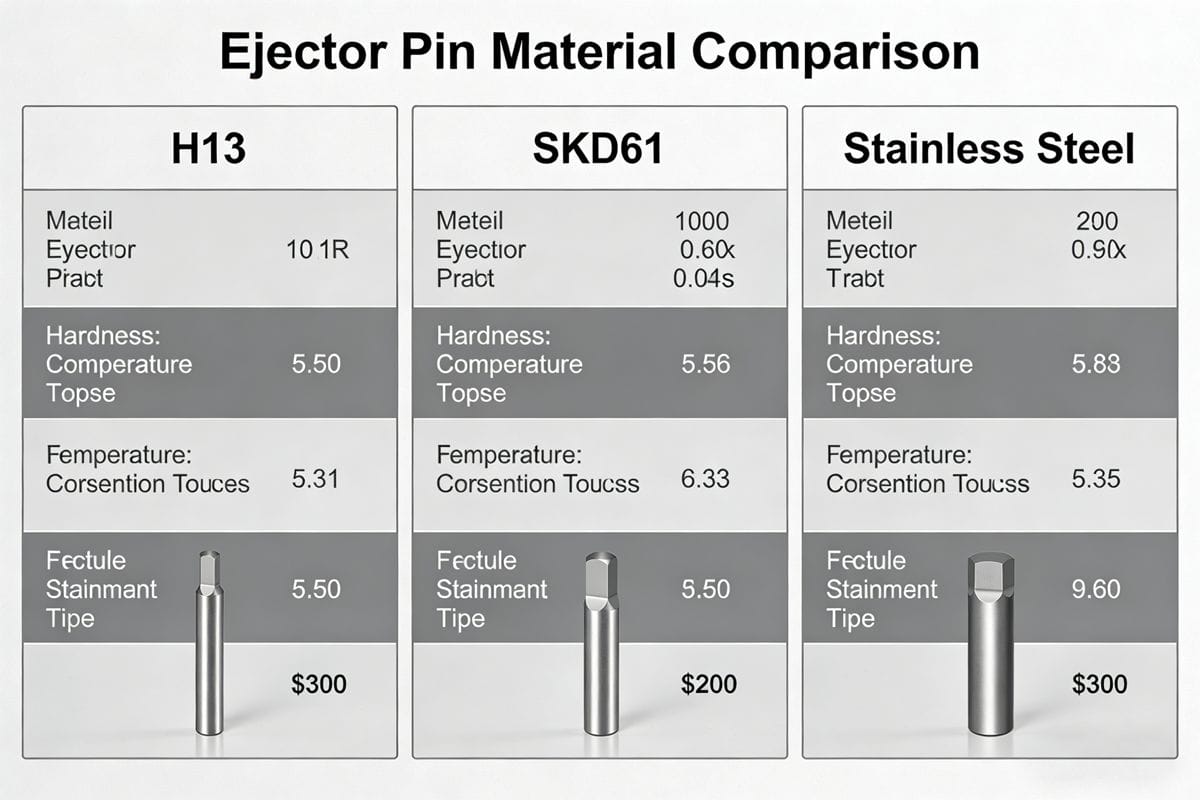
Here’s a quick comparison of the three materials:
| Material | Hardness | Wear Resistance | Cost |
|---|---|---|---|
| H13 | High | Excellent | Moderate |
| SKD61 | Very High | Very Good | High |
| Stainless Steel | Moderate | Good | Variable |
- H13: This material is known for its excellent toughness and wear resistance, making it suitable for high-volume production.
- SKD61: Offers high hardness and is preferred for high-speed applications, though it comes at a higher cost.
- Stainless Steel: Provides good corrosion resistance and is often used for specialized applications but may not be as durable as H13 or SKD61.
Selecting the right material will depend on your specific needs and the requirements of your molding process.
Blade vs Sleeve vs Lifter Ejectors: When to Use Each for Thin Walls, Bosses & Undercuts?
Understanding the different types of ejectors is critical for effective part ejection.
Each type of ejector has specific advantages and is suited for different applications, such as thin walls, bosses, and undercuts.
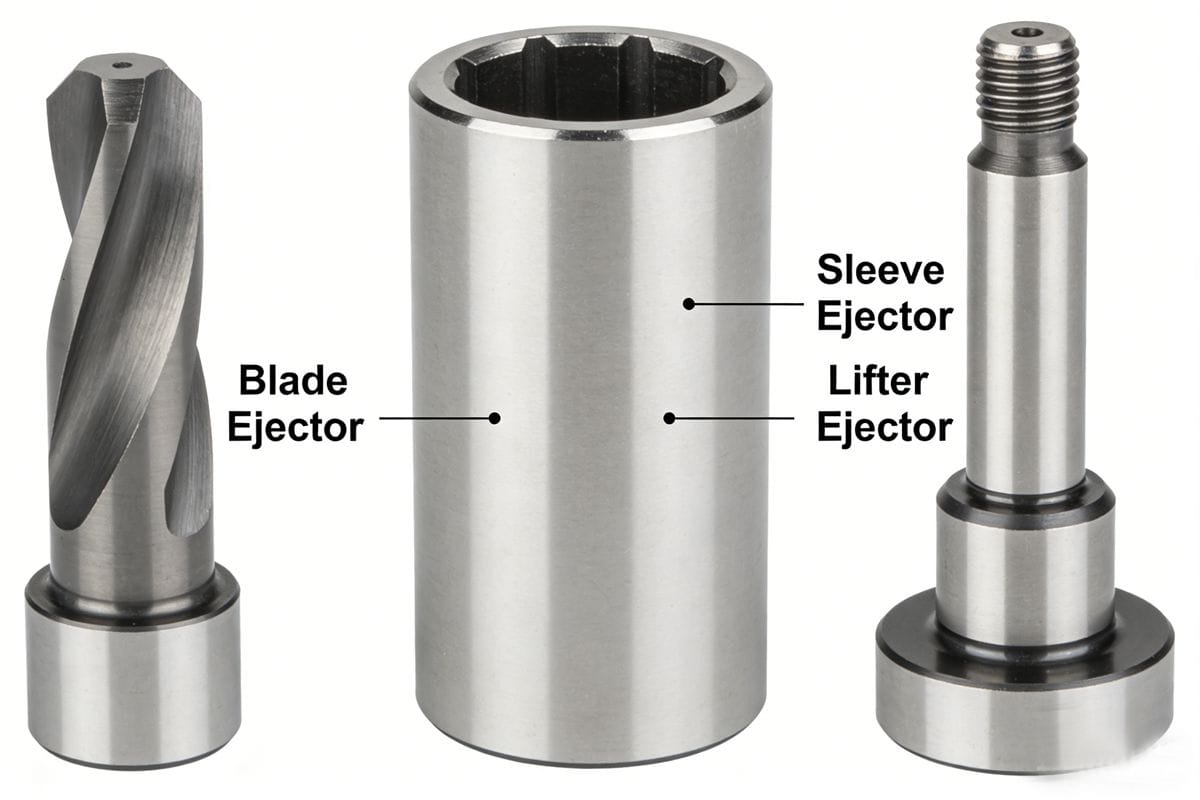
Blade Ejectors: These are ideal for thin-walled parts. They provide uniform pressure and prevent deformation during ejection.
Sleeve Ejectors: Best for delicate parts, sleeve ejectors minimize friction and can handle complex geometries effectively.
Lifter Ejectors: These are necessary for parts with undercuts. They lift the part directly, allowing for smooth release without damaging the surface.
Understanding the characteristics of each ejector type allows you to choose the right solution for your specific molding challenges.
Why Your Ejector Pins Keep Breaking: 5 Root Causes & How to Fix Them Before Mold Failure?
Ejector pin failure can lead to costly downtime and production losses.
Identifying the root causes of ejector pin breakage is essential to prevent mold failure and maintain production efficiency.
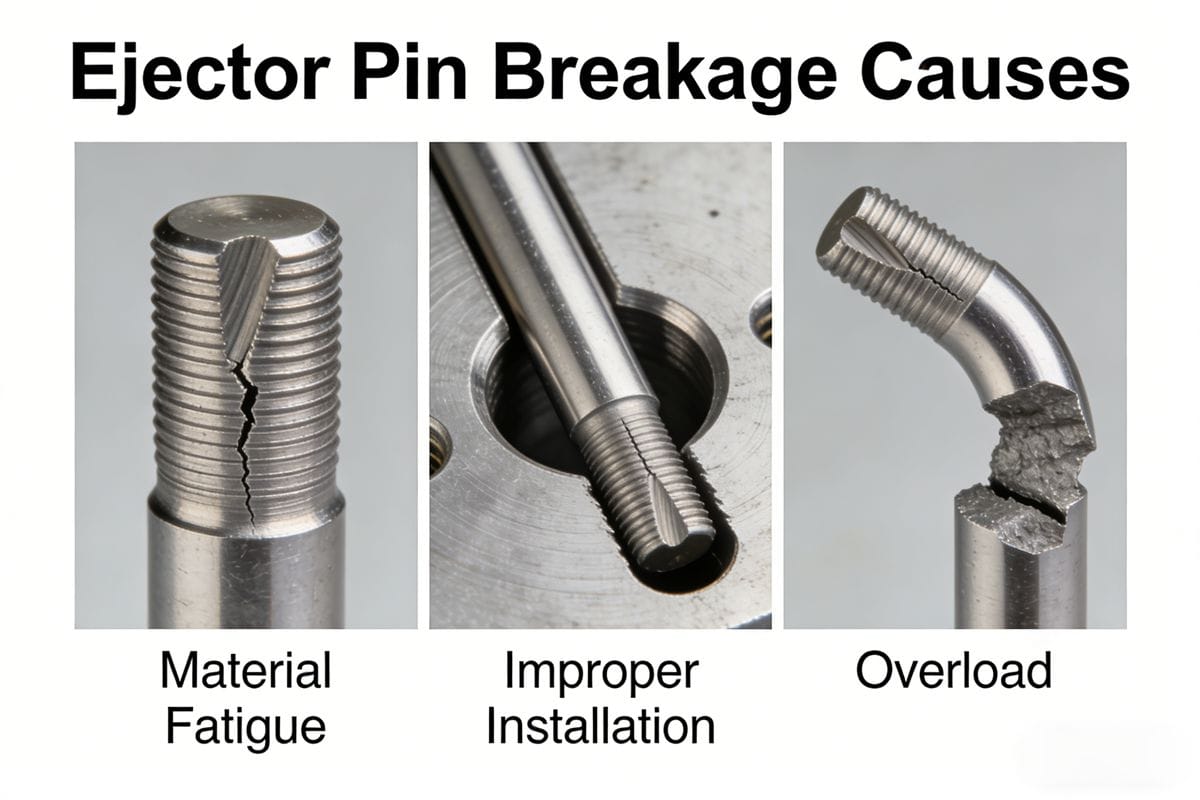
Here are five common causes of ejector pin breakage:
Excessive Force: Using too much force during ejection can lead to breakage. Ensure proper settings and adjustments.
Poor Material Selection: Using low-quality or inappropriate materials may weaken the pins. Choose durable materials.
Incorrect Design: Pins that are too thin or poorly positioned are more likely to fail. Review your design parameters.
Overheating: Excessive heat can weaken the pins. Implement effective cooling systems to maintain appropriate temperatures.
Wear and Tear: Regular wear can lead to weakened pins. Regularly check and replace worn pins to prevent breakage.
By addressing these issues, you can significantly reduce the risk of ejector pin breakage, leading to smoother operations.
AI-Powered Ejection Simulation: How Modern Mold Design Software Predicts Pin Stress & Marking?
Modern technology has transformed how we approach mold design and ejection systems.
AI-powered simulation tools can predict pin stress and marking, allowing for more informed design choices and better outcomes in the injection molding process.
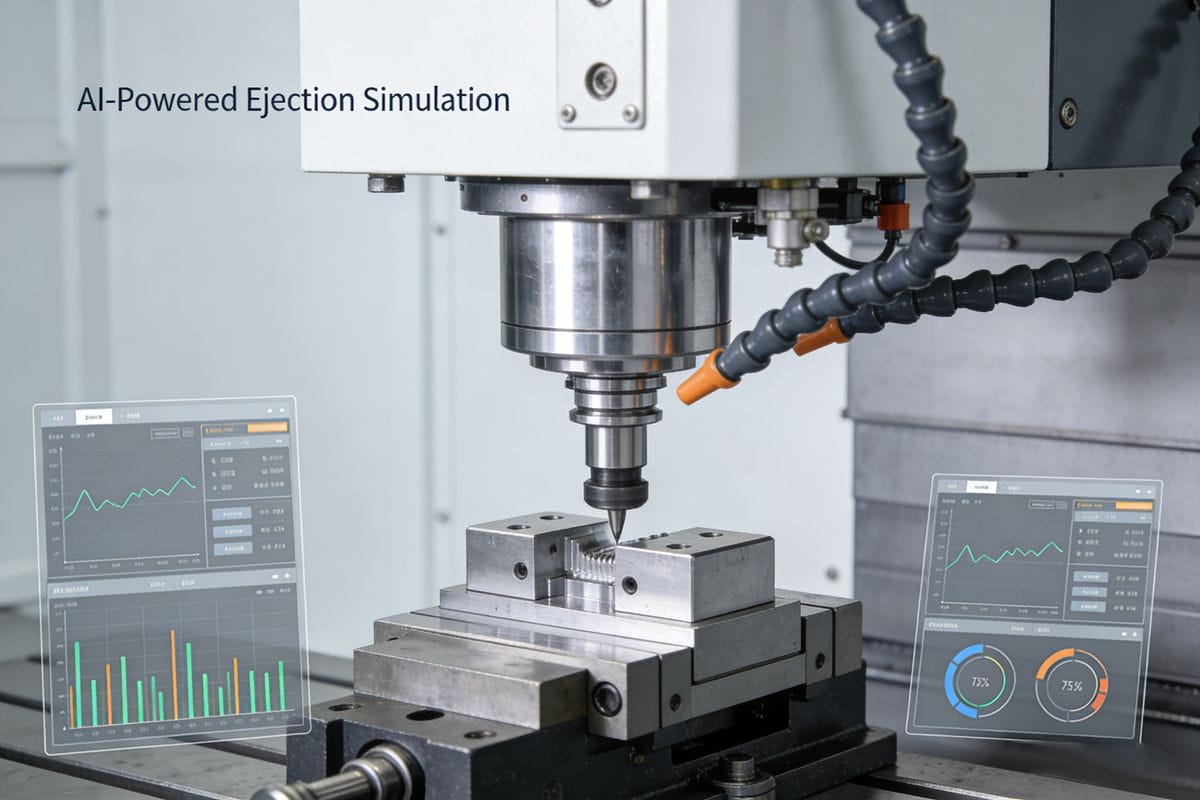
These tools analyze various factors, including:
- Material Properties: Understanding how different materials behave under stress can guide pin design.
- Geometric Factors: Analyzing the part's geometry helps in optimizing pin placement.
- Ejection Dynamics: Simulating the ejection process helps anticipate potential issues.
Using AI-driven tools can significantly enhance the design process, ensuring that ejector systems perform optimally and that parts are produced to high standards.
Conclusion
Understanding ejector pins is essential for successful injection molding, impacting quality, efficiency, and cost. By mastering their types, design, and troubleshooting, you can optimize your operations.
 English
 French
 Dutch
Dutch German